
Before Supras and Skylines captured global headlines, Japan was already building cars that defied expectations and hinted at a performance future few saw coming.
In the 1960s and 1970s, Japanese automakers produced practical transportation while experimenting with bold designs, unusual engines, and racing-inspired engineering. These cars didn’t always make the cover of glossy magazines, but they laid the groundwork for everything that came later.
Some were quietly brilliant, others wildly ahead of their time. All of them deserve a closer look.
How We Chose These Classics

We focused on Japanese cars from the 1960s and 1970s that pushed boundaries through engineering, design, motorsport success, or cultural impact. Each model included at least one of the following:
- Broke new ground or introduced bold innovation
- Marked a key moment in its brand’s evolution
- Influenced the future of JDM performance or style
- Stood out for being rare, ahead of its time, or just plain cool
From rotary rebels to rally stars, these cars prove Japan’s golden era of automotive ingenuity started long before the ‘90s.
Toyota 2000GT

Calling a car with 150 horsepower a supercar might sound like a stretch, but in 1967 Japan, it was a game-changer. Most mainstream Japanese cars at the time made well under 100 horsepower, so the Toyota 2000GT’s 2.0-liter straight-six packing 150 was nothing short of revolutionary.
The 2000GT’s stylish design was inspired by European sports cars, such as the Jaguar E-Type, but it’s much rarer than the British sports car. Toyota only built 351 2000GTs, and when they were new, they cost around $7,000. That was a lot of money back then, but it’s even more expensive today, fetching upwards of $1 million at auction. Trendspotters take note: It’s not always about horsepower; it’s about power-to-weight ratio.
Honda S-Series

By the early ‘60s, Japanese automakers were diving into the world of small sports cars, and no one saw Honda coming. Known for its dominance in motorcycles and its quirky kei trucks, Honda wasn’t exactly on the radar as a sports car manufacturer. Then came the S500, and suddenly, the game changed.
Most sports cars pack some power, but Honda went with a 44-horsepower 0.5-liter engine in the S500. Both power and displacement grew until the S800, with 70 horsepower and a 8,500 rpm redline, arrived in 1966. Honda drew on its motorcycle expertise when building the S-series, and it was both innovative and fun to drive.
Datsun 240Z / Fairlady Z

Toyota wasn’t the only one taking notes from the Jaguar E-Type. Enter the Datsun 240Z (or the Fairlady Z, as it was known in Japan). This was the car that kickstarted the legendary Z-car lineage, and if you squint, you can definitely see hints of that classic British sports car in its long hood and sleek fastback design. And let’s be real, Jaguar was still cool back then. These days? It’s more of a high-fashion accessory in a perfume commercial than a brand pushing the limits of performance.
The 240Z had a 2.4-liter straight-six engine with 151 horsepower, and unlike the 2000GT, it brought sports car ownership to the masses. In 2020, a pristine, ultra-low-mileage 1971 240Z sold for a record $310,000, according to Hagerty.
Nissan Skyline GT-R Hakosuka

Long before the GT-R became a global icon, there was the original Skyline GT-R, better known to enthusiasts as the Hakosuka (“Box Skyline”). Introduced in the late ’60s, it laid the groundwork for a performance legacy that would eventually lead to today’s R35 GT-R.
Under its hood, the Hakosuka GT-R hides a 2.0-liter DOHC six-cylinder engine that churns out 150 horsepower and about 130 lb-ft of torque. For a while, the Hakosuka was unbeatable on Japan’s racetracks, racking up more than 50 wins by 1972.
Mazda Cosmo 110S

The Cosmo was Mazda’s first Wankel-engined car, and the company named it after the space race of the late 1960s to show that this was the way of the future. While Mazda continued to work on the rotary engine over the following decades, it never perfected the formula.
One thing that is close to perfection is the Cosmo’s stunning design. It’s not all show and no go either, as the 982cc two-rotor Wankel engine produced about 110 horsepower in early models, rising to around 128 PS in later Series II cars. Each Cosmo was hand-built, and during its production run, Mazda made 1,176 cars, 343 Series I models, and 833 Series II models.
Toyota Corolla SR5
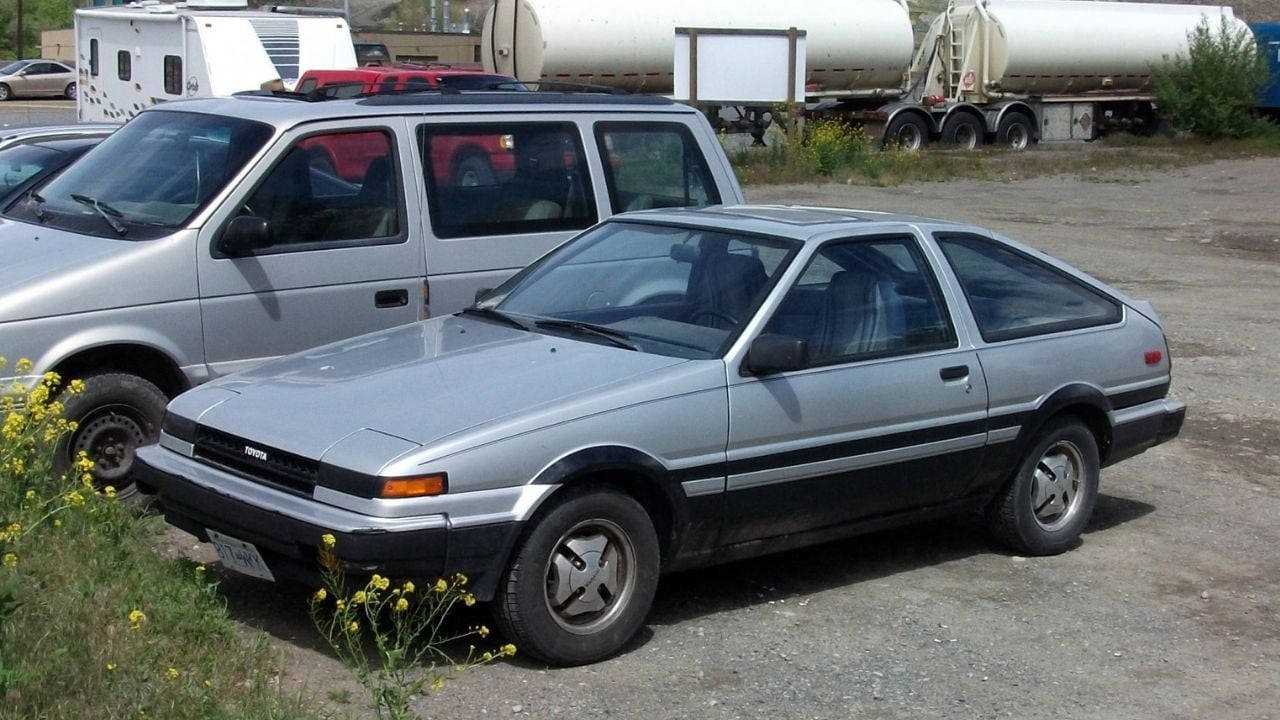
In the early 1970s, long before the world went wild for the AE86 Corolla, Toyota built another small Corolla coupe that was fun to drive, the Corolla SR5. This second-gen Corolla was built to compete against Japanese icons such as the Datsun 510 and other RWD coupes.
In Japan, high-spec TE27 Corolla Levin and Sprinter Trueno models received a 1.6-liter twin-carb DOHC engine producing about 115 PS but wasn’t available in the States. Instead, the American car received a 1.6-liter OHV engine with 88 horsepower. Considering how light it was, that was still pretty decent.
Why didn’t the U.S. get this setup? Emissions, regulations, and market preferences played a big role. But in Japan, the Corolla wasn’t just an economy car, it had real driving spirit. That same DNA later evolved into legends like the AE86, proving that even the most unassuming cars can have performance roots. It’s a classic case of forbidden fruit, one of those little-known details that makes vintage JDM cars so fascinating.
Datsun Roadster

When the Datsun Fairlady is mentioned, people automatically think of the 240Z. In all fairness, it was the first Z car, but it wasn’t the first Fairlady. 1963, the Datsun Fairlady 1500 convertible hit the market, ready to go toe-to-toe with sports car legends such as MG and Alfa Romeo.
With time, the 1500 grew to a 1600, and later, there was a 2000 model. The Datsun 2000’s 2.0-liter engine had a single overhead cam and produced 135 horsepower. With a factory high-output specification that included Mikuni/Solex carburetors and cam changes, power jumped to 150 wild horses, all sent to the rear wheels via a manual 5-speed transmission.
Mazda RX-2

Mazda continued down the Wankel rotary engine path when it introduced the RX-2 in 1970. It also had regular four-cylinder engines.
In 1972, it was sold in the States as the Mazda 618, which had a unique 1.8-liter engine for the US market. However, we prefer the roughly 1.1-liter (1146cc) rotary version, rated around 128 horsepower (SAE) or 130 PS depending on market. See, Japan? We can handle this amount of horsepower, we swear.
Datsun 510
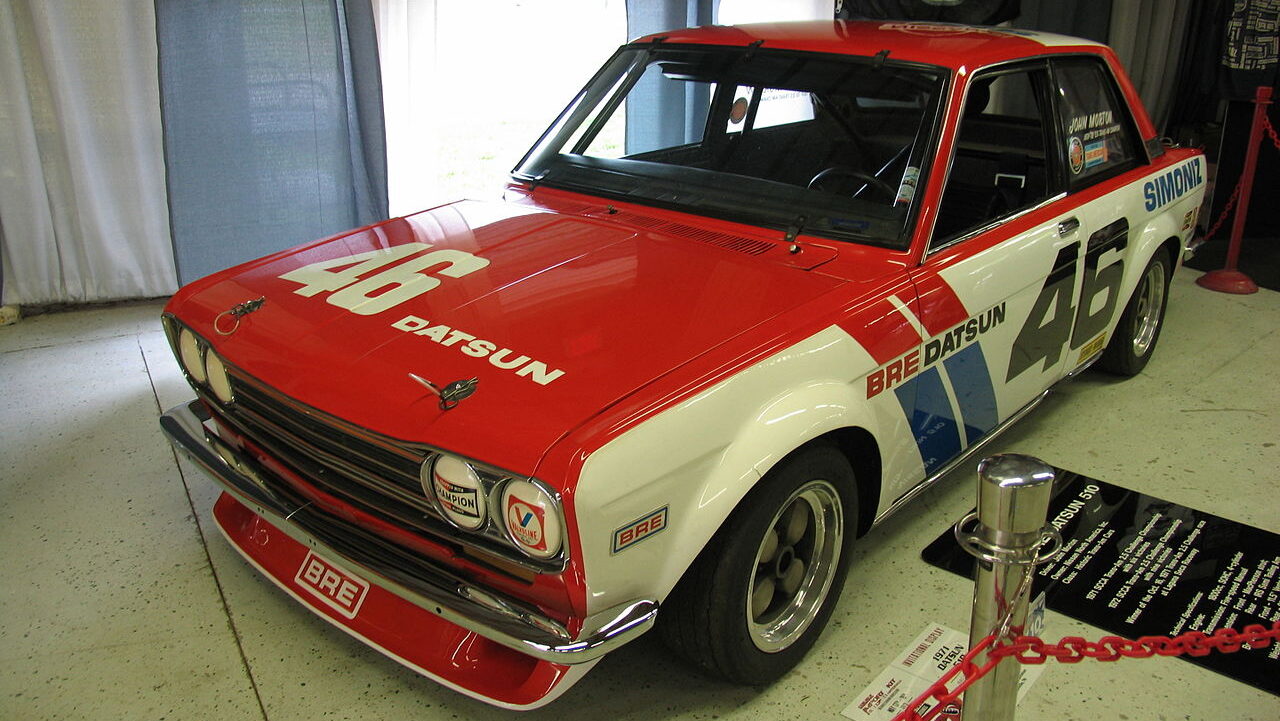
There’s no denying that the humble little Datsun 510 has become one of the most iconic Japanese cars ever. It was built to resemble the European box-styled cars of its era and was available with two, four, and five doors. The most desirable model is the two-door coupe.
The Nissan 510 had a 1.6-liter engine that produced 96 horsepower, about the same as a European car. Thanks to its affordability and reliability, the 510 became a well-performing race and rally car with a burgeoning aftermarket.
Mitsubishi Lancer 1600 GSR

Mitsubishi’s Lancer model became a world-famous rally car when Tommi Mäkinen dominated the WRC behind the wheel of a Lancer Evolution. However, the Lancer was a force to be reckoned with long before that. Mitsubishi introduced the first Lancer in 1973, and just like the Evos, the 1600 GSR was a proper rally car for the road.
The road-going Lancer 1600 GSR had a 1.6-liter engine with 110 horsepower and 108 lb-ft of torque, but in the racing version, competition versions were tuned significantly higher than the road cars. Unfortunately, the Lancer 1600 GSR wasn’t available in the States. Instead, markets outside Japan received lower-spec or rebadged versions, a rebadged version with less performance. Why must we suffer so?
Toyota Celica

In the 1970s, Toyota brought the battle to American soil, taking on pony cars like the Mustang. The new Celica coupe was a stunner, and established brands had reason to be worried.
Toyota did have sports car DNA, as they’d already made the Sports 800 and 2000GT, so they knew what they were doing when making the Celica. There were two different styles of the Celica, a slant nose and a flat nose model. In the states, it was introduced in the U.S. with Toyota’s 1.9-liter 8R engine producing about 108 horsepower, which eventually grew into a 2.2-liter unit. Currently, the Celica is highly sought-after, but finding a reasonably priced example is still possible.
Isuzu 117 Coupe
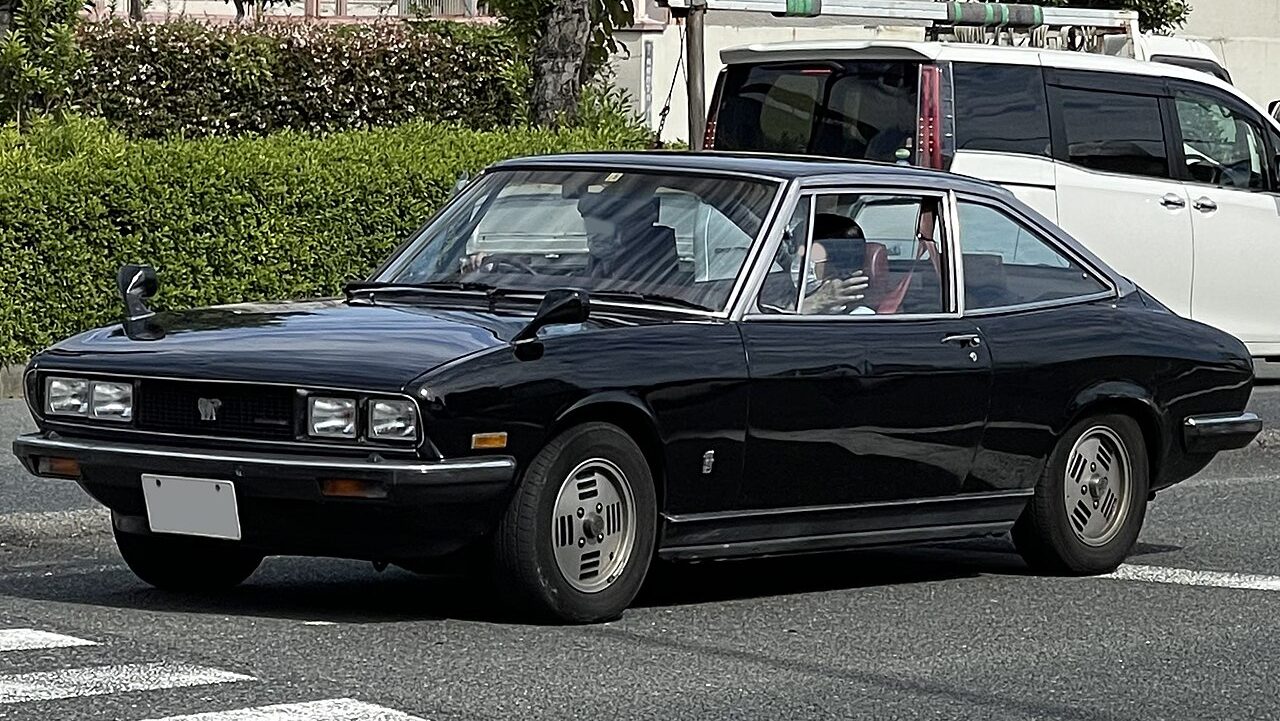
Isuzu is best known for its pickup trucks these days, but the Japanese company has built some excellent sports cars over the years. The 117 Coupe is a gorgeous example of that. If you think it looks very European, that’s because it was designed by none other than Giorgetto Giugiaro.
While it wasn’t quick, it did reach 60 mph in 10.2 seconds and had a top speed of 118 mph. But do you want to go fast in a car like this, or slowly cruise by so everyone can see it? Think about it. Production lasted until 1981, but your chances of finding one of these cars in good condition are slim.
Toyota Celica Liftback
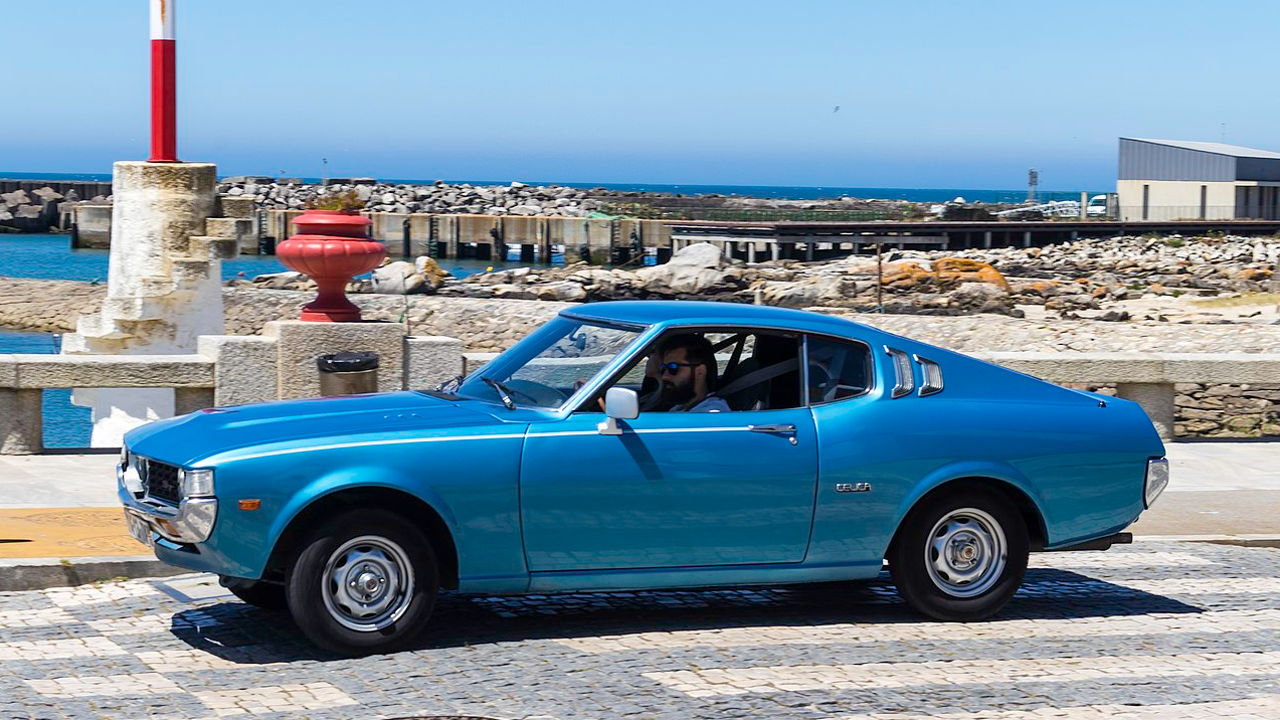
Maybe we’re just anxiously awaiting the new Celica and have them on the brain, but Toyota made many variations, so we wanted to include another one. The 1976 Liftback Celica is perhaps the best-looking version of them all, and it was a direct threat to the Ford Mustang 2.
The Celica Liftback came along during the oil crisis of the 70s, and performance cars were so neutered that they were left in the dust by pickup trucks. While the Celica only had 96 horsepower, it looked better and offered better build quality than most American cars in its segment.
Honda Civic

The original Honda Civic wasn’t fast nor fancy; it was just an affordable and reliable car that did the job. When the oil crisis hit in the 1970s, consumer demand for fuel-efficient vehicles skyrocketed, and it was the humble Civic’s time to shine.
The 1.2-liter engine produced 50 horsepower, but its real party trick was that it could run on both leaded and unleaded fuel, providing drivers with fuel choice flexibility. In Japan, Honda released a hotter version, the Civic 1200 RS. Dual Keihin carburetors, an improved intake manifold, a more aggressive cam, high-compression pistons, and a different exhaust header produced 73 horses.
Mazda RX-3

Remember the Hakosuka Skyline GT-R we talked about earlier? Well, the Mazda RX-3 was the car that ended the Hakosuka Skyline’s race-winning streak. Mazda enjoys taking a different approach to performance cars, focusing on low weight and balance rather than maximum power. Therefore, the RX-3 flagship model was given a 1.2-liter twin-rotor Wankel engine with 100 horsepower.
The RX-3 was soon nicknamed “the rotary rocket,” it would lay the foundation for Mazda’s future rotary-powered sports car, the RX-7.
Mitsubishi Colt Galant GTO

Mitsubishi first introduced the Galant moniker in 1969, and it is most commonly associated with carmakers’ high-end sedans. The Galant GTO borrows its name from the Ferrari 250GTO, which stands for Gran Turismo Omologato. That’s right, the Mitsubishi Colt Galant GTO is a homologation special built to compete in the JCCA. However, because of the 1973 OPEC oil embargo, it was never raced.
Like many other Japanese coupes from the 1970s, the Colt Galant GTO looks like a downsized muscle car. There’s no V8 under the hood, though. Mitsubishi went with four-cylinder units ranging from 1.6 to 2.0 liters, and the range-topping MR trim had a 1.6-liter DOHC, twin-carb engine with 125 horsepower.
C110 Nissan Skyline GT-R Kenmeri

Following the Hakosuka Skyline GT-R, the C110 Skyline arrived in 1973, but the GT-R version was built only briefly that year before being canceled. Because of an ad showing a young couple, Ken and Mary, in the Hokkaido countryside, the C110 GT-R is popularly known as the Kenmeri Skyline. However, the trendy couple didn’t help sales, and the Kenmeri flopped. Maybe the ad had too much kite flying and not enough driving.
The Kenmeri Skyline GT-R had a 2.0-liter inline-six engine that produced 160 horsepower. Unlike modern AWD GT-Rs, it sent all its power to the rear wheels via a 5-speed manual gearbox.
Toyota Sports 800

The Toyota Sports 800 may be tiny, but it greatly impacted the manufacturer’s success. Some say it’s among the most essential cars Toyota ever made. It was the brand’s first production sports car and one of the first cars to feature a targa roof.
It’s a 790cc air-cooled, dual-carburetor two-cylinder engine that produces 45 horsepower, and in a car that only weighs 1,280 lbs, that’s more than enough to have fun. Toyota only built 3,131 Sports 800 cars, and they were sold primarily in Japan, with a small number of left-hand-drive examples built for Okinawa.
Toyota Century
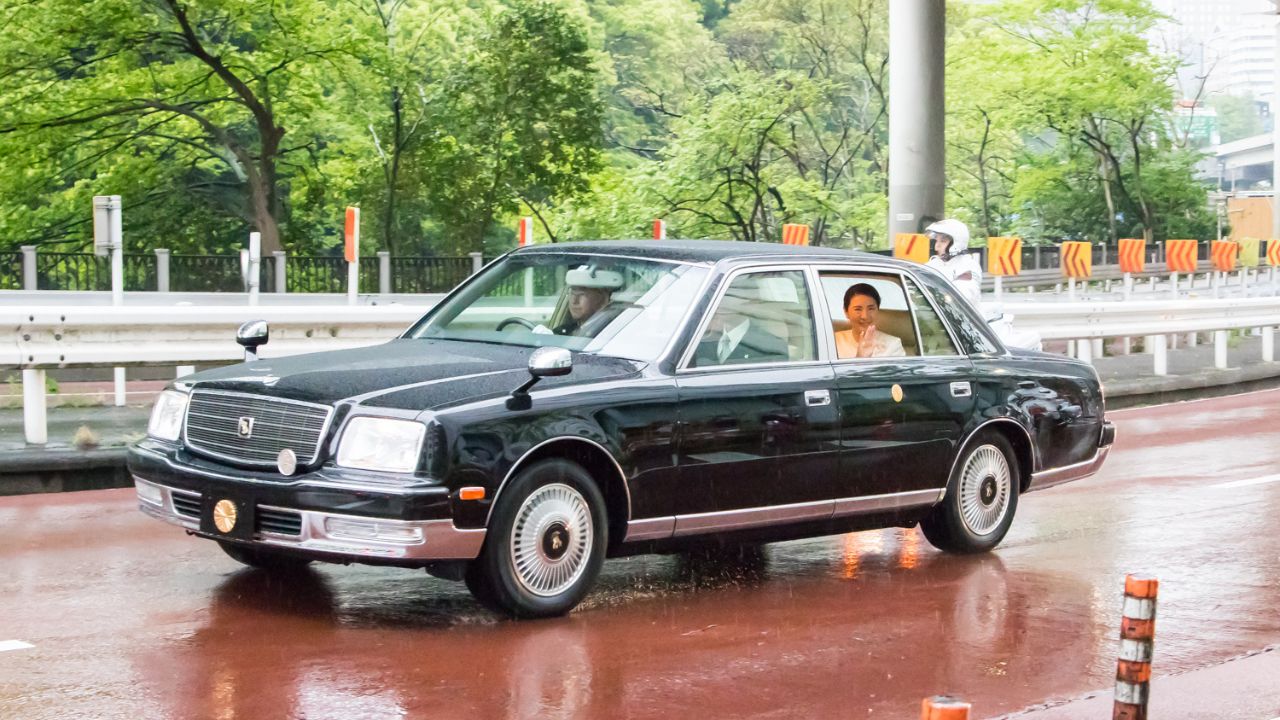
The Toyota Century was released in 1967 and is one of the world’s most outstanding luxury sedans. Since it was sold exclusively in Japan, most foreign VIPs never even knew it existed. In Japan, however, the JDM limo is the preferred mode of transport for important people.
The first-gen 3.0-liter V8 engine provides around 150 horsepower, but the Century was never intended to go fast; it’s just for cruising in style, so smoothness is preferred over raw force. The Century is often seen in formal black with chrome accents, and the interior is as luxurious as you’d expect from its European counterparts.
Datsun Bluebird SSS Coupe

The 610 Datsun Bluebird SSS Coupe is an evolution of the Datsun 510, selling as the Datsun 610 in the States. SSS stands for Super Sport Sedan, although it was available as a two-door coupe.
This generation was beefier and more muscular than its 510 predecessors, and it had a 1.8-liter engine that produced 115 horsepower. The US market never received the SSS and had to make do with a 2.0-liter that churned out 97 horsepower. It still looked great, though.
Isuzu Bellett GT-R

Isuzu never offered the Bellett GT-R in the States. Still, American gearheads can enjoy it in the Gran Turismo video game series, if you’re lucky enough to come across the rare used vehicle. The GT-R was essentially a racing version of the Bellett, fitted with numerous performance upgrades, and was only available as a coupe.
Isuzu only built between 1,069 and 1,400 Bellet GT-Rs, which made them exceptionally rare in the real world. They were powered by a 1.6-liter DOHC engine that produced around 120 horsepower.
Hino Contessa Coupe
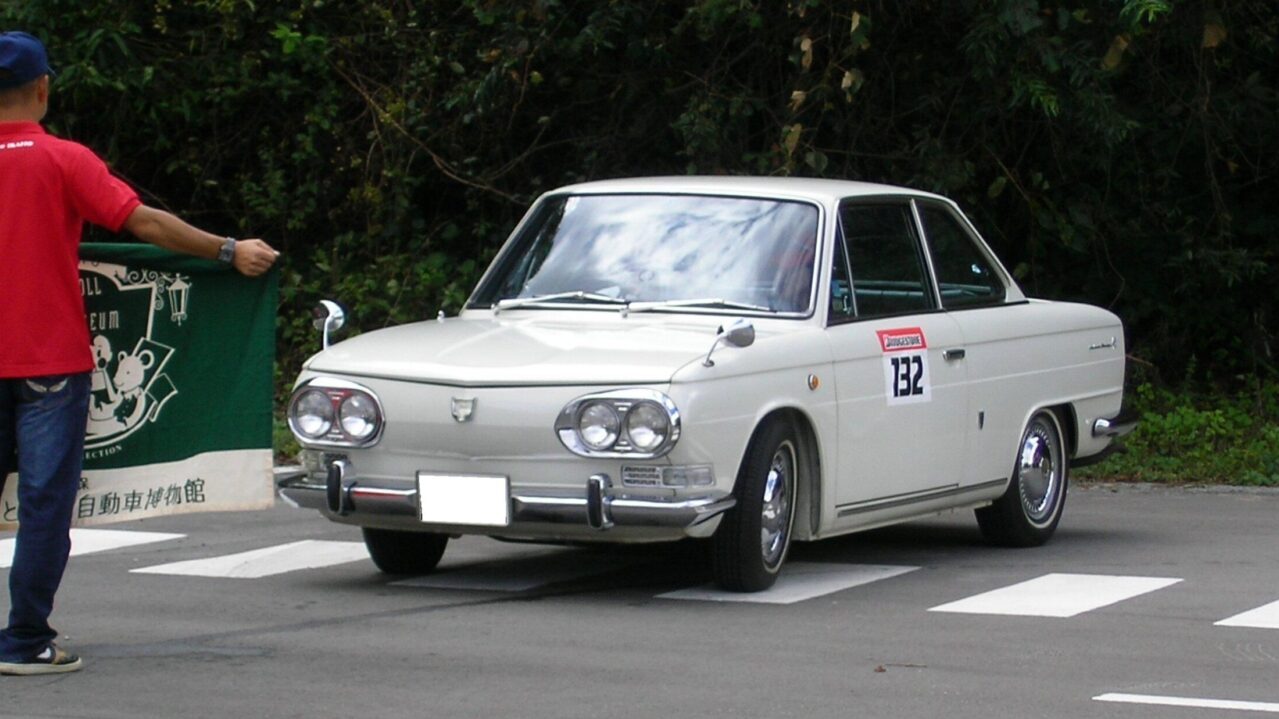
Hino is best known for making large commercial vehicles, but the company did make regular cars for a while following WWII. Well, “regular” is relatively speaking. Initially, Hino was licensed to build a locally adapted version of the Renault 4CV called the Contessa PC Sedan. It looked weird and flopped, so Hino asked Giovanni Michelotti to re-design it and maybe make it more normal.
The second-gen Contessa 1300 PD sedan looked great, and a sportier two-door coupe soon followed it. Hino only built 3,868 Contessa Coupes before new owners, Toyota, shut down production.
Datsun 620 Truck

To this day, the humble, little Datsun 620 truck has a massive fan base. It was an underdog when it first arrived in the market, but it has proven to be a capable workhorse, even if it can’t haul the heavy loads a V8-powered American truck can.
We wouldn’t put it to work, but with its light weight, roughly 110 horsepower SAE gross (about 97 horsepower net in U.S. trim), and huge aftermarket, we’d happily drive this thing all day just for fun. For a truck, it’s ridiculously charming.
The Legacy Lives On

These cars weren’t just ahead of their time; they made the time. In an era dominated by muscle cars and European elegance, Japan quietly built its own brand of cool: light, innovative, and often overlooked.
Today, they’re more than vintage metal. They’re stories on wheels. Proof that Japan’s golden age of car culture didn’t start in the ‘90s, it roared to life decades earlier.
So the next time someone talks JDM and jumps straight to Supras and Skylines, hit them with a Kenmeri, a Cosmo, or a Bellett GT-R. Because of the real roots of Japanese performance? They’re hiding in plain sight.