The most affordable new car you can buy in the United States today will run you somewhere north of $20,000, and that’s before taxes, destination fees, or whatever the dealer decides to call a “market adjustment” that month.
Meanwhile, on the other side of the planet, a fully functional electric vehicle with real technology inside is rolling off assembly lines for around $10,000. You can’t have one. A layered wall of tariffs, regulatory requirements, and bipartisan trade policy has made sure of that, and the story of how that wall got built is worth understanding.
China’s BYD became the world’s largest seller of electric vehicles in 2025, moving 2.26 million battery electric vehicles globally, up nearly 28% from the prior year. To put that in perspective, Tesla’s deliveries fell to 1.64 million that same year, marking a second consecutive annual decline and the biggest yearly drop in the company’s history.
BYD accomplished this without selling a single vehicle to an American retail customer. That’s not a minor footnote. It’s the whole story.
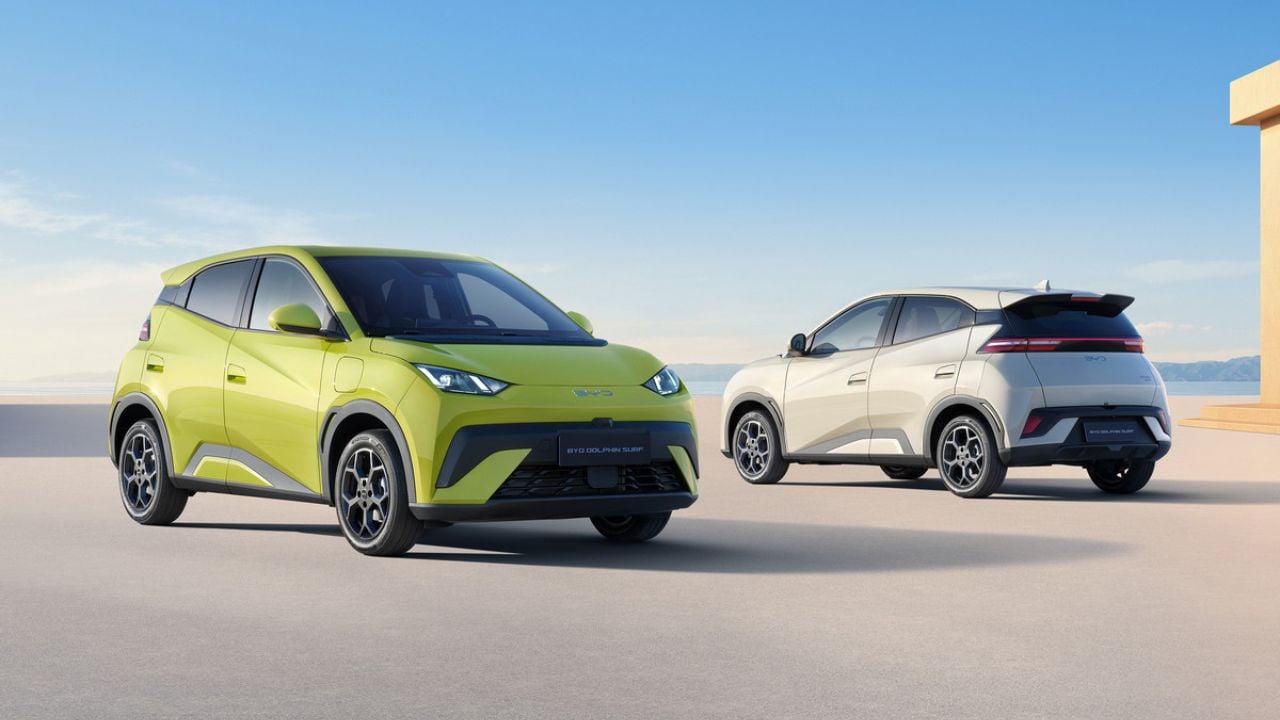
The BYD Seagull, a compact EV that has become something of an international cautionary tale for U.S. automakers, sells in China for the equivalent of $10,000 to $12,000. Automotive outlet InsideEVs drove the Seagull in Suzhou and described the $8,000 car as “scary good,” reporting that it “didn’t feel cheap or bad at all.” For reference, the least expensive EV available at a U.S. dealership hovers around $28,000, and that’s before the federal tax credit was eliminated.
A Cox Automotive survey conducted at the end of 2025 found that 40% of U.S. consumers support Chinese auto brands entering the American market, and 49% rate Chinese vehicles as having very good or excellent value. Dealerships disagree, with only 15% supporting entry, which is perhaps not surprising from an industry that profits from the current price floor.
The gap between what consumers want and what the market offers them is the crux of the debate swirling around Chinese EVs, American trade policy, and who, exactly, is being protected here.
A Tariff Wall Built by Both Parties
The 100% import tariff on Chinese-made electric vehicles was not a Trump invention, and it wasn’t a Biden invention in the strictest sense either. It is, at this point, a bipartisan tradition. The Biden administration raised the Section 301 tariff rate on EVs imported from China from 25% to 100% in 2024, citing what it called unfair trade practices.
The Trump administration retained those tariffs when it took office, and added further restrictions on connected-vehicle software developed in China.
Chinese EVs face a combined tariff rate exceeding 100%, which effectively blocks Chinese EV brands from the American market entirely. The math is straightforward: take a $10,000 Seagull, apply the tariff, and you’re already at $20,000 before shipping, compliance work, dealer margins, or anything else gets factored in.
A €22,990 BYD Dolphin Surf, the European version of the Seagull, would cost over $55,000 after U.S. tariffs are applied. At that price, it competes with vehicles in a completely different segment and loses the only argument it was ever going to win: cost.
The Safety Compliance Problem Is Real, But It’s Complicated
Tariffs are not the only barrier, and proponents of the current policy are right to point to regulatory requirements as a separate issue. American company Caresoft Global purchased a Seagull and shipped it to the U.S. for inspection, and according to Caresoft’s president Terry Woychowski, a former General Motors big-truck chief engineer, BYD’s cars would require modifications and further testing to pass stricter American safety standards.
That is a legitimate concern. NHTSA standards around crash structures, occupant protection, and increasingly, cybersecurity and software, represent a genuine engineering gap that Chinese manufacturers have had little incentive to close since they have never been allowed to sell in the U.S. anyway. The tariff and the certification gap reinforce each other in a cycle: no access means no incentive to certify, and no certification becomes another reason to deny access.
The Chinese government has handed out a minimum of $3.7 billion in subsidies to BYD alone, which is a real factor in how these vehicles are priced and a legitimate grievance for manufacturers competing without equivalent government backing. The counterargument, which rarely gets aired, is that American automakers have benefited from decades of their own favorable policy treatment, including the $7,500 federal EV tax credit that was extended to domestic manufacturers and has since been eliminated.
What the Rest of the World Is Already Doing
While the U.S. debates whether to let Americans buy affordable EVs, most of the rest of the world has moved on. Brands like BYD, XPeng, Nio, and Xiaomi are expanding aggressively in Europe, Southeast Asia, Latin America, and the Middle East, offering affordable models with advanced features including flash-charging batteries and AI-driven systems.
Canada moved in a different direction, cutting tariffs to allow up to 49,000 Chinese-made EVs at a 6.1% rate, giving BYD a partial North American foothold without crossing the U.S. border. That arrangement is worth watching. If Canadian consumers absorb these vehicles without incident and the sky does not fall on the domestic auto industry north of the border, the U.S. policy position becomes harder to justify on purely practical grounds.
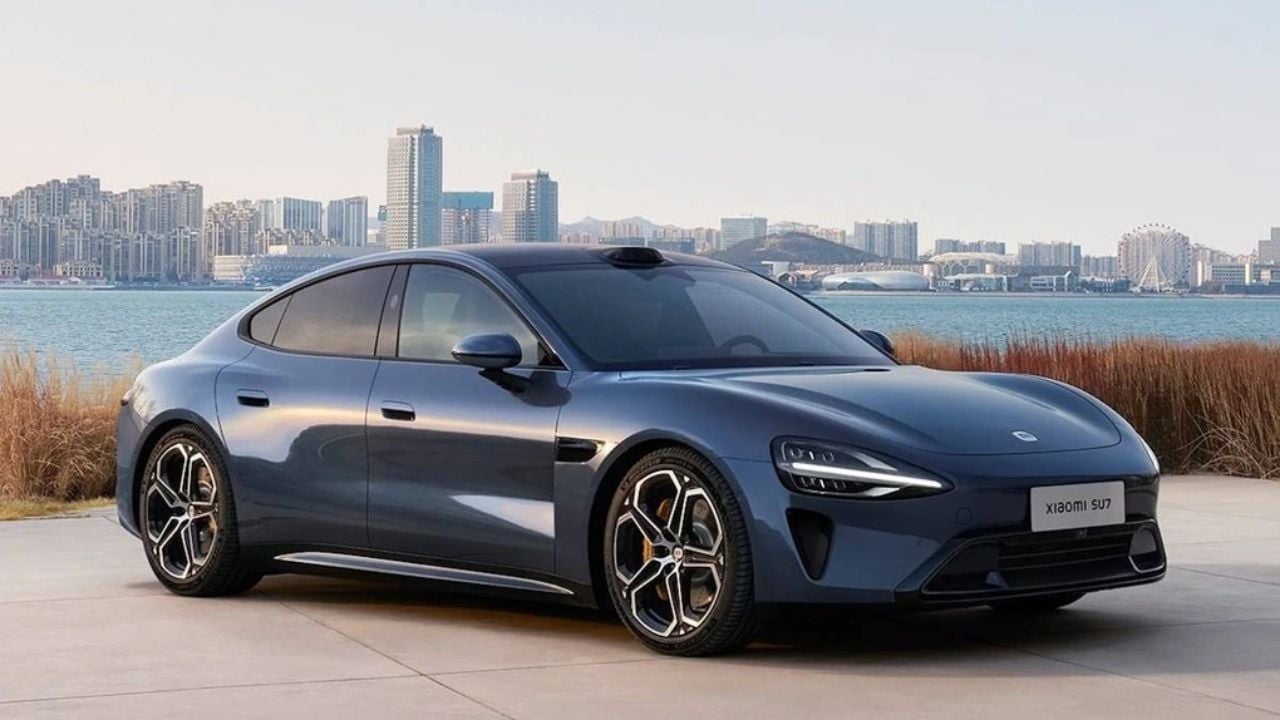
Tech YouTuber Marques Brownlee drove the Xiaomi SU7 Max for two weeks and called it “a $42,000 car that feels like a $75,000 car,” noting cabin technology that makes Western EV infotainment seem dated. The Xiaomi SU7 is not even the budget option. Xiaomi delivered more than 410,000 vehicles in 2025, a remarkable figure for a company that shipped its first car in April 2024.
What This Means for American Car Buyers
The honest answer is that American consumers are paying a premium for protection that the industry may not need indefinitely and the consumer almost certainly did not ask for. The Harris Poll found that 43% of Republicans and 55% of Democrats said they would consider purchasing from a Chinese automaker in a February 2026 study, figures that rose year-over-year for both parties despite escalating trade rhetoric.
The Big Three’s combined global market share fell from roughly 21.4% in 2019 to about 15.7% in 2025, a trend that predates Chinese EVs having any meaningful presence outside their home market. The tariffs have not reversed that slide. They have simply ensured it happens more slowly and at higher cost to domestic consumers.
None of this is to say the answer is simple. National security concerns around connected-vehicle software, supply chain dependencies on Chinese battery components, and the very real displacement of American manufacturing jobs are legitimate policy considerations.
But a policy built primarily around protecting automakers from competition, rather than genuinely protecting consumers or national infrastructure, deserves scrutiny. The $10,000 EV exists. Americans just aren’t allowed to know what they’re missing.