
Mazda’s story reads like an anime where the underdog actually wins. While other manufacturers were busy building refrigerators on wheels or chasing horsepower numbers like teenagers collecting Pokémon cards, Mazda was quietly perfecting the art of making cars that actually talk back to their drivers.
Sure, they’ve had their moments of questionable judgment (looking at you, CX-9 with the V6 that drank gas like a fraternity pledge), but when Mazda gets it right, they create machines that make you remember why you fell in love with driving in the first place.
This isn’t about the cars that sold the most units or impressed the most spreadsheet warriors. This is about the Mazdas that made you take the long way home, the ones that turned your daily commute into a therapy session, and the rare few that could make you grin like an idiot while stuck in traffic.
These are the cars that proved you don’t need 500 horsepower to have 500 times more fun than the guy next to you in his beige crossover.
Crafting the Selection

Selecting these cars required more than checking Wikipedia and calling it a day. We looked for models that embody what makes Mazda special: cars that prioritize the connection between human and machine over quarterly profit margins. We considered real-world driving dynamics, long-term owner satisfaction (the kind that keeps people buying the same car three times), and that indefinable quality that makes you want to drive to nowhere in particular.
Some of these cars defined entire generations of enthusiasts. Others were commercial failures that are now worth more than most people’s houses. What they all share is an ability to remind you that driving doesn’t have to be a chore, it can be the best part of your day.
That left us with 12 exhilarating Mazda that rose above the rest. Or, well, drove above the rest.
Mazda MX-5 Miata (NA)

The first-generation Miata didn’t just save the roadster, it taught an entire generation what “lightweight” actually means. At 2,116 pounds, the NA Miata was a flyweight compared to modern cars. Those pop-up headlights weren’t just cute; they were a throwback design that disappeared industry-wide as pedestrian-impact rules and packaging constraints got stricter.
The magic wasn’t in the 116 horsepower (your lawn mower probably makes more torque), but in how those horses were delivered. The 1.6-liter four-cylinder was smooth as silk pajamas and eager to rev. The five-speed manual had throws shorter than a teenager’s attention span and gates so precise you could shift blindfolded. The steering was so communicative it practically narrated what each tire was doing: “Left front says the road is getting bumpy, right rear is getting a bit loose, but we’re all having a great time back here.”
The suspension setup was brilliant in its simplicity: independent double-wishbones up front and in back, and enough body roll to remind you that physics still exists. It wasn’t the fastest car on the road, but it made 35 mph feel like 85. The NA taught us that happiness per dollar is more important than horsepower per dollar, a lesson most manufacturers are still struggling to understand.
Mazda MX-5 Miata (ND)

After the NC generation made everyone question whether Mazda still understood their own formula (hint: they didn’t), the ND Miata returned like a prodigal son with a better education. Mazda went back to basics: make it lighter, make it prettier, and for the love of all that’s holy, make sure it doesn’t look like it was designed by a committee of accountants.
The ND is actually smaller and lighter than its immediate predecessor, which in today’s world of ever-expanding everything is roughly equivalent to finding a unicorn that also does your taxes. The 2.0-liter Skyactiv engine made 155 hp on 2016–2018 U.S. cars, then 181 hp from 2019 onward, which is enough to make you forget about the good old days when cars had chrome bumpers and point-and-shoot handling.
The chassis strikes that perfect balance between compliance and control. It soaks up road imperfections without making you feel like you’re driving a marshmallow, and the steering provides just enough feedback to keep you informed without beating you up. The six-speed manual is a masterclass in mechanical precision, each shift feels like loading a round into a well-oiled rifle.
Most importantly, the ND retained the original’s ability to make you smile at inappropriate moments. Stuck behind a school bus? Shift into second, feel that engine come alive, and suddenly you’re not late for work, you’re having an adventure.
Mazda RX-7 (FD)

The FD RX-7 was Mazda’s answer to the question, “What if we built a wannabe supercar but forgot to charge supercar prices?” With its sequential twin-turbo 13B rotary engine producing 255 hp, it could run with Porsches and Corvettes while looking better than both. The body was penned by someone who clearly understood that cars should look fast even when parked.
That rotary engine was both the car’s greatest strength and its Achilles’ heel. When it worked, it was pure magic, smooth as butter, eager to rev to the moon, and making sounds that would make a Ferrari owner weep with envy. When it didn’t work (and let’s be honest, it didn’t work a lot), you got to become very familiar with your local Mazda service department and the fine art of apex seal replacement.
The FD’s handling was supernatural. The front-midship engine placement gave it perfect weight distribution, and the suspension was tuned by people who understood that “sporty” doesn’t mean “kidney-crushing.” It could dance through corners with the grace of a prima ballerina and the precision of a Swiss watchmaker. The only problem was keeping the engine running long enough to enjoy it.
Despite its reputation for drinking oil like a thirsty sailor and eating apex seals for breakfast, the FD remains one of the most beloved sports cars ever built. Why? Because when everything worked, driving one felt like controlling barely contained lightning. And sometimes, the promise of perfection is worth the risk of frequent disappointment.
Mazda RX-3

Before the RX-7 made rotary engines famous, the RX-3 was busy proving that Wankel power could work in a relatively affordable package. This compact coupe was among the first Mazda’s attempts at bringing rotary technology to the masses, and it did so with style, character, and the kind of build quality that made Lucas electrical systems look reliable.
Depending on year and market, RX-3s ran Mazda’s early rotaries (often the 10A, and later 12A in some markets). Output varied widely with emissions tuning, but the formula was the same: light weight + rev-happy rotary shove. The result was performance that could surprise much larger, more powerful cars, especially when the road got twisty. The rotary’s smooth power delivery and willingness to rev made it feel more sophisticated than the piston engines of its era.
The styling was pure 1970s Japanese charm: clean lines, round headlights, and proportions that looked right from every angle. It wasn’t trying to be aggressive or intimidating; it was just a pretty car that happened to be quick. The interior was simple but functional, with gauges that actually told you useful information and seats that held you in place during spirited driving.
The RX-3 earned its stripes in motorsport, particularly in touring car racing, where its light weight and balanced handling made it a giant killer. Today, clean examples are rarer than honest politicians and worth about as much, but they remain one of the purest expressions of Mazda’s rotary philosophy.
Mazda RX-8

The RX-8 was Mazda’s attempt to make a rotary-powered car that wouldn’t terrify your insurance agent or your wallet. The result was a four-seater sports coupe with rear-hinged “suicide doors” that made getting in and out feel like boarding a private jet, albeit one with questionable reliability records.
The naturally aspirated 13B rotary made up to 232 hp in higher-output versions (manual-trans cars), with lower-output variants in some trims/years/markets, which was enough to keep up with traffic but not enough to keep up with expectations. The engine loved to rev, it had to, since torque was about as abundant as parking spots at a Cars and Coffee meet. Peak power didn’t arrive until 8,500 rpm, which meant you spent most of your time driving it like you were trying to set a new land speed record just to merge onto the highway.
But here’s the thing: the RX-8 was absolutely brilliant to drive. The chassis was so well-balanced it could probably walk a tightrope, and the steering was more precise than a German engineer’s watch collection. It proved that you could have four doors and still maintain sports car credibility, as long as you were willing to explain to everyone why your “family car” needed premium gas and oil changes every 3,000 miles.
The RX-8’s biggest crime wasn’t being unreliable (though it was), it was being ahead of its time. It was a driver’s car in an era when most people just wanted to get from point A to point B without thinking about apex seals.
Mazda 3 Hatchback (2010s)

The second-generation Mazda 3 hatchback was what happened when Mazda’s designers remembered that economy cars don’t have to look economical. With its flowing lines, aggressive stance, and that distinctive “smiley face” grille, it managed to make every other compact car look like it had been designed by committee, a committee with no imagination and a deep fear of making anyone feel anything.
The 2.5-liter four-cylinder engine was no world-beater at 167 hp, but it was willing and eager, with enough torque to make city driving entertaining. Paired with the available six-speed manual transmission, it felt significantly quicker than the numbers suggested. The real joy was in how the engine delivered its power, smoothly, willingly, and with a note that didn’t make you want to turn up the radio to drown it out.
The chassis was the real revelation. Mazda managed to tune a family car that actually enjoyed being driven hard. The steering was precise enough for autocross duty but light enough for parking lot maneuvers. The suspension absorbed pavement irregularities without making the car feel disconnected from the road. It was comfortable enough for daily duty but engaging enough to make you take the long way home just because.
Inside, the 3 felt more upscale than its price point suggested. The materials were good, the fit and finish was solid, and the driving position was spot-on. It proved that you didn’t need to spend luxury car money to get a car that felt like it was designed by people who actually cared about the details.
Mazda 6
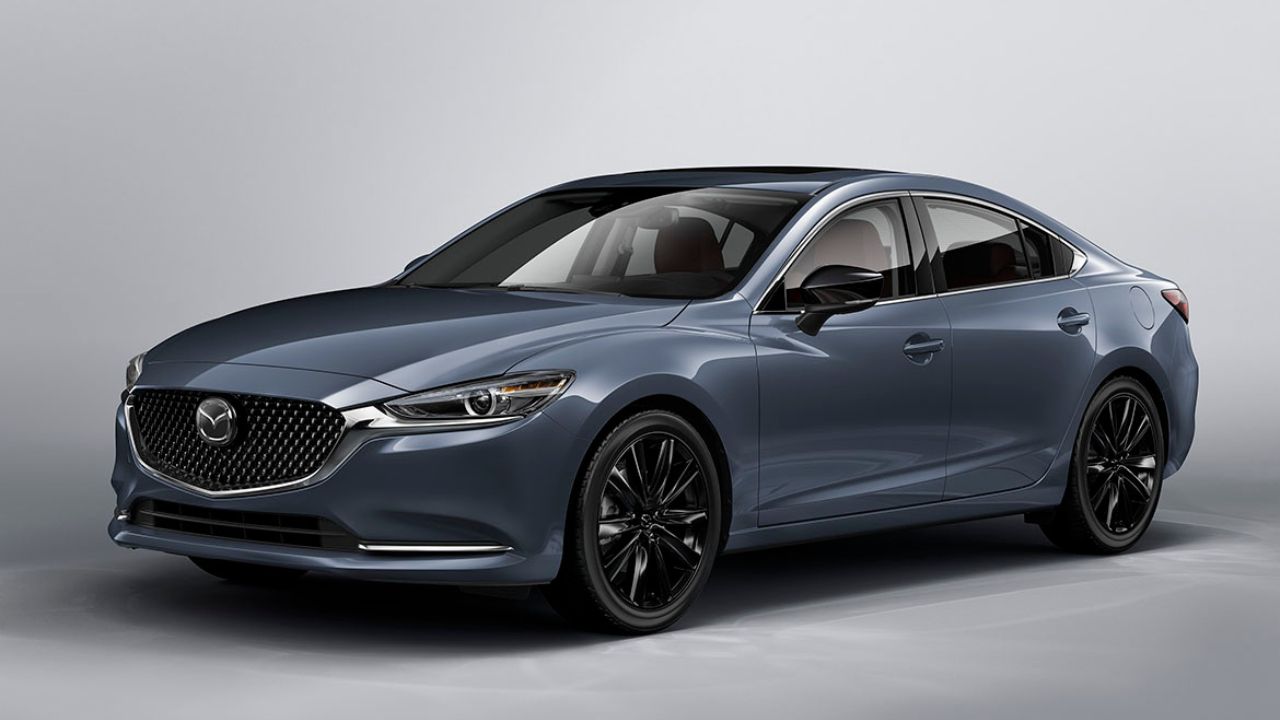
The first-generation Mazda 6 proved that midsize family sedans didn’t have to be rolling sedatives. While the Camry and Accord were busy perfecting the art of automotive beige, Mazda built a sedan that actually wanted to take corners and didn’t apologize for it. The result was a car that could haul your family in comfort but still make you look forward to your commute.
The Mazda6 came with a range of engines, but the 3.0-liter V6 was the sweet spot. With 220 horsepower on tap, it was available with either a five-speed manual or a five-speed automatic, depending on trim and year. The real star, though, was the chassis. Mazda tuned it for engagement rather than isolation, so instead of floating above the road like a luxury barge, you actually felt connected to what the car was doing beneath you.
The steering was precise enough for back-road shenanigans but not so heavy that parking became a CrossFit workout. The suspension struck that rare balance between comfort and control, it soaked up road imperfections without making every turn feel like a ship changing course in heavy seas.
Inside, the 6 felt more upscale than its price suggested, with materials that didn’t immediately scream “rental car” and an interior design that actually showed some thought. It was one of the last midsize sedans that felt like it was designed by people who actually enjoyed driving, rather than focus groups who just wanted cup holders and DVD players.
Mazda RX-4

The RX-4 was Mazda’s attempt to prove that rotary engines weren’t just for sports cars, they could power a proper gentleman’s coupe too. The result was a car that combined the smoothness and sophistication of the rotary powerplant with styling that wouldn’t look out of place in a 1970s James Bond film.
The RX-4 was larger and more luxurious than its RX-3 sibling, with a longer wheelbase that provided more interior space and a more planted feel on the highway. The rotary engine provided smooth, linear power delivery that made the car feel effortlessly quick rather than frantically fast. It was the kind of car you could drive across the country in comfort, then surprise a few Corvette owners at the next stoplight.
The styling was pure 1970s elegance: clean lines, perfect proportions, and just enough chrome to look upscale without being gaudy. The interior featured wood grain accents, comfortable seats, and instrumentation that actually told you useful information about what the car was doing. It was one of the last cars that managed to feel both sporty and luxurious without seeming confused about its identity.
The RX-4 proved that rotary engines could be civilized when they needed to be. It was a gentleman’s express that happened to have one of the most interesting powerplants ever put into a production car. Today, clean examples are rarer than rational political discourse, but they remain one of the most elegant expressions of Mazda’s rotary philosophy.
Mazda Cosmo Sport 110S

The Cosmo Sport was Mazda’s moonshot, their attempt to prove that a small Japanese company could build a world-class sports car using an engine design that most people thought belonged in chainsaws, not automobiles. The result was one of the most beautiful cars ever to emerge from Japan and proof that sometimes the crazy ideas work out just fine.
The 110S looked like it was styled by someone who understood that sports cars should make your pulse quicken just sitting in the driveway. The long hood, low roofline, and delicate details created a silhouette that was both elegant and purposeful. Those slim headlights and careful proportions made it look expensive even when it wasn’t.
Under that gorgeous hood sat Mazda’s first production rotary engine, a twin-rotor unit that made around 110 hp, not earthshaking by today’s standards, but plenty for a car that weighed just 2,072 lb. The rotary’s smooth power delivery and unique sound signature made driving the Cosmo feel like operating a piece of precision machinery rather than just another car.
The Cosmo Sport was more than just a pretty face with an interesting engine: it was Mazda’s declaration that they belonged on the world stage. It proved that innovation and beauty could coexist, and that sometimes the best way forward is to ignore what everyone else is doing and trust your own vision.
Mazda Familia Rotary Coupe
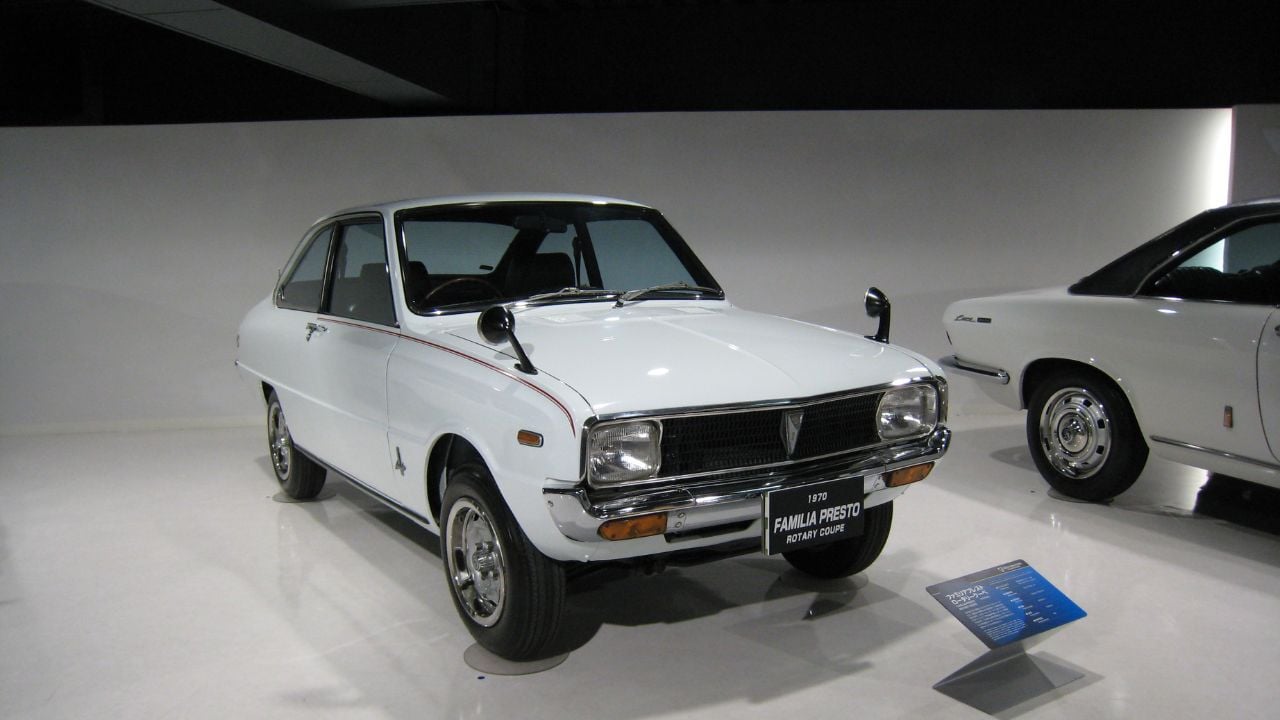
Before the RX-3, before the RX-7, there was the Familia Rotary Coupe: Mazda’s first attempt at putting their revolutionary Wankel engine into an affordable package that regular people could actually buy. The R100, as it was known in some markets, was proof that advanced technology didn’t have to be exotic or expensive to be exciting.
The Familia Rotary looked like a regular economy car that had been touched by some kind of mechanical magic. The exterior styling was clean and simple; no unnecessary ornamentation, just honest lines and pleasing proportions. Under the hood, though, sat Mazda’s twin-rotor 10A engine, making around 100 horsepower in a car that barely weighed 1,800 pounds. The result was performance that could embarrass much more expensive machinery.
The rotary’s smooth power delivery made the Familia feel sophisticated beyond its humble origins. While other economy cars of the era were struggling with rough, underpowered engines, the R100 hummed along with the smoothness of a much more expensive machine. The engine’s willingness to rev and its unique sound made every drive feel special, even if you were just going to the grocery store.
The R100 was significant because it democratized rotary power. It proved that Mazda’s innovative engine technology could work in an affordable, practical package. It was the car that introduced thousands of drivers to the joys of rotary power, many of whom became lifelong Mazda enthusiasts. Today, finding a clean R100 is like finding buried treasure, but it remains one of the most important cars in Mazda’s history.
Mazda Luce R130
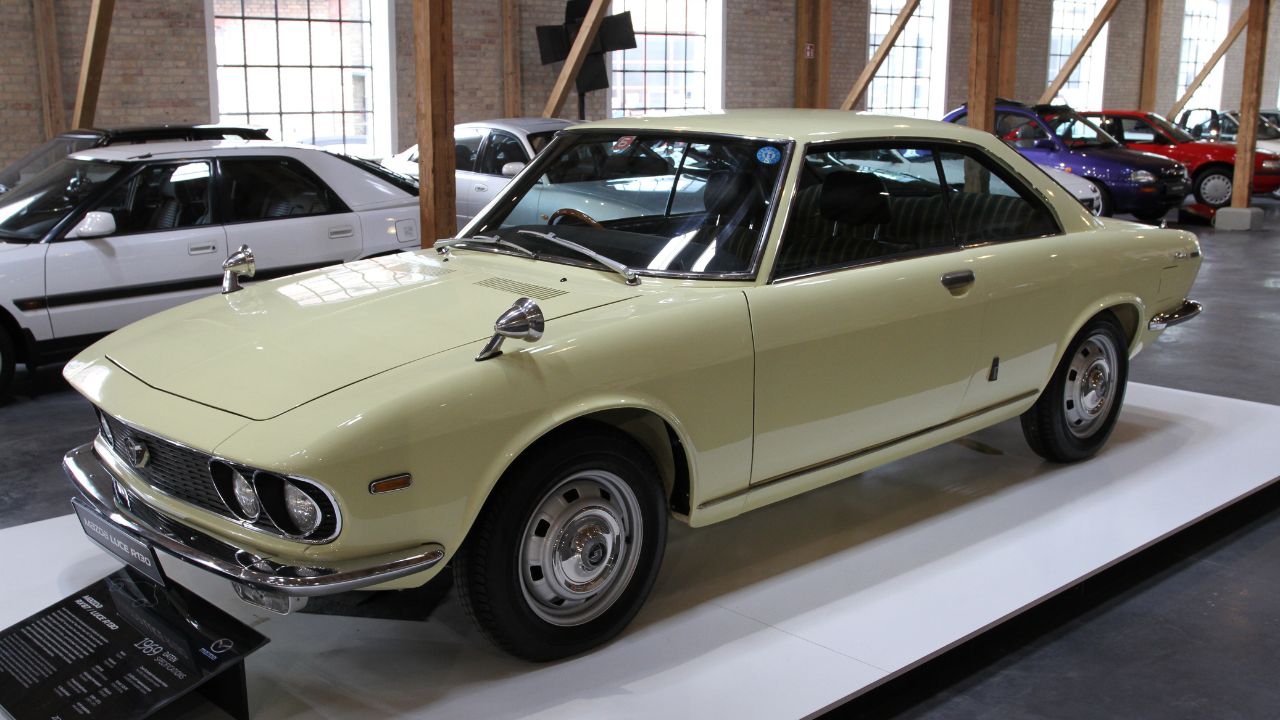
The Luce R130 was what happened when Mazda decided to build a luxury car and skipped their usual design playbook entirely. Instead, they went to Italy and had Bertone, under Giorgetto Giugiaro, style the Luce R130 coupé. The result was one of the most elegant cars to ever come out of Japan, proof that great design doesn’t care about borders, or badges.
Bertone’s influence was obvious from every angle. The R130 had the kind of clean, purposeful lines that Italian designers were famous for, but with Japanese attention to detail and build quality. The proportions were perfect, the details were restrained, and the overall effect was of understated elegance rather than flashy showiness. It looked like a car that would be equally at home at a country club or a film premiere.
The Luce range included piston-engine versions, but the R130 coupé is best known for its 13A rotary layout. The rotary version was the one to have: it provided smooth, sophisticated power delivery that matched the car’s upscale aspirations. The ride was comfortable without being wallowy, and the handling was competent without being aggressive. It was a car for people who appreciated quality and sophistication over raw performance.
The R130 proved that Mazda could play in the luxury segment when they wanted to. It was a car that didn’t need to shout about its credentials, its quality and design spoke for themselves. Today, clean examples are virtually impossible to find, but they remain one of the most beautiful expressions of 1970s automotive design.
Mazda RX-Vision Concept
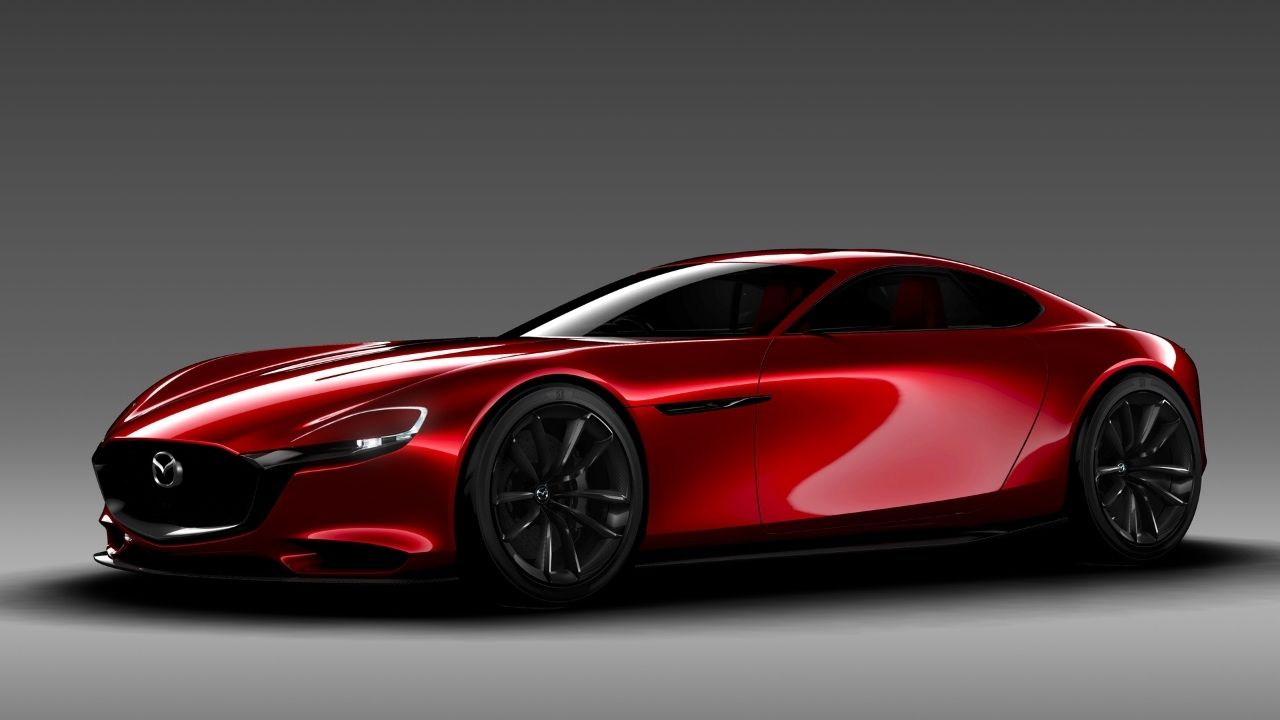
The RX-Vision wasn’t a production car, but it was something arguably more important, it was hope. After years of Mazda insisting that rotary engines were dead and buried, the RX-Vision appeared at the Tokyo Motor Show like a beautiful ghost from the past, whispering promises of a rotary-powered future.
The design was everything an RX-7 successor should be: long hood, short deck, perfect proportions, and lines that looked fast even when standing still. It took everything we loved about the FD RX-7 and updated it for the modern era without losing any of the original’s soul. The interior was minimalist perfection, focusing entirely on the driver and the experience of driving.
Most importantly, the RX-Vision showcased Mazda’s SkyActiv-R rotary engine, a new generation Wankel that promised to solve the reliability and efficiency issues that plagued previous rotary engines. Whether Mazda can actually deliver on those promises remains to be seen, but the concept proved that the rotary dream isn’t dead, just sleeping.
The RX-Vision represents everything that makes Mazda special: the willingness to be different, the commitment to driver engagement, and the understanding that some things are worth preserving simply because they make the world a more interesting place. It’s a concept car, but it’s also a promise: Mazda hasn’t forgotten what made them special, and they haven’t given up on the idea that cars should stir emotions as well as get you places.
Why Mazda Still Wins Hearts

In an automotive landscape increasingly dominated by crossovers that prioritize cupholder count over cornering ability, Mazda remains one of the few manufacturers that still believes cars should be engaging to drive. They’ve never been the biggest, the fastest, or the cheapest, but they’ve consistently been the most fun to drive per dollar spent.
These cars represent more than just transportation: they’re mechanical expressions of the belief that the journey is just as important as the destination. They’re proof that you don’t need to spend supercar money to have supercar fun, and that sometimes the most memorable drives happen in cars that most people would consider “ordinary.”
If you’ve never experienced the particular joy of a well-sorted Mazda, you owe it to yourself to find one and take it for a drive. Just be warned: once you understand what “Zoom-Zoom” really means, every other car will feel a little bit disappointing. And that’s a risk worth taking.