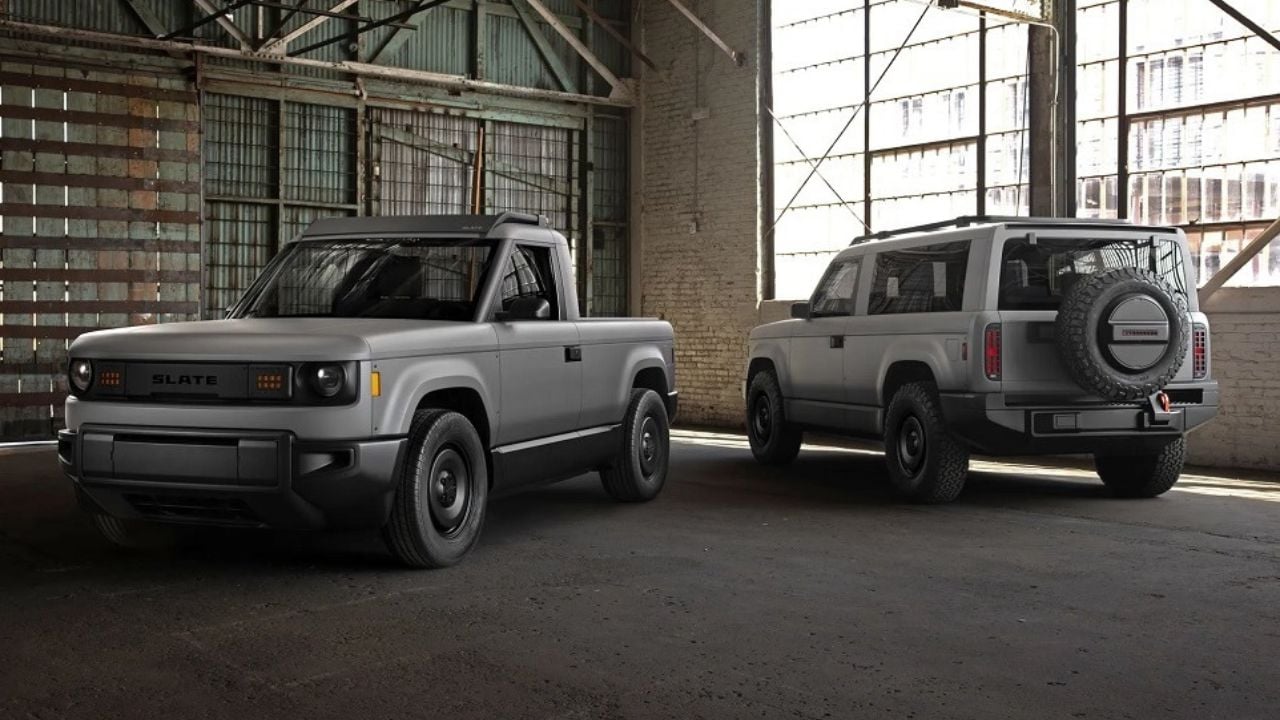
The electric truck market has spent years proving it can be expensive, complicated, and occasionally on fire. Slate Auto wants to try the opposite. The Michigan-based startup, backed by Jeff Bezos and carrying more than $1.4 billion in total funding, is now weeks away from pulling back the curtain on final pricing for its compact electric pickup, with the official number dropping on June 24. What CEO Peter Faricy has shared in the meantime is enough to make even the most skeptical gearhead pay attention.
The company has confirmed that deliveries will begin in the fourth quarter of 2026, with three body configurations available: a two-door pickup, a fastback, and a square-back SUV variant. The base truck is a rear-wheel-drive two-door, and it ships with fewer than 800 parts total compared to the 3,000 to 4,000 components found in a conventional pickup. That simplicity is not a bug. It is the entire business model, and it extends to the price tag.
The startup still aims to launch as the most affordable electric pickup on the market, with a target price somewhere in the mid-$20,000 range. That figure comes with a caveat, as supplier negotiations are reportedly still ongoing. The original goal was a sub-$20,000 entry price, but that math depended on the federal EV tax credit, which was eliminated.
Slate has since held the line in public statements, though the difference between “mid-$20s” and a fully optioned truck with a larger battery pack and an SUV conversion kit is a gap worth watching.
Faricy came to Slate after a decade-plus run at Amazon Marketplace and a stint as CEO of solar company SunPower, and he took over from longtime Chrysler executive Chris Barman, who remains with the company as President of Vehicles. That Amazon background is not incidental. The whole architecture of Slate, from its reservation process to its modular accessory ecosystem, reads like it was built by people who understand how to sell a platform, not just a product.
A Deliberately Stripped-Down Vehicle That Actually Makes Sense
Slate is positioning the truck around a deliberately analog experience: manual windows, minimal electronics, and a composite body that skips traditional paint entirely. The platform can be reconfigured with bolt-on panels to create an SUV-like body, which is part of how Slate keeps both development and manufacturing costs down.
This is either going to resonate strongly with buyers who are tired of paying for screens they do not use, or it will confuse people who have never bought a vehicle without at least a backup camera standard. The market will sort that out quickly enough.
Buyers looking for something closer to a fully equipped vehicle can shop from nearly 100 exterior wrap options in lieu of paint, add rear seats, or opt for an SUV roof conversion. Slate has partnered with RepairPal to support service from day one at more than 4,000 locations nationwide, sidestepping the need to build a proprietary service network from the ground up.
That is a smarter call than many EV startups have made on their way to flaming out.
Two Battery Options, Modest Range, and a Clear Target Buyer
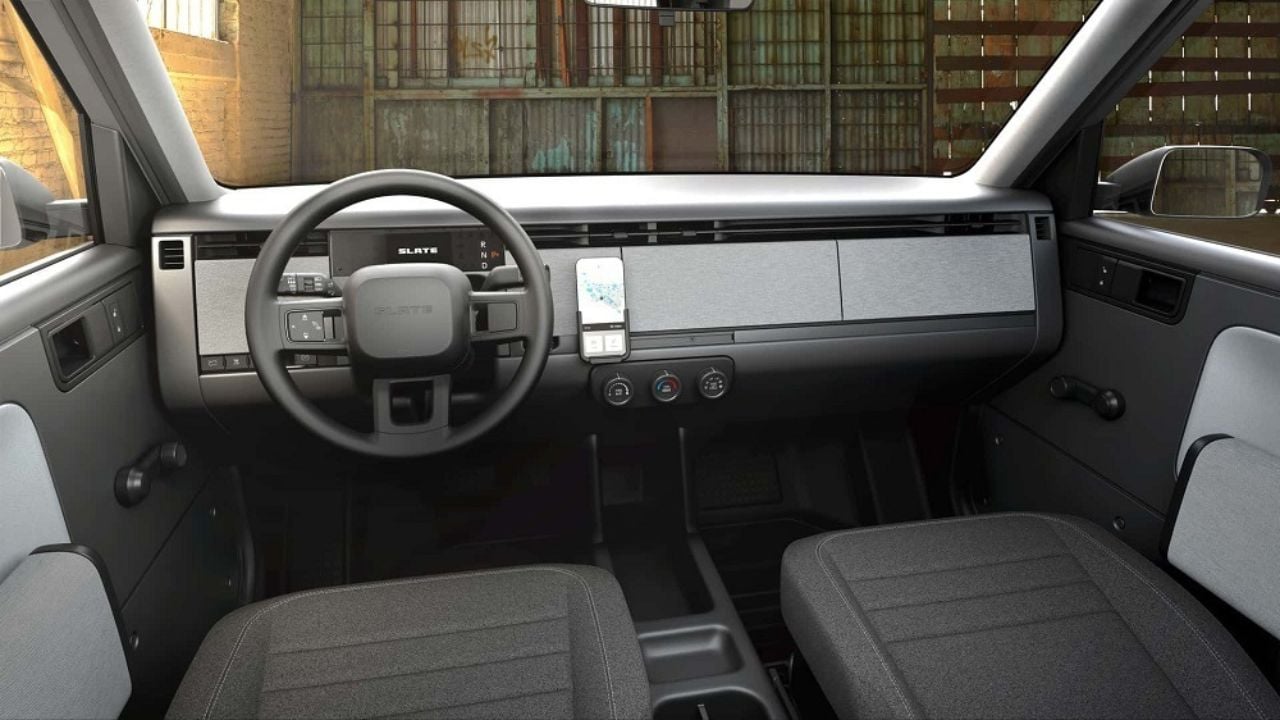
The Slate truck operates with a single electric motor and offers 150 miles of range on the standard battery pack, or 240 miles with the optional larger pack. The standard pack is a 53 kWh unit, while the upgrade extends to 84 kWh.
Those are not numbers that will worry anyone shopping for a long-distance cruiser, but Slate’s compact proportions and light construction are designed to make the most of what is there. A DC fast charge from 20 to 80 percent takes roughly 30 minutes.
For context, the Slate truck is 25 inches shorter than the Ford Maverick, seats two in its base configuration, and is rated for 1,000 pounds of towing, compared to the Maverick’s 2,000 to 4,000 pounds depending on configuration. Buyers expecting a Silverado with a smaller sticker are going to be disappointed. Buyers who want a lightweight, cheap-to-run urban and light-duty truck with an unusual amount of personality might find it a genuinely compelling proposition.
The Accessories Question Is the Real Story
Here is where things get interesting, and a little familiar. Slate’s goal has been to build an inexpensive electric pickup that owners can transform with an app and a wrench. CEO Faricy has described it as “mass customization,” which is a polished way of saying the base vehicle is a blank canvas and the company intends to sell you the paint. Key investor
Jeff Bezos did not get where he is by leaving money on the table, and it is easy to imagine accessory prices escalating like ordering from a menu without looking at the right-hand column.
The accessories include wraps, rear seat kits, SUV roof conversions, and a growing catalog of third-party add-ons. The company has confirmed that solar panels will be an option, 3D-printed accessories can be used, and buyers can configure the truck to be pet-friendly.
There is no dealer markup, and the price is the price. That last point alone puts Slate ahead of a meaningful portion of the industry before it has delivered a single production vehicle.
What Happens June 24 Will Tell Us Everything
The reservation list already stands at over 150,000 units, which is a meaningful number for a company that has not yet put a production vehicle in a customer’s hands. Assembly will take place at a 1.4 million-square-foot former printing plant in Warsaw, Indiana, with Slate expecting to bring more than 2,000 jobs to the area. Total investment in the facility is expected to reach approximately $400 million.
The June 24 reveal will settle the questions that matter most: final pricing, confirmed range figures, and exactly what it costs to turn a stripped pickup into something resembling a daily driver. If the number lands where Slate says it will, the company will have accomplished something the rest of the EV industry largely gave up on, which is building an affordable electric truck for people who actually need a truck, not a status symbol with a frunk.