
Some sports cars don’t just thrill on the road—they hold their value surprisingly well, and in some cases, even appreciate. Now, we’re not saying cars are great investments (they’re usually not).
But if you love driving something special and tend to swap rides every few years, it makes sense to pick one that might return a little cash when it’s time to move on.
These cars aren’t just fun—they’re smart picks for enthusiasts who want performance and potential resale value, without treating their car like a savings bond, tucked away and untouched for years.
Why These Cars Made the Cut
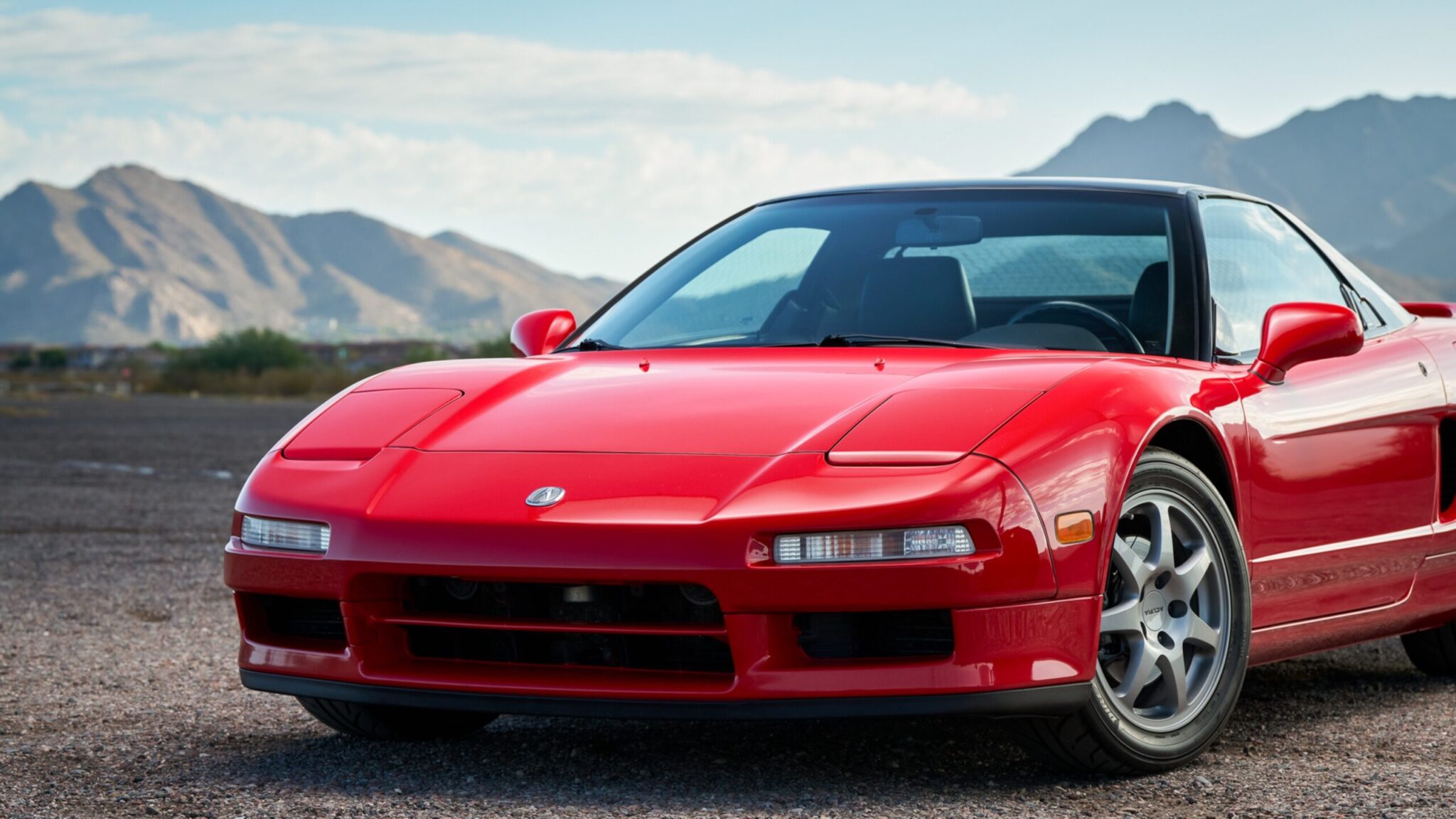
This isn’t your typical list of garage queens and six-figure unicorns. We picked these cars because they’re underappreciated, relatively accessible to buy, and—most importantly—fun to drive. Sure, some ultra-rare exotics gain value sitting in climate-controlled vaults. But what’s the point if you can’t take them to Cars & Coffee or enjoy a weekend cruise?
We focused on sports cars that real people can still afford (mostly under six figures), and that have the potential to grow in value, without sacrificing the joy of actually driving them. That means no Ferraris, no speculative hypercars, and no investment advice better suited for Wall Street.
Before You Fire Up the Email Machine…(Yes, We Still Love the Classics)

And before anyone writes in—yes, we love the classics. Muscle cars from the ’60s and rare Italian exotics definitely deserve a place in the investment conversation. But this list isn’t about blue-chip collectibles or Barrett-Jackson unicorns. It’s about cars you can still find, still drive, and maybe—even today—still afford.
Remember: most cars aren’t great long-term investments. But if one makes you grin and might appreciate? That’s a rare kind of win.
Honda S2000

The Honda S2000 is an all-time great that’s been steadily climbing in value since its discontinuation in 2009. First launched in 1999, it came with the screaming F20C and later F22C1 inline-four engines, producing up to 239 horsepower and revving all the way to 9,000 rpm. Paired with a crisp six-speed manual and near-perfect 50:50 weight distribution, the S2000 delivered a driving experience that was sharp, responsive, and endlessly rewarding.
Light on tech but heavy on feel, every throttle input, gear change, and steering movement felt immediate and intentional.
While it was mechanical where it counted, we loved the little modern touches—the digital tach dancing across the dash, the Formula 1-inspired push-button start, and the hideaway radio that let the engine do most of the talking. Whether you were carving corners or chasing the redline, the S2000 made every drive feel like an event.
It wasn’t just a car for purists—it was a pop culture icon, earning screen time in The Fast and the Furious, Gran Turismo, and the daydreams of every JDM-obsessed kid of the 2000s.
Honda S2000: Financial Snapshot

According to Classic.com, the average sale price of an S2000 is around $33,000. However, prices can soar for pristine examples, especially the rare 2009 S2000 CR (Club Racer). One ultra-low-mileage CR sold for a staggering $200,000 on Bring a Trailer in 2022. Only 699 CRs were built for the U.S. market, and their rarity makes them highly sought-after by collectors.
In other words, the S2000 isn’t just an incredible drive—it’s also proving to be an excellent investment.
Autozam AZ-1

Tiny but mighty, the mid-engined Autozam AZ-1 is one of the quirkiest cars on this list. This gullwing-doored Kei car features a turbocharged 657 cc inline-three engine producing 64 hp, and it weighs just 1,587 lbs, making it a delight to drive.
Initially developed by Suzuki and later brought to market by Mazda under the Autozam brand, the AZ-1 was produced between 1992 and 1994, with only 4,392 units built. Its unique design and rarity have contributed to its cult status among JDM enthusiasts.
Autozam AZ-1: Financial Snapshot

- Average Sale Price: Approximately $21,000.
- Recent High Sale: A 1993 Autozam AZ-1 sold for $40,500 in November 2024.
- Typical Price Range: Pristine, low-mileage examples often sell between $25,000 and $35,000
Acura Integra Type R

A classic rising in value yearly is the iconic 1992-2001 Honda/Acura Integra Type R, first sold in Japan as the Integra Type R in 1995. Honda worked hard to dramatically tune the Integra, fitting it with a new and tuned version of the B18C engine that produced 197 hp in Japan and 195 hp in the United States.
Honda also strengthened the Integra Type R chassis while reducing its weight to make it more agile in the corners. The new Type R had a rev limit from 8,500-8,600 rpm and several changes to the car’s design, such as the new rear wing and front lip spoiler.
The changes resulted in what many still believe is one of the best front-wheel drive cars of all time, and its superb handling received substantial critical acclaim from the motoring press.
Acura Integra Type R: Financial Snapshot

- Average Sale Price: Approximately $23k for 3rd-generation models (1996–2001).
- Typical Market Range: Clean, driver-quality examples sell between $20,000 and $40,000, depending on mileage and condition.
- Record Auction Sale: A 1997 Integra Type R with only 6,200 miles sold for $151,200 at the Amelia Island auction in 2023, setting a new benchmark for the model.
Dodge Viper SR I (1992–1995)

If any car didn’t need an introduction, it’s the Dodge Viper. The first-generation SR I, launched in 1991 and produced until 1995, quickly earned a reputation as one of the rawest and most unfiltered sports cars ever built. Under the hood was an 8.0-liter, odd-firing V10, developed with the help of Lamborghini, which cranked out 400 horsepower and 465 lb-ft of torque, figures that bordered on outrageous at the time.
Creature comforts were almost nonexistent. The Viper had no airbags, no exterior door handles, a canvas roof, and vinyl windows with zippers. You got lumbar support, a clock, and an AM/FM cassette player, but forget about air conditioning. And yet, that Spartan interior didn’t matter. What mattered was the brutal performance and the Viper’s reputation for biting back.
What it lacked in refinement, it more than made up for in intimidation. The Viper wasn’t just fast, it was feral. No traction control, no ABS, and no apologies. But that was the appeal. The Viper was a modern car with an analog soul—the custom soft-tail chopper of the sports car world.
When it debuted, it felt fresh but also eerily familiar, like a spiritual successor to the Shelby Cobra, and with the later GTS coupe, a modern reincarnation of the Daytona Coupe. It wasn’t just a performance car but a raw, musclebound throwback to a time when driving meant wrestling something wild and untamed into submission.
And if you loved cars and had a pulse, in 1991, you wanted a Viper. The good news? Thanks to depreciation, career progression, and maybe a few smart investments, you just might be able to own one today.
Dodge Viper SR I (1992–1995): Financial Snapshot

- Average Sale Price: Approximately $48k for first-generation models.
- Typical Market Range: Clean, driver-quality examples sell between $30,000 and $60,000, depending on mileage and condition.
- Record Auction Sale: A 1992 Dodge Viper RT/10 sold for $170,000 in January 2023, setting a new benchmark for the model.
Pontiac Fiero GT

The Pontiac Fiero launched with more ambition than execution. However, by 1985, the GT version finally delivered on its promise as a mid-engine sports car. With sleek fastback styling, V6 power, and sharper handling, the Fiero finally found its stride. By 1988, it had become the car Pontiac should’ve built.
Why 1988 Was the Fiero’s Finest Hour:
- Suspension Overhaul: GM finally gave the Fiero a redesigned, Lotus-inspired suspension that transformed its handling and ride quality.
- Better Brakes: Vented discs at all four corners made stopping power match the car’s sporty ambitions.
Sadly, GM canceled the Fiero just as it hit its peak. Fewer than 7,000 GTs were built in 1988, and only about 3,700 of these had the desirable 5-speed manual transmission. Rarer still, just 614 GTs were equipped with factory T-tops.
If you’re after a quirky, fun-to-drive car that’s becoming increasingly collectible, an ’88 Fiero GT—especially a 5-speed T-top—is one you won’t see every day. And chances are, you won’t lose money owning it either.
Pontiac Fiero GT: Financial Snapshot

Yes, the investment potential of clean 1985–1988 Pontiac Fiero GT models is real. Recent market data supports a valuation range of $15,000–$25,000 for well-maintained examples.
- A 1985 Fiero GT with just 941 miles was listed for $25,000, reflecting strong demand for low-mileage survivors.
- A 1988 Fiero GT with just 22 miles sold for over $40,000 at Mecum’s Kissimmee 2025 auction, setting a model record.
Bonus Round: Don’t Sleep on the Z06

Okay, so it didn’t quite fit our criteria—maybe it’s a little too popular or a little too expected—but we’d be remiss not to shout out the C5 and C6 Corvette Z06.
These cars offer serious bang for your buck, delivering performance that rivals the supercars we drooled over in the ’80s and ’90s, at a fraction of the price. With a lightweight chassis, track-focused engineering, and naturally aspirated V8s that absolutely sing, the Z06 is a legend in its own right.
Prices for clean C5 Z06s (2001–2004) and early C6 Z06s (2006–2013) are still within reach, and they deliver a driving experience that punches well above their price point. Whether you’re chasing lap times or want to feel like you finally made it into your childhood poster car, a Z06 gets you there without draining your retirement account.
Is it underappreciated? Not exactly. But value-wise? It’s a steal.
Drive It Like You Might Sell It for More Later

Whether it’s the scream of VTEC, the rumble of a V10, or gullwing doors on a Kei car that barely hits 60, these sports cars aren’t just a joy to drive—they’re also savvy picks for the enthusiast who wants their thrills with a side of financial upside.
You’re not buying stocks. You’re buying stories, joyrides, and maybe, just maybe, a little future payday.
So take the scenic route. Show up to the meet. Smile every time you downshift. Because if you picked right, you won’t just enjoy it now—someone else might pay you handsomely to enjoy it next.