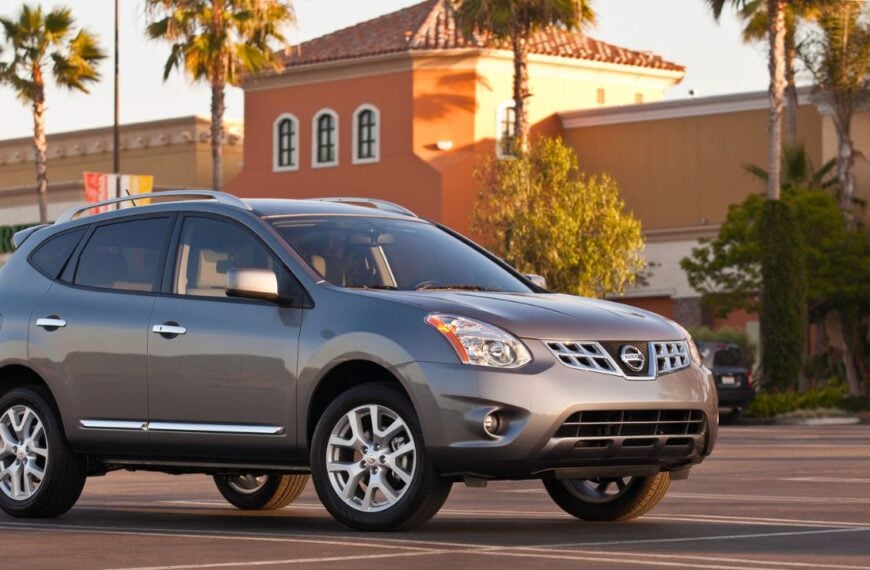
A new compact SUV can move into the low-to-mid $30,000 range quickly once destination charges, processing fees, taxes, and options enter the picture. Honda lists the 2026 CR-V from $30,920 before its $1,450 destination charge, while Toyota lists the 2026 RAV4 Hybrid from $31,900 before its dealer processing and handling fee.
That creates a used-car argument worth taking seriously. For similar money, a careful shopper can find a luxury sedan that originally cost far more than a mainstream compact crossover.
The trick is not pretending these cars are cheaper to maintain than a CR-V or RAV4. Depreciation can make the purchase price tempting, but tires, brakes, suspension work, electronics, hybrid-system checks, and neglected service can still bite.
The appeal is comfort, power, and cabin richness. The right used luxury sedan can bring leather-trimmed seating, quiet highway manners, strong V6 or V8 power, premium audio, heated and ventilated seats, and long-distance comfort that many compact SUVs cannot match.
Lexus ES 350

The 2019 to 2022 Lexus ES 350 is the safest luxury-sedan argument here for buyers who want comfort without taking a huge ownership gamble. The 2020 ES 350 uses a 3.5-liter V6 rated at 302 hp, giving it far stronger passing power than most compact SUVs in this price conversation.
KBB estimated private-party values for the 2020 ES 350 Sedan 4D from about $23,000 to $26,300 in late May 2026, depending on condition. That puts many examples in the same broad budget conversation as a new compact SUV once fees and options are included.
The ES is not a sport sedan, and it does not need to be. Its strengths are a quiet cabin, comfortable seats, smooth V6 power, and Lexus ownership logic. For commuters and highway drivers, it delivers the calm, polished daily experience that small crossovers often struggle to match.
Because the headline promises leather, shoppers need to choose carefully. Lower ES trims may use Lexus’ NuLuxe synthetic upholstery, while Luxury and Ultra Luxury trims are the better targets for buyers who specifically want real leather.
Lexus LS 460

The 2015 to 2016 Lexus LS 460 gives buyers true flagship luxury for less than many new compact SUVs. KBB lists the 2016 LS 460 Sedan 4D around the low-$20,000 range in national Fair Purchase Price, while the car originally sat in a completely different luxury class.
The hardware still feels rich. The LS 460 uses a 4.6-liter V8 rated at 386 hp with an eight-speed automatic, and the driving experience is built around quietness, smoothness, and long-distance ease rather than sport-sedan aggression.
This is the car for buyers who want a real luxury sedan instead of a loaded mainstream model. The LS brings large seats, a hushed cabin, a soft ride, rich materials, and the kind of relaxed V8 personality that makes highway miles feel expensive in the best way.
Age and maintenance history matter more than the badge. Suspension components, electronics, tires, brakes, fluid history, and previous repair quality all need close inspection. A clean LS 460 can feel special every day, but a neglected one can make a cheap purchase price disappear quickly.
Genesis G80

The 2017 to 2020 Genesis G80 is one of the strongest used luxury bargains in this group. The 2019 lineup ranged from the 311-hp 3.8-liter V6 to the 365-hp 3.3-liter twin-turbo V6 and the 420-hp 5.0-liter V8.
KBB pricing for the 2019 G80 sits roughly around the high teens to low $20,000s depending on trim, condition, and pricing metric, with the 3.3T Sport typically landing higher than the 3.8. That is a lot of original luxury-car substance for mainstream new-car money.
The G80 works because it does not feel like a lightly upgraded family sedan. It offers a quiet ride, strong cabin isolation, leather seating, available all-wheel drive, and a long list of comfort features. The 3.8 is the sensible version, the 3.3T Sport brings more response, and the 5.0 Ultimate adds V8 character.
Depreciation is the hook, but condition is still the filter. Buyers should check tire quality, brake wear, service records, infotainment function, and whether the car has been maintained like a luxury sedan rather than treated like a cheap used bargain.
Lincoln Continental

The 2017 to 2020 Lincoln Continental is the American comfort pick. It makes the most sense here in Reserve or Black Label form, especially when equipped with the 3.0-liter twin-turbo V6 that produced 400 hp and 400 lb-ft of torque with all-wheel drive.
KBB lists 2018 Continental pricing from the mid-teens for lower trims to the low-to-mid $20,000s for Black Label models, depending on condition and pricing metric. That gives shoppers a path into a large, quiet luxury sedan for less than many new compact SUVs.
The Continental feels different from the German sedans in this group. It prioritizes cabin space, quietness, large seats, and relaxed highway confidence over sharp handling. The available 30-way Perfect Position front seats are a major reason to shop carefully for the right car.
The trim matters because the headline promise depends on equipment. Higher Continental trims bring the stronger leather and interior presentation that fit this article best. Buyers should inspect electronics, seat motors, climate controls, suspension wear, and all-wheel-drive service history before getting seduced by the price.
Cadillac CT6

The 2017 to 2020 Cadillac CT6 is the biggest sedan here in attitude. It gives used buyers size, technology, and presence without the usual German badge pricing.
The practical target is the 3.6-liter V6, not the rare high-output versions that can move outside the clean value case. Edmunds lists the 2019 CT6 Premium Luxury with a 3.6-liter V6 rated at 335 hp and 284 lb-ft of torque, paired with all-wheel drive.
KBB shows the 2019 CT6 3.6 Luxury Sedan 4D with a current resale value around the low $20,000s in late May 2026. Premium Luxury trims can cost more, but they are also the better place to find the features that make this article work: nicer leather, stronger audio, more driver-assistance equipment, and a richer cabin.
Buyers should look closely at service records, wheel condition, suspension behavior, electronic features, and evidence of accident repairs. A clean CT6 gives shoppers a large luxury-sedan experience at a price that now looks surprisingly approachable, but a rough one can become expensive fast.
Acura RLX Sport Hybrid

The 2018 to 2020 Acura RLX Sport Hybrid is the sleeper of this group. It was expensive and easy to overlook when new, which makes it more interesting as a used buy.
KBB lists the 2018 RLX Sport Hybrid SH-AWD Sedan 4D around a $21,500 national Fair Purchase Price, while Acura rated the system at 377 hp. The setup combines a 3.5-liter V6, hybrid assistance, and Super Handling All-Wheel Drive, giving the RLX strong acceleration with a very understated personality.
The RLX does not shout for attention. It offers a comfortable cabin, quiet highway manners, standard all-wheel-drive hybrid performance, and a premium feel without the obvious badge pull of BMW, Mercedes, or Lexus. That lack of attention is exactly why used values can look appealing.
It avoids some of the repair-anxiety reputation attached to older German luxury sedans, but it is not a simple Accord. Buyers should confirm hybrid-system condition, tire quality, brake wear, electronic functions, and complete service history before treating one as a bargain.
BMW 540i

The 2017 to 2020 BMW 540i is the driver’s choice among the traditional midsize luxury sedans here. Edmunds lists the 2018 540i with a 3.0-liter turbocharged inline-six rated at 335 hp and 332 lb-ft of torque, paired with a refined eight-speed automatic.
KBB lists the 2018 540i Sedan 4D around the low $20,000s in national Fair Purchase Price, with the 540i xDrive slightly higher. That puts a smooth, quick, rear-drive or all-wheel-drive luxury sedan in the same general budget conversation as many new compact SUVs.
The 540i gives buyers something most small crossovers cannot: real highway punch, a quiet cabin, balanced handling, and the smoothness of BMW’s turbocharged inline-six. It feels polished without needing to be an M car.
It is also one of the cars here where the wrong example can punish a buyer. Service history matters, and shoppers should check for oil leaks, coolant-system work, brake condition, tire quality, suspension wear, and whether expensive options still function properly. Buyers who want real leather should also verify the original window sticker or trim/options instead of assuming every 540i has the same upholstery.
Used Luxury Sedans Still Make a Strong Case

A compact SUV gives buyers practicality, a higher seating position, flexible cargo space, and the security of a new warranty. Those strengths are real, and they explain why so many shoppers start there.
Used luxury sedans offer a different kind of value. They can make the same budget feel richer through quieter cabins, stronger engines, better seats, smoother highway manners, and interiors that were built for buyers spending far more money when the cars were new.
The right choice depends on priorities. A CR-V or RAV4 is easier to justify for warranty coverage, cargo space, ground clearance, and simple ownership. A clean ES, LS, G80, Continental, CT6, RLX, or 540i makes more sense for buyers who care more about comfort, power, and long-distance refinement.
The smart move is not buying the cheapest luxury badge available. It is buying the cleanest example, with service records, matching tires, working electronics, smooth drivetrain behavior, and no signs of neglected maintenance. Get that right, and a used luxury sedan can make a new compact SUV feel basic.