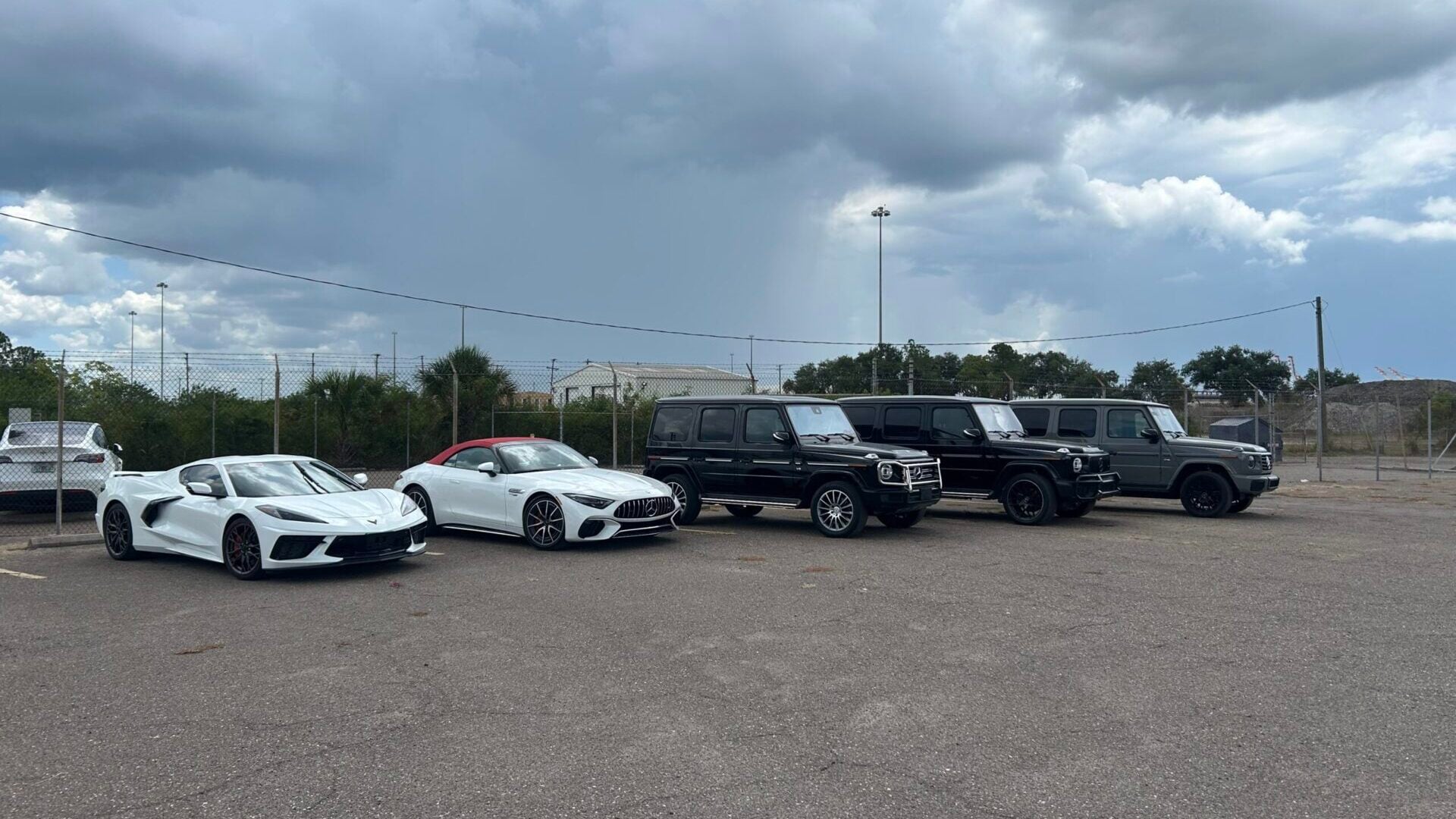
Federal authorities have seized five luxury vehicles at the Port of Tampa after uncovering what investigators describe as an export fraud scheme involving falsified documentation and undervalued declarations. The vehicles, which included several high-end Mercedes-Benz models and a Chevrolet Corvette, were intercepted before they could be shipped overseas.
According to U.S. Customs and Border Protection (CBP), officers identified irregularities during routine inspections carried out by the agency’s Anti-Terrorism and Contraband Enforcement Team. A closer review of the paperwork revealed multiple discrepancies that ultimately led to the seizure of the shipment.
Investigators say the vehicles were accompanied by suspected fraudulent bills of sale and export documents that significantly understated their actual value. CBP believes the shipment was intentionally undervalued by more than $257,000, raising concerns about potential violations of U.S. export laws.
The case highlights the extensive checks performed on outbound shipments, particularly when high-value vehicles are involved. Authorities say export fraud extends beyond inaccurate paperwork and can be linked to broader criminal activities, including financial crimes and sanctions evasion.
Luxury Vehicles Flagged During Port Inspection
Feeling fancy? Recently, Tampa CBP seized five luxury vehicles valued at more than $539,000 in an export fraud investigation. Export fraud is a serious crime that can conceal money laundering, sanctions evasion, and other transnational criminal activity.
➡️… pic.twitter.com/PpVMGU88XP— Director of Field Operations (@DFOFlorida) July 16, 2026
The seizure took place on June 26 after CBP officers inspected vehicles awaiting export at the Port of Tampa. Officials selected five late-model performance and luxury vehicles for additional examination after identifying documentation that warranted closer scrutiny.
The shipment included a 2023 Mercedes-Benz AMG SL55 roadster, two 2025 Mercedes-Benz G-Class SUVs, one 2022 Mercedes-Benz G-Class SUV, and a 2023 Chevrolet Corvette. Together, the vehicles carried a documented purchase price of $539,194.91.
Paperwork Raised Immediate Concerns
According to CBP, investigators found that the declared values listed on the export paperwork did not accurately reflect what had been paid for the vehicles. The agency says the shipment was undervalued by more than $257,000 compared with its actual purchase price.
Officials also noted that the vehicles carried a combined National Automobile Dealers Association (NADA) value exceeding $694,000. As a result, CBP detained the shipment, suspended the export filings, and initiated formal seizure proceedings for alleged violations of federal export regulations.
CBP Warns Export Fraud Is a Serious Offense
Daniel Alonso, Director of Field Operations for CBP’s Miami and Tampa Field Office, praised the officers involved in the investigation and emphasized that export fraud can have far-reaching consequences. He said cases involving falsified export documents may be connected to crimes such as money laundering, sanctions evasion, and other forms of transnational criminal activity.
CBP says its outbound enforcement efforts focus on preventing the illegal export of stolen vehicles, firearms, undeclared currency, sensitive technology, and other prohibited goods. The agency also works to ensure exporters comply with federal laws governing international shipments.
Investigation Are Ongoing
Authorities have not indicated where the vehicles were destined or whether any criminal charges have been filed in connection with the case. They also have not suggested that the seized vehicles were stolen, with the investigation instead centering on the documentation used to support the export.
The case serves as a reminder that exporting a vehicle involves strict legal requirements that extend well beyond transportation logistics. Knowingly submitting false information on export documents can lead to the seizure and forfeiture of property, along with significant civil or criminal penalties under U.S. law.