
The supercar world isn’t just about speed, status, or sticker shock. It’s the frontier where carmakers experiment, fail spectacularly, and occasionally reinvent what’s possible. These machines have served as testbeds for technology that now powers family crossovers and pickup trucks.
Innovations in aerodynamics, lightweight materials, hybrid drivetrains, and even software started here, in cars that most people would only ever see in posters, magazines, or video games.
And that’s exactly why they matter.
Supercars reflect the wildest ambitions of their era, translating race technology into street-legal form and influencing design language across the industry. They show us what happens when engineers are given blank checks and free rein to chase perfection.
While few of us will ever own one, we all benefit from them. From mid-engine layouts and carbon-fiber construction to all-wheel drive and adaptive suspensions, the ideas born in these machines eventually trickle down to cars within reach of ordinary drivers.
These are the models that didn’t just turn heads, they changed the trajectory of automotive history.
Lamborghini Miura (1966)

The Miura helped popularize the mid-engine supercar formula and made it the template many exotic brands followed. While mid-engine race cars already existed, Lamborghini’s engineers put a transverse V12 behind the seats in a road-going exotic, an arrangement that felt shocking at the time and paid off in balance and handling.
It was a radical idea that worked so well that the mid-engine layout became the default for many flagship supercars in the decades that followed.
McLaren F1 (1992)

Gordon Murray’s masterpiece proved that a street car could be engineered with Formula 1 precision and actually work in the real world. Its carbon fiber monocoque chassis, central driving position, and naturally aspirated BMW V12 made it the fastest production car of its era at 240.1 mph.
More importantly, it established carbon fiber as the gold standard for lightweight supercar construction, something that’s now common practice.
Ferrari F40 (1987)

The F40 is often described as the last Ferrari developed during Enzo Ferrari’s lifetime, and it showed the world that raw, race-bred performance could sell. Its extensive use of composite materials like Kevlar and carbon fiber in a production car was groundbreaking for the time.
This wasn’t about luxury, it was about pure speed, and it kicked off the modern era of no-compromise supercars.
Porsche 959 (1986)

This technological tour de force packaged advanced all-wheel drive, height-adjustable suspension, and a tire-pressure monitoring system into one road-going performance icon. The 959 was essentially a rolling technology showcase that proved advanced electronics and sophisticated engineering could enhance performance rather than dilute it.
Many of its innovations filtered down into regular Porsches and inspired AWD systems across the industry.
Bugatti Veyron (2005)

Love it or hate it, the Veyron redefined what was physically possible in a road car with its 1,001-PS quad-turbo W16 engine. It required breakthroughs in tire technology, aerodynamics, and cooling systems to function at roughly 253 mph.
The Veyron proved that with enough engineering resources, you could build something that seemed to defy physics, and actually make it reliable enough to drive daily.
Audi R8 (2006)

When Audi introduced the R8 in 2006, it quietly rewrote the rules for what a supercar could be. Here was a mid-engine exotic with real-world usability, a comfortable ride, space for groceries, and maintenance schedules that didn’t induce panic. Developed alongside the Lamborghini Gallardo and sharing a platform and key components, the R8 offered supercar pedigree with real-world usability.
Critics sometimes argue it’s “too tame” to be a true supercar, but that’s precisely what made it so influential. The R8 didn’t chase lap records or outrageous styling; it focused on making the exotic feel approachable. Its aluminum space-frame construction, signature LED lighting, and available naturally aspirated V10 helped deliver supercar performance and presence without the usual fragility or drama.
Built at Audi’s Neckarsulm site (including its low-volume Böllinger Höfe facility in later years), the R8 delivered the excitement of an Italian thoroughbred with the day-to-day polish buyers expect from a German luxury brand. It changed public perception, proving that supercars didn’t have to be temperamental toys or weekend-only indulgences.
In doing so, the R8 became the “attainable” supercar. This gateway brought new buyers into the world of high-performance motoring and inspired rivals to make usability a virtue rather than a compromise.
Honda NSX (1990)

Honda sought feedback from Ayrton Senna during NSX development, helping sharpen the chassis of a supercar that became famous for being unusually reliable and usable. The NSX might not have the flash or drama of modern hypercars, but that was part of its genius. Its doors opened the normal way, it didn’t need active aerodynamics or massive wings, and yet it looked every bit as futuristic as anything from Italy.
Underneath that clean, understated design was real innovation. The NSX used an all-aluminum body structure and was among the first mass-produced cars to do so, paired with suspension tuning that delivered incredible balance and feedback. It was a driver’s car in the purest sense, precise, usable, and remarkably well-built.
While the exotic competition relied on quirks and temperamental engineering to seem special, Honda proved that sophistication and reliability could coexist with true supercar performance. The NSX forced Ferrari and others to raise their standards, proving that great design and cutting-edge technology didn’t have to come with high maintenance or low dependability.
Koenigsegg CCX (2006)

This Swedish upstart showed that tiny independent manufacturers could compete with established names through pure innovation. Koenigsegg became known for its dihedral synchro-helix doors and for engineering key systems in-house when off-the-shelf solutions didn’t fit its goals.
Their willingness to engineer everything in-house inspired a new generation of boutique hypercar makers.
Jaguar XJ220 (1992)

The Jaguar XJ220 was born from bold ambition. When it was first revealed as a concept in 1988, the plan called for a massive V12 engine and all-wheel drive, the stuff of pure fantasy. By the time it reached production, reality and regulations had trimmed those dreams down to a twin-turbocharged 3.5-liter V6 and rear-wheel drive instead. Some enthusiasts saw that as a letdown, but the car’s performance quickly silenced most critics.
Though it couldn’t match the McLaren F1’s later top speed, the XJ220 was still among the fastest cars in the world at around 212.3 mph. It advanced bonded-aluminum chassis construction and demonstrated how carefully tuned aerodynamics could generate serious downforce without resorting to towering wings or extreme styling.
The XJ220’s development also influenced how Jaguar approached lightweight materials and structural design in later models. More than three decades later, we still think it’s one of the best-looking Jaguars ever built, sleek, understated, and every bit the futuristic dream its creators envisioned.
Pagani Zonda (1999)
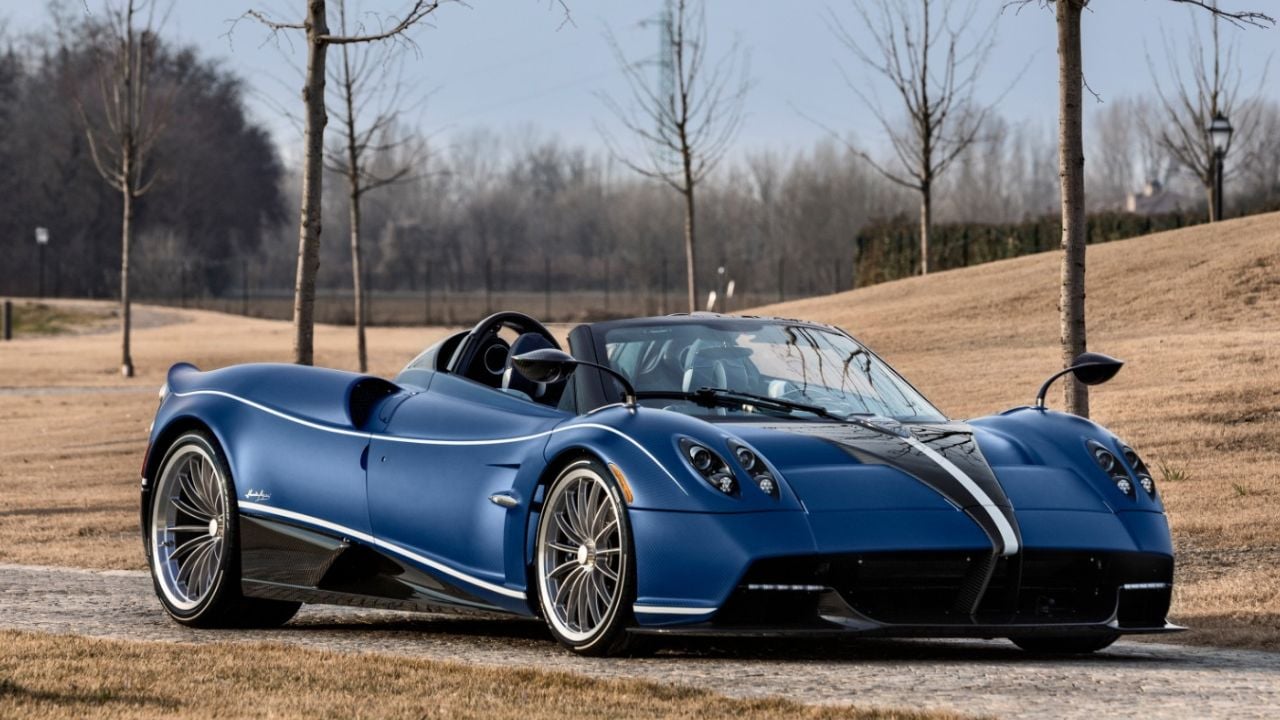
Horacio Pagani’s obsession with art and engineering created a car that proved small-scale manufacturers could build world-class machines with sufficient attention to detail. The Zonda’s carbon-fiber construction, and later special versions that introduced Pagani’s Carbo-Titanium material, paired with a bespoke approach to customization showed there was a market for ultra-exclusive, hand-built exotics.
It opened the door for the current hypercar boom, where limited production numbers and personalization are major selling points.
Ford GT40 (1964-1969)
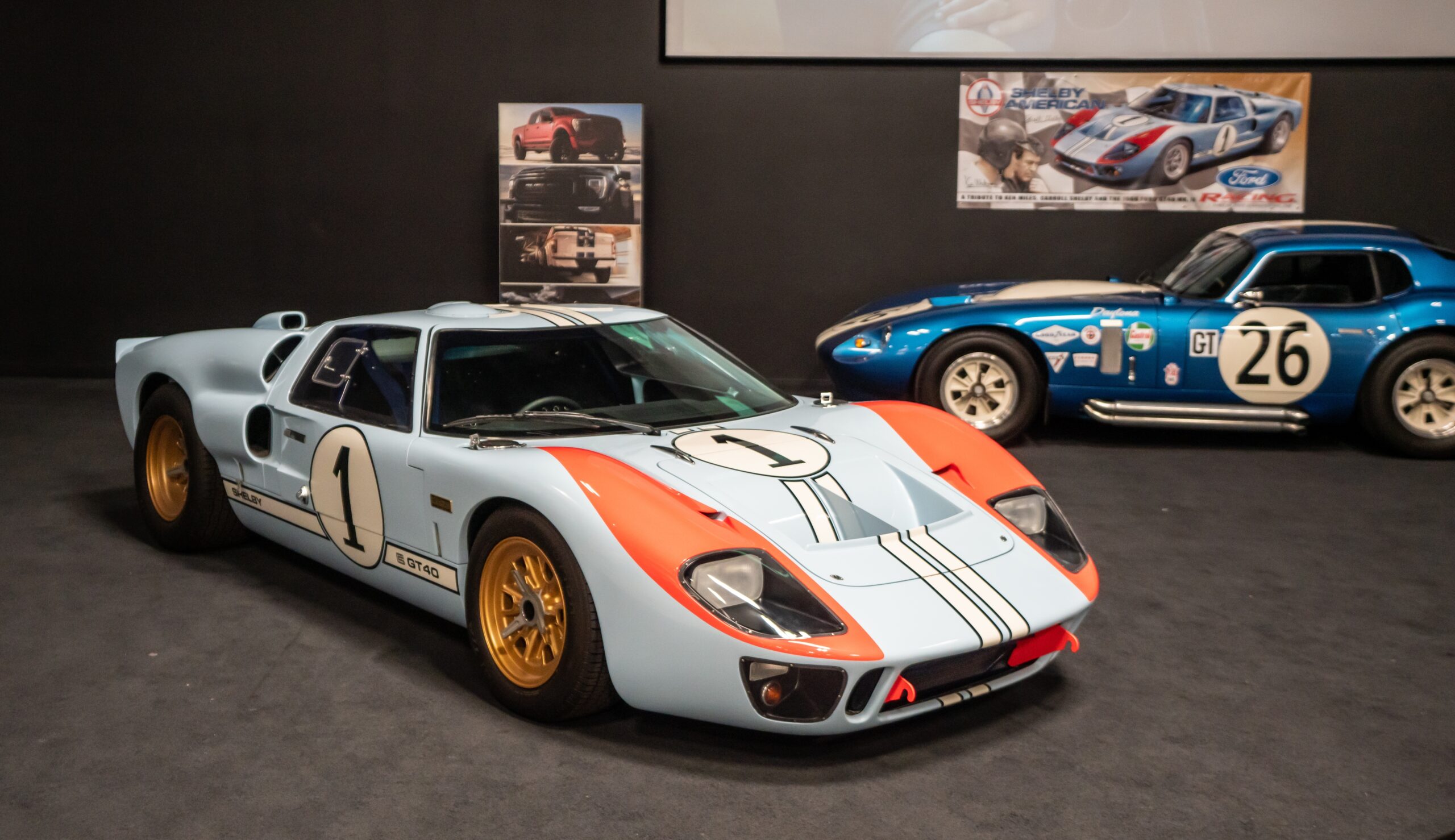
Born from spite and executed with precision, the Ford GT40 was more than just a racing machine, it was a declaration. When Enzo Ferrari backed out of a deal to sell his company to Ford, Henry Ford II decided to beat him at his own game: Le Mans. The result was the GT40, a brutally fast, beautifully balanced car that dethroned Ferrari and won four straight 24 Hours of Le Mans titles from 1966 to 1969.
But the GT40’s influence extended far beyond the racetrack. It proved that American engineering could produce a true supercar, one that combined brute force with aerodynamic sophistication. Unlike many race legends, it also reached the public; street-legal versions were sold, cementing Ford’s image as more than just a maker of family sedans.
The GT40’s legacy runs through every performance Ford since, from the 2005 and 2017 GTs to today’s track-bred Mustangs. It also made Ferrari and the rest of Europe think twice about dismissing Detroit. America hadn’t just joined the supercar conversation; it had rewritten the rules.
Honorable Mention: Tesla Roadster (2008)

Let’s address the obvious: the original Tesla Roadster wasn’t a supercar in the traditional sense. Based on a lightweight Lotus chassis and powered by an electric motor, it sat closer to a high-end sports car than a Ferrari rival. Yet, it earns its place here and this honorable mention because few vehicles have had a bigger long-term impact on the industry.
Before the Roadster, “electric car” meant slow, short-range, and boring. Tesla flipped that narrative overnight. The Roadster could sprint from 0–60 mph in under four seconds, travel more than 200 miles per charge, and recharge overnight in your garage. It didn’t just prove that EVs could be fast, it made them desirable.
Sales of the Roadster helped fund Tesla’s Model S program and launched the modern EV movement. Whether you love or loathe Elon Musk or Tesla itself, the Roadster’s role is undeniable: it turned electrification from a niche experiment into the defining automotive shift of the 21st century. Its success helped convince the industry that EVs could be aspirational and performance-focused, accelerating interest in high-end electric sports cars and hypercars.
Conclusion

These 12 machines represent more than just impressive performance figures. They’re milestones in automotive thinking. Whether it was a new material, a different engine layout, or simply proving that something impossible could be done, each of these cars pushed the envelope in ways that benefited the entire industry. The innovations they pioneered in limited production runs eventually made their way into mainstream vehicles, improving safety, efficiency, and performance for everyone.
That’s the real legacy of a groundbreaking supercar, not only what it achieves in its own time, but how it shapes the cars we’ll all be driving tomorrow.