Every company leaves a few chapters in its story that drift quietly into the background, and BMW is no different. History remembers the E30 M3s that still make grown men weep at auctions, yet hidden among them are machines that once carried daring choices and curious experiments, some of which make you wonder what exactly the Bavarians were drinking during those board meetings.
Some came for only a short time, leaving memories that faded faster than your enthusiasm for washing your car in winter. Others arrived with all the market timing of a vegan opening a steakhouse next to a CrossFit gym. Looking back at them is like flipping through an old photo album, where familiar faces appear beside snapshots that make you think, “Wait, BMW actually made that?”
These forgotten BMWs reveal a side of the brand that blended ambition with the kind of experimental spirit that either creates legends or leaves engineers updating their LinkedIn profiles. They show how even a company known for “The Ultimate Driving Machine” can produce cars that are more like “The Pretty Good Driving Machine, But Only If You’re Into Weird Stuff.”
BMW 503

Luxury and style defined the BMW 503, a grand touring coupe introduced in 1956 that carried elegance, exclusivity, and a price tag that made wealthy customers reach for their smelling salts. The 503’s styling was developed at BMW, with industrial designer Albrecht von Goertz brought in to refine the proposal, a designer who later consulted for Nissan and is often credited as an influence on the 240Z rather than its sole designer.
The 3.2-liter V8 under that endless hood produced 140 horsepower, which sounds quaint until you remember this was 1956 and most cars were still figuring out how to make reliable brakes. Performance delivered confidence on the autobahn, with acceleration to 60 mph in around 13 seconds, not exactly Tesla Plaid territory, but respectably swift for a car that weighed as much as a small apartment and cost twice as much as most people’s houses.
Between 1956 and 1959, BMW built 412 examples of the 503, split between 273 coupes and 139 convertibles, and it is widely described as a model that was difficult for BMW to sell profitably because of its high price and low volume. Yes, you read that right: BMW lost money on every single 503 they built, making it perhaps the most expensive way to establish brand prestige since paying influencers to wear your logo. Today, surviving examples are rarer than rational political discourse and worth more than some people’s retirement funds.
BMW Z1
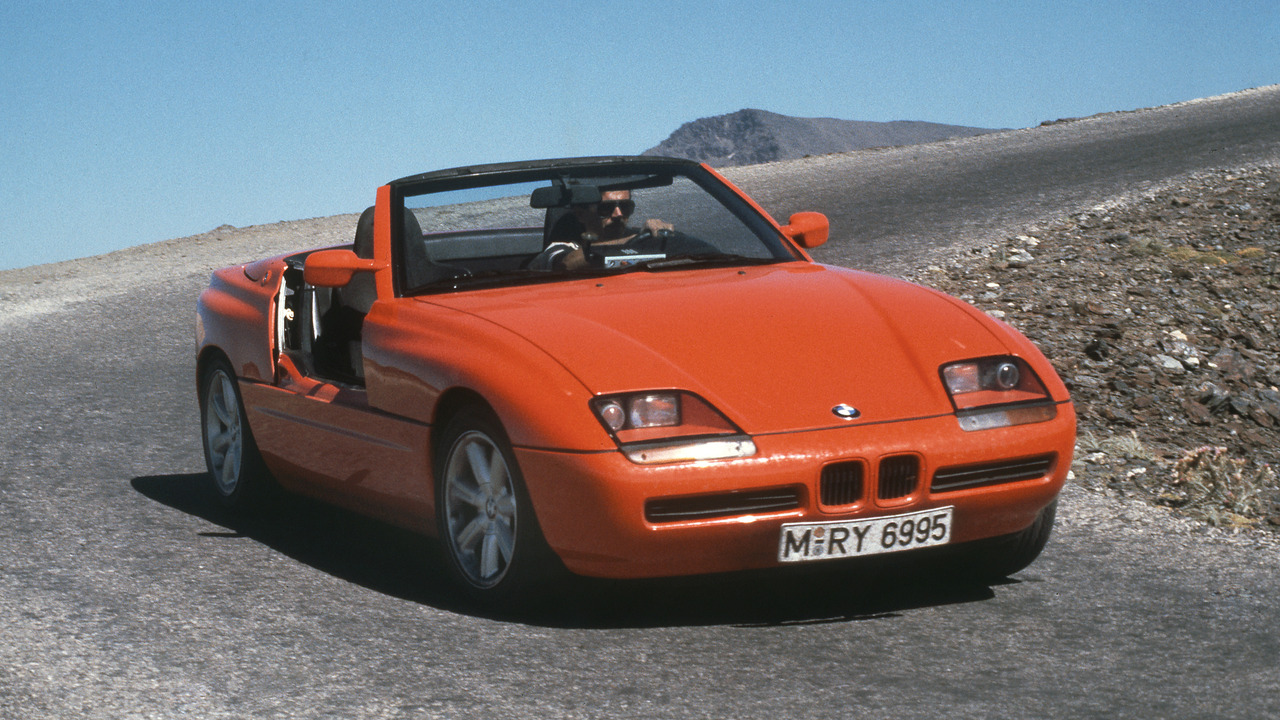
Pop-up headlights were the mullet of automotive design in the late ’80s, business up front, party, well, up front once they were revealed. Yet, the Z1 surprised everyone with doors that dropped into the sills, as if they were auditioning for a Transformers movie. This futuristic party trick became its signature feature and the source of endless conversations at car meets and gatherings, right up until the door mechanisms inevitably broke and left owners explaining why they had to climb out, Dukes of Hazzard-style.
Limited to just 8,000 examples worldwide, the Z1 featured a 2.5-liter inline-six producing 170 hp, which propelled this plastic-bodied experiment to 60 mph in 7.9 seconds. More impressive was its top speed of 140 mph, achieved with all the aerodynamic efficiency of a brick with anger management issues. The real party trick wasn’t the speed: it was that owners could swap the removable plastic body panels for different colors, turning their car into the world’s most expensive Lego set.
Built on a modified E30 3 Series platform (because BMW has never met a platform it couldn’t stretch into something unusual), the Z1 handled like a proper sports car, despite looking like a concept that had escaped from an auto show. Interior comfort leaned toward “German minimalism meets spaceship,” and the sense of occasion remained high with every drive, assuming you could actually get the doors to work.
BMW 700

Small dimensions and rear-mounted engineering gave the BMW 700 an unusual place in the company’s history, mainly because it prevented BMW from becoming a footnote in automotive history books. Styled by Giovanni Michelotti, this compact charmer carried clean lines and proportions that somehow made “small and rear-engined” look dignified instead of desperate.
The 697cc two-cylinder engine (yes, you read that correctly, two cylinders) was sourced from BMW’s motorcycle division because apparently someone in Munich thought, “You know what this car needs? The engine from our bikes, but with more cylinders than a Harley and fewer than literally any other car.” This air-cooled twin initially produced a mighty 30 horsepower, later increasing to a whopping 40 hp in the LS version, which could accelerate to 60 mph in about 23 seconds, perfect for those times when you wanted to experience the thrill of being passed by tractors.
But here’s the thing: the 700 was actually brilliant. It saved BMW from bankruptcy in the early 1960s, selling about 190,000 units by 1965 and proving that sometimes survival means swallowing your pride and building the car people actually need, rather than the one that looks good in your corporate lobby. The coupe version even developed a cult following among drivers who appreciated its nimble handling and the fact that you could park it in spaces other cars could only dream about.
BMW 3200 CS

Elegant lines from the studios of Bertone shaped the BMW 3200 CS into one of the company’s most graceful coupes of the early 1960s, proving that when Italians design German cars, everybody wins except possibly the accountants. Giorgetto Giugiaro at Bertone created proportions that emphasized a long hood and balanced roofline, with details like slim pillars and delicate chrome trim that gave it the kind of timeless beauty that makes modern BMWs look like they were designed by committee in a panic.
Under that sculpted hood lived a 3.2-liter V8 producing 160 hp, which provided smooth acceleration that carried drivers confidently into the modern age, assuming they could afford the car in the first place. Zero to 60 mph required just over 10 seconds, and the top speed of 118 mph was enough to outrun most of the competition and all of your financial common sense.
Interiors blended leather, wood, and thoughtful ergonomics in ways that made contemporary Mercedes models look like they were furnished by people who thought luxury meant “more chrome.” The dashboard layout was so intuitive that you could actually find the controls without a PhD in German engineering, a feature that BMW would apparently forget how to implement for the next several decades.
Only 603 examples were built between 1962 and 1965, making it rarer than humility in a BMW dealership and more expensive than therapy for people who bought BMWs thinking they’d be cheap to maintain. Today, the 3200 CS feels like a hidden bridge between postwar recovery and the emerging identity of BMW coupes: the kind of car that makes you wonder why we can’t have nice things anymore without seventeen different driving modes and a subscription service.
BMW 2002 Touring
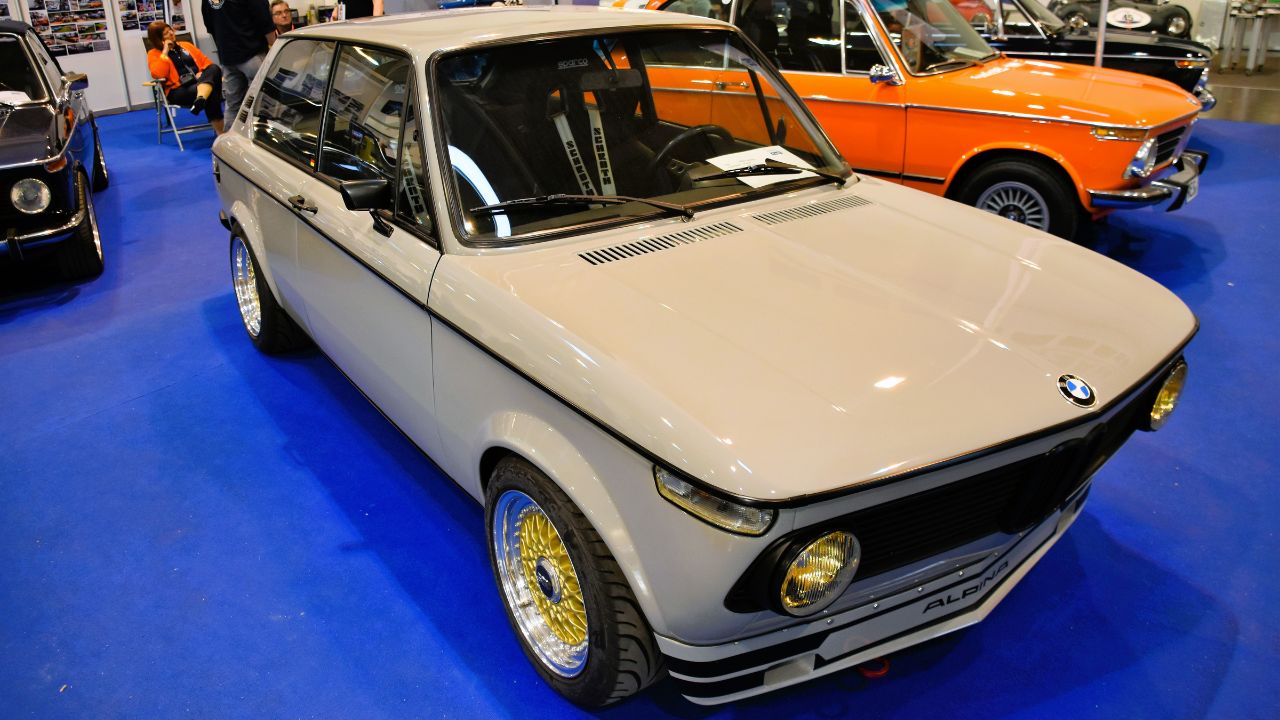
Station wagon form expanded the legendary 2002 lineup into a family-friendly package that somehow managed to make grocery runs feel like gymkhana practice. The 2002 Touring took everything that made the original 2002 a legend, lightweight construction, perfect balance, and that sweet 2.0-liter four-cylinder, and added a hatchback that could swallow your weekend camping gear without swallowing your enthusiasm for driving.
The same M10 engine that powered the regular 2002 lived under the Touring’s hood, producing anywhere from 100 to 130 hp, depending on which carburetor setup was ordered and how optimistic one was about emissions regulations. This was enough to hustle the slightly heavier wagon to 60 mph in about 10 seconds while carrying enough stuff to outfit a small expedition or a teenager’s first semester at college.
What made the Touring special wasn’t just its practicality: it was that BMW managed to create a station wagon that didn’t completely destroy the 2002’s legendary handling dynamics. Sure, it wasn’t quite as razor-sharp as the coupe, but it was still more fun than any family hauler had a right to be, especially when loaded with camping gear and pointed toward a twisty back road.
About 25,877 1600 to 2002 Touring models were built between 1971 and 1974, making them significantly rarer than the regular 2002 and infinitely cooler than the SUVs that eventually replaced this entire category. Today’s collectors treasure surviving examples as proof that once upon a time, you could have your practicality and eat your driving dynamics too; a concept apparently lost somewhere between the invention of the cup holder and the rise of the crossover.
BMW 850Ci

Big coupe proportions gave the 850Ci immense road presence and a price tag that made financial advisors weep openly. Launched in 1989 as BMW’s flagship, this technological tour de force packed more electronic wizardry than a NASA mission and enough luxury features to make a Rolls-Royce feel inadequate. Pop-up headlights added drama, while the computer-controlled suspension introduced a level of complexity that made shade-tree mechanics consider early retirement.
The 5.0-liter V12 under that sculptured hood produced 300 hp and 332 lb-ft of torque, numbers that sound modest today but in 1989 were enough to launch this 4,000-pound luxury barge to 60 mph in 6.8 seconds and on to a top speed that was electronically limited because BMW didn’t want to deal with the insurance lawsuits. The six-speed manual transmission was a work of art, assuming you could find one of the roughly dozen people who actually ordered it instead of the four-speed automatic.
Inside, the 850Ci featured more buttons than a NASA control panel, including BMW’s first attempt at a navigation system, which worked about as well as you’d expect from 1990s German software engineering. The seats were trimmed in leather so soft it probably required its own passport, and the sound system was advanced enough to play your CDs with the kind of clarity that made you realize how terrible most of your music actually was.
Production ran until 1999, and BMW built 30,621 E31 8 Series cars in total, with 850i and 850Ci variants making up the majority of production. Today, the 850Ci is remembered as the car that proved BMW could build a world-class grand tourer, even if nobody could afford to buy or maintain one.
BMW Z8

Styling drew inspiration from the classic 507 roadster, and hand-built production gave the Z8 exclusivity and the kind of craftsmanship that justified its eye-watering price tag. When BMW announced it was building a modern interpretation of its most beautiful roadster ever, enthusiasts everywhere began liquidating their retirement accounts and explaining to their spouses why they suddenly needed a second mortgage.
The 4.9-liter V8 borrowed from the M5 resided under the Z8’s elongated hood, producing 394 hp and 368 lb-ft of torque: numbers that propelled this aluminum-bodied masterpiece to 60 mph in 4.7 seconds, while producing sounds that could inspire poetry or, at the very least, really expensive speeding tickets. The six-speed manual transmission was the only option because BMW correctly assumed that anyone spending $130,000 on a roadster in 2000 probably knew how to operate a clutch.
Hand-built in Munich with the kind of attention to detail that made Swiss watchmakers jealous, each Z8 featured an aluminum space frame that weighed less than most people’s guilt about buying such an expensive toy. The interior showcased period-correct details, including chrome bezels and leather, that smelled of success and financial irresponsibility in equal measure.
Only 5,703 examples were built worldwide, making the Z8 rarer than rational thought at a classic car auction and more valuable than most people’s houses. Today, pristine examples trade for well north of $200,000, proving that sometimes the best investment strategy is buying the car that makes absolutely no financial sense. The Z8 remains BMW’s most beautiful modern creation and its most effective method of separating wealthy enthusiasts from their money.
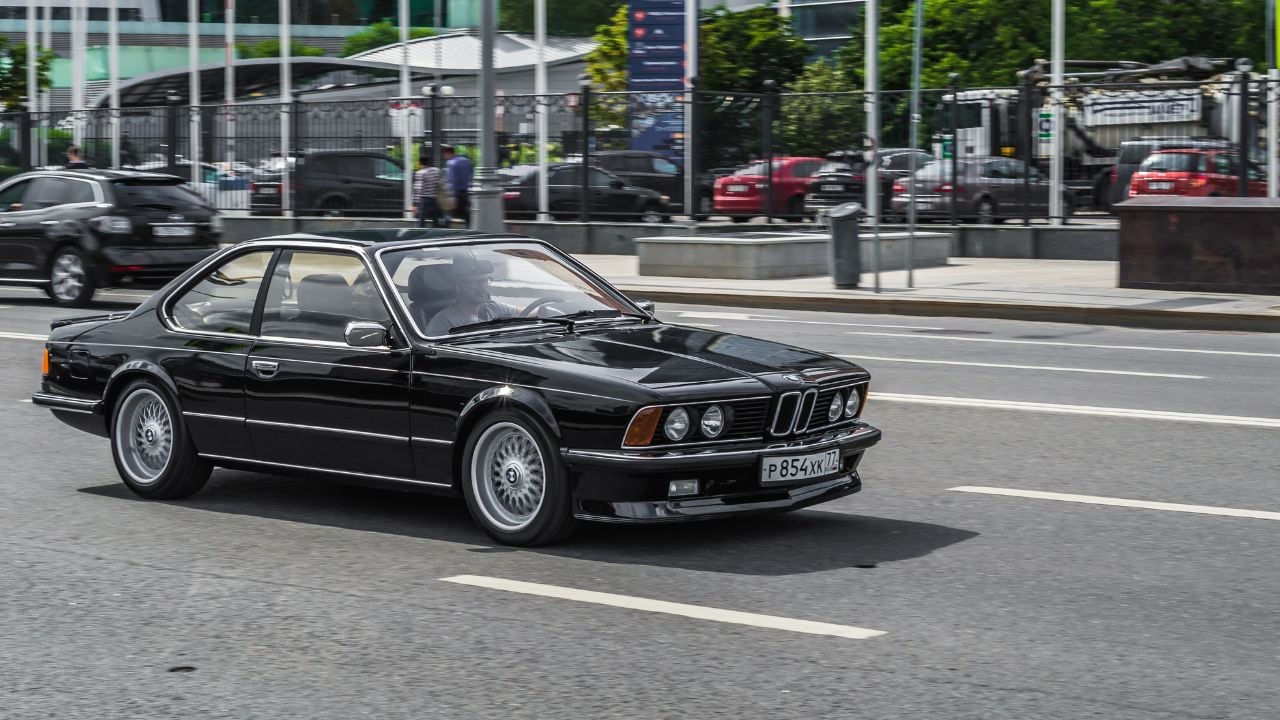
BMW 6 series (E24)

Luxury and performance blended seamlessly in the BMW 6 Series E24, a coupe that carried elegance throughout the late 1970s and 1980s while establishing the template for every BMW coupe that followed. The shark-nose front end became as iconic as the roundel itself, though considerably more intimidating to other drivers who suddenly found themselves being tailgated by what looked like a predator with German engineering.
Built on the 5 Series platform but stretched and lowered like a supermodel in heels, the E24 came with engine options ranging from the smooth 2.8-liter inline-six to the M88 slash 3 powered European M635CSi at 286 hp, while the North American M6 used the emissions equipped S38 at 256 hp and a soundtrack that made neighbors call the police. The regular 633CSi and 635CSi models offered more civilized power delivery but still managed 0-60 times in the high six-second range, a respectable time for cars that weighed as much as contemporary American muscle cars, yet handled like they actually understood what corners were for.
Interiors featured the kind of Germanic luxury that made Mercedes drivers slightly nervous: sport seats that actually held you in place during spirited driving, a dashboard laid out by people who understood that form should follow function, and enough wood trim to make you feel sophisticated without appearing as though you were trying too hard. The service position headlights were pure genius, allowing mechanics to actually work on the car without disassembling half the front end.
Production ran from 1976 to 1989, during which BMW built over 86,000 examples worldwide, making the E24 successful enough to justify its existence but not so common that owning one made you just another face in the crowd. Today, clean E24s command serious money from collectors who remember when BMW built cars that looked like they were moving even when parked, and the M6 variants trade for prices that make current M car owners question their life choices.
Remembering the Overlooked and Underappreciated

Every car company writes chapters that never make it into the highlight reels, and BMW’s story is filled with creations that carried promise, as well as experiments that sometimes worked brilliantly and sometimes left everyone wondering what exactly happened in those Munich board meetings. These forgotten models remind us that innovation often looks ridiculous in hindsight, and that the difference between genius and insanity is usually about twenty years and a lot of rose-colored glasses.
Looking back at them today brings perspective on how bold decisions often create legacies that only reveal their meaning years later, usually around the time the original owners are trying to explain to their insurance companies why their “classic” BMW is worth more than they paid for their house. These cars show us that success isn’t always measured in sales figures; sometimes it’s measured in how many people still get excited when they see one at a car show, or how many forum posts are dedicated to keeping them running despite parts availability that makes unicorns look common.