
Since the earliest days of motoring, there’s been one question on every car lover’s mind: how fast can we go? That hunger for speed has only intensified, especially in the last few decades. Back in the ’80s, hitting 200 mph felt like touching the moon. Today, some manufacturers claim theoretical top speeds above 300 mph, including numbers around 330 mph, but most of those figures have not been validated by an independent two way top speed run.
Whether you’re a lifelong auto enthusiast or just curious about what the world’s fastest cars look like in 2025, here’s a friendly walkthrough of the machines redefining velocity. These cars are feats of engineering, passion, and sometimes just plain audacity.
How We Picked These Cars

This list highlights some of the fastest production cars ever built, based on either verified testing or official manufacturer claims.
To qualify, each vehicle had to be produced for customer purchase, not just a one-off prototype, and delivered in at least limited numbers. While some are road legal and others are track-focused machines, all are real cars that enthusiasts could buy, own, and drive in some form. We included both current and past models, focusing on performance figures that have been either independently tested or credibly reported by manufacturers.
In short, these aren’t concept cars or vaporware, they’re the real deal, built for speed and delivered to customers around the world.
GMA T.50 – 226 MPH
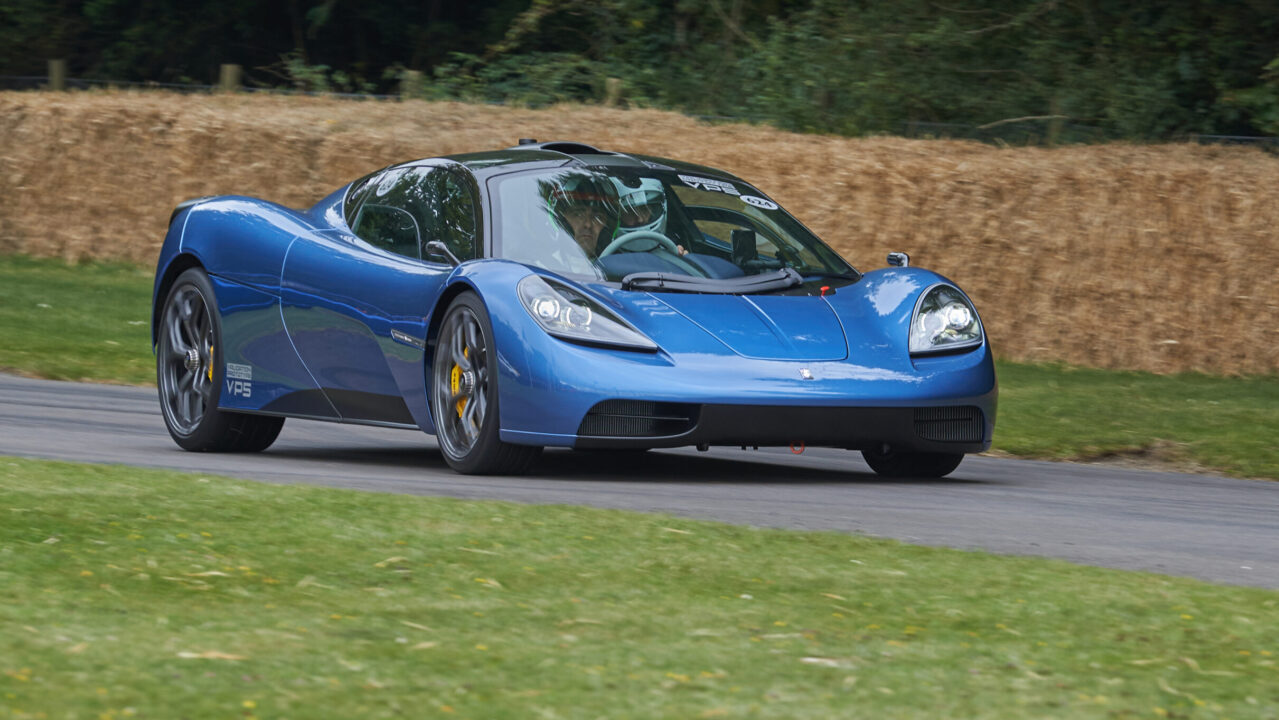
If the name Gordon Murray rings a bell, it should, he’s the mastermind behind the legendary McLaren F1. The GMA T.50 is his latest creation, and in many ways, it’s a modern-day echo of that iconic car. From its lightweight construction to its distinctive three-seat layout (yes, the driver sits in the center), the T.50 was built to prioritize the thrill of driving above all else.
At its heart is a bespoke 4.0-liter V12 developed by Cosworth, a high-revving, naturally aspirated engine that sings all the way to 12,100 rpm. It makes 654 horsepower and, with its featherweight build, pushes the T.50 to a top speed of 226 mph. It’s not just fast , it’s a love letter to pure, analog performance in a digital world.
Spania GTA Spano – 230 MPH
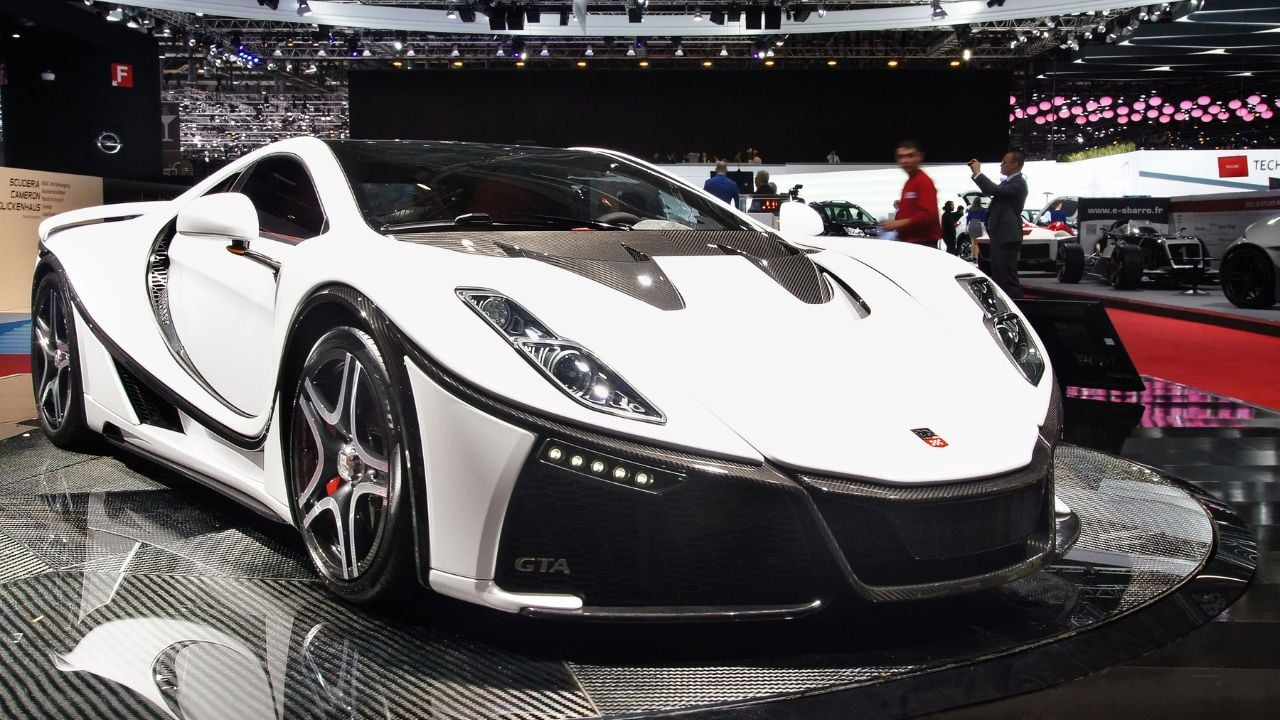
In the world of supercars, most brands stick to familiar engine formulas, flat-sixes for Porsche, V8s and V12s for just about everyone else. But Spania, a boutique carmaker from Spain, takes a different path. Under the hood of the updated Spano is an 8.0-liter V10 with twin turbocharging. Earlier versions used a Viper based V10 with a supercharger, but the later car did not offer buyers a choice between turbocharging or supercharging.
Originally launched in 2009 and reimagined in 2015, the Spano is built on years of racing experience. Its carbon fiber monocoque chassis and double wishbone suspension give it the agility of a track car, while the V10 delivers the muscle. With a top speed of 230 mph, it’s clear this Spanish supercar isn’t just about flair, it’s built to fly.
Ruf CTR3 Clubsport – 236 MPH
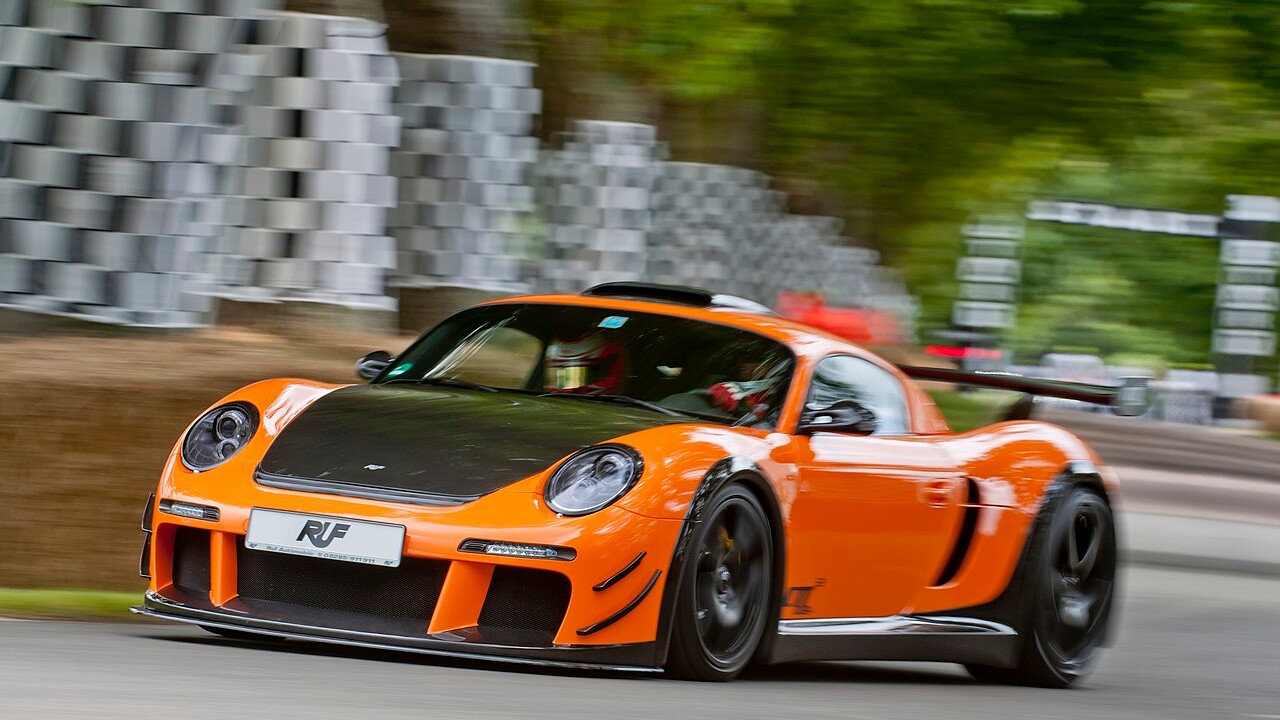
Porsche’s 911 is already a legend, but if you’ve ever wondered what happens when someone takes that formula and dials it up to eleven, Ruf has your answer. Though it looks like a heavily modified 911, Ruf is actually a manufacturer in its own right, building its cars from the ground up using Porsche-supplied chassis.
The CTR3 Clubsport is the ultimate evolution of Ruf’s CTR3, introduced in 2012 and still offered in limited numbers. And we do mean limited, only seven Clubsports have been built. It may not shout for attention visually, but under the skin, it’s all business. With 777 horsepower and a top speed of 236 mph, this is one of the fastest cars ever to wear a silhouette inspired by the 911.
Ultima Evolution Supercharged – 240 MPH
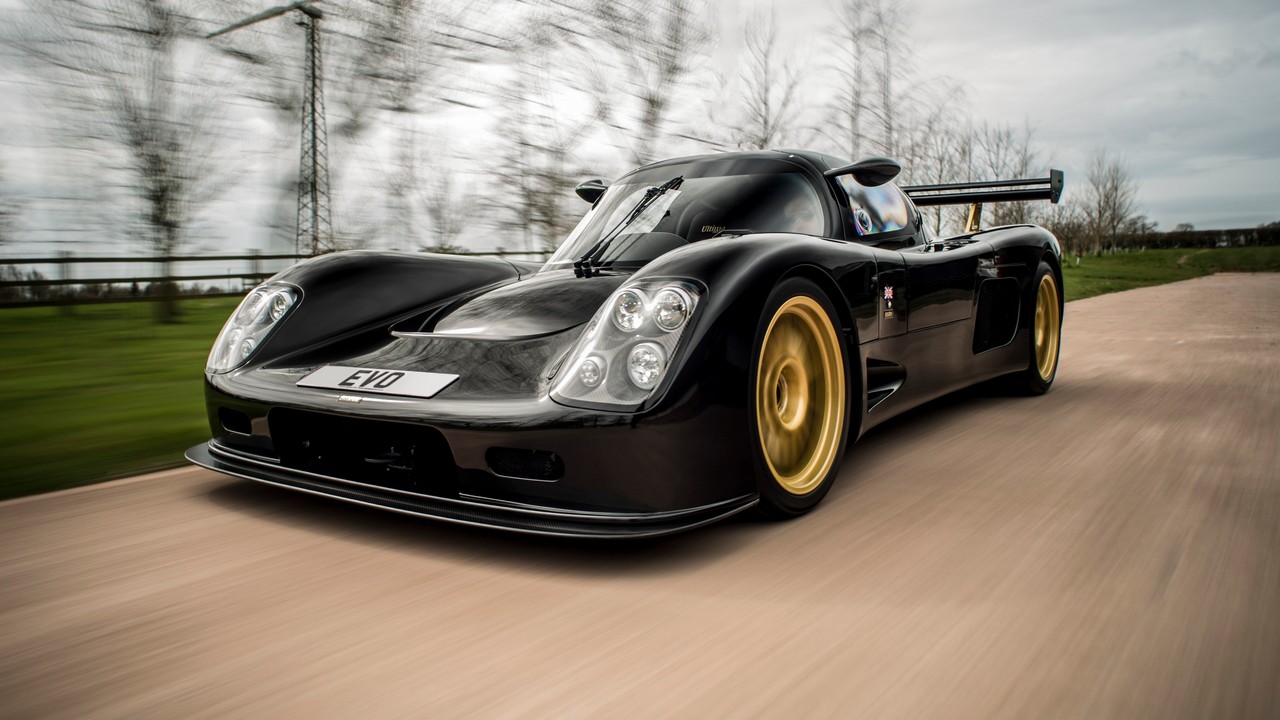
At first glance, the Ultima Evolution might look like a niche track toy, but don’t be fooled, this British-built beast can outrun some of the biggest names in the hypercar world. First launched in 2015, the Evolution is available either fully assembled or as a kit. But unlike the flimsy kit cars of the past, Ultima delivers a turnkey-quality experience with serious performance credentials.
In its top-tier configuration, the Evolution packs a 6.8-liter supercharged LS V8 pushing out 1,020 horsepower. That’s a massive amount of power in a car that weighs just over 2,000 pounds. The result? A top speed of 240 mph and acceleration that’ll glue your back to the seat. Starting around $95,000, it offers a supercar experience without the supercar snobbery, or the seven-figure price tag.
Koenigsegg Gemera TFG – 249 MPH
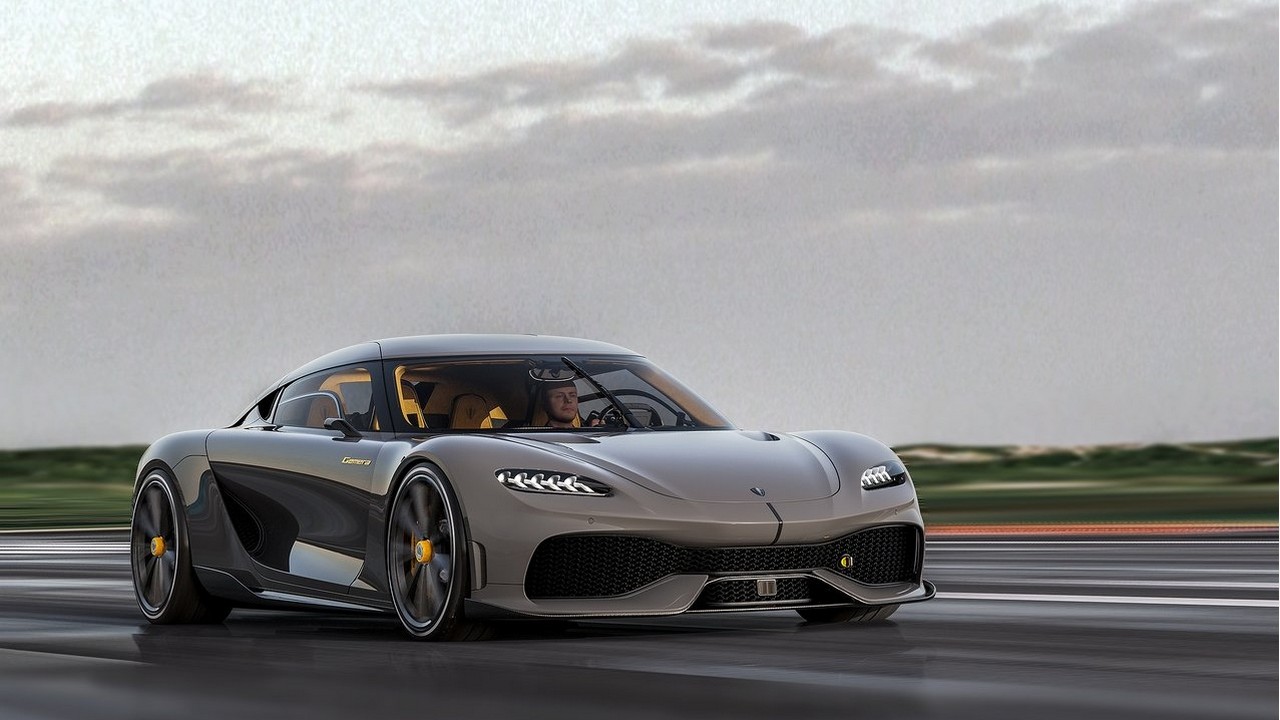
For decades, speed meant two doors, two seats, and not much else. Then Koenigsegg came along and rewrote the rulebook. The Gemera may look like a typical hypercar from the outside, but open one of its sleek dihedral doors and you’ll find something truly unexpected, four full seats. Yes, this is a family-sized megacar that just happens to be faster than most supercars on the planet.
The surprises don’t stop with the layout. Instead of a massive V8 or W16, the Gemera uses a tiny-but-mighty 2.0-liter three-cylinder engine, affectionately named The Friendly Giant (TFG), paired with three electric motors. The result? Koenigsegg quotes a total system output of 1,700 horsepower and a top speed of 249 mph. It’s a masterclass in unconventional engineering, and proof that practical can still mean blisteringly fast.
Aspark Owl – 256 MPH
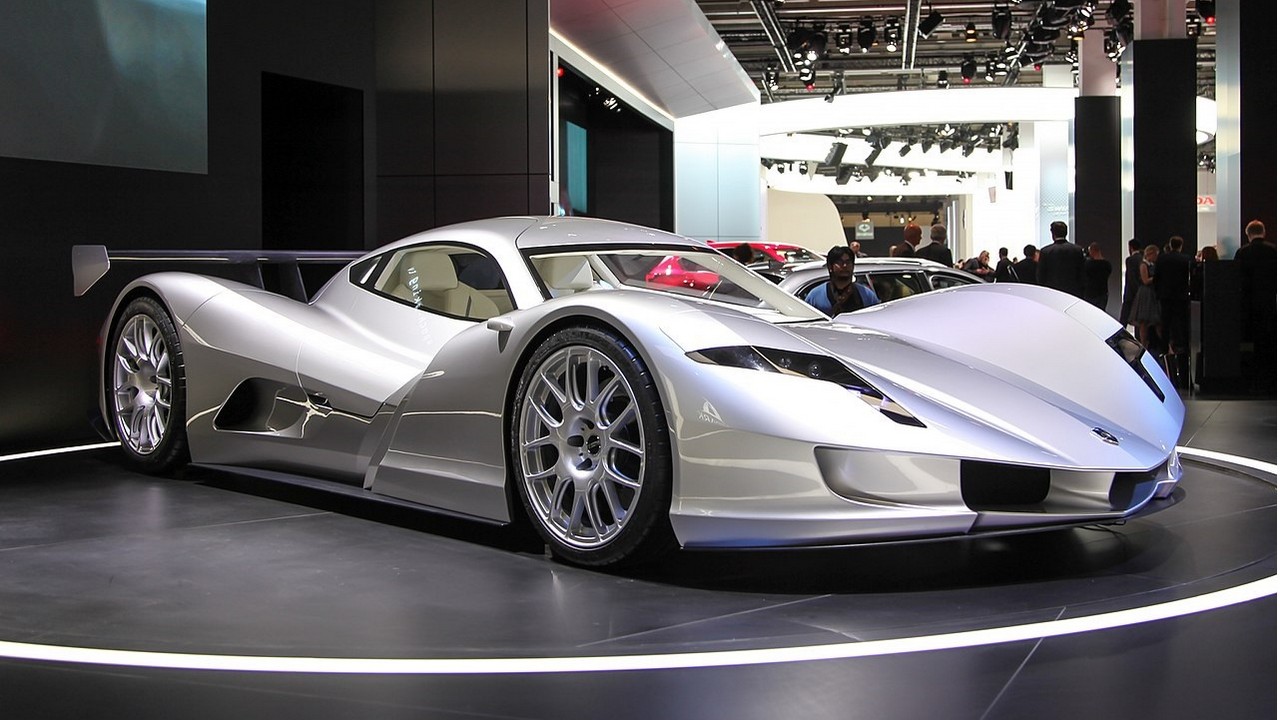
If speed had a sound, the Aspark Owl would be nearly silent. This all-electric hypercar from Japan is best known for its jaw-dropping acceleration, 0 to 60 mph in just 1.72 seconds, making it one of the quickest production cars in the world. But it doesn’t stop there. Aspark quotes a top speed of 256 mph based on development testing, but it also says regular customer vehicles are limited to 350 km/h for safety and tire durability.
Power comes from four electric motors, one at each wheel, delivering precise torque and true all-wheel drive performance. With instant power delivery and balanced weight distribution, the Owl isn’t just fast in a straight line, it’s a showcase of what the future of speed looks like when electricity takes the wheel.
Rimac Nevera – 256 MPH
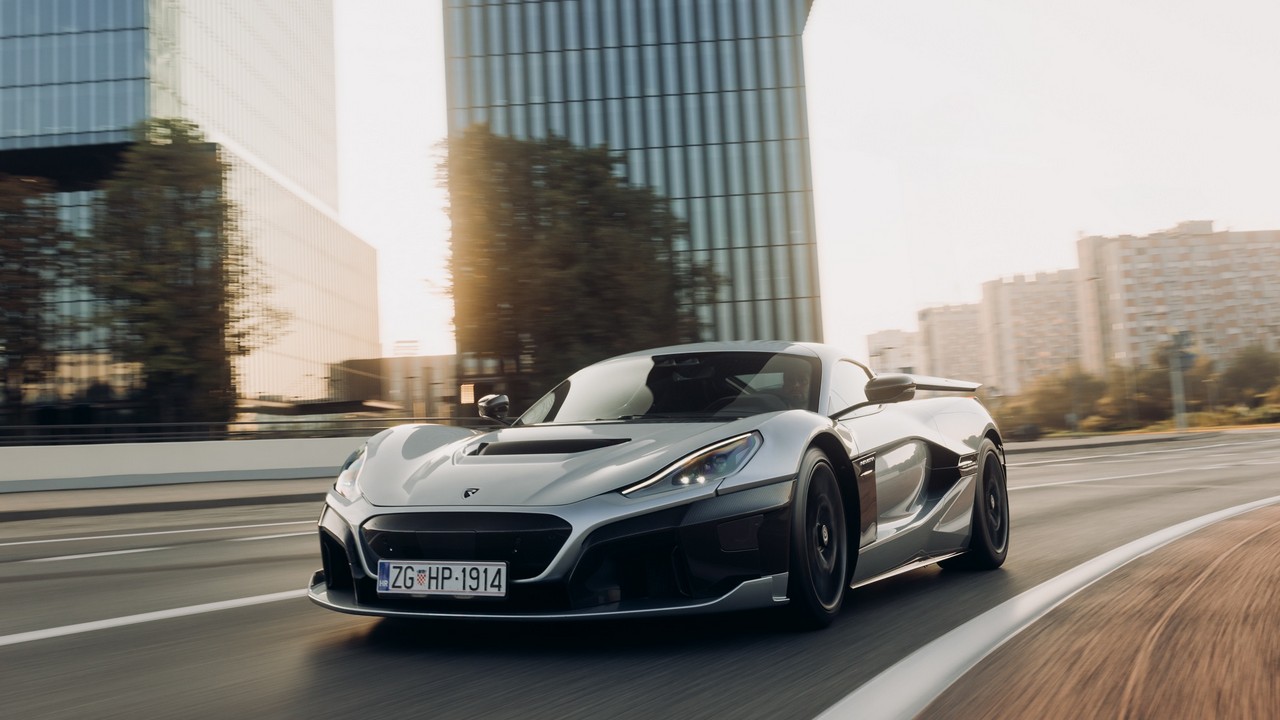
It might not rumble or roar, but the Rimac Nevera is proof that silence can be seriously fast. Built in Croatia, the Nevera is part of a new generation of electric hypercars that are rewriting the rules of performance. With four electric motors, one at each wheel, it produces up to 1,914 horsepower and has a verified top speed of 258 mph.
What it lacks in engine noise, it more than makes up for in sheer acceleration. Thanks to instant torque, the Nevera can run 0 to 60 mph in as little as 1.74 seconds with one foot rollout under high grip conditions. It’s not just a fast EV, it’s one of the fastest cars in the world, period. And it’s helping to prove that the future of speed doesn’t need to burn fuel to break records.
Zenvo TSR-GT – 263 MPH
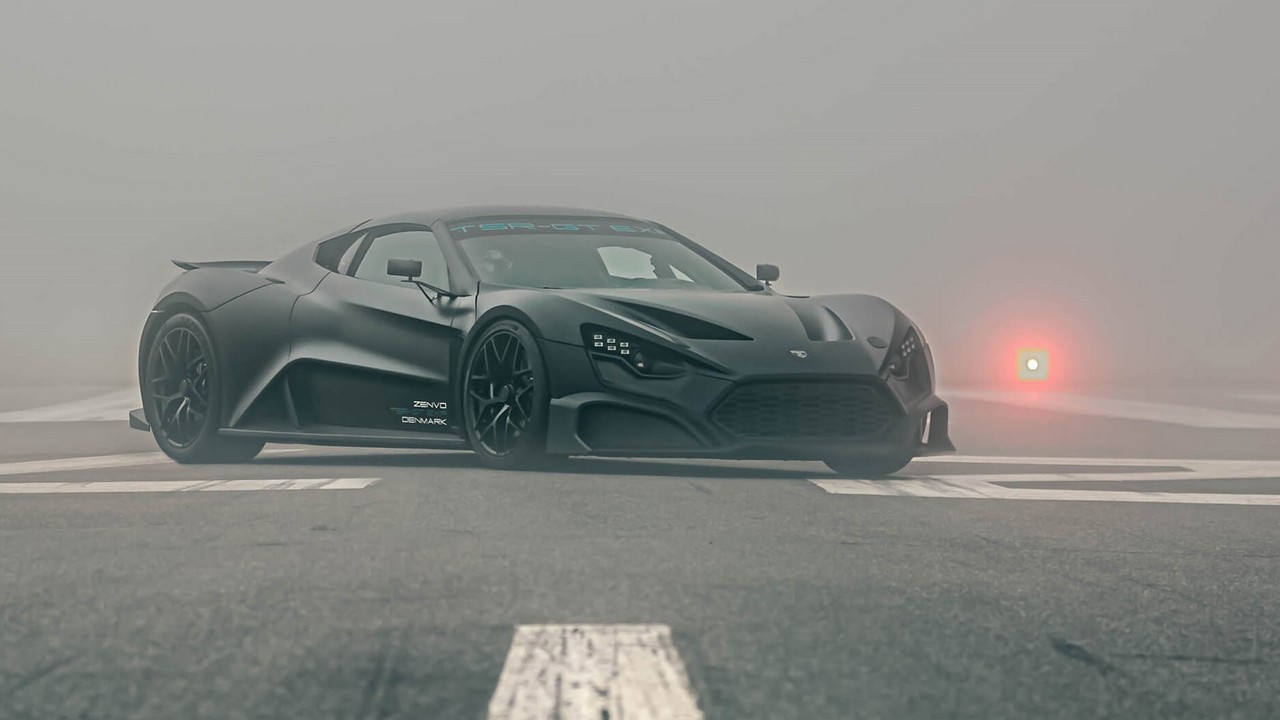
Danish automaker Zenvo may not be a household name, but its TSR-GT certainly deserves a spot in the hypercar hall of fame. Topping out at 263 mph, it’s currently the fastest model in Zenvo’s lineup, and among the fastest in the world. Plans are already underway for an even quicker model called the Aurora, set to debut in 2026, but the TSR-GT is no slouch.
Built with a clear focus on performance, the TSR-GT is packed with functional design, think scoops, vents, and cooling ducts that all serve a purpose. Under the hood, it breaks from the usual turbo trend and opts for twin superchargers bolted to a 5.8-liter V8, producing 1,360 horsepower. It’s brutally fast, unapologetically mechanical, and proudly unconventional.
Bugatti Chiron Super Sport – 273 MPH (limited)

The Chiron Super Sport marks a grand farewell to one of the most iconic hypercar bloodlines in modern history. Though it’s electronically limited to 273 mph, that’s still more speed than most tracks, or drivers, will ever need. The limiter is there for safety and tire durability, and no, you can’t remove it, even if you ask nicely.
Under the sleek bodywork is the familiar 8.0-liter quad-turbo W16 engine that has powered every Bugatti since the Veyron. In this final form, it produces a thundering 1,578 horsepower. While it may not top the charts anymore, the Chiron Super Sport remains a masterclass in high-speed refinement and effortless power.
Koenigsegg Agera RS – 284 MPH
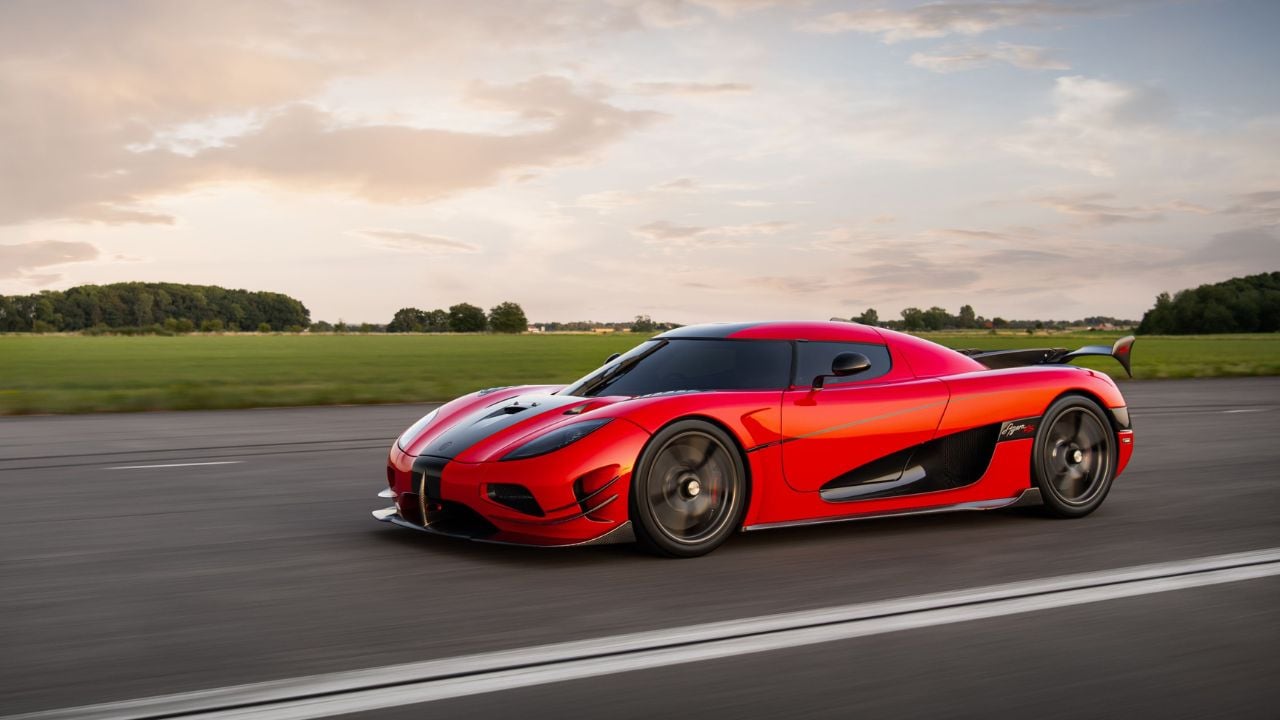
For a long time, names like Ferrari, Porsche, and McLaren dominated the conversation around the world’s fastest cars. But in the mid-1990s, a newcomer from Sweden quietly stepped onto the stage, and Koenigsegg hasn’t looked back since. The Agera series helped solidify the brand’s reputation, with several versions pushing well beyond 270 mph.
The Agera RS set a two-way average top speed record of 277.87 mph, with a peak of 284.55 mph in one direction during the same run. Powered by a 5.0-liter twin-turbo V8 rated at 1,160 hp on gasoline, with higher output available on E85, it was designed with one goal in mind: to dominate the track. It’s not the kind of car you’re likely to see cruising the freeway, but it’s a defining symbol of what Koenigsegg does best, blend outrageous speed with brilliant engineering.
SSC Tuatara – 295 MPH (one-way)
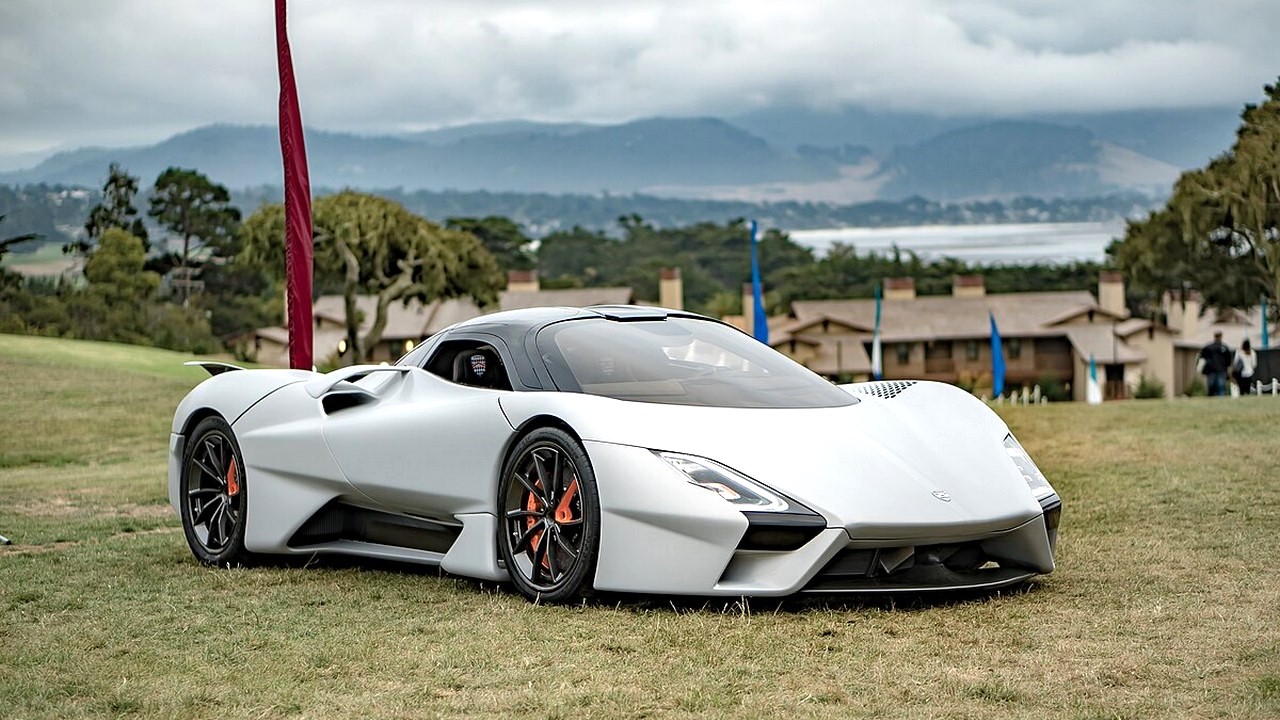
When it comes to chasing top-speed glory, it’s not just Europe in the game. The SSC Tuatara, built in Washington state, proves that American engineering has a serious need for speed. It once held a brief claim as the world’s fastest car with a disputed 316 mph run, but later testing confirmed a still-incredible one-way speed of 295 mph.
Under the sleek carbon-fiber body is a homegrown 5.9-liter twin-turbo V8 capable of making up to 2,200 horsepower, if you feed it methanol. Running on E85 flex fuel, it still cranks out a monstrous 1,750 hp. The Tuatara might not have hit 300 mph just yet, but it’s knocking on the door, and doing it with American swagger.
Hennessey Venom F5 – 300 MPH (tested average)
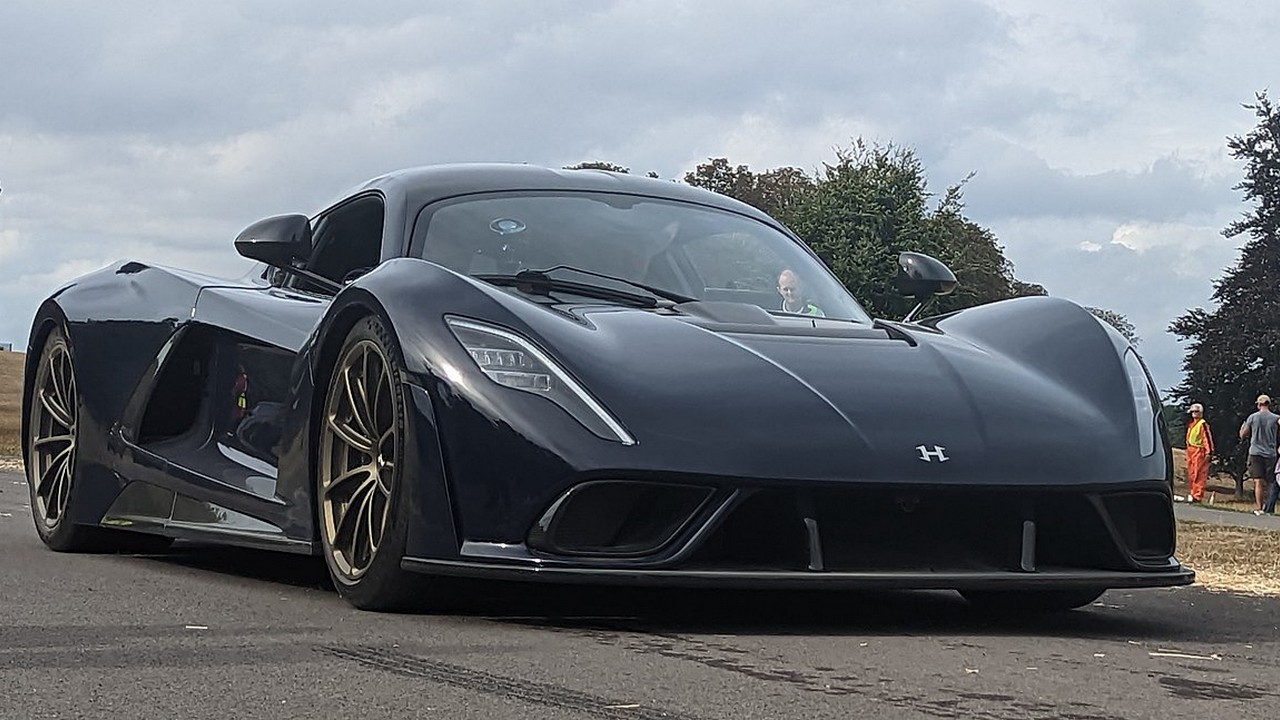
The Hennessey Venom F5 might be sold out, but its legacy as one of the fastest cars in the world is still very much alive. Originally revealed in concept form back in 2014, the Venom F5 was built with one bold goal: to break the 300 mph barrier. While the theoretical top speed sits much higher, publicly documented testing has shown the Venom F5 reaching 271.6 mph, with the company still targeting a 300 mph plus run in the future.
Powering this American missile is Hennessey’s own 6.6-liter twin-turbo “Fury” V8, cranking out 1,817 horsepower. It’s raw, loud, and unapologetically fast, a fitting tribute to what might be the last of the gasoline-powered hypercar giants.
Bugatti Bolide – 304 MPH
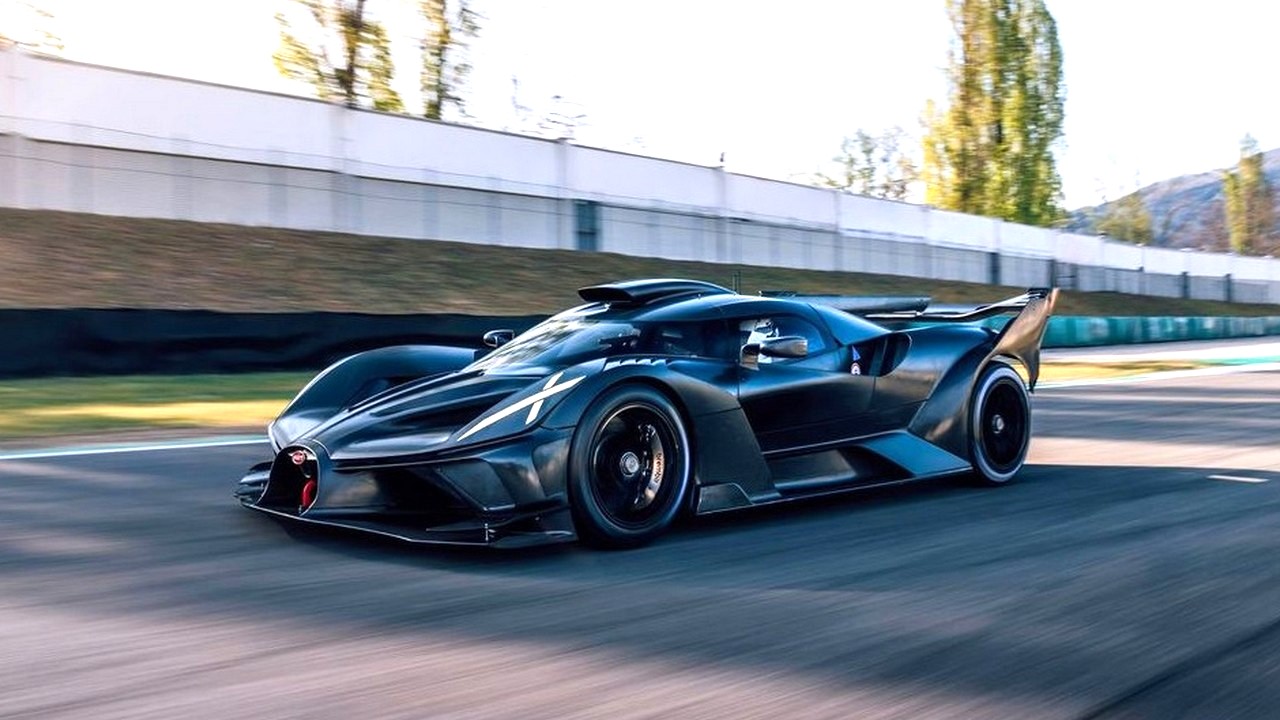
The Bugatti Bolide is one of the rarest, wildest creations to ever wear the Bugatti badge and Bugatti says it targets a top speed of 380 km/h in low downforce configuration. While online rumors have suggested even higher numbers, real-world physics like drag and tire limitations keep this hypercar squarely (and proudly) in the 300 mph club.
Built as a track-focused evolution of the Chiron, the Bolide borrows heavily from its siblings, including the legendary 8.0-liter quad-turbo W16 engine. In its earliest form, the Bolide promised over 1,800 horsepower, though production models were slightly dialed back to a still-astonishing 1,578 hp. It’s lighter, leaner, and sharper than anything Bugatti has built before, and it’s about as close as you can get to a fighter jet on four wheels.
Koenigsegg Jesko Absolut – 330 MPH (theoretical claim)

With a claimed top speed of 330 mph, the Koenigsegg Jesko Absolut stands at the pinnacle of production car performance. Even if real-world testing hasn’t officially reached that number yet, Koenigsegg itself estimates a more realistic 310 mph is within reach, still enough to earn it the crown as the world’s fastest production car.
What makes this Swedish speed machine so special? It all starts with a 5.1-liter twin-turbo V8 producing 1,298 horsepower on standard fuel. Feed it E85 biofuel, and it climbs to a staggering 1,600 hp. A unique high-pressure air injection system helps eliminate turbo lag, and every inch of the car’s design is focused on low drag and high stability. It’s not just built to go fast; it’s built to make speed feel effortless.
Speed Isn’t Everything… But It Sure Is Fun to Watch

The race to be the fastest is about pushing the boundaries of what’s possible (and maybe some bragging rights). Whether powered by roaring V8s, whisper-quiet electric motors, or cutting-edge hybrid tech, each of these cars tells a story of innovation, ambition, and the relentless human drive to go faster.
While most of us may never sit behind the wheel of a 300 mph hypercar, there’s still something thrilling in knowing they exist. They represent the outer edge of engineering, and remind us that even in a world moving toward efficiency and sustainability, there’s still room for wonder, excitement, and speed.