
The Audi RS3 has always occupied a strange and appealing corner of the performance car world. While most compact performance cars now rely on turbocharged four cylinders, the RS3 built its reputation around a turbocharged inline five, an engine layout that feels increasingly rare in the modern market and deeply tied to Audi’s rally heritage. In U.S. spec, that 2.5-liter EA855 engine is rated at 394 HP, which is part of what makes the car feel so distinctive today.
That uniqueness is now facing its biggest challenge yet. According to recent reporting out of Europe, Audi has already pulled the RS3 from sale there ahead of Euro 7 emissions rules, which begin applying to new light-duty vehicle types on November 29, 2026.
The problem is not demand. It is the cost and complexity of keeping a low-volume specialty engine compliant in a much tougher regulatory environment.
Why Euro 7 Puts The Five Cylinder Under Pressure

The EA855 is not a mass-market engine spread across a broad family of models. In its current form, it is used in only two vehicles, the Audi RS3 and the Cupra Formentor VZ5, which makes the business case for a major emissions rework much harder to justify. Reports say the upgrades needed for Euro 7 compliance could include a new particulate filter, more advanced NOx sensors, denser catalysts, and revised ignition mapping.
That is the heart of the issue. When an engine is built in relatively small numbers, every added engineering cost becomes harder to spread across enough vehicles to make the math work. In that context, even a beloved engine can suddenly become vulnerable.
Audi Still Seems To Be Looking For A Way Forward
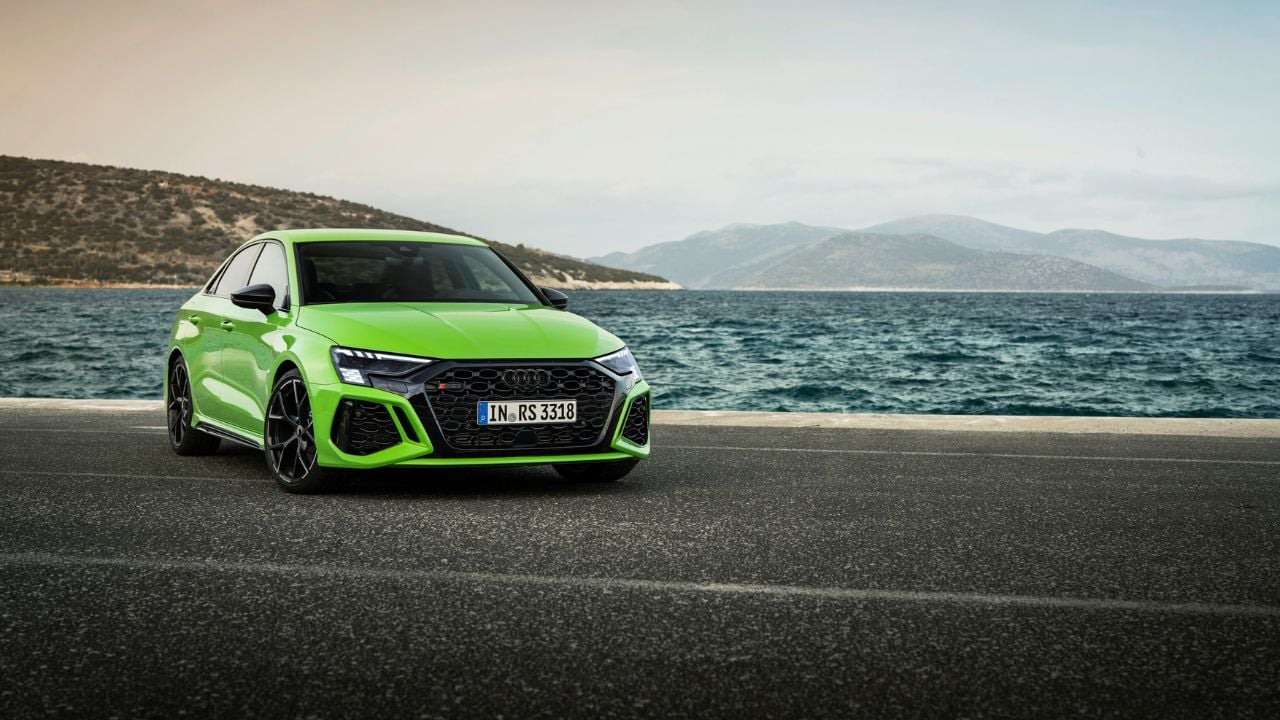
Audi Sport is not treating the story as finished. In comments reported by Autocar and echoed by other outlets, Audi Sport boss Rolf Michl said the company remains open to different technological possibilities, including hybridization, as it looks for a way to preserve the five-cylinder in Europe.
That makes the next step especially interesting. Audi has already shown that electrification does not automatically mean a retreat from performance. The new RS 5, unveiled in February, became Audi Sport’s first plug-in hybrid performance model and combines a twin-turbo 2.9-liter V6 with electric assistance for 639 PS, or about 630 HP.
In other words, Audi now has a fresh internal example of how a performance model can survive stricter rules through electrification while still moving up in output. Whether that exact formula would suit the lighter and more compact RS3 is still unclear, but the broader direction is no longer theoretical.
What A Hybrid RS3 Could Mean
For now, nobody outside Audi appears to know what form a future electrified RS3 might take. A mild hybrid setup would likely be lighter and easier to package, while a plug-in hybrid would give Audi a stronger emissions advantage but could also add significant weight to a car whose appeal depends heavily on agility and character. That uncertainty matters because the current RS3’s charm has never rested on straight-line numbers alone. It has always been about the sound, the response, and the unusual personality of that five-cylinder.
That is why this moment feels so important. Audi is not just trying to save another engine. It is trying to decide whether one of its most charismatic modern powertrains can be adapted without losing the traits that made it worth saving in the first place.
Why The U.S. Still Matters
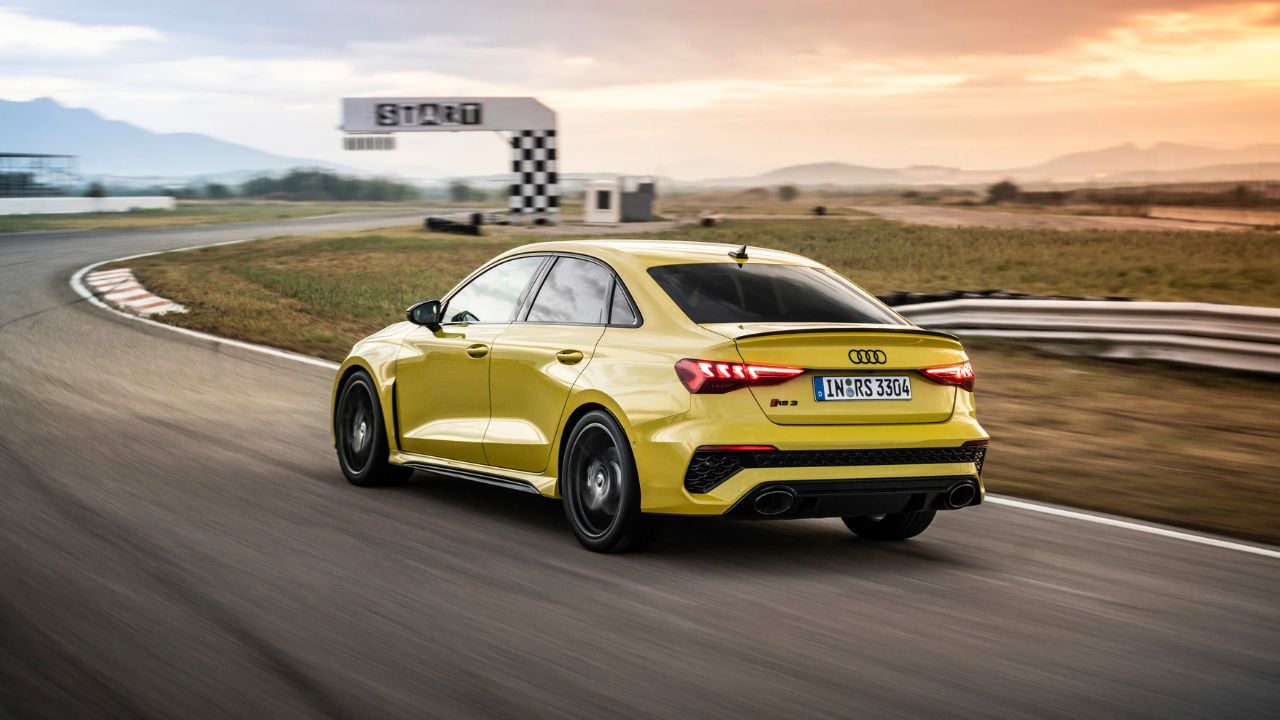
Euro 7 does not apply directly in the United States, but its influence still reaches far beyond Europe because Audi develops vehicles for a global business. Car and Driver reported that Audi still plans to keep selling the five-cylinder in markets with more flexible emissions rules, including the U.S., at least for now.
Even so, the American business case is not huge. Audi does not break out RS3 sales separately, and the broader A3 line sold 8,315 units in the U.S. in 2025, which is not the kind of volume that makes expensive niche engineering decisions easy.
That leaves the RS3 in a delicate position between regulation, economics, and engineering ambition. If Audi finds a way to hybridize the five-cylinder without dulling its personality, the RS3 could become a rare example of tradition and new technology working together instead of canceling each other out. If not, one of the most distinctive engines in the modern performance car market may gradually become a memory of a very different era.
This article originally appeared on Autorepublika.com and has been republished with permission by Guessing Headlights. AI-assisted translation was used, followed by human editing and review.