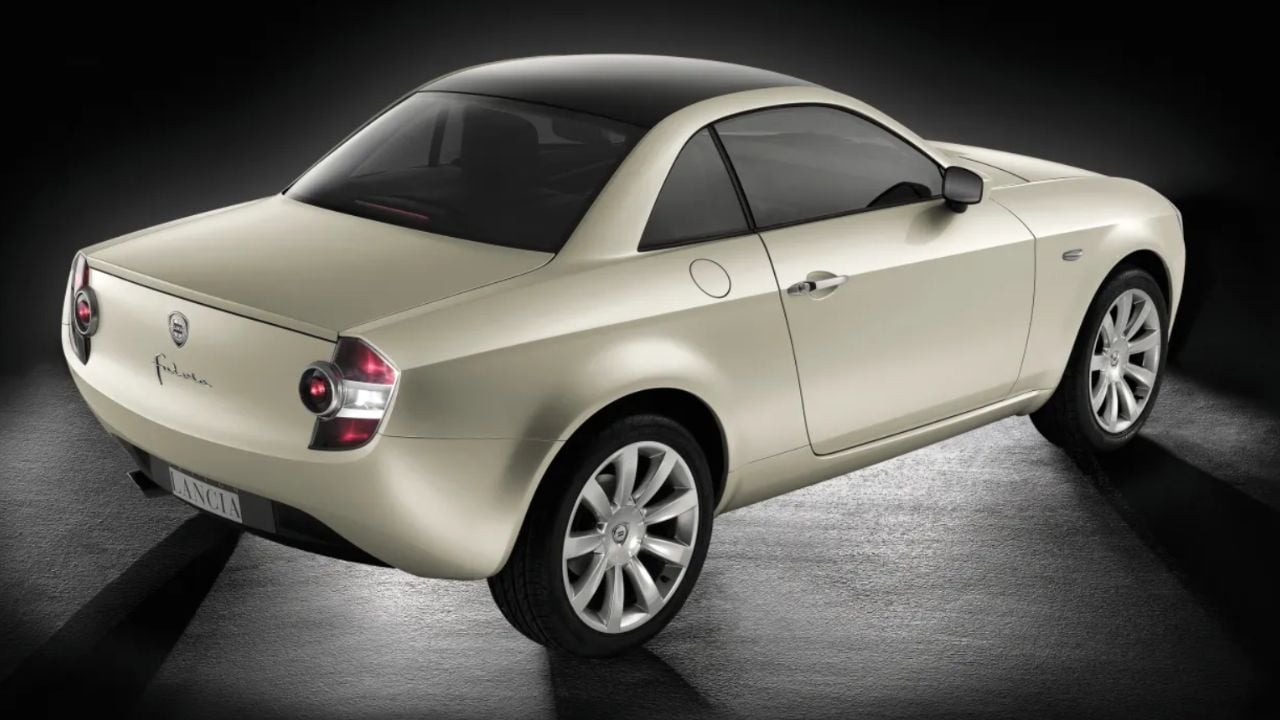
Lancia has no shortage of legends, but few unrealized projects still sting quite like the Fulvia Coupé concept. It arrived looking less like an auto show fantasy and more like the exact car the brand needed.
By the early 2000s, Lancia had drifted a long way from the image that once made it special to rally fans and design loyalists. The old excitement was fading, and the lineup no longer carried much of the spirit people associated with the badge.
Then Frankfurt 2003 changed the mood.
The Fulvia Coupé concept was a modern reinterpretation of the 1965 original, and unlike many concepts of that era, it looked almost ready for the road. That is exactly why its cancellation still feels so frustrating today.
A Difficult Moment For Lancia

The timing was important. Lancia entered the new century with a thinner reputation than its history deserved, and the brand’s design team knew it needed something emotional, elegant, and instantly recognizable if it wanted to put some life back into the marque.
That is why the original Fulvia was such a smart starting point. The first Fulvia Coupé debuted in 1965, became one of Lancia’s most admired road cars, and helped build the image that later fed directly into the brand’s competition success, including the Monte Carlo Rally-winning 1.6 HF of 1972.
For the 2003 concept, designer Alberto Dilillo worked under design director Flavio Manzoni to create a new car that respected the old Fulvia’s stance and proportions without turning it into a costume piece. The official approach was not nostalgic imitation but a modern reworking of the original idea.
A Concept That Felt Production Ready

When the car appeared at the Frankfurt Motor Show in September 2003, it made an immediate impression. Evo described it as the star of a confident Lancia stand, while period company material presented it as a prototype created to celebrate one of the brand’s most important names.
Part of the appeal came from how disciplined the design felt. The concept kept the falling roofline and tidy three-box silhouette of the classic car, but it mixed those cues with smoother early 2000s body surfacing, swept headlights, and a clean front bumper that now looks refreshingly restrained.
Just as important, the car did not rely on typical concept car gimmicks. It had real mirrors, normal door handles, realistic cooling openings, and an interior trimmed in dark brown leather, wood, and Alcantara, right down to specially made Trussardi luggage in the rear compartment.
Light, Simple, And Honest

Underneath, the Fulvia Coupé concept was far more straightforward than its styling suggested. It used front-wheel-drive Fiat Barchetta underpinnings and a naturally aspirated 107-cubic-inch inline four, paired with a five-speed manual transmission.
Output was about 138 HP, which did not sound dramatic even by the standards of the time. But the concept also weighed only about 2,183 pounds thanks in part to aluminum body panels, and that kept the whole package true to the light, simple spirit that had always made the Fulvia name attractive.
The numbers reflected that balance. Contemporary details put the car at 0 to 62 mph in 8.6 seconds with a top speed of 132 mph, which means it was never intended to be a brute force machine. It was supposed to be something rarer: a small, elegant, front-wheel-drive coupe built around feel, proportion, and charm.
Why It Never Reached Showrooms
For a while, production looked more plausible than many people now remember. Luca de Meo, then Lancia’s boss, said the company only needed about 2,000 to 2,500 buyers willing to spend around $41,000 for the car to make sense, and there was even talk that an outside specialist such as Zagato could help build it.
But the obstacles were real. The Barchetta platform was aging out, Fiat itself was in weak financial shape, and signing off a low-volume coupe for a struggling brand quickly became harder to justify no matter how warmly the public responded in Frankfurt.
Hope flickered again a few years later when Sergio Marchionne hinted the project might still happen, but it never did. De Meo has since called the failure to put the Fulvia Coupé into production one of his biggest professional regrets, and the one-off show car now survives as part of the Heritage Hub museum in Turin, where Stellantis preserves many of its historic models.
That is what keeps this story alive. The Fulvia Coupé concept was not memorable because it was wild, outrageous, or impossible. It is memorable because it felt achievable and because even now it still looks like the kind of car Lancia should have had the courage to build.
This article originally appeared on Autorepublika.com and has been republished with permission by Guessing Headlights. AI-assisted translation was used, followed by human editing and review.