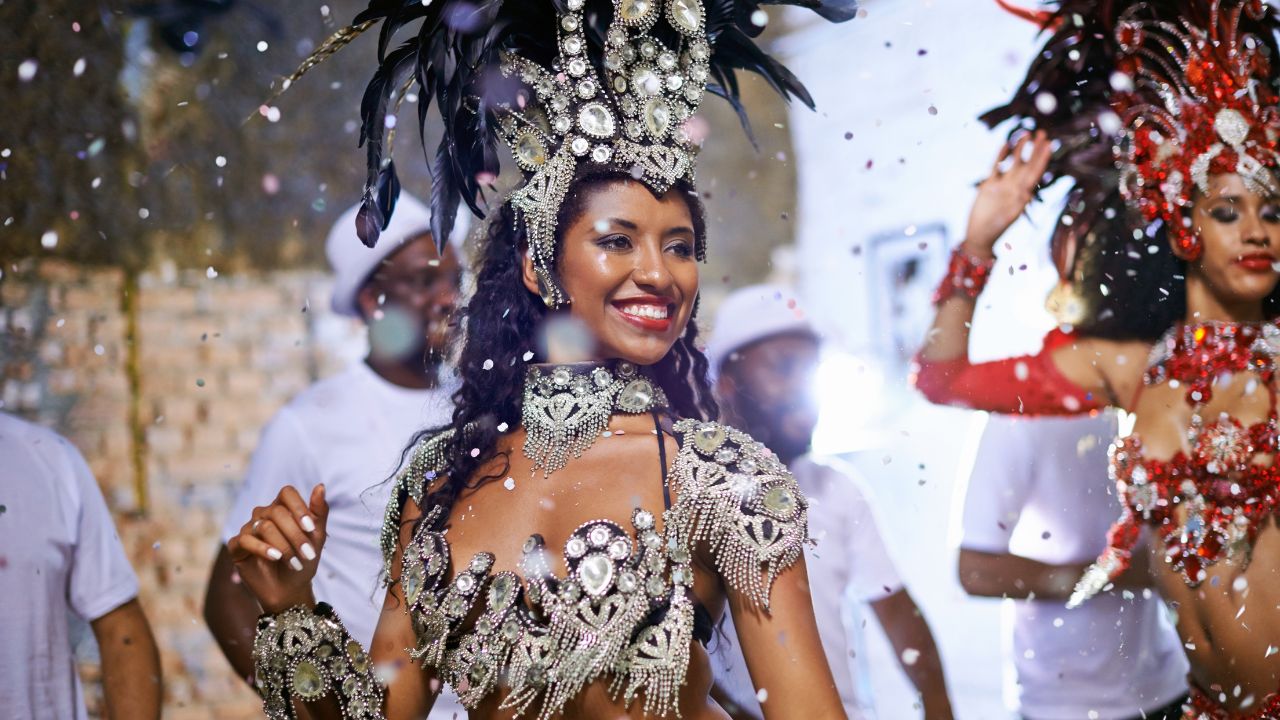
Each winter, the calendar builds toward Fat Tuesday, the final day before Lent in the Christian tradition. Because Easter shifts annually, this pre-Lenten season falls in February most years and sometimes reaches early March.
Across the United States, places with French and Spanish roots, plus long Gulf Coast traditions, mark the lead-up with organized krewes, masked royalty, and established customs. Travelers who check published schedules ahead of time avoid road closures and land better viewing spots.
From coastal Alabama to Missouri riverfront blocks, local character shapes every celebration. Some destinations lean into grand processions with elaborate floats, while others spotlight horseback runs, music halls, and family-friendly lineups. King cake shows up in bakeries throughout the season, colored in purple, green, and gold to represent justice, faith, and power. A flexible plan, comfortable footwear, and early arrival keep the day running smoothly.
1. New Orleans

Carnival culture in New Orleans sets the national benchmark. Major krewes such as Rex and Zulu roll along St. Charles Avenue and finish near Canal Street, right by the edge of the French Quarter, with beads and signature throws flying from the floats. The calendar starts weeks before Fat Tuesday and builds toward a high-drama finale that feels bigger each night.
Uptown segments feel residential in daylight, which gives families more breathing room. After dark, illuminated floats hit a more theatrical rhythm near Canal Street. King cakes appear across the metro area with classic cinnamon fillings and cream cheese variations. Transit plans can change during parade weeks, so check the latest city and RTA updates before heading out.
2. Mobile
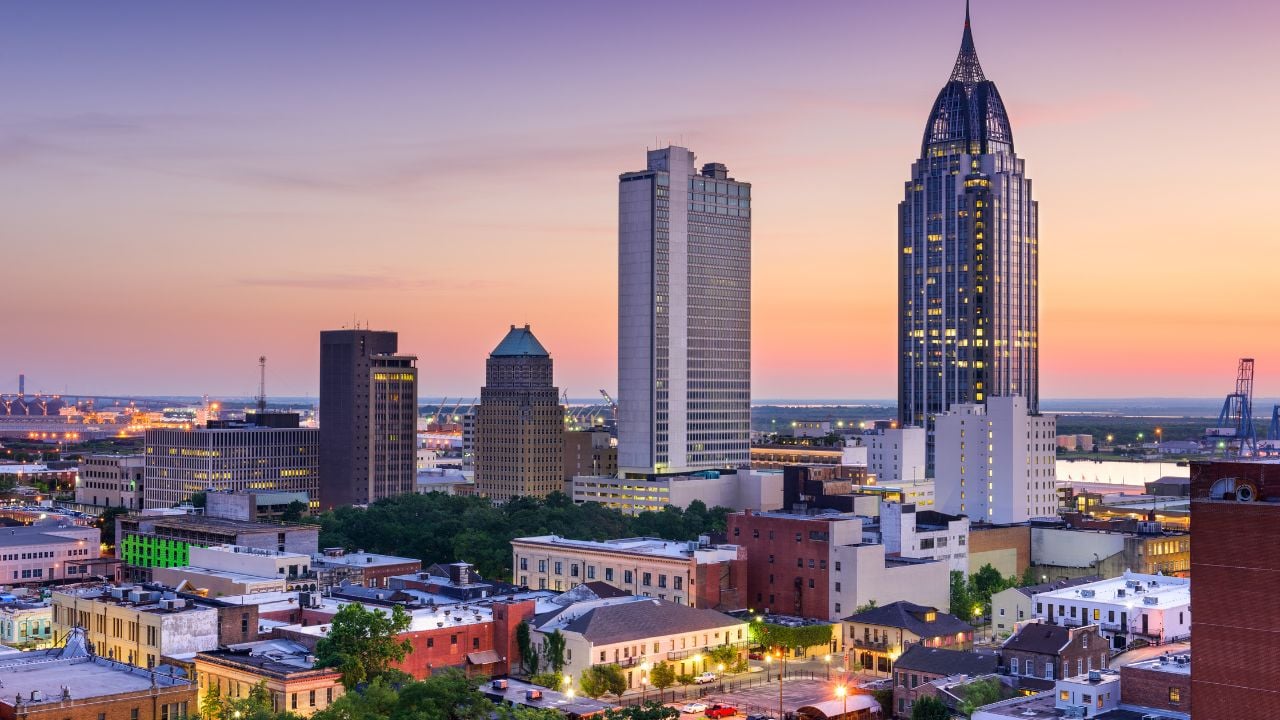
Mobile traces its organized Carnival history to 1703, making it the oldest documented observance in the country. Mystic societies such as the Conde Cavaliers coordinate a multi-week calendar, with Bienville Square acting as a central downtown anchor on many days. The Mobile Carnival Museum helps explain the tradition through regalia, archival pieces, and the story behind the city’s court culture.
Formal balls and coronations give the season a distinct tone here. Daytime options make the visit easier for travelers bringing children or joining multi-generation trips. Marching ensembles from local schools add a steady soundtrack that keeps streets lively between floats. Scan municipal notices before you go so street closures and parking shifts do not surprise you.
3. Galveston
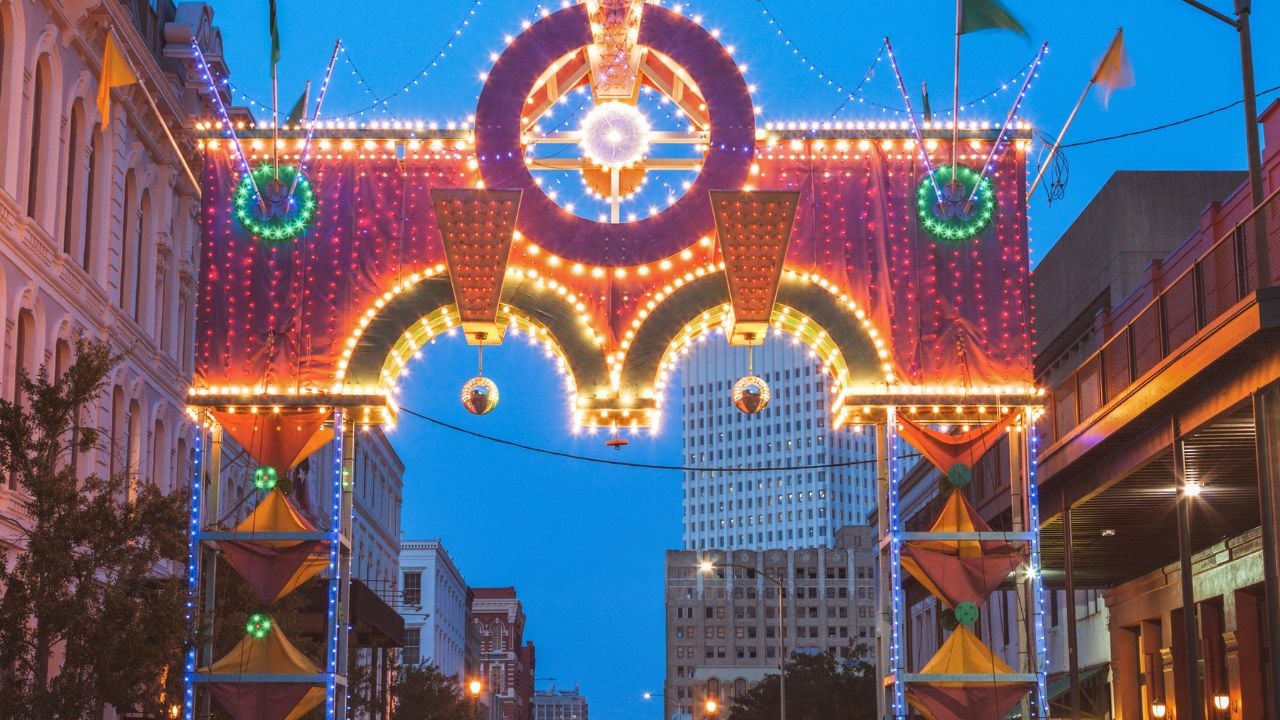
On the Texas coast, Galveston hosts one of the largest Gulf gatherings outside Louisiana. Much of the action concentrates around the Strand Historic District, where ironwork balconies overlook the parade corridor and the sidewalks fill fast on peak weekends. Ticketed viewing zones add structure for visitors who prefer reserved space and predictable sightlines.
Concert stages expand the program beyond traditional krewe events. Fireworks are often part of the waterfront schedule during headline dates, depending on the year’s lineup. Throws commonly include beads plus branded keepsakes. Hotels near the Strand book quickly, so lock in lodging early if you plan to stay within walking distance.
4. Lafayette
In Lafayette, Cajun heritage shapes the season’s most memorable customs. Nearby rural communities continue the courir de Mardi Gras tradition, where masked riders on horseback gather ingredients for a communal gumbo. Inside the city, multiple neighborhood parades keep the vibe approachable and easy to follow.
Zydeco shows and live bands fill dance halls and public spaces throughout the run-up. Local menus lean hard into boudin, cracklins, and Gulf seafood that match the region’s identity. Smaller crowds often mean simpler curb access and less jostling for a spot. A short drive into surrounding towns adds context, since many traditions are older than the modern street parade format.
5. St. Louis
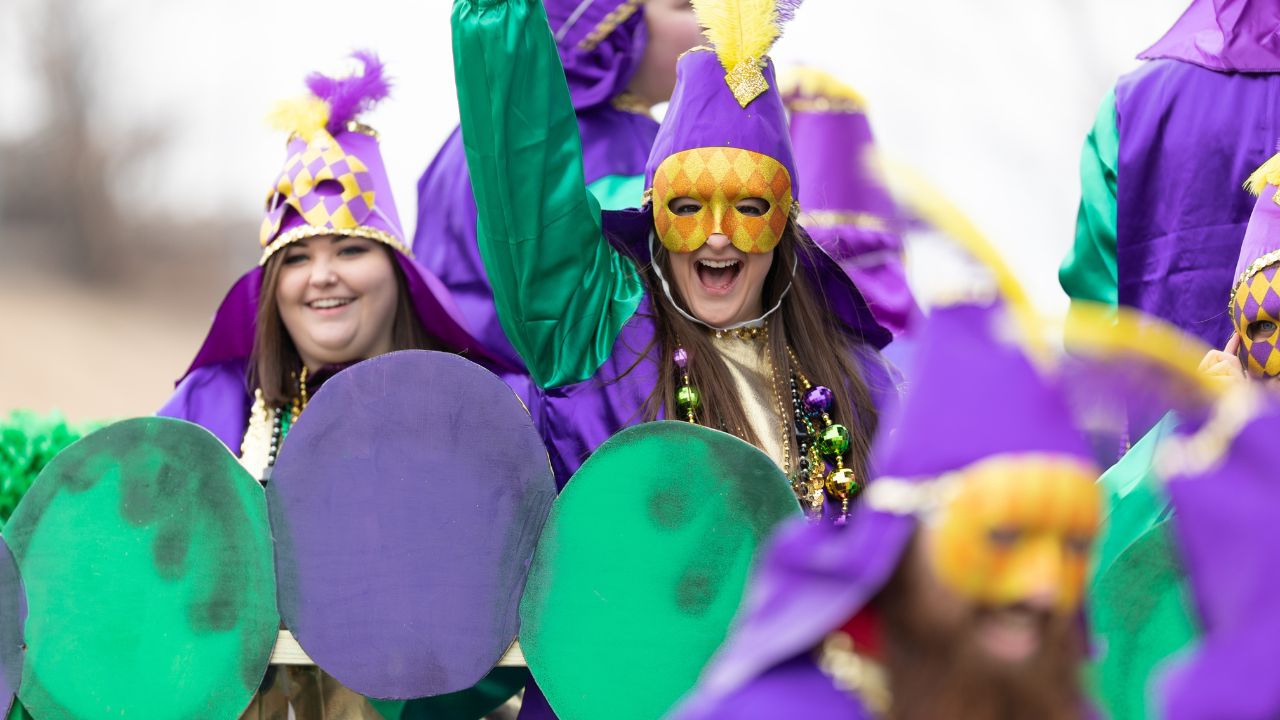
The Soulard district in St. Louis hosts a major winter celebration each year. The Bud Light Grand Parade typically lands on the Saturday before Fat Tuesday and draws big crowds to historic brick streets and packed sidewalks. The neighborhood’s French colonial links help explain why this tradition took root so strongly here.
Costume contests push the creativity level way up, especially near the busiest corners. A pet parade and family activities broaden the audience beyond late-night revelers. Restaurants in the area often offer king cake alongside local staples, so food can anchor your day between events. Arriving early cuts stress, especially if you plan to park nearby.
6. Pensacola
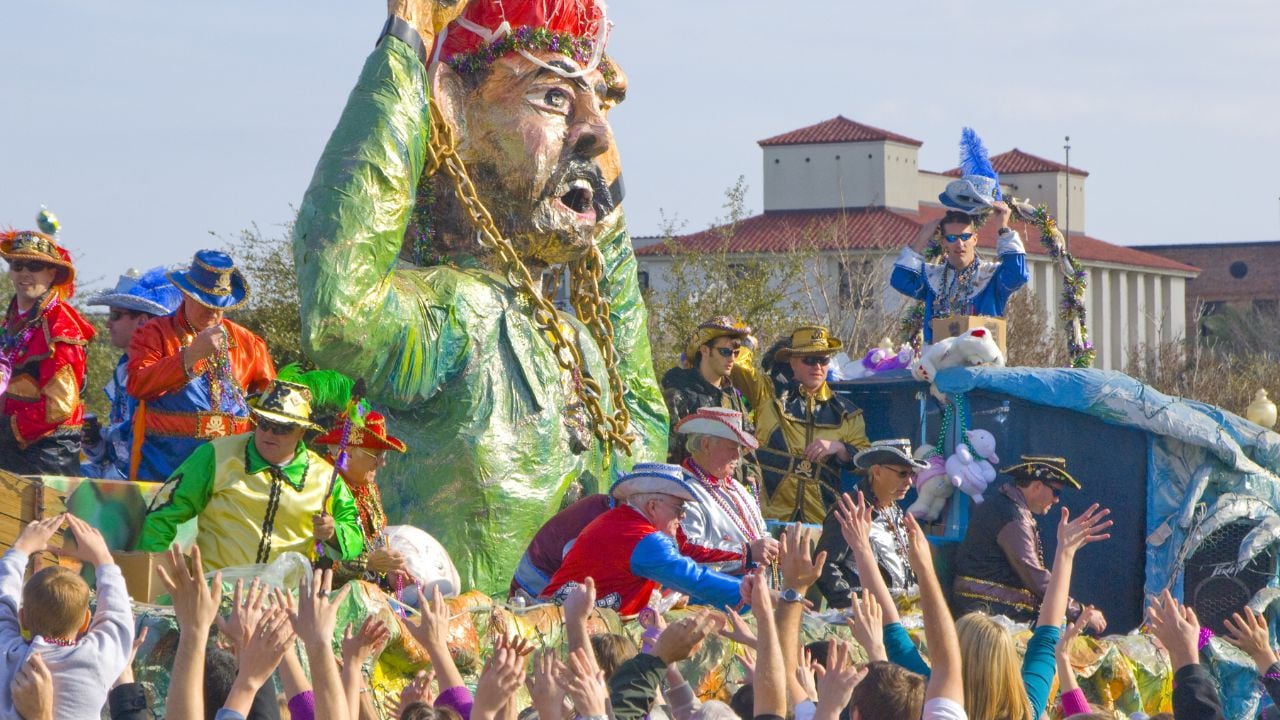
Pensacola joins Gulf Coast traditions through events organized by the Krewe of Lafitte. Oak-shaded streets downtown frame many processions, and the nearby waterfront adds a scenic backdrop for daytime viewing. Community groups play a major role in float building, which gives the parade themes a local, handcrafted feel.
Naval aviation heritage sometimes shows up in designs and references, depending on the year. Weekend programming often includes youth-focused parades that work well for younger spectators. Plazas and small parks downtown make good reset points between lineups. Keep an eye on the official calendar and day-of notices so timing changes do not throw off your plan.
7. Baton Rouge
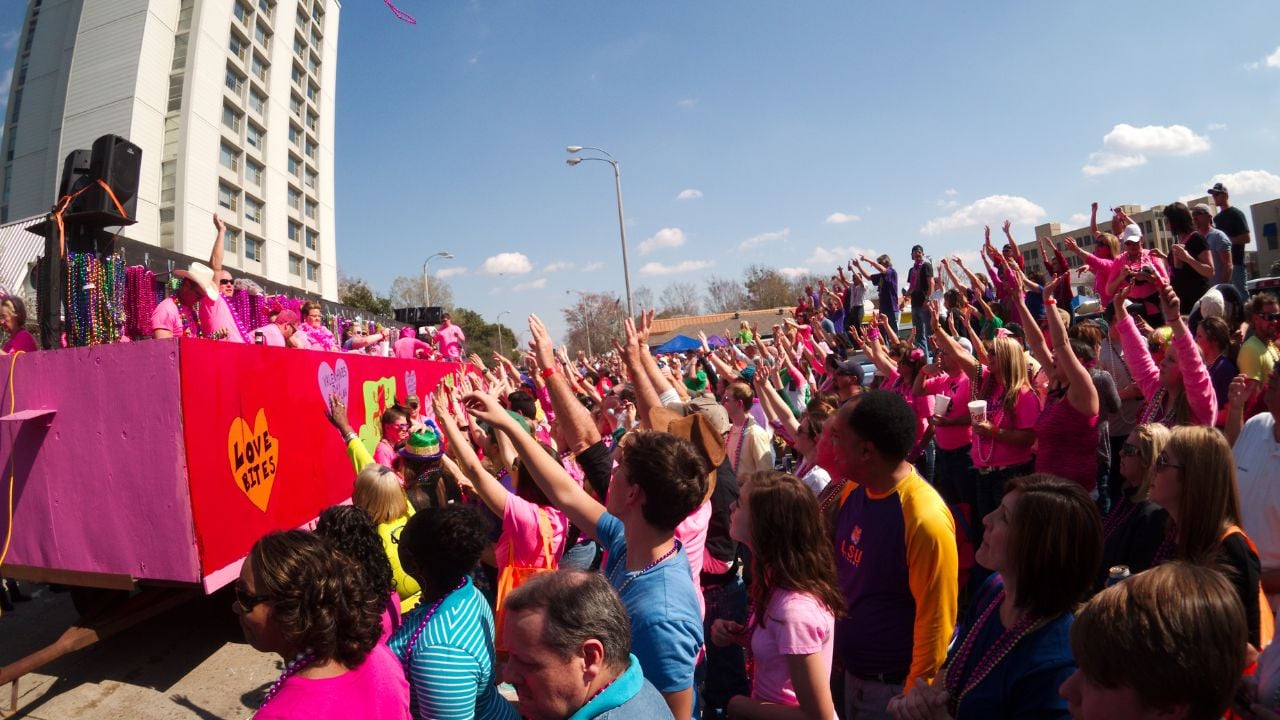
Louisiana’s capital blends university energy with established krewe culture. The Spanish Town Parade is the best-known highlight, tied to its playful pink flamingo symbol and a crowd that shows up ready to lean into the joke. Residential streets can feel more manageable than the biggest metro routes, which helps first-timers settle in.
Perkins Road Overpass District spots often extend the night with food and bar options nearby. Family-friendly daytime parades appear earlier in the calendar, which makes it easier to pick a calmer visit window. Many groups emphasize handcrafted throws rather than purely mass-produced items. Check the published map before you go, because the easiest entry and exit points are not always the closest ones.
8. Biloxi
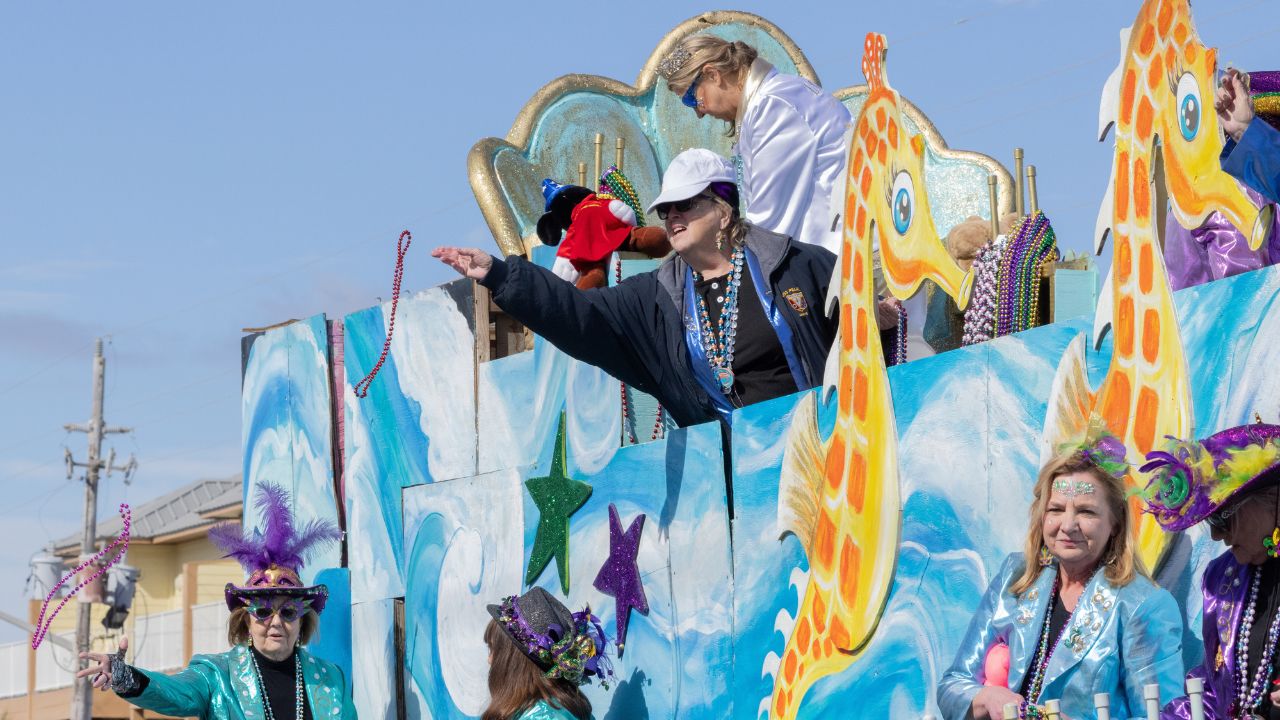
Biloxi embraces the season along Beach Boulevard with open views of the Gulf of Mexico. The Krewe of Neptune and the Gulf Coast Carnival Association help anchor major coastal events, and the city’s resort and casino scene expands lodging capacity during busy weekends. The shoreline setting gives the celebration a more open feel than tightly packed downtown corridors.
Daylight parades tend to draw families who want space near the water. Seafood spots often extend hours to match the visitor spike, especially around headline dates. Beachside parking fills early and can turn into a slow crawl later in the day. Arriving ahead of the crowd is the simplest way to keep logistics easy.
9. Lake Charles
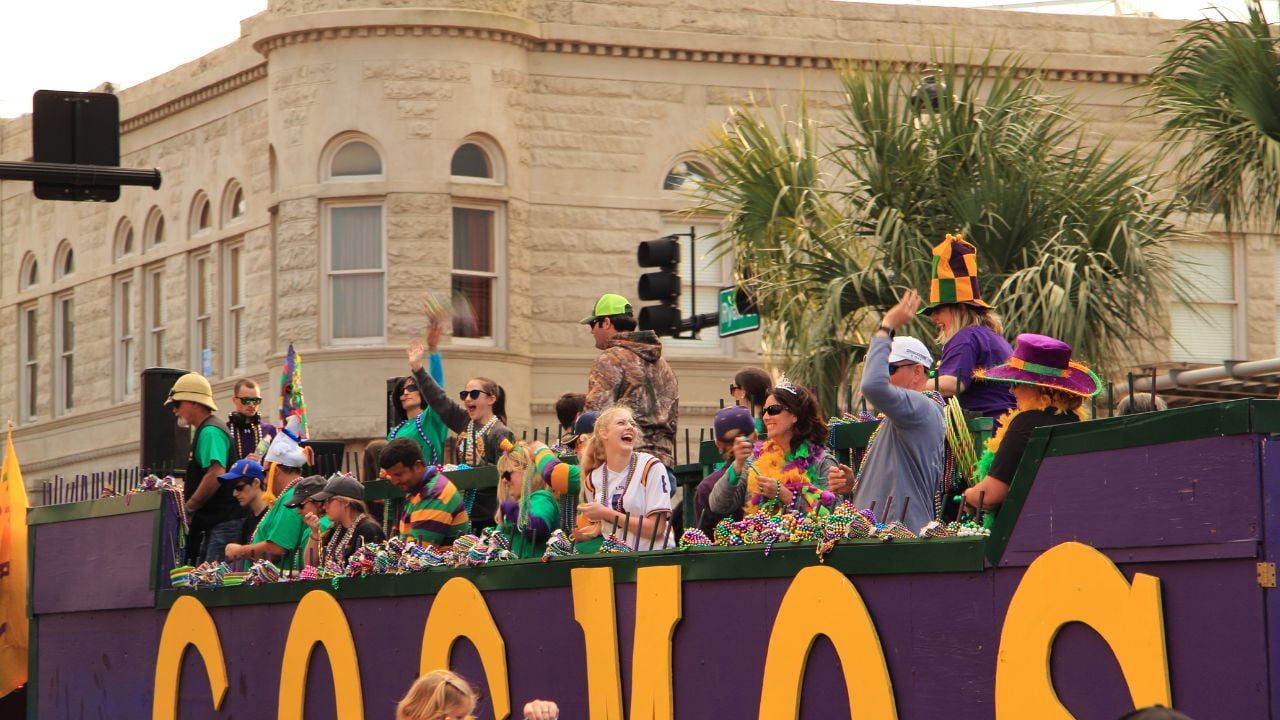
Lake Charles runs a Krewe of Krewes Parade that brings multiple groups into one downtown showcase. The Civic Center often hosts complementary activities tied to the season, while food vendors highlight regional cooking across the event footprint. Volunteer labor stays at the heart of float construction, which keeps the vibe community-driven.
Local marching ensembles add energy during afternoon hours. Casino-linked hotels sometimes package stays around key weekends, which can help with planning. Since dates shift each year, confirm timing on the official calendar before booking travel. The compact layout makes it easier to move between venues without a long transit plan.