The 1970s were supposed to be the death knell for American muscle, but these magnificent machines had other plans. While insurance companies clutched their pearls and the gas crisis loomed on the horizon, a handful of automakers kept the horsepower dream alive in those early years.
Sure, the party didn’t last the whole decade, but what a party it was while it lasted. These cars represent the last stand of unfettered performance before emissions regulations and fuel economy standards rewrote the rulebook. They’re the automotive equivalent of that friend who showed up to the disco in bell-bottoms and a muscle tee, refusing to let go of the ’60s dream.
Let’s celebrate the machines that squeezed every last drop of power out of the golden age before everything changed.
1970 Chevrolet Chevelle SS 454 LS6

The LS6 was Chevy’s nuclear option, and boy did it deliver. With 450 horsepower and 500 lb-ft of torque from its 454 cubic inch V8, this was one of the most powerful factory rated engines GM had put into a production car at the time. The Chevelle SS 454 could hit 60 mph in around 6 seconds, which was genuinely impressive for a car that weighed around 4,000 pounds.
This was the peak of the muscle car era, arriving right before everything started to change. Only about 4,475 LS6 Chevelles were built, making them rare even when new.
Today, they’re considered one of the most desirable muscle cars ever produced, and the prices at auction reflect that legendary status.
1970 Plymouth Hemi ‘Cuda

Mopar’s answer to the horsepower wars came in an impossibly cool package. The 426 Hemi engine in the ‘Cuda produced 425 horsepower, though most enthusiasts agree that figure was pretty conservative.
Plymouth built 666 Hemi ‘Cudas for the U.S. market in 1970, including 14 convertibles, making them instant collectibles. The combination of the Hemi’s brute force and the E-body platform’s relatively compact size created something truly special. These cars could run the quarter mile in the low 13-second range right off the showroom floor.
The Hemi ‘Cuda has become one of the most valuable muscle cars in history, with pristine examples selling for seven figures at auction.
1970 Buick GSX Stage 1

Buick proved that luxury brands could build serious performance cars too. The GSX came with a 455 cubic inch V8 that made 360 horsepower, but the real story was the torque: a staggering 510 lb-ft.
That torque figure made the GSX one of the quickest cars off the line, period. Buick offered the GSX in only two colors for 1970: Apollo White and Saturn Yellow, both with bold graphics that left no doubt about the car’s intentions. Only 678 were built that first year, making it rarer than most of its competitors.
The Stage 1 package transformed Buick’s gentleman’s hot rod into a legitimate muscle car contender that could embarrass just about anything at a stoplight.
1970 Oldsmobile 442 W-30

Oldsmobile’s 442 had been a strong player throughout the ’60s, but the W-30 package took things to another level.
The 455 cubic inch Rocket V8 produced 370 horsepower and 500 lb-ft of torque with the W-30 modifications. These included a hotter cam, better breathing heads, and a functional ram air setup through the hood scoops.
The W-30 could run the quarter mile in the mid-13-second range with a skilled driver. Oldsmobile only built 3,100 W-30 equipped 442s in 1970, making them relatively rare.
The combination of Oldsmobile’s refinement and serious go-fast hardware made the 442 W-30 a thinking person’s muscle car.
1971 Plymouth Road Runner 440+6

The 1971 Road Runner marked the last full year of the legendary 440 Six Pack option, and it was a fitting sendoff. With three two-barrel carburetors feeding the 440 cubic inch V8, it produced 385 horsepower in its final form.
The Six Pack setup was wonderfully mechanical: the outboard carbs only kicked in under heavy throttle, giving you drama on demand. It is one of the rarest muscle cars of the era. The combination of the Road Runner’s no-nonsense attitude and the Six Pack’s performance made for an unforgettable driving experience.
This was muscle car simplicity at its finest, before everything got complicated.
1970 Ford Torino Cobra 429 Super Cobra Jet

Ford’s answer to the horsepower wars was the 429 Super Cobra Jet, rated at 375 horsepower. That rating was likely conservative, as these cars were absolute monsters at the drag strip.
The Torino Cobra was more of a sleeper than some of its flashier competitors, which made it even more dangerous. Ford built around 7,675 Torino Cobras in 1970, though not all had the Super Cobra Jet engine. In period testing, Motor Trend recorded a 13.99 second quarter mile at 101 mph for a 4 speed Torino Cobra with the 429 Super Cobra Jet.
These cars represented Ford’s commitment to straight-line performance, even if the styling was a bit more understated than the competition.
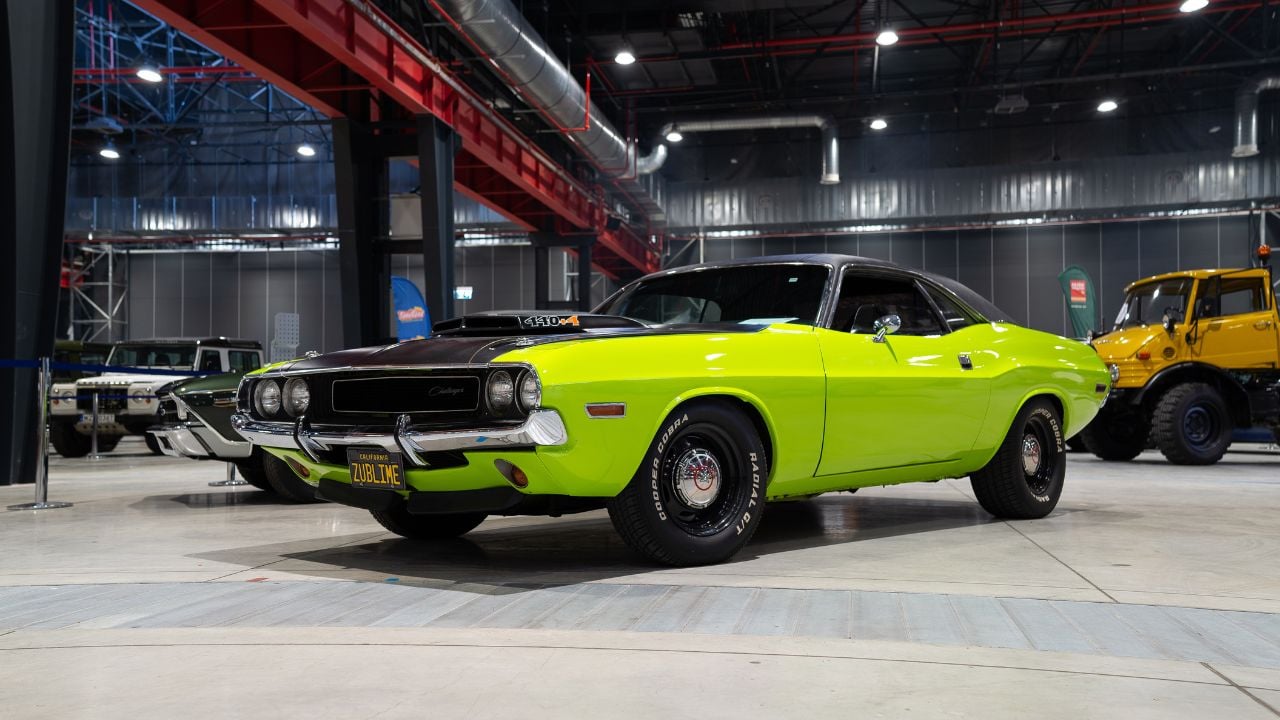
1970 Dodge Challenger R/T 440 Six Pack

The Challenger arrived fashionably late to the muscle car party, but it made quite an entrance. The 440 Six Pack engine produced 390 horsepower, giving the Challenger serious credentials.
Dodge offered an incredible range of options, making it possible to order your Challenger exactly how you wanted it. The longer wheelbase compared to the ‘Cuda gave the Challenger slightly better handling characteristics. Only 2,035 Challengers were equipped with the Six Pack in 1970, making them desirable today.
The Challenger combined Mopar’s mechanical excellence with styling that has aged beautifully over the decades.
1970 Pontiac GTO Judge Ram Air IV
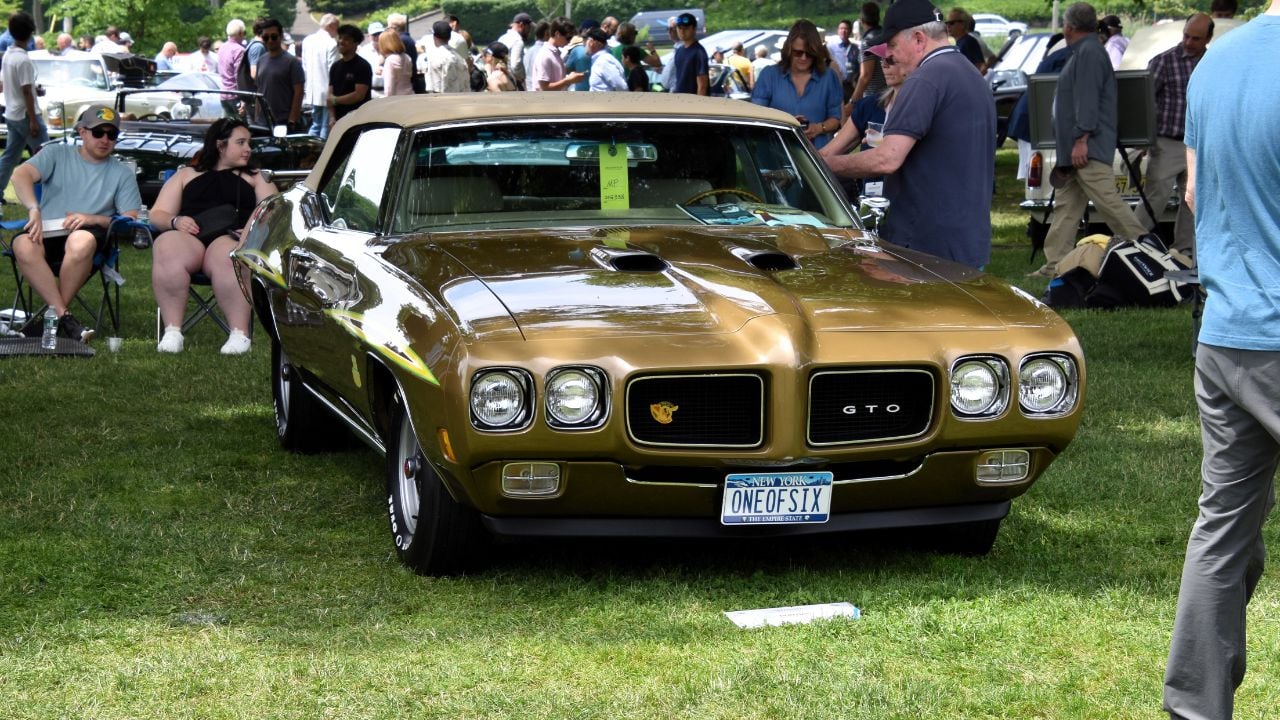
The Judge was Pontiac’s wild child, and the Ram Air IV engine was its party trick. With 370 horsepower from its 400 cubic inch V8, the Ram Air IV was a high-winding screamer.
The Judge package included graphics and spoilers that made the car impossible to ignore. These cars could run mid-13s in the quarter mile with the right gearing.
The Judge represented Pontiac’s willingness to embrace the youth market with style and substance in equal measure.
1971 AMC Javelin AMX 401
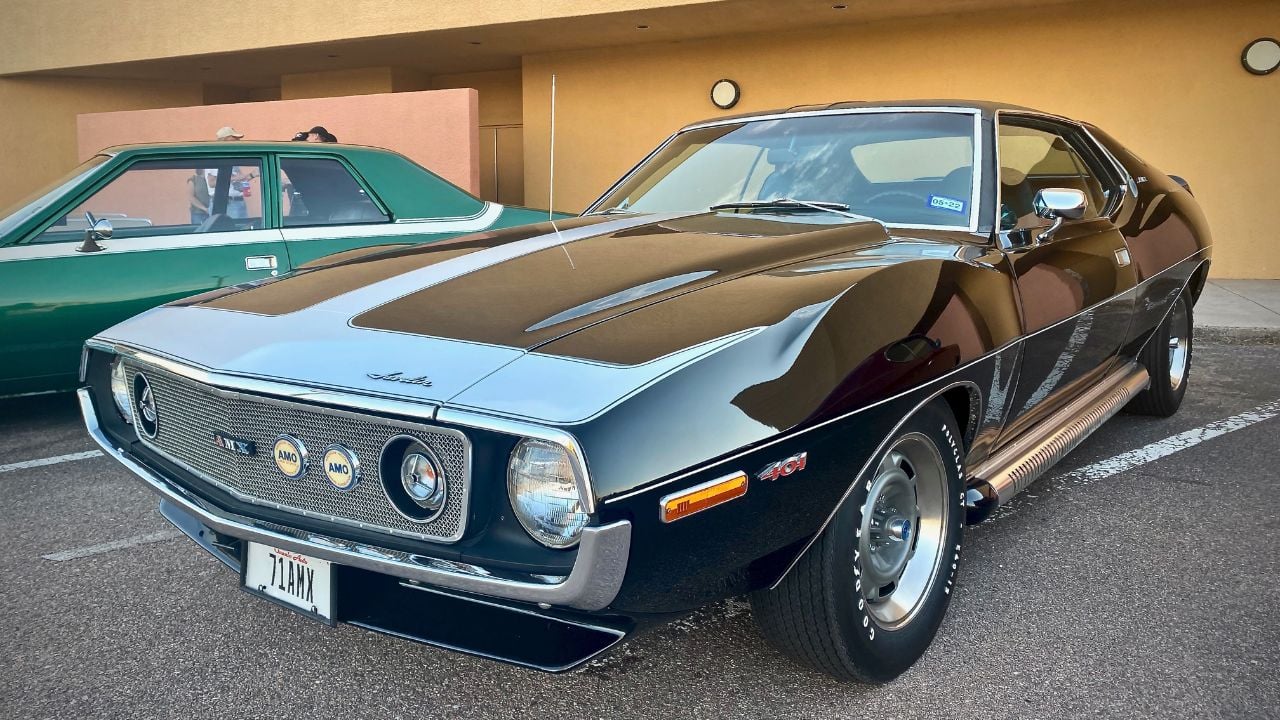
AMC might have been the underdog, but they knew how to build a performance car. The Javelin AMX came with a 401 cubic inch V8 making 330 horsepower, solid numbers for 1971.
What made the Javelin special was its handling: AMC actually cared about making the car go around corners. The styling was distinctly American but with a touch of European flair that set it apart. AMC built fewer than 3,000 Javelin AMXs in 1971, making them rare today.
These cars proved that you didn’t need to be from Detroit’s Big Three to build something genuinely exciting.
1970 Mercury Cyclone Spoiler 429

Mercury’s Cyclone Spoiler was a bit of a style experiment that also happened to pack serious power. The 429 Cobra Jet engine produced 370 horsepower, giving the Cyclone impressive straight-line performance.
Mercury offered wild graphics packages and aerodynamic add-ons that made the Spoiler stand out. The Cyclone was essentially a sportier, slightly upscale version of the Ford Torino. Production numbers were relatively low, making these cars rare survivors today.
The Spoiler represented Mercury’s attempt to carve out its own identity in the muscle car market.
1970 Chevrolet Camaro Z28

The Z28 took a different approach to the horsepower war, prioritizing handling without sacrificing power. The LT-1 350 cubic inch V8 produced 360 horsepower and revved like a small block should.
This was a more sophisticated muscle car, designed to compete in Trans Am racing. The Z28 could run with the big block cars in the quarter mile while actually going around corners. Chevrolet built 8,733 Z28s in 1970, making them relatively successful.
The second-generation Camaro Z28 represented the evolution of the muscle car into something more well-rounded.
1971 Ford Mustang Boss 351

The Boss 351 was Ford’s last gasp of true muscle car performance before emissions strangled everything. With 330 horsepower from its 351 cubic inch Cleveland V8, it was potent but not outrageous.
What made the Boss 351 special was its rev-happy nature and solid handling dynamics. Ford only built 1,806 Boss 351 Mustangs, making them rare today. These cars could hold their own against bigger-engined competitors thanks to better weight distribution.
The Boss 351 marked the end of an era, as emissions regulations would change everything for 1972 and beyond.
Conclusion

These machines represent a brief but glorious moment in automotive history when horsepower was king. The early 1970s gave us the last true muscle cars before emissions controls, insurance rates, and fuel economy standards changed the game forever.
While the party ended quickly, the legacy of these cars lives on in every modern performance vehicle. They proved that American automakers could build genuinely exciting cars that captured the imagination of enthusiasts. Today, these survivors command serious money at auctions and cruise nights, reminding us of when cubic inches and horsepower were all that mattered.
The 1970s horsepower war may have been short-lived, but its impact on car culture remains undeniable decades later.