
If there’s one thing classic cars taught us, it’s that there’s nothing quite like a proper hood scoop to make your heart skip a beat. You know that feeling when you’re cruising down the street and spot one of those beauties from the golden age of automotive design? The one where form met function in the most gloriously aggressive way possible? Yeah, that’s the magic we’re talking about here.
Hood scoops weren’t just about looking tough (though they absolutely nailed that part). These were the classic performance car equivalent of rolling up your sleeves – they meant business. They promised cold air induction, better performance, and the kind of street credibility that made other drivers nod in respectful acknowledgment. Today, we’re diving into the classics that had stand-out hood scoops that made us feel like we were staring an angry bull in the face.
1970 Plymouth ‘Cuda AAR

The Plymouth ‘Cuda AAR (All American Racers) came equipped with what might be the most purposeful-looking hood scoop in automotive history. That massive fiberglass shark-gill intake wasn’t messing around: it fed cool air directly to the 340 Six-Barrel engine underneath, and it looked like it could swallow small birds in flight. The scoop was so prominent that it practically announced itself before the rest of the car came around the corner.
What made the AAR special wasn’t just its appetite for air, but how that scoop perfectly complemented the car’s racing-bred attitude. This wasn’t some weekend warrior trying to look tough in the grocery store parking lot – this was legitimate Trans-Am racing technology adapted for the street. The fact that Plymouth only made these for one year makes spotting one today feel like discovering an automotive treasure.
1966 Shelby GT350
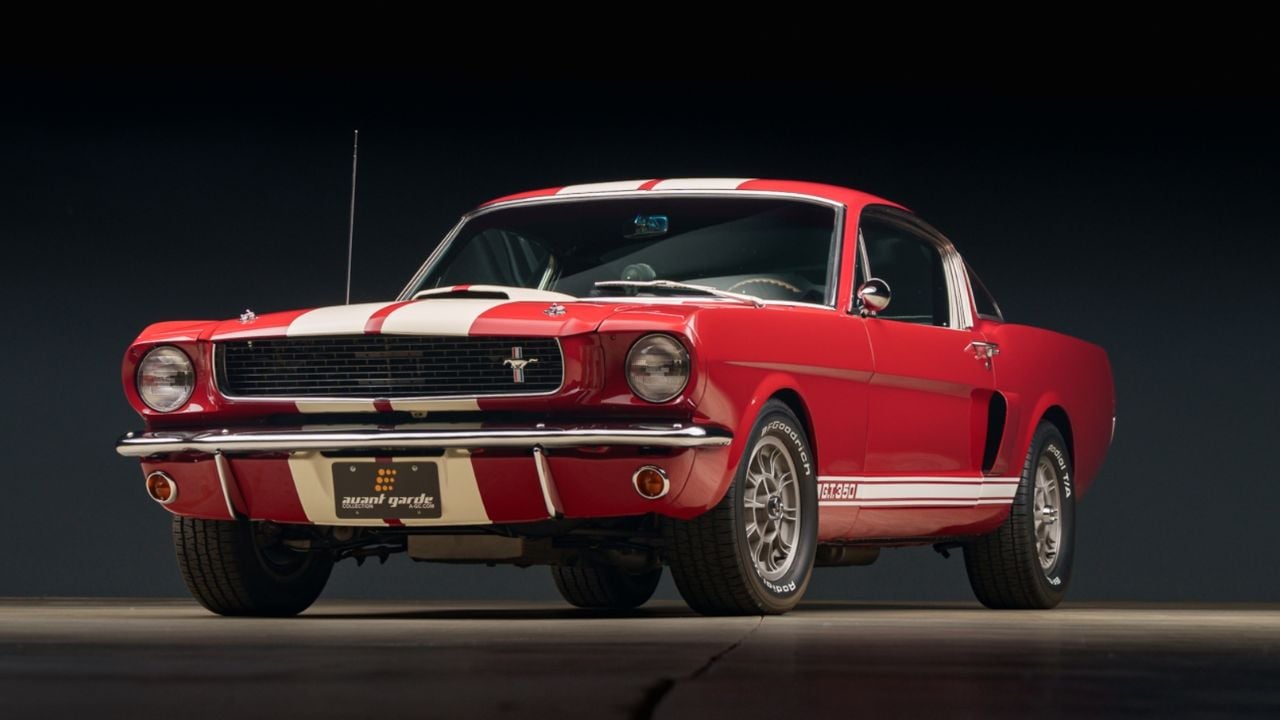
Carroll Shelby knew a thing or two about making cars go fast, and his approach to hood scoops was typically no-nonsense: if it helps performance, it stays; if it doesn’t, it goes. The Shelby Mustangs featured functional scoops that weren’t the biggest or flashiest, but they got the job done with mechanical precision. The GT350’s setup kept the high-revving 289 Hi-Po V8 breathing easy.
What set Shelby’s scoops apart was their integration with the car’s overall aerodynamic package. These weren’t afterthoughts or styling exercises: they were carefully engineered components that worked in harmony with the car’s other performance modifications. When you’re dealing with the legend who helped Ford beat Ferrari at Le Mans, you can bet every curve and angle was there for a reason.
1970 Buick GSX

Leave it to Buick – yes, Buick – to create one of the most intimidating hood scoops of the muscle car era. The GSX took the brand’s reputation for sophisticated luxury and threw it out the window in favor of pure, unadulterated aggression. That massive functional scoop fed cold air to the 455 cubic inch Stage 1 V8, creating a combination that could embarrass Corvettes and Camaros while offering a surprisingly comfortable ride to the grocery store.
The beautiful irony of the GSX is how it perfectly captured the muscle car era’s “anything goes” attitude. Here was Buick, the brand your grandfather trusted for smooth, quiet transportation, building a car with a hood scoop that looked like it belonged on a NASCAR stocker. Only 678 GSX models were built for 1970, making them rarer than hen’s teeth and twice as valuable to collectors who appreciate automotive contradiction at its finest.
1971-1974 AMC Javelin AMX
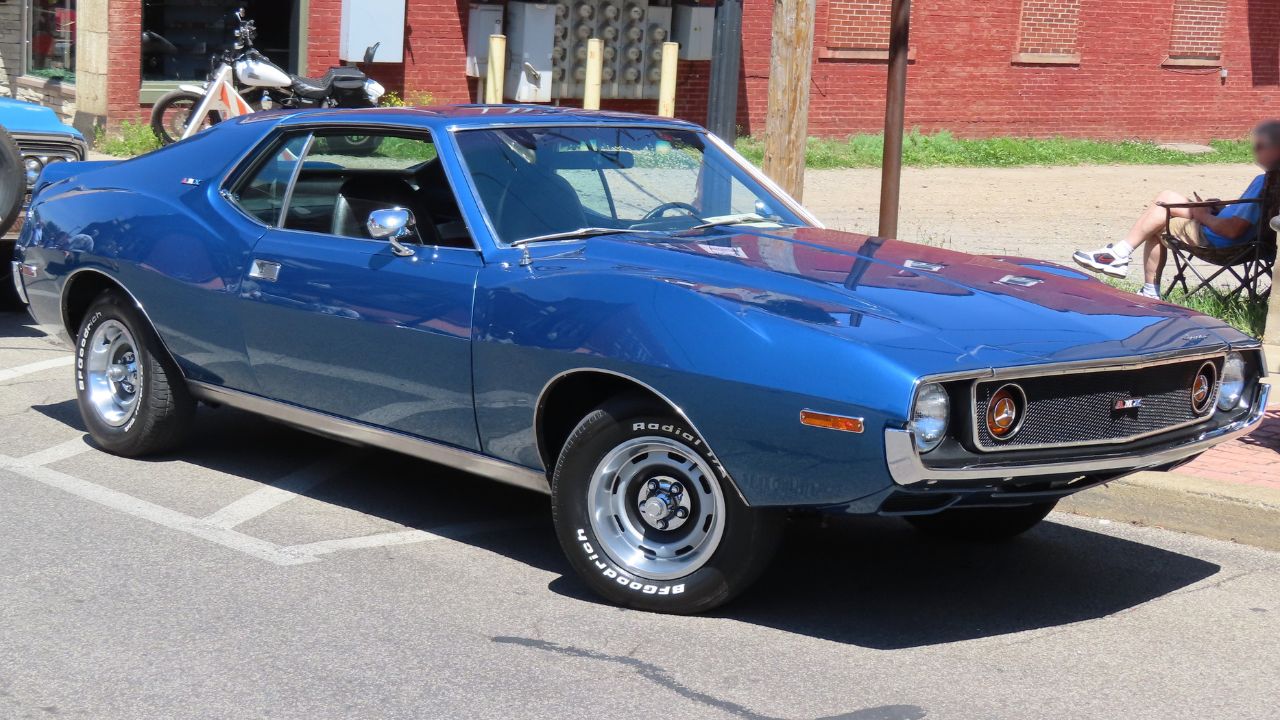
American Motors Corporation might have been the underdog in the muscle car wars, but its Javelin AMX proved that David could absolutely compete with the Goliaths from Detroit. The car’s hood scoop was perfectly proportioned to its sleek fastback profile, feeding air to engines ranging from the respectable 304 V8 all the way up to the tire-shredding 401. AMC may not have had GM’s budget or Ford’s racing pedigree, but they had something else: pure determination to build something special.
What made the Javelin AMX’s scoop design so successful was how it managed to look both elegant and purposeful simultaneously. While some manufacturers went for maximum visual impact, AMC created a scoop that enhanced the car’s already stunning proportions without overwhelming them. The result was a muscle car that looked like it could have been penned by Italian designers but built with a distinctly American attitude.
1969 Ford Mustang Boss 429
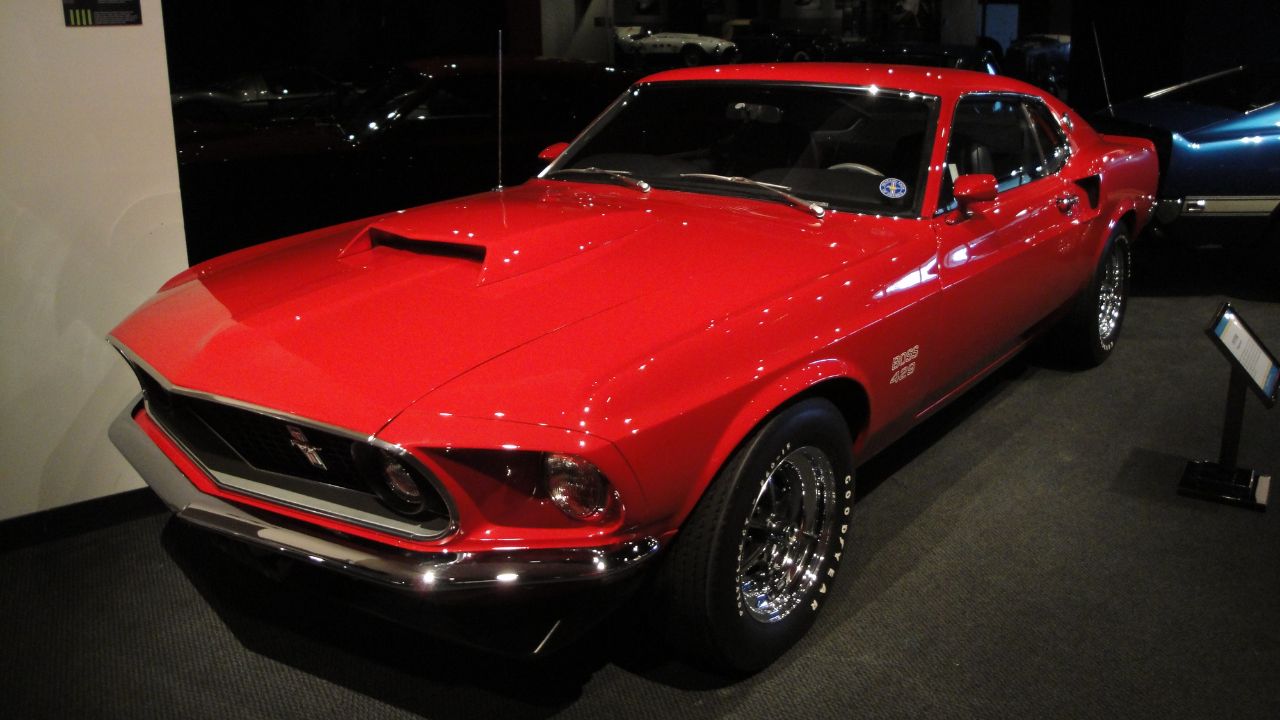
The Boss 429 Mustang represents Ford’s “because we can” approach to automotive engineering, and its massive hood scoop was absolutely essential to the whole package. That NASCAR-bred 429 engine needed serious cooling, and the functional scoop delivered exactly what was required. The bulge in the hood wasn’t just functional: it was a visual promise that serious business was happening underneath that sheet metal.
As you can see from the above image, it wasn’t trying to be pretty or subtle. This was pure function driving form, and the result was automotive honesty at its most brutal. Ford built fewer than 1,400 of these monsters over two model years, according to the Audrain Auto Museum, and every single one wore that distinctive hood bulge like a badge of honor. Today, finding one is like discovering Bigfoot, if he could run low-14-second quarter miles in factory trim.
1970 Oldsmobile 442 W-30

Oldsmobile’s W-30 package turned the already impressive 442 into something truly special, and the functional hood scoops were a crucial part of the transformation. Those twin scoops connected to a cold-air induction system that helped the 455 cubic inch V8 breathe easier and make more power. The setup was so effective that it became one of the most copied designs in the aftermarket world.
The beauty of the 442 W-30’s scoop design lay in its restraint and integration. While some manufacturers went for maximum visual impact, Oldsmobile created scoops that looked like they belonged on the car from day one. The result was a muscle car that could surprise unsuspecting competitors at the drag strip while maintaining the sophisticated appearance that Oldsmobile customers expected.
1968-1970 Charger R/T

The 1968–1970 Charger R/T took the ‘go big or go home’ approach to hood design with its aggressive power-bulge hood (1969-1970). The raised center section gave the 440 Magnum or 426 Hemi underneath extra clearance and visual menace, looking like it was ready to punch a hole in the horizon even when the car was parked.
The beauty of the Charger’s setup was that it perfectly matched the car’s personality. This wasn’t a vehicle for shrinking violets or people who worried about parking lot dings. The dual scoops gave the Charger an aggressive, purposeful look; a look that said it wasn’t afraid of any Mustang or Camaro that revved at a stoplight. Plus, they made that distinctive whistling sound at highway speeds that was basically automotive intimidation in audio form.
1969-1974 Ferrari Dino 246 GT

Now here’s where we throw you a curveball: not every iconic hood scoop came from Detroit’s muscle car wars. The Ferrari Dino 246 GT featured elegant hood vents that weren’t technically scoops in the traditional sense, but they served a similar function and looked absolutely gorgeous doing it. These functional openings helped cool the mid-mounted V6 engine while adding visual interest to the car’s already stunning profile.
The Dino’s approach to functional hood ventilation proves that Italian designers could make even the most utilitarian features look like works of art. While American muscle cars were going for maximum visual impact, Ferrari created something subtle, sophisticated, and undeniably beautiful.
1969-1970 Pontiac GTO Judge

The GTO Judge didn’t just have a hood scoop – it had an attitude problem, and we loved every loud minute of it. That functional Ram Air scoop fed cold air to the 400 cubic inch V8 (or the legendary 455 HO in later models), while the car’s wild graphics and spoilers announced its intentions from three blocks away. This wasn’t a car for wallflowers; this was automotive theater at its most entertaining.
What made the Judge’s scoop special was how it fit perfectly with the car’s over-the-top personality. While the basic GTO was already a serious performer, the Judge package took everything up to 11 and made no apologies about it. The hood scoop was part of a complete performance and styling package that said “yes, we’re showing off, and yes, we can back it up.” And yes, don’t even think about it.
Function With Fierceness

Looking back at these automotive legends, it’s clear that the best hood scoops weren’t just about moving air – they were about capturing the spirit of an era when car manufacturers weren’t afraid to take risks and push boundaries. These hood scoops were bold statements from engineers and designers who understood that sometimes the best solution is also the most dramatic one.
The magic of these classic hood scoops lies in their perfect marriage of form and function. They made cars faster, they made cars look faster, and they created automotive icons that still stop traffic more than half a century later.
What’s more intimidating? A perfectly aerodynamic car straight out of a wind tunnel test or a massive hood scoop on a growling Detroit beast? There’s probably one you would not want to mess with, and it’s the one with the hood scoops. So you can keep your tests and science. Sometimes, it’s all about personality, aura, and evoking an emotional response.