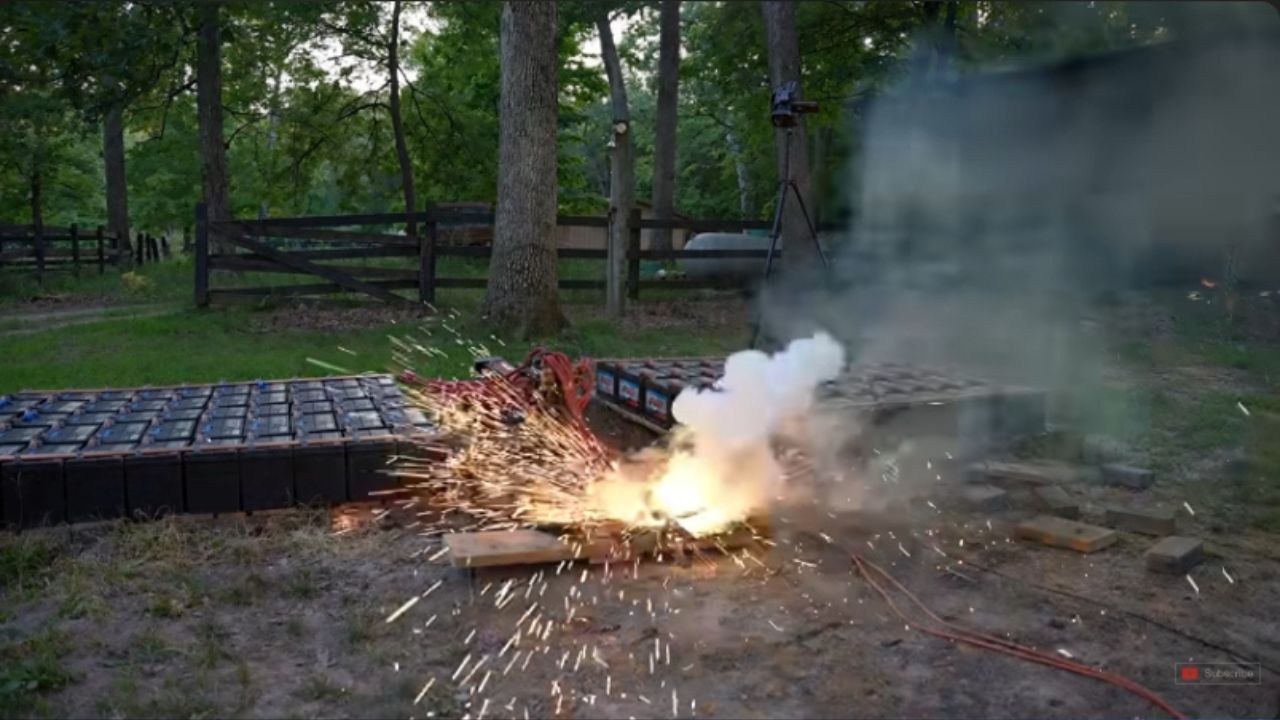

The video opens with a bang of curiosity and ambition as Drake Anthony of the styropyro channel reveals his latest and most intense project yet.
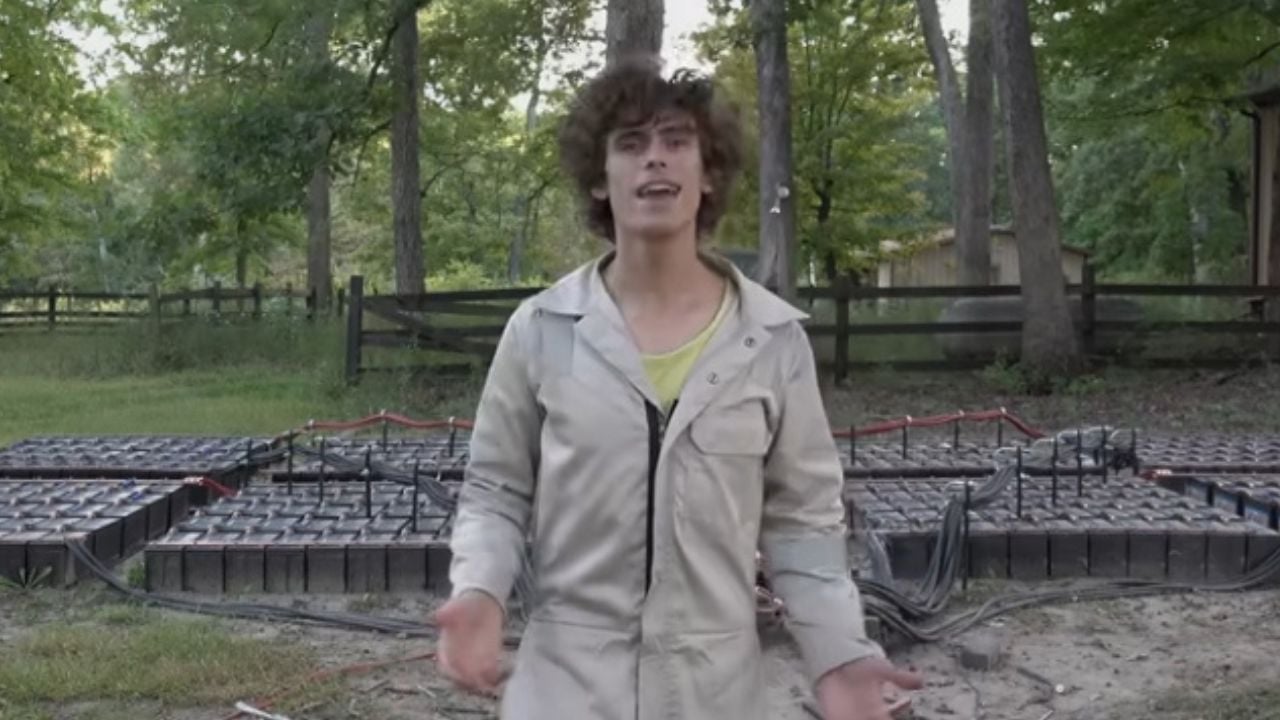
Standing in a wide, open outdoor workspace with dozens of thick cables running across the ground, he introduces a setup that looks like an electrical apocalypse waiting to happen.
He has collected 400 car batteries and plans to wire them together into a single super‑powerful bank to unleash extreme currents most people have never seen outside of professional labs.
It’s immediately clear from the start of the video that this isn’t a simple science demonstration. One viewer commented that they were driving “but pulled over to watch this.”
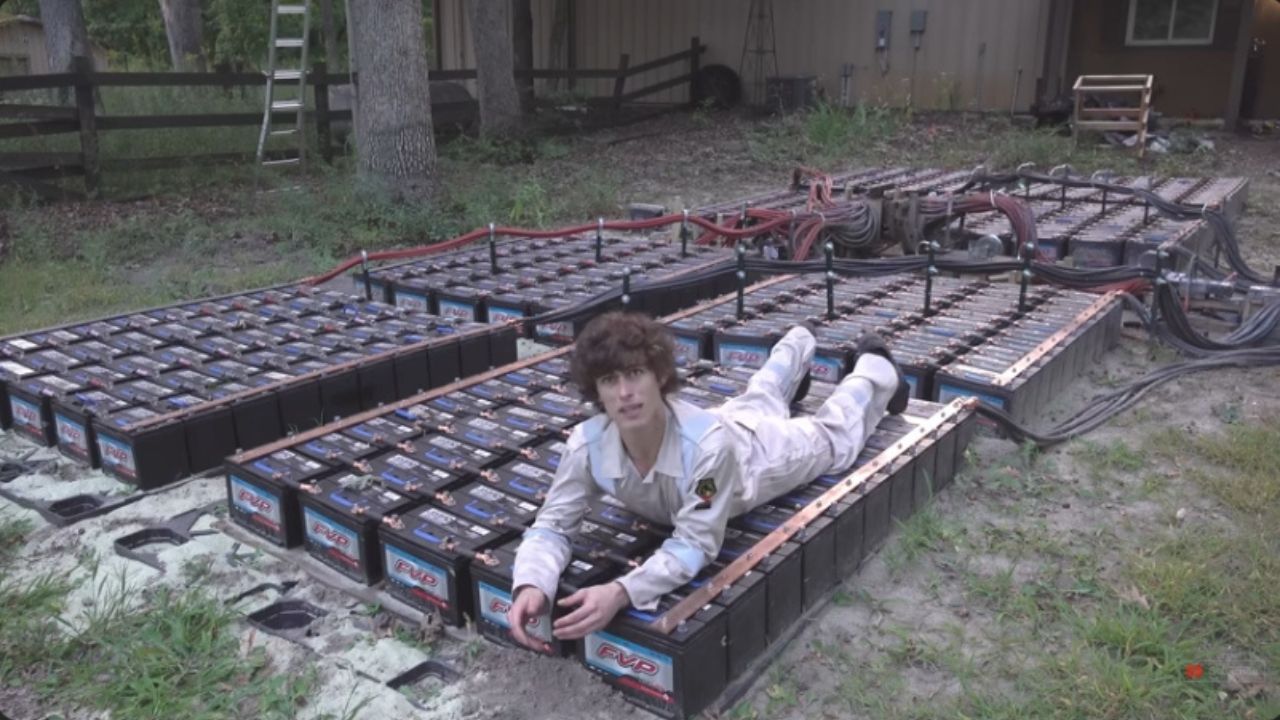
Hundreds of heavy batteries are stacked and connected using robust clamps and thick red and black cables that snake across the yard.
Drake explains that car batteries might not be the first thing people think of for huge electrical output, but they offer an advantage over other sources because they can deliver massive sustained current rather than just a brief pulse.
The goal is to build current levels in the ballpark of hundreds of thousands of amps — the kind of power normally only seen in lightning strikes or high‑end industrial equipment.
How Do You Turn It On?
Before the experiment begins, Drake must first solve one of the biggest engineering hurdles: how to safely connect so much energy. There is no off‑the‑shelf switch made for this scale, so he fabricates a huge custom switching mechanism from heavy copper and a modified log splitter to bring the circuit together.
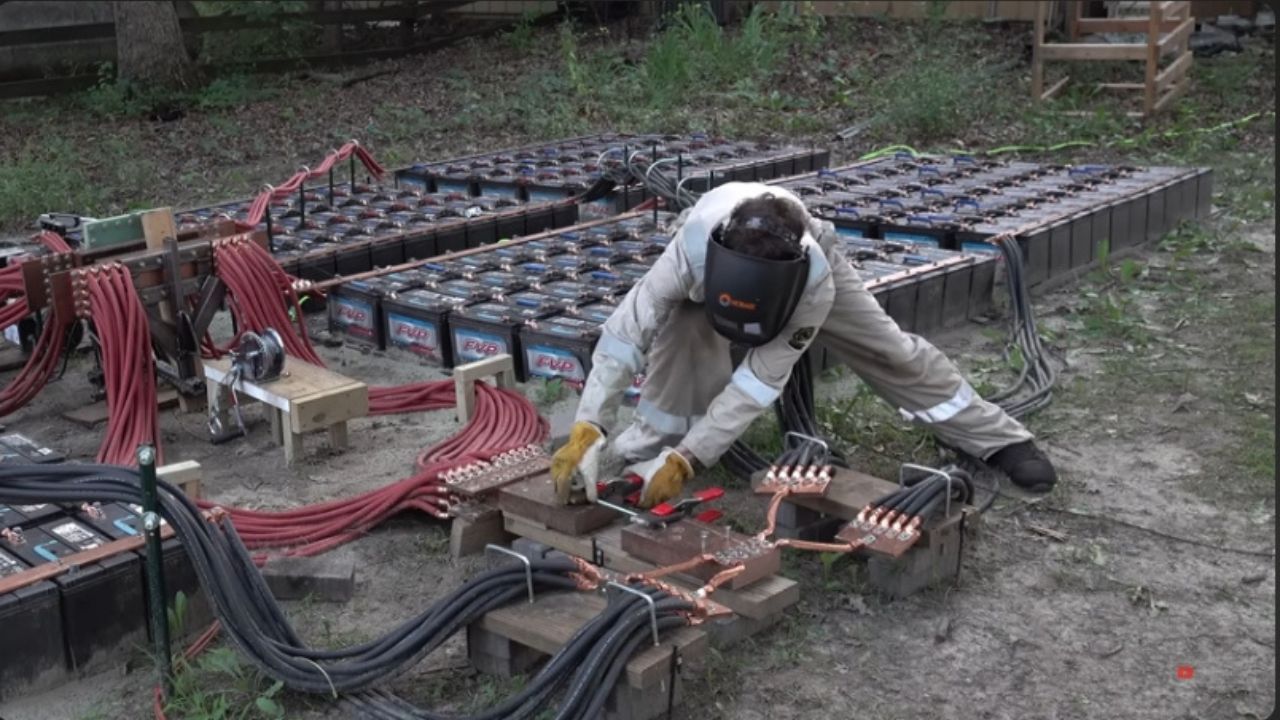
As he explains in the video, the physics behind high current flows and why this configuration was chosen, the camera pans over meticulous connections and thick cabling that seem more like an art installation than a science setup.
Once the batteries are wired and the custom switch installed the real fun starts. The camera switches into high‑speed mode as Drake demonstrates what happens when extreme current races through objects placed between the switch contacts.
At first it is just a small metal rod but almost instantly it glows white hot before vaporizing in a bright flash that sends molten sparks flying in all directions. The light is so intense that it blinds the camera momentarily.
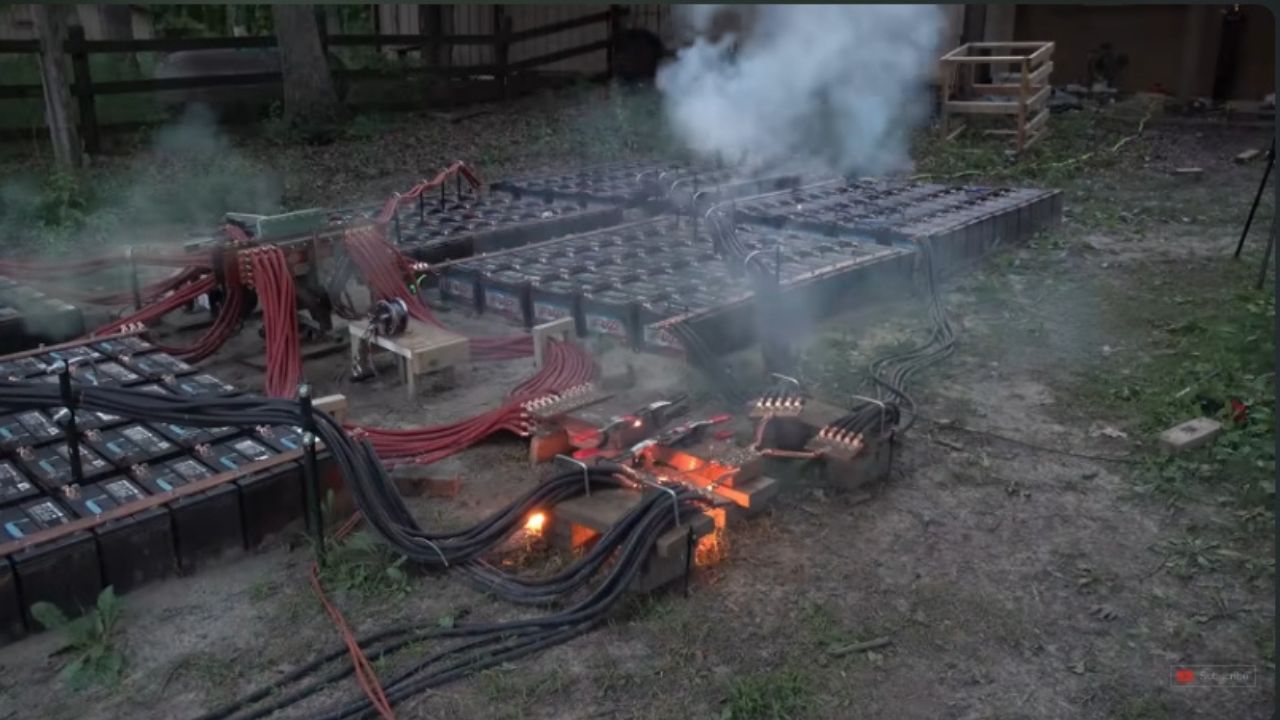
Drake tries a variety of materials from titanium rods to copper plates, and each test ups the ante. Some objects buckle under electromagnetic compression while others explode outward in showers of plasma and fire.
One of the most dramatic moments comes when he uses the electrical forces to try to crush a thick metal pipe not with brute force but through magnetic pressure created by the current itself. It is not graceful but it works, bending and tearing the metal in violent arcs of energy.
Is This Safe?
Throughout the video, Drake narrates what is happening in clear, accessible terms, talking about concepts like magnetic fields generated by large currents and how those fields interact with the metal in surprising ways. It is clear he knows exactly what he is doing and respects the danger.
For anyone thinking of replicating the setup, he repeatedly warns that even a single car battery can be dangerous if mishandled, let alone 400 working together.
The final act involves a layer of spectacle added to science. Drake pours ferrofluid into the experimental area and triggers the battery bank again.
The result is a fireball explosion as chaotic as it is mesmerizing. He laughs with genuine thrill as the reactions play out in slow‑motion footage that captures every spark and plasma filament. It feels like watching chemistry and electricity collide in an almost artistic display.
What Else Can Batteries Do?
As the video winds down, he disconnects the setup and shows that surprisingly all the batteries remain intact, a testament to the robustness of the build and perhaps a bit to good fortune.
Drake reflects on what was learned and hints at future experiments that might push boundaries even further, including underwater tests and enhancements to the current system.
By the end of the video, you have been taken on a wild journey from meticulous planning to blazing electrical chaos, all grounded in real physics and careful engineering.
Car batteries have inspired plenty of wild experiments and unusual projects beyond simply starting engines. Enthusiasts have also built improvised welding rigs using car batteries wired in series, creating portable welders for emergency repairs.
Battery banks have powered homemade railguns, giant coils that launch metal projectiles using magnetic force. Others have even used them to run temporary off grid power systems for campsites, tiny homes, or mobile workshops. Behold, a simple car battery can fuel some surprisingly unconventional ideas.
Note: This article contains embedded video. Embedded media may not display on all platforms. The video is available on our website here.