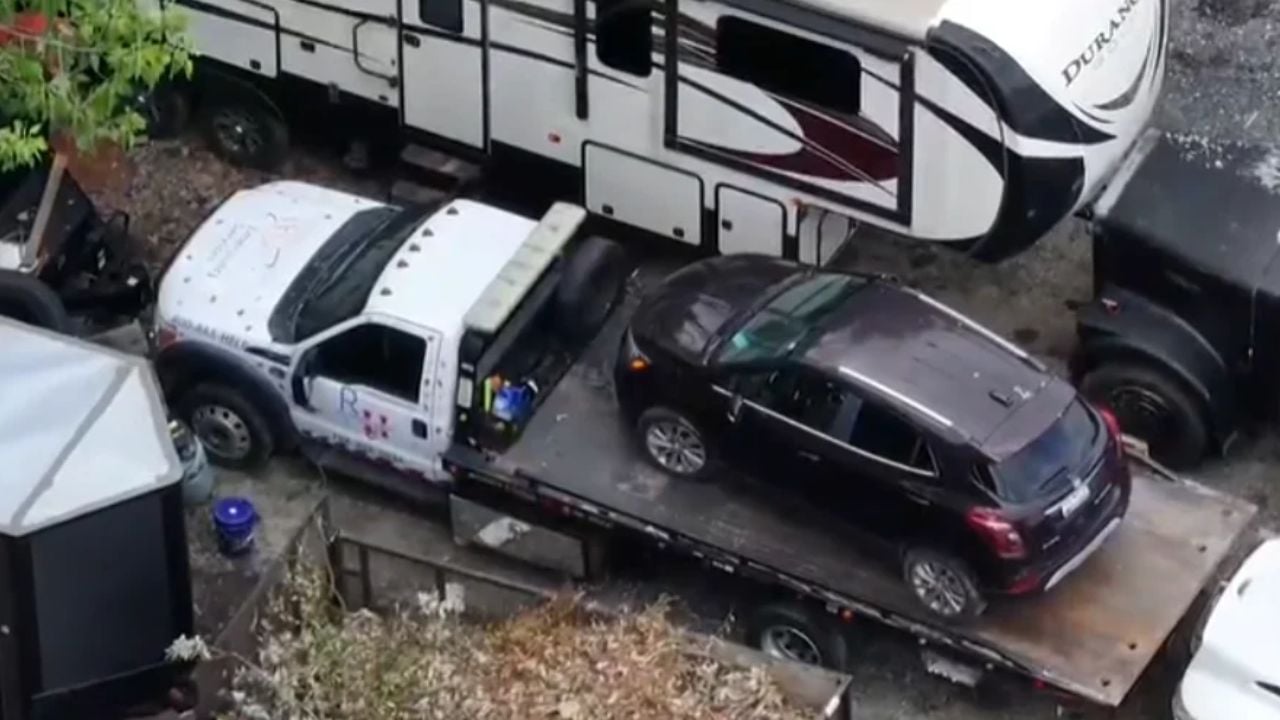
When your car breaks down, calling a tow truck is supposed to be the start of a solution, not the beginning of a months-long financial nightmare. For one Charlotte-area woman, a routine call for roadside help turned into something considerably darker: a vehicle she can’t get back, a bill that nearly quintupled without her consent, and personal belongings she says were thrown in the trash. The tow company has a different story, of course. They always do.
Tenasia Benjamin reached out to Ray Harris Towing after her Buick’s key fob stopped working while she was relocating between domestic violence shelters. It was a vulnerable moment that required a simple service. What she got instead was a cascading series of charges for repairs and diagnostics she says she never authorized, with the total climbing from $275 for the initial tow to $550, then $600, then $1,300. Cash App records show she paid more than $500 during that stretch, and yet the car remains out of her reach.
The situation took an additional turn when Benjamin says she offered to retrieve personal property from the vehicle to help cover what she owed. According to her account, the company’s response was that her belongings had already been discarded. That included a laptop, an iPad, and $400 in cash. The company’s stated reason: mold. Benjamin’s attorney, Jesse Collin, told WBTV he believes that decision may have crossed the line from a civil billing dispute into criminal territory.
Benjamin and Collin have since filed a report with the Charlotte-Mecklenburg Police Department. Meanwhile, her car has been tracked to a storage facility in Fort Mill, South Carolina, which introduces a separate problem entirely. Federal transportation records indicate Ray Harris Towing is not authorized to transport vehicles across state lines, yet that appears to be exactly what happened.
The registered agent of the company, Johnathan Emanuel Ray, also has pending charges in Union County, North Carolina for driving with a revoked license and fleeing law enforcement.
How Towing Disputes Become a Legal Gray Zone
This case is a useful reminder of how little protection consumers often have once their vehicle is in someone else’s possession. In most states, towing companies gain what’s known as a “garageman’s lien” the moment they take custody of a vehicle, which gives them the legal right to hold it until unpaid fees are settled.
The problem is that the lien laws vary considerably by state, and the threshold for what constitutes “authorized” repair work is frequently contested. North Carolina and South Carolina have different rules governing these scenarios, and when a vehicle crosses a state line without authorization, as may be the case here, those jurisdictional complications multiply fast.
Storage Fees: The Hidden Clock Running Against Vehicle Owners
One of the less-discussed aspects of towing disputes is how quickly storage fees can turn a manageable bill into an impossible one. Many towing companies charge daily storage rates that can range from $25 to $75 or more per day, and they begin accruing from the moment the vehicle arrives at the lot.
A vehicle that sits for several months can accumulate fees that easily exceed the car’s actual market value. At that point, some companies simply pursue a lien sale, taking legal ownership of the vehicle and selling it to recoup costs. Vehicle owners who are unaware of their rights or can’t afford an attorney often have no practical recourse by the time they realize what is happening.
When Unauthorized Repairs Get Added to the Bill
The dispute over charges Benjamin says she never approved points to another recurring pattern in towing industry complaints. “Consent” for repairs in this context is rarely formalized the way it would be at a licensed auto shop, where a written work order is required before a mechanic touches a car.
Towing and roadside operators often operate with far less documentation, which creates an environment where disputed charges are difficult to prove or disprove after the fact. Text message records, as in Benjamin’s case, can be critical evidence, but they only capture part of the picture if verbal agreements or disputes aren’t documented.
What Regulators and Consumers Should Know
Attorney Collin’s observation that there’s a “real loophole” allowing operators to function this way is accurate, and it’s not unique to the Carolinas. Towing is one of the least uniformly regulated service industries in the country. Licensing requirements, fee caps, and mandatory release procedures differ not just between states but sometimes between counties.
Consumer advocates have pushed for years for standardized towing reform at the state level, with mixed results. A handful of states have enacted laws requiring towing companies to accept credit cards, post their fee schedules publicly, and provide timely vehicle release, but enforcement is inconsistent and complaint processes are slow.
For Benjamin, none of that systemic context changes the immediate reality: she is without a vehicle, without the belongings that were in it, and still fighting to get a straight answer from a company that has declined to meaningfully engage with the public record of events. Her car, at last report, remains in South Carolina.