Somewhere between a Mr. Burns scheme and every plan Cobra Commander ever pitched sits the idea of launching giant mirrors into space so we can shine sunlight back onto Earth after dark.
It also brings to mind one of Dr. Ian Malcolm’s best warnings from Jurassic Park: “Your scientists were so preoccupied with whether they could, they didn’t stop to think if they should.”
That is more or less where I land on Reflect Orbital, the California startup pitching “sunlight on demand” for solar farms, disaster zones, remote construction sites, agricultural operations and other places that apparently need the sun to start working the night shift.
Silicon Valley has developed a habit of treating every natural process as an engineering problem waiting to be disrupted. Cars needed more screens. Cities needed scooters. Then it was crypto. Then AI. Apparently, now the Earth needs a second sun.
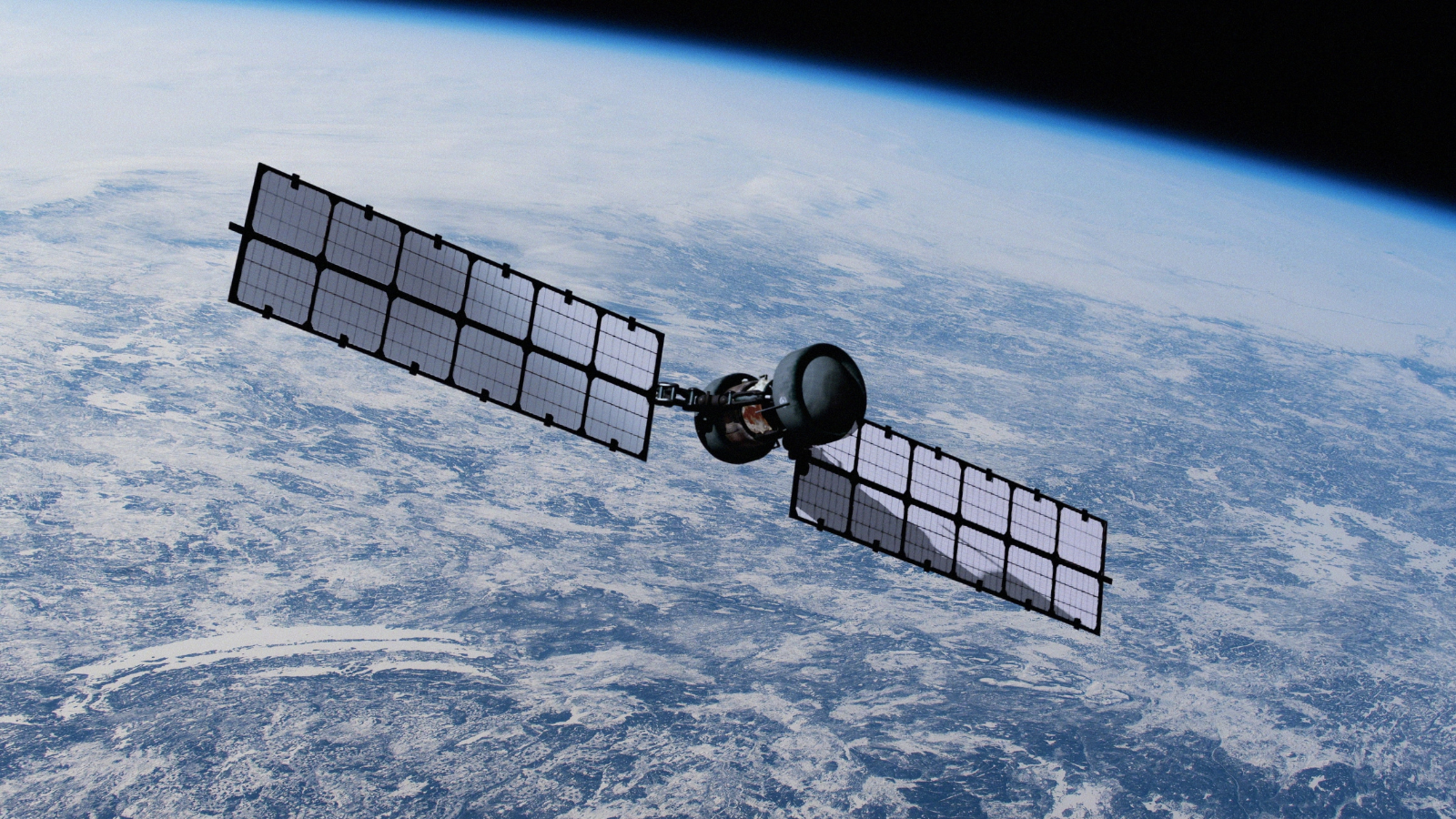
The Federal Communications Commission has authorized Reflect Orbital to launch Earendil-1, a test satellite carrying an approximately 59-foot-wide steerable reflector. Supporters keep emphasizing that the FCC approved only one satellite. That is technically true, but it is also a wonderfully convenient way to avoid discussing the enormous orbital network this technology would require before it could deliver most of the benefits being promised.
Earendil-1 Is Not the Destination
Earendil-1 isn’t the destination. It’s the foot in the door.
The FCC approved a single, limited-duration technology demonstration, not Reflect Orbital’s proposed constellation of tens of thousands of satellites. Earendil-1 would operate at approximately 625 kilometers above Earth and use a motorized thin-film reflector to direct sunlight toward a designated target on the ground.
The stated purpose of the mission is to determine whether the technology is feasible and identify problems that might affect future versions.
However, a single satellite cannot illuminate a solar farm throughout the night, produce around-the-clock solar energy, or consistently light remote work sites. A spacecraft in low Earth orbit races across the sky in minutes, meaning useful illumination over several hours would require one satellite to hand the target off to another, then another and another.
That is why I do not buy the “it’s only one satellite” argument. You do not approve a technology demonstration unless you are open to where that technology is ultimately going.
Reflect Orbital’s public vision reportedly grows to more than 50,000 satellites by 2035. The FCC approved one mirror, but Reflect Orbital is selling investors, customers, and government agencies on a future filled with thousands of them.
Silicon Valley’s Favorite Trick
The company’s marketing has all the hallmarks of Silicon Valley’s favorite trick: promise to save the planet first, figure out the consequences later.
The pitch is irresistible: sunlight on demand, cleaner energy, disaster response, better agriculture, longer operating hours for solar farms and emergency lighting without diesel generators. Every benefit is presented as inevitable, while the trade-offs are treated as engineering problems someone else will solve later.
Reflect Orbital also received a $1.25 million Phase II SBIR contract through AFWERX to advance the technology for potential Department of the Air Force applications. That does not mean the military has committed to buying a constellation. Still, it does show the concept is being pitched for government and defense uses alongside its clean-energy promises.
What happens to nocturnal wildlife when a dark desert solar facility suddenly receives reflected sunlight for hours? What happens to migratory birds, insects, bats, and plants that depend on predictable cycles of light and darkness? What happens to local temperatures around solar farms already located in some of the hottest parts of the country? What happens when tens of thousands of large reflective structures begin sharing low Earth orbit with Starlink, Amazon’s growing constellation, Chinese satellite networks, weather satellites, research spacecraft and existing debris?
Maybe they will figure it all out. But “we’ll figure it out later” has become Silicon Valley’s favorite modus operandi. Too often, “later” arrives only after the money has been spent, the venture capital has moved on, and everyone else is left dealing with the unintended consequences. In this case, “everyone else” could mean the entire planet.
Yes, It Would Add Heat
One of Reflect Orbital’s central pitches is extending solar generation after sunset. Doing that means directing additional solar energy onto photovoltaic panels during the period when the panels, the ground, and the surrounding environment would normally be cooling.
Solar panels convert only a fraction of incoming sunlight into electricity. Most of the remaining energy ultimately becomes heat. If orbital mirrors direct additional sunlight onto those panels at night, they are introducing additional energy into an area that would otherwise be cooling naturally.
One 59-foot test reflector is not going to change Earth’s climate. But it is equally misleading to pretend it introduces no additional heat.
If a mirror redirects sunlight that otherwise would never reach a dark location, that location receives additional energy. Some becomes electricity, some reflects away, and much of it eventually becomes heat. That is not a political argument or an objection to solar power. It is basic physics. There is a legitimate counterargument. If a system like this displaced enough fossil-fuel generation, the reduction in greenhouse gas emissions could outweigh the additional heat from the reflected sunlight.
Maybe. The problem is that nobody has shown that yet.
Reflect Orbital is asking the public to accept environmental trade-offs today, based on benefits that remain largely hypothetical. Proving this is a net climate benefit would require more than showing that the mirrors work. It would require demonstrating that emissions from manufacturing, launching, operating, and eventually replacing thousands of satellites are outweighed by the fossil-fuel generation they actually displace.
Which raises another question: why are we reaching for orbital mirrors before exhausting far less disruptive ideas? Batteries keep getting better. Renewable generation continues to expand. Utilities are modernizing the grid. Cities are planting trees, installing cool roofs, and using cooler pavement to reduce heat islands and energy demand. None of those projects require redesigning the night sky.
The question is not only how much heat this system would add. It is whether this is the smartest way to reduce emissions in the first place. That should be answered before the technology becomes infrastructure, not after thousands of satellites have already been launched.
Starlink Is Already Showing Us the Orbital Workload
Reflect Orbital’s business model depends on putting a massive number of additional spacecraft into an orbital environment that is already becoming difficult to manage. We do not have to imagine what operating a giant constellation looks like because SpaceX is already giving us a preview.
According to Space.com’s reporting on SpaceX’s latest semiannual FCC disclosure, Starlink satellites performed 207,152 collision-avoidance maneuvers between December 2025 and May 2026. That followed 148,696 during the previous reporting period, bringing the one-year total above 355,000.
SpaceX’s filing breaks the latest total into 65,137 maneuvers by Gen 1 satellites and 142,015 by Gen 2 satellites. The company said Gen 1 satellites averaged approximately 36 maneuvers per spacecraft per year, while Gen 2 satellites averaged approximately 46 maneuvers per spacecraft per year. In other words, the average Starlink satellite is already changing course roughly every eight to 10 days.
Those maneuvers are not necessarily last-second swerves around tumbling rocket parts. SpaceX uses an intentionally conservative threshold, maneuvering when the estimated collision probability exceeds three in 10 million. The company says the broader industry standard is closer to one in 10,000.
The point is not that Starlink is constantly surviving near misses. It is that operating a mega-constellation requires an astonishing amount of traffic management. More than 355,000 avoidance maneuvers in a single year show how complicated orbital operations become once thousands of satellites begin sharing the same region of space.
The filing also shows Starlink is not merely dodging unidentified junk. Thousands of maneuvers involved active satellites operated by other companies and governments. SpaceX listed 1,809 maneuvers involving one GUOX/ZJ Lab satellite, 1,740 involving Honghu-2, and more than 1,400 each involving two Satellogic spacecraft.
SpaceX also said some operators fail to provide reliable orbital predictions, realistic uncertainty data, or current contact information, making collision warnings and coordination more difficult. The company reported encountering physically implausible trajectories, late notice of maneuvers, and extended periods during which operators failed to publish updated orbital data.
That is the orbital environment Reflect Orbital wants to enter and eventually expand with tens of thousands of additional spacecraft.
More Satellites Do Not Create Risk One at a Time
Adding satellites does not increase orbital risk on a one-object-at-a-time basis. Every new spacecraft can interact with many of the objects already in orbit, meaning the number of possible conjunctions grows much faster than the number of satellites.
As one expert explained to Space.com, doubling the number of satellites in the same orbital shell can roughly quadruple the number of possible pairings that must be monitored.
Reflect Orbital’s spacecraft would also carry very large deployable mirrors. Earendil-1’s reflector spans roughly 18 meters, giving the satellite a much larger physical profile than its spacecraft bus alone.
The FCC concluded that Reflect Orbital’s propulsion, tracking and debris-mitigation plans were sufficient for a single technology demonstration. The agency accepted the company’s calculations that Earendil-1 could maneuver around tracked objects, would respond to conjunction warnings, and should deorbit within approximately one year after the mission even without a successful active disposal maneuver.
The FCC also said its analysis placed the risk of human casualty from surviving reentry debris at approximately one in 119,400, below the agency’s permitted threshold.
That may be enough to authorize one test spacecraft. It is not the same thing as demonstrating that a future constellation of tens of thousands of large reflective satellites could operate safely.
What Happens When a Mirror Satellite Fails?
Satellites fail. Communications systems stop responding, thrusters malfunction, software crashes, deployment mechanisms jam, and attitude-control systems lose their ability to keep a spacecraft properly oriented.
A failed conventional satellite can become an uncontrollable object that every other operator must track and avoid. A failed mirror satellite could also tumble, produce unpredictable flashes, or lose the ability to aim its reflector away from unintended areas.
DarkSky International raised that possibility during the FCC proceeding, warning that a loss of control during deorbit could result in random light sweeps or flashes for months. The FCC called that outcome unlikely because Earendil-1’s disposal plan is expected to remove the satellite within a year and because the company demonstrated a high probability of successful disposal.
Again, that finding applies to one satellite.
Reflect Orbital says its system would remain off by default, operate only with authorization, and avoid observatories and sensitive habitats. Those promises sound sensible while every spacecraft is communicating, maneuvering, and responding exactly as designed. The harder question is what happens when one does not.
Even a serious failure rate of 0.1% across a 50,000-satellite network would leave 50 disabled spacecraft. A 1% rate would mean 500.
Designing satellites to deorbit at the end of their service lives is important. Still, planned disposal does not prevent a satellite from colliding or generating debris before it reaches the atmosphere.
Debris Does Not Care About Intentions
A collision could fragment a mirror satellite into countless smaller objects, some too faint to track reliably but still large enough to damage another spacecraft.
A recent peer-reviewed study published in The Journal of the Astronautical Sciences demonstrated just how incomplete our picture of orbital debris remains. Researchers reprocessed observations from the Isaac Newton Telescope and discovered 25 previously missed debris tracks, pushing the survey’s detection limit roughly one magnitude fainter.
Under assumptions the researchers acknowledged were uncertain, some of the detected objects may have been only five to 10 centimeters across. The study focused on geosynchronous orbit, where debris can remain almost indefinitely, while low Earth orbit benefits from atmospheric drag.
Still, it demonstrated an uncomfortable reality: our ability to create orbital debris remains better than our ability to find all of it.
The FCC’s Narrow Review Is Part of the Problem
The FCC received more than 1,800 public comments objecting to Earendil-1, including submissions from astronomy organizations, environmental advocates, and dark-sky groups. Many raised concerns about wildlife, aviation, astronomy, and the cumulative impact of a future mirror constellation.
The FCC’s response was surprisingly narrow. The agency concluded that many of those concerns either fell outside its legal authority or were too speculative to evaluate for a single demonstration satellite. The FCC did not conclude that orbital mirrors are environmentally harmless. It concluded that many of the biggest environmental questions were outside the scope of the licensing decision.
The agency evaluated the radio station, frequency use, and orbital debris plan. It did not issue a sweeping scientific determination that altering nighttime illumination is safe for astronomy, wildlife, aviation, or human health.
That should make people less comfortable, not more.
This Is Why It Feels Like Greenwashing
Greenwashing is not limited to putting a leaf on a plastic package and calling it sustainable. It can also involve presenting a project almost entirely in terms of its environmental aspirations while minimizing the new environmental costs required to make it work.
Reflect Orbital describes a future of clean, abundant energy unlocked through advanced orbital infrastructure. That future could also require thousands of launches, tens of thousands of satellites, constant collision monitoring, repeated replacements, atmospheric reentries, altered nighttime ecosystems, and additional heat over solar facilities that are often already located in hot, environmentally sensitive regions.
Maybe the benefits would outweigh those costs. The company has not demonstrated that because the technology has not yet been tested in orbit, much less at a commercially meaningful scale.
The clean-energy benefits remain projections. The ecological and orbital consequences are treated as engineering problems that can be managed once the technology begins scaling.
That imbalance is why the marketing deserves skepticism.
Not Every Idea Deserves a Prototype
The standard defense is that Earendil-1 is only an experiment, and we cannot know whether the technology works until someone tries it.
Normally, I would agree. Experiments produce evidence, and evidence is better than speculation. But not every idea deserves a prototype simply because someone raised enough venture capital to build one.
The only version of Reflect Orbital’s proposal that delivers its biggest promises is the massive version. The company’s own roadmap makes that clear. This is not a small technology that might accidentally become large. The large network is the business model.
Earendil-1 is not just a satellite. It is a precedent.
The burden of proof should not fall on astronomers, ecologists, and the public to explain why we should not fundamentally alter the nighttime environment. It should fall on the company proposing the change.
Maybe Reflect Orbital proves me wrong. Maybe 20 years from now, we will wonder why humanity ever accepted that the sun had to set on solar power. But right now, we have an unproven prototype, a venture-capital pitch deck, and a roadmap for more than 50,000 satellites.
That is enough to justify asking difficult questions. It is not enough to convince me that we should start redesigning the night sky.
Which brings me back to Cobra Commander. This still sounds exactly like the kind of plan he would unveil moments before declaring, “This plan cannot fail!” And that is usually when he does.