
The Texas Department of Public Safety is spending nearly $4.5 million on a sophisticated surveillance package built around four 2026 Chevrolet Tahoes. While that works out to well over $1 million per vehicle if the entire contract is viewed as a fleet purchase, the SUVs themselves account for only a fraction of the total cost.
As reported by The Drive, the bulk of the $4,487,500 package is tied to FalcoNet surveillance technology supplied by Cognyte, along with licenses, portable equipment, antennas, and other supporting hardware. A January 2026 quote from Cognyte lists four fully integrated Tahoes at a combined $600,000, or $150,000 each.
FalcoNet is designed to identify, capture, and locate cellular devices across multiple generations of mobile networks, according to descriptions included in the procurement document. The technology can be installed in vehicles, while portable configurations allow similar equipment to be deployed outside the SUVs.
The purchase highlights the increasingly sophisticated technology finding its way into law enforcement vehicles, while also raising significant questions about privacy and oversight. From an automotive perspective, these Tahoes represent an unusually expensive example of how an otherwise familiar police SUV can become the foundation for an advanced mobile surveillance platform.
The Tahoes Are Only $600,000 of the Purchase

According to Cognyte’s January 21 quote to Texas DPS, the four 2026 Chevrolet Tahoes cost a combined $600,000 after a discount, putting each vehicle at $150,000. That price includes what the document describes as a complete turnkey retrofit, integration, and preparation for the FalcoNet system.
The largest single expense is the four FalcoNet core systems, which carry a combined discounted price of $2.85 million. Another unlicensed core system adds $200,000, while four perpetual Delta 5G licenses contribute another $280,000 to the total.
The order also includes a $355,500 FalcoNet Backpack Core V2, a $27,000 flexible antenna kit, a $105,000 Cognyte Compact PA Ranger, and an additional $70,000 unlicensed backpack system. Altogether, the quote reaches exactly $4,487,500, with Cognyte noting that the pricing reflects discounts associated with purchasing multiple systems under a single order.
Inside the FalcoNet Surveillance Package
The procurement document provides some insight into the capabilities being installed in the vehicles. Each primary FalcoNet system includes 13 software-defined radio base stations supporting 2G, 3G, 4G, and 5G networks, along with features identified as Heat Map, Silent Call, MuCom with Enhancer, and a PathFinder direction-finding system.
Each system also includes a vehicle deployment kit with a rack, antennas, amplifiers, and associated cabling. The separate Delta 5G software licenses are described in the quote as enabling the identification, capture, and location of devices operating on native standalone 5G networks.
Portability appears to be another major element of the package. The order’s backpack system supports numerous cellular frequency bands, while the accompanying equipment allows temporary deployment from vehicles using roof rails, directional antennas, mounting hardware, and transportation cases.
A Mobile Technology Platform Disguised as a Familiar SUV
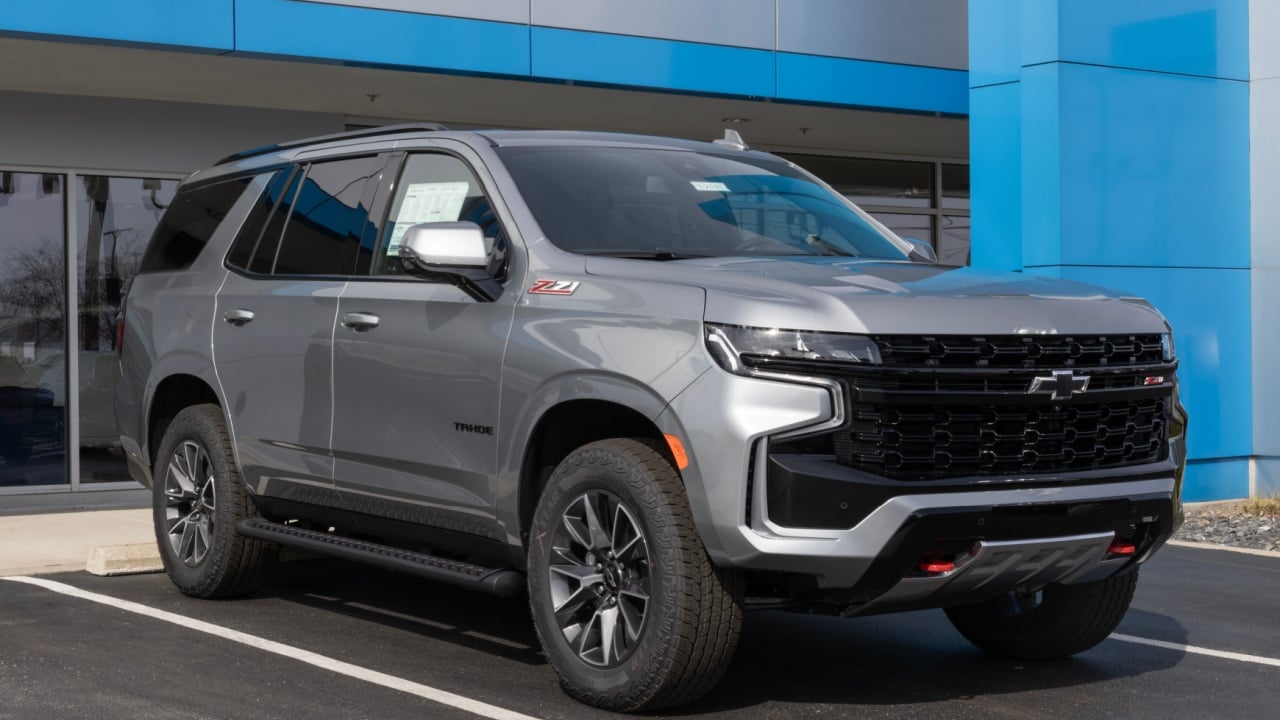
The Chevrolet Tahoe has long been a common sight in American law enforcement, where its size and truck-based construction make it well suited to carrying officers and specialized equipment. In this case, however, the vehicle itself effectively becomes the mobile infrastructure supporting a much larger technology package.
The contract also illustrates why comparing the $4.5 million total directly with the retail price of four ordinary Tahoes can be misleading. Most of the money is being spent on specialized electronics, software licensing, integration, portable systems, training, and support rather than simply purchasing unusually expensive SUVs.
Even so, the result is striking: four Chevrolet Tahoes sitting at the center of a surveillance procurement worth nearly $4.5 million. The vehicles may look relatively conventional from the outside, yet the equipment associated with them is considerably different from the radios, computers, lights, and other hardware typically expected inside a police SUV.
The Technology Brings Privacy Questions With It
Systems capable of identifying and locating cellular devices inevitably raise questions about how law enforcement collects and uses information associated with members of the public. The Cognyte proposal itself states that use of the supplied systems and services is limited to neutralizing, investigating, or preventing terrorism and crime in accordance with applicable law.
The document also includes provisions addressing compliance with relevant laws and regulations, including requirements related to privacy and human rights standards. Those contractual conditions establish stated boundaries for the technology’s intended use, although broader questions surrounding authorization, oversight, and the practical deployment of cellular surveillance systems remain important areas of public scrutiny.
For drivers who encounter one of these Tahoes on the road, there may be little indication of just how much specialized technology is associated with the vehicle. Texas DPS’s purchase demonstrates how modern police fleets are evolving beyond transportation, turning familiar SUVs into sophisticated technology platforms whose capabilities extend far beyond traditional patrol duties.