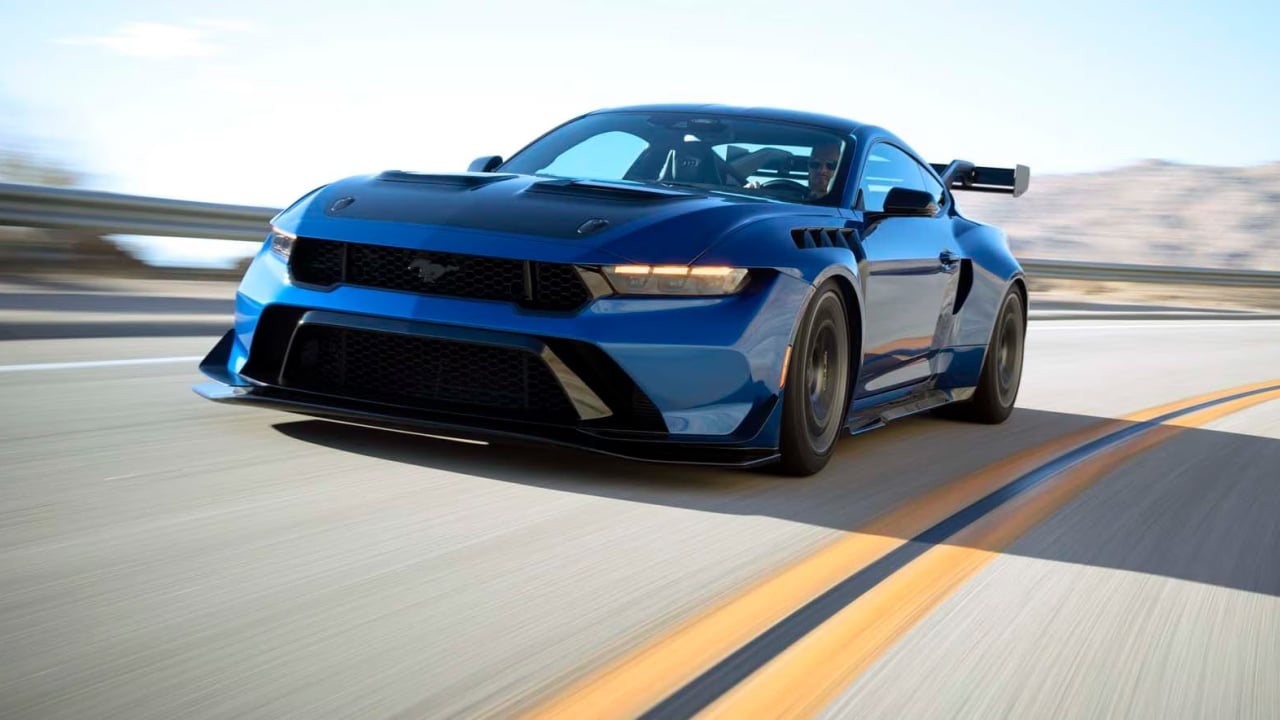
The Ford Mustang is one of America’s most recognizable performance cars, yet the $327,960 Mustang GTD has a surprisingly international production story. As reported by Carbuzz, Ford’s ultimate road-going Mustang begins its journey in Michigan before heading to Canada for its specialized transformation, while major components are sourced from across North America.
That arrangement makes the GTD an interesting case as the United States considers potential changes to automotive trade rules. The car may wear an American badge and use a supercharged V8 sourced from the U.S., but its production process depends on the deeply integrated manufacturing relationship between the United States, Canada, and Mexico.
Under the current United States-Mexico-Canada Agreement, qualifying vehicles are evaluated using regional content requirements that recognize production across all three countries. Proposed changes reportedly being discussed could place greater emphasis on specifically U.S.-sourced content, potentially creating complications for vehicles built through cross-border supply chains.
The final rules remain uncertain, meaning it is too early to conclude exactly how future tariffs would affect the GTD or other North American-built vehicles. Still, Ford’s 815-horsepower halo car provides a striking example of how difficult it can be to define an “American-made” vehicle in an industry where components and manufacturing routinely cross national borders.
The Mustang GTD Has a Three-Country Production Story
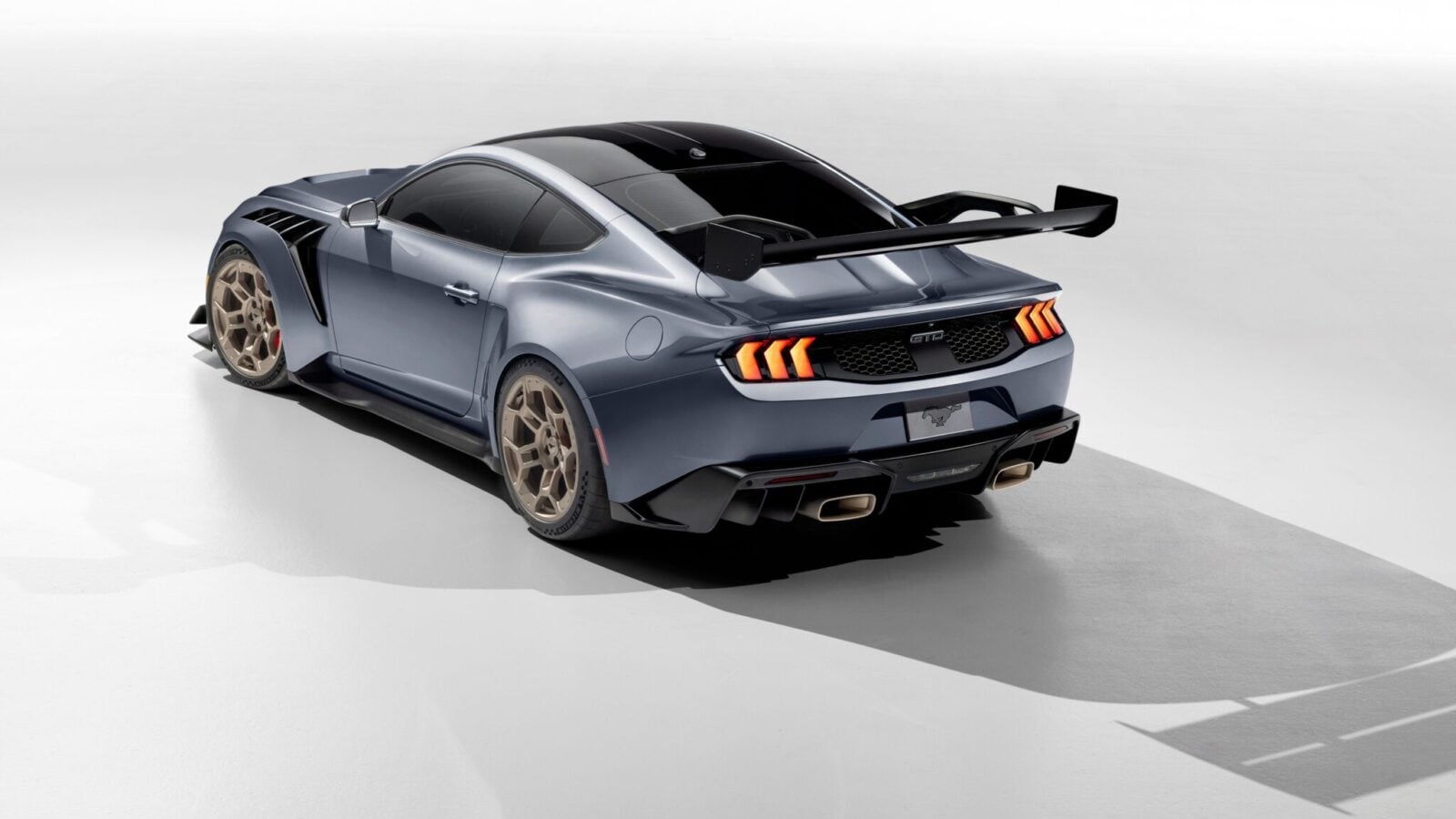
The Mustang GTD starts at Ford’s Flat Rock Assembly Plant in Michigan before being sent to Canadian engineering specialist Multimatic for its extensive transformation. That specialized work turns the Mustang into a road-going machine heavily influenced by Ford’s GT racing program.
Its hardware is appropriately extreme. The GTD uses a 5.2-liter supercharged V8 producing 815 horsepower and 664 lb-ft of torque, paired with a rear-mounted eight-speed dual-clutch transaxle sourced from Mexico.
Carbon-fiber bodywork, carbon-ceramic brakes, sophisticated Multimatic adaptive suspension technology, and aggressive aerodynamics further separate the GTD from an ordinary Mustang. The complex engineering and specialized production process help explain its official 2025 starting price of $327,960.
That production footprint also makes the GTD distinctly North American. Its journey through facilities and suppliers in multiple countries demonstrates exactly how modern automakers have structured manufacturing around decades of increasingly integrated regional trade.
Proposed Trade Rules Could Change the Equation
Under existing USMCA rules, qualifying vehicles generally need to satisfy a 75% regional value content requirement. Crucially, that calculation can recognize qualifying content originating in the United States, Canada, and Mexico rather than treating each country as an entirely separate manufacturing ecosystem.
The situation has become increasingly complicated as the U.S. government reviews its trade relationship with Canada and Mexico. U.S. Trade Representative Jamieson Greer confirmed in July that the United States would not simply extend the USMCA in its existing form, opening the door to further negotiations over how the agreement operates.
One reported proposal would increase the regional content requirement to 82% while introducing a separate threshold requiring 50% of a vehicle’s value to originate specifically in the United States. Those figures have not been finalized as binding treaty rules, making it impossible to definitively calculate the GTD’s future status under any revised system.
If a stricter U.S.-specific requirement ultimately emerges, however, vehicles with significant Canadian assembly or Mexican components could face new compliance questions. The Mustang GTD is particularly notable because its identity is so closely connected with American automotive culture despite its multinational manufacturing footprint.
Why a 70% Content Figure Doesn’t Settle the Question
The 2026 Made in America Auto Index from American University’s Kogod School of Business reportedly assigns the Mustang GTD a 70% U.S. and Canadian content figure. At first glance, that number might appear to put the car below a proposed 82% North American threshold, although the comparison is not that straightforward.
The Kogod index is a consumer-oriented measure that uses American Automobile Labeling Act data as part of its methodology. USMCA rules of origin, meanwhile, rely on specific trade-compliance calculations, meaning the two percentages cannot necessarily be compared directly.
The combined figure also does not reveal precisely how much of the GTD’s value originates specifically in the United States versus Canada. Ford’s certified content calculations under whatever rules ultimately take effect would therefore be far more important in determining potential tariff exposure.
The Concern Extends Beyond the Mustang GTD
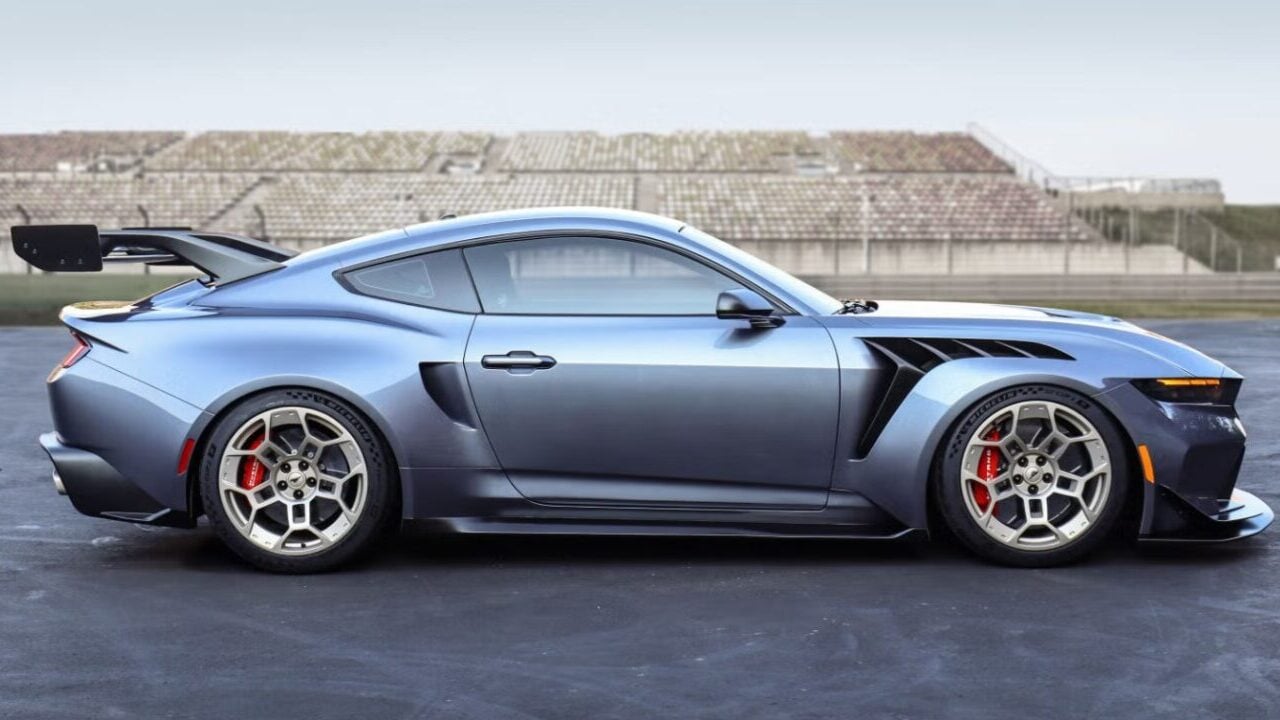
For the Mustang GTD, any tariff-related price increase would affect an extremely limited and affluent group of customers. Ford has already closed the application process for the exclusive model, further limiting the immediate impact of potential future trade changes on GTD buyers.
The issue becomes considerably more important when the same manufacturing realities are applied to mainstream vehicles. The Chrysler Pacifica, for example, is closely associated with an American automaker but is assembled at Stellantis’ Windsor Assembly Plant in Ontario, Canada.
Changes that favor U.S.-specific content over broader North American integration could therefore influence vehicles far beyond six-figure performance cars. For everyday buyers, additional costs could potentially affect transaction prices, financing, monthly payments, incentives, and manufacturer sourcing decisions.
The Mustang GTD ultimately illustrates the complexity facing automakers as trade policy evolves. It may be an unmistakably American performance icon, but the engineering and manufacturing network behind it reflects a North American auto industry that has spent decades operating across borders—and changing those rules could have consequences reaching well beyond Ford’s most extreme Mustang.