Not every legendary car needs to break speed records to break hearts. Some of the most memorable rides in automotive history made their mark with gorgeous lines, head-turning presence, and enough personality to fill a showroom.
These classics proved that sometimes the journey matters more than how quickly you get there. Their designers understood that a car could be a rolling sculpture, a statement piece that said something about who you were and where you were going.
While muscle car fans were obsessing over quarter-mile times, these beauties were winning admirers at every stoplight.
1957 Chevrolet Bel Air

The ’57 Bel Air is automotive royalty, and it earned that crown on looks alone.
With its iconic tailfins, generous chrome trim, and that unmistakable grille, this Chevy became the poster child for 1950s American optimism. The base model came with a modest 235 cubic inch inline-six producing just 140 horsepower, which was perfectly adequate for cruising to the drive-in.
V8 options ranged from about 162 to 270 horsepower, with a rare fuel-injected 283 rated at 283 horsepower, respectable but not earth-shattering. What it lacked in raw power, it made up for in sheer presence, turning every parking lot into a car show. Decades later, it remains one of the most recognizable and beloved cars ever built.
Volkswagen Beetle

The people’s car became a global icon through charm rather than performance.
Featuring a rear-mounted air-cooled engine that produced about 25–36 horsepower in early models, the Beetle wasn’t winning any drag races. Its rounded, almost whimsical shape made it instantly recognizable from a mile away, and that simplicity became its superpower.
Drivers didn’t buy Beetles to go fast; they bought them because these cars had character that money couldn’t buy. The bug-eyed headlights and curved fenders gave it an almost friendly appearance that made people smile. Over 21 million were sold worldwide, proving that personality can outsell horsepower any day of the week.
1955 Ford Thunderbird

Ford’s first Thunderbird was marketed as a personal luxury car, not a sports car, and that distinction mattered.
The two-seater came with a 292 cubic inch V8 producing 193 horsepower, which sounds decent until you remember it was hauling around 3,100–3,200 pounds, depending on equipment. What the T-Bird did have was continental kit styling, porthole windows, and an elegance that made it feel special without trying too hard.
It was the car you drove to the country club, not the drag strip, and everyone understood that was the entire point. The wraparound windshield and low-slung profile created a silhouette that still looks gorgeous today.
Ford sold over 16,000 in the first year, proving Americans were hungry for something sophisticated and stylish.
Citroën DS

When the DS debuted at the 1955 Paris Motor Show, it looked like it had dropped from another planet.
The French masterpiece featured radical aerodynamic styling, hydropneumatic suspension, and a futuristic design that made everything else look dated overnight. Under that spaceship bodywork sat a modest four-cylinder engine producing just 75 horsepower initially, though later models offered more.
Performance wasn’t the story here, the DS floated over French roads like a magic carpet, turning heads with its otherworldly appearance. The single-spoke steering wheel and later swiveling headlights added to the avant-garde appeal.
This was a car that prioritized innovation and aesthetics over straight-line speed, and it became an instant classic because of it.
Mercury Cougar (1967-1970)

Mercury’s Cougar arrived as the upscale cousin to the Mustang, trading some muscle for a lot more sophistication.
While you could option a big-block engine, the standard 289 cubic inch V8 with 200 horsepower was perfectly adequate for the target buyer. The hidden headlights, sequential turn signals, and long hood gave it a prowling elegance that lived up to its feline nameplate.
Interior materials were a step above most pony cars, with genuine wood-grain trim and plush seating that felt more luxury than sport. The Cougar proved that the personal luxury coupe could offer style and comfort without needing to terrorize the competition.
Its refined approach to the muscle car formula attracted buyers who wanted presence without the aggressive posturing.
Studebaker Avanti

The Avanti looked like pure speed even when it was standing still, which is ironic considering performance wasn’t its strongest suit.
Raymond Loewy’s design featured a fiberglass body with aircraft-inspired lines that seemed a decade ahead of their time. The base R1 289 V8 produced 240 horsepower, while the supercharged R2 was rated at 289 horsepower, respectable but not groundbreaking for 1962. What made the Avanti special was its daring design language: no grille, asymmetrical hood scoop, and a wedge profile that screamed innovation.
The interior featured European-style round gauges and aircraft-inspired controls that added to its jet-age appeal. Production problems kept numbers low, making it more of a style statement than a sales success, but those who got one owned something truly unique.
Pontiac Grand Prix (1962-1964)

Pontiac took the full-size chassis and draped it in some of the most elegant sheetmetal of the era.
The first-generation Grand Prix came with a 389 cubic inch V8 producing 303 horsepower, which sounds impressive until you remember it was moving well over 4,000 pounds of luxury. This was a car designed for effortless highway cruising, not stoplight battles, with bucket seats and a center console that made it feel sportier than it actually was.
The distinctive grille and long hood gave it a prestigious appearance that competed more with Lincoln than with other performance cars. Pontiac priced it above the Bonneville, positioning it as a personal luxury car for executives who wanted style without sacrificing comfort.
The formula worked, creating a new niche that other manufacturers would soon rush to fill.
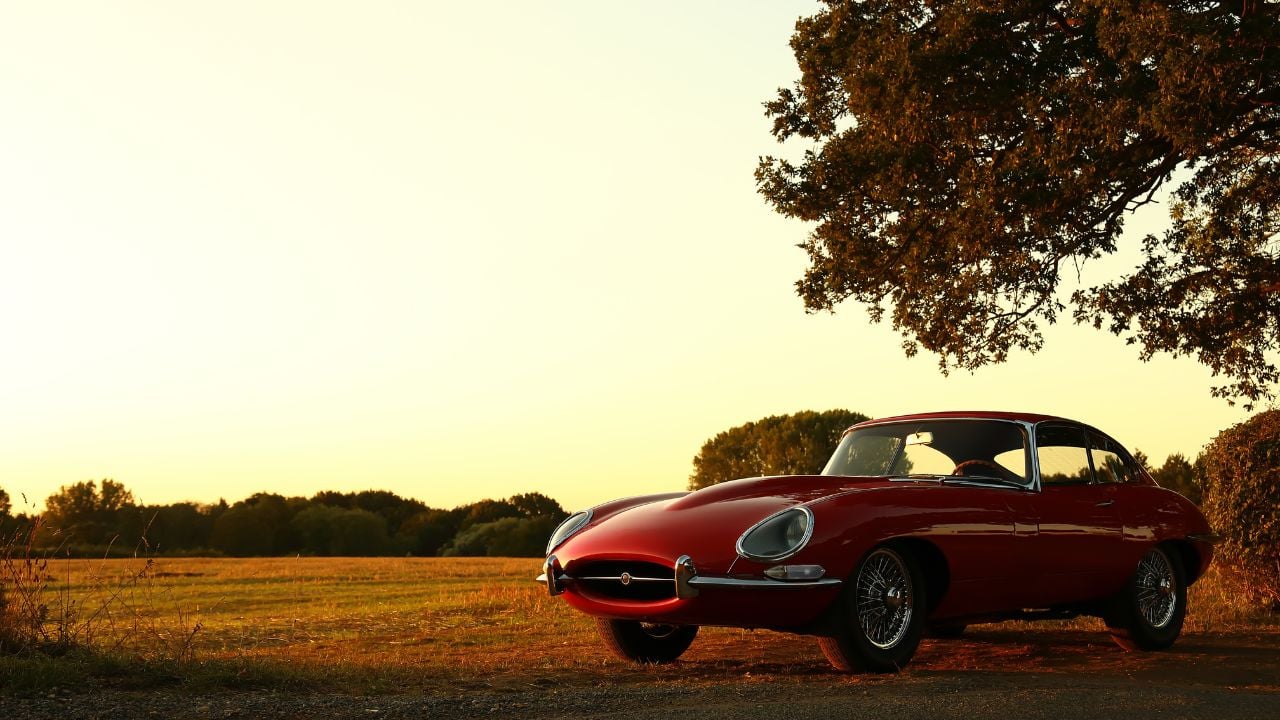
Jaguar E-Type

British automotive royalty, the E-Type combined breathtaking beauty with performance that was strong for its era, though it could be demanding to keep in top form.
Enzo Ferrari famously called it the most beautiful car ever made, and who’s going to argue with Enzo? The early models featured a 3.8-liter inline-six producing 265 horsepower, which delivered decent acceleration but required patience and mechanical sympathy. The long hood, curved fenders, and low stance created proportions that artists still study today.
Owners quickly learned that keeping an E-Type running could be as challenging as it was rewarding, but that didn’t diminish the thrill of driving something so visually stunning. The car’s real performance was in how it made you feel, which is worth more than any dyno sheet.
Cadillac Eldorado (1967-1970)
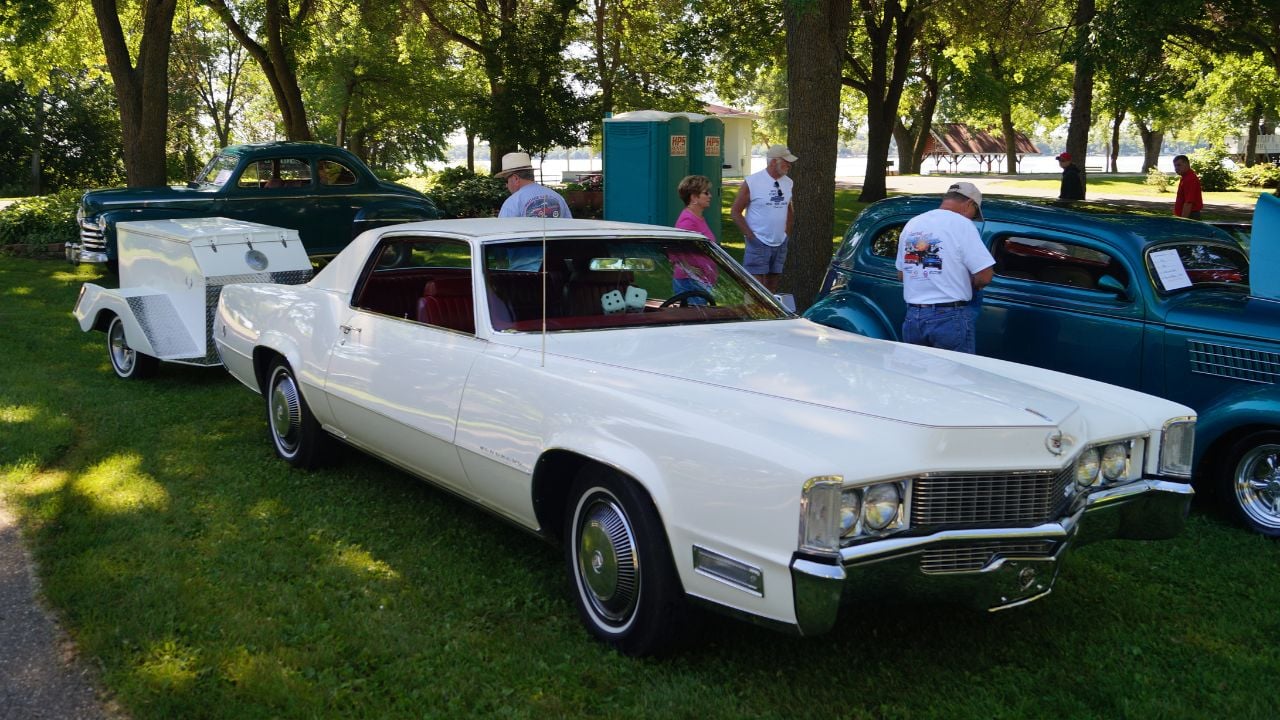
Cadillac’s personal luxury coupe redefined what it meant to arrive in style.
The front-wheel-drive Eldorado used a 429 V8 in 1967 (340 hp), then switched to the 472 V8 for 1968–1969 (375 hp), but all that power was devoted to moving over 4,600 pounds of comfort and chrome. The long hood, hidden headlights, and sharp-edged styling made it impossible to ignore, especially in period-correct white with a vinyl top.
This was never meant to be a corner-carver or a drag racer, it was a boulevard cruiser for people who had already made it. The plush interior featured more luxury than most living rooms, with power everything and enough space to host a small party.
Cadillac understood that their buyers wanted to make an entrance, and the Eldorado delivered exactly that.
Triumph Spitfire

The little British roadster proved you didn’t need power to have fun, just good looks and open-air thrills.
Powered by a small 1.1-liter four-cylinder engine producing roughly 50 to 63 horsepower depending on market and measurement standards, the Spitfire wasn’t scaring anyone off the line. What it offered instead was charming styling, an affordable price, and the simple joy of top-down motoring on a sunny afternoon.
The swing-spring rear suspension made for interesting handling characteristics, which is British automotive journalism speak for “exciting in unexpected ways.” Chrome bumpers, wire wheels, and classic proportions gave it charm that far exceeded its modest specifications.
Thousands of enthusiasts still maintain these little roadsters today, proving that driving enjoyment doesn’t require triple-digit horsepower.
Oldsmobile Toronado (1966-1970)

Oldsmobile’s bold experiment combined radical front-wheel-drive engineering with styling that looked ready for the 21st century.
The massive 425 cubic inch V8 produced 385 horsepower, but it was tasked with motivating 4,500 pounds of futuristic Detroit iron. The fastback roofline, hidden headlights, and dramatic proportions made it look like nothing else on American roads.
This was a grand touring car in the truest sense, designed to devour interstate highways while cocooning passengers in comfort. The innovative drivetrain was more about smooth power delivery than outright performance, prioritizing refinement over rawness.
Critics praised its ambitious design even while noting that it was more about making a statement than setting lap times.
Chevrolet Corvair

GM’s rear-engined experiment became controversial for the wrong reasons, but its styling deserves appreciation.
The air-cooled flat-six produced between 80 and 180 horsepower, depending on configuration, which was modest even by 1960s standards. What the Corvair offered was distinctive styling that broke from Detroit’s conventional wisdom, especially in the gorgeous second-generation models.
The sporty Monza trim proved that economical cars could still have personality and pizzazz. Unfortunately, safety concerns overshadowed its genuine appeal, though modern collectors appreciate its unique character.
The Corvair represented American automakers trying something different, even if the execution didn’t quite match the ambition.
Conclusion

These classics remind us that automotive greatness comes in many forms, not just from the stopwatch. Each of these cars made lasting impressions through design, character, and the intangible quality that makes people turn their heads. They’ve survived in memory and in collector garages because they made people feel something special, regardless of their spec sheets.
Today’s cars may be faster, safer, and more efficient, but many struggle to create the same emotional connection these beauties managed effortlessly. The lesson is timeless: sometimes looking good while getting there is just as important as how quickly you arrive.