
Walk into any dealership today and you’ll find the lots stacked high with crossovers, SUVs, and trucks in every size imaginable. It’s a great time to buy something tall and practical, sure, but somewhere along the way we lost something special.
The sedan, that low-slung, driver-focused staple of American roads, quietly faded from the spotlight, and a lot of genuinely exciting cars went with it. The 2000s were a golden stretch for four-door enthusiasts, a decade when automakers were still willing to take swings on stylish, fun, and outright quick sedans at nearly every price point. Whether you were a college student stretching a budget or a gearhead with cash to spend, there was something on the lot with a trunk lid and a heartbeat.
These are the ones we keep thinking about.
Pontiac G8 (2008–2009)
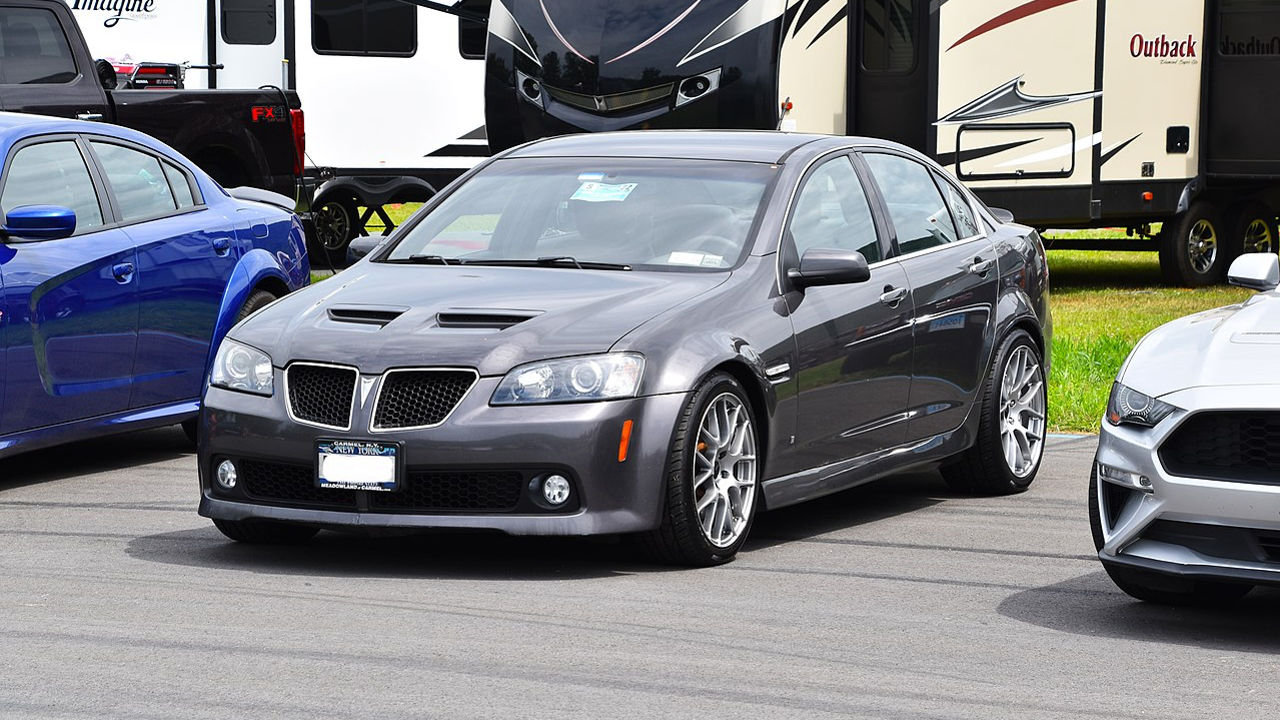
Here’s the thing about the G8: it showed up, reminded everyone what a proper rear-wheel-drive American sedan could feel like, and then promptly disappeared when GM discontinued Pontiac.
Talk about bad timing. Built on an Australian platform and powered by engines that ranged from a capable V6 all the way up to a 6.0-liter V8 in the GT trim, the G8 was the kind of car that made you actually look forward to your commute. It drove with a directness and confidence that most sedans in its price range couldn’t touch.
Enthusiasts still talk about it like a great athlete who retired too soon, which is exactly what it was.
Honda Accord (2003–2007, Seventh Generation)

Not every car on this list needs to be a fire-breather to deserve a spot.
The seventh-gen Accord earned its place by being nearly flawless at what it set out to do, and doing it with a level of refinement that made competitors scramble to keep up. The four-cylinder was smooth and willing, the V6 was genuinely quick, and the whole package was wrapped in a design that aged gracefully without ever trying too hard. It steered well, rode well, and felt like it was built by people who actually drove cars.
In a world where a lot of modern sedans have traded driver feel for screen real estate, the seventh-gen Accord reminds you how good the basics can be when they’re done right.
BMW 3 Series E46 (1999–2005)

If you want to start a debate among car people, just ask them which generation of 3 Series was the best and sit back.
A lot of them are going to land on the E46, and they’re not wrong. This was BMW at its most confident, a car that balanced everyday usability with genuine driving pleasure in a way that felt effortless rather than engineered. The steering communicated everything, the chassis felt alive in corners, and even the base engines made the whole car feel like it wanted to be driven rather than just piloted.
It’s the benchmark that every enthusiast sedan since has been quietly measured against, and a lot of them still haven’t quite cleared the bar.
Dodge Charger (2006–2010, LX Generation)

The LX-generation Charger that arrived for 2006 had something that felt genuinely bold about it, a big, rear-wheel-drive American muscle sedan that didn’t apologize for what it was.
Slap the R/T badge on it with the 5.7-liter Hemi and you had a car that sounded like it meant business every time you touched the throttle. Four real doors, a proper back seat, a trunk big enough to matter, and enough V8 character to make the whole thing feel special.
It was a muscle car that your family could also ride in without complaint, which is a harder trick to pull off than it sounds.
Subaru Legacy GT (2005–2009)

This one flew under the radar for most people, which made it even better for the people who knew.
The fourth-generation Legacy GT was a turbocharged all-wheel-drive sleeper that looked like something a sensible commuter would drive and performed like something considerably less sensible. The 2.5-liter turbocharged flat-four pushed out around 250 horsepower in stock form, with a manual transmission available for enthusiasts who wanted to stay properly connected to what the car was doing. On a wet or snowy road, it was about as confidence-inspiring as sedans got.
It’s the kind of car that makes you wonder why more manufacturers weren’t building turbocharged, all-wheel-drive sport sedans at an accessible price point, because when it works this well, it really works.
Cadillac CTS (First Generation, 2003–2007)
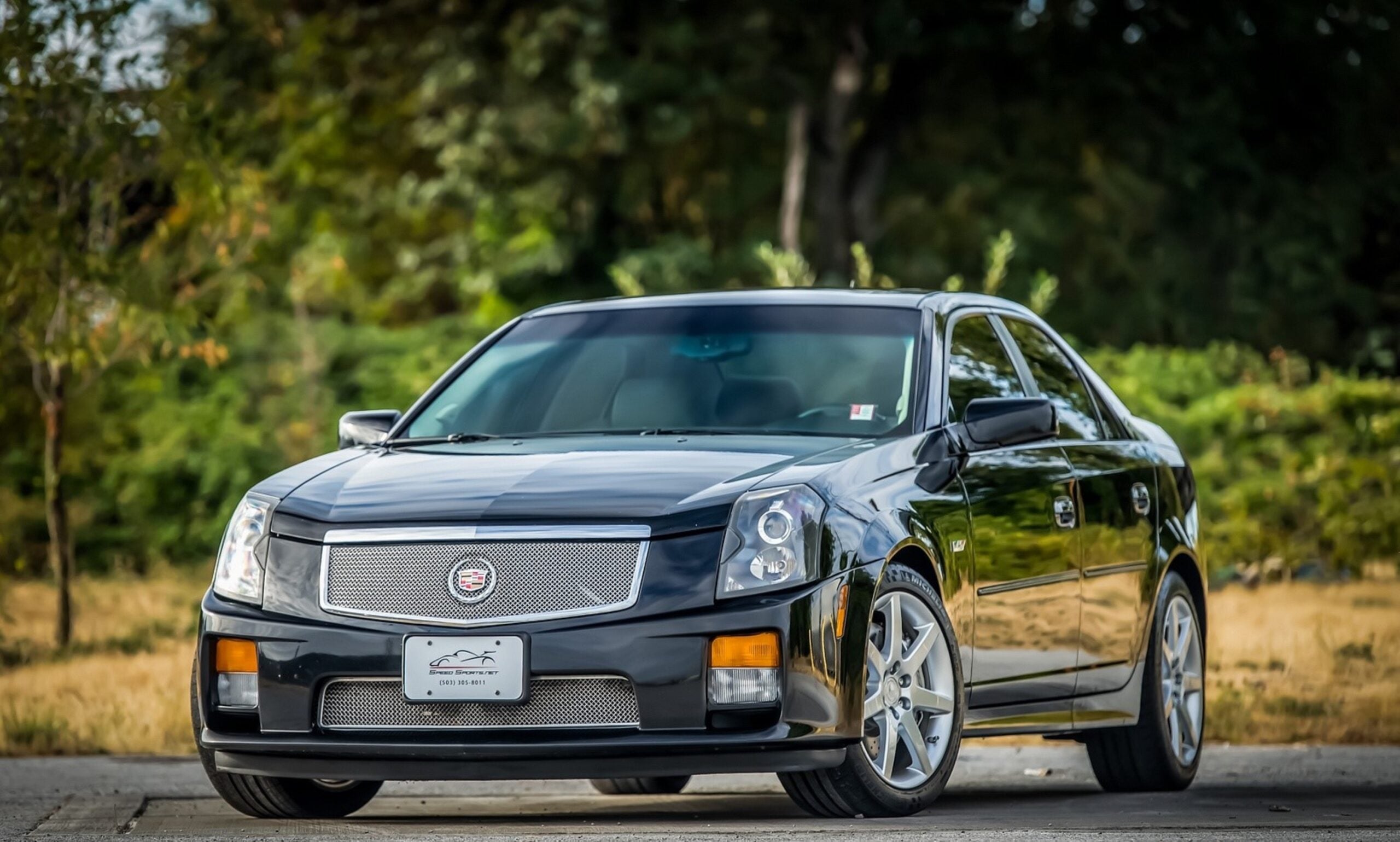
Cadillac had spent much of the late 1990s coasting on reputation, and then the CTS arrived and reminded everyone that this brand actually knew how to build a driver’s car when it wanted to.
The first-gen CTS was bold and angular at a time when most luxury sedans played it safe, and underneath that sharp styling was a rear-wheel-drive platform that could entertain you when the road got interesting. The CTS-V that followed, using the LS6 V8 shared with the C5 Corvette Z06 in 2004 and 2005 models, got most of the press, but the standard CTS deserves credit for putting Cadillac back in the conversation about cars worth caring about.
It was the reset button the brand desperately needed.
Mazda 6 (First Generation, 2003–2008)
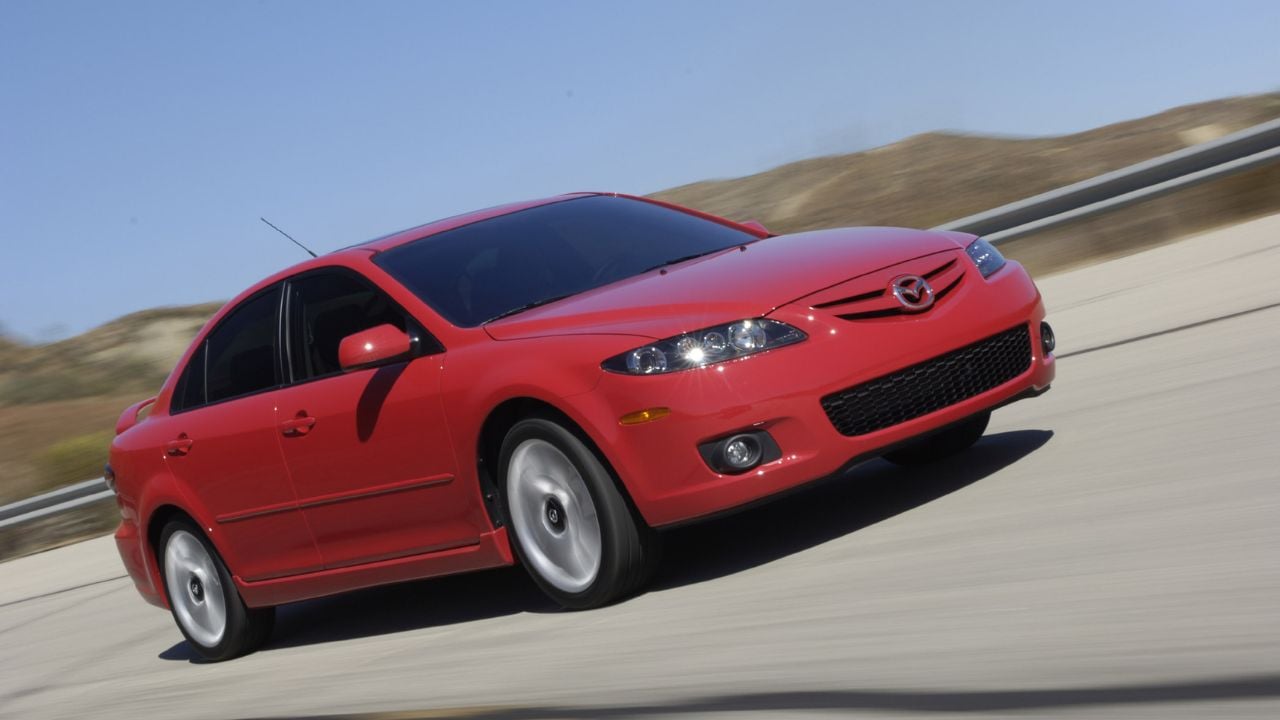
Mazda has always had a knack for making ordinary cars feel less ordinary, and the first-generation 6 was proof of that at the mid-size level.
It wore its sport sedan intentions on its sleeve, lower, wider, and more dynamic-looking than most of the competition, and it backed up the looks with handling that was genuinely engaging. The V6 version in particular struck a nice balance between everyday practicality and weekend enthusiasm. It wasn’t the most powerful option in the segment, but it was one of the most fun to actually drive, which Mazda correctly understood was often the better trade.
A lot of Accord and Camry buyers walked past it without realizing what they were missing.
Chrysler 300C (2005–2010)

There’s something to be said for a car that commits fully to its own aesthetic, and the 300C committed.
That bold, upright grille and wide-stance stance made it look like it had somewhere important to be, and the Hemi V8 under the hood made sure it could back that up. The interior stepped up Chrysler’s game in ways that surprised people who had written the brand off, and the rear-wheel-drive dynamics gave it a character that front-wheel-drive competitors simply couldn’t replicate. It became a genuine sales success because it connected with buyers who wanted something that stood out in a parking lot of vanilla options.
In hindsight, it was ahead of the curve on the idea that American buyers would pay for something with genuine personality.
Volkswagen Passat W8 (2001–2004)

This one is for the truly devoted, the enthusiasts who like their cars with a side of “wait, they put what in it?”
Volkswagen dropped a narrow-angle W8 engine, essentially two narrow VR4s joined together, into the Passat, making it one of the most unusual powerplants in a family sedan ever offered. It was smooth, refined, and unlike anything else on the road at the time. Combined with all-wheel drive and a 4MOTION badge, it was a genuinely premium, genuinely different machine. It wasn’t cheap to produce or to maintain, which is largely why it lasted only a couple of years.
But the ambition it represented, a quirky, over-engineered German sedan that didn’t follow any conventional playbook, is exactly the kind of thing we miss in today’s more calculated market.
Ford Five Hundred (2005 to 2007) / Ford Taurus (2008 to 2009)

The Five Hundred doesn’t get nearly enough credit for what it was: a genuinely spacious, comfortable, surprisingly capable family sedan that offered available all-wheel drive at a price that regular people could afford.
When it was refreshed and renamed the Taurus for 2008, it got a little more polish, but the fundamentals were already solid. The cabin was notably roomy, the ride was composed, and the optional AWD system made it a year-round proposition for people in climates where that matters. It wasn’t flashy, but it was honest, and sometimes honest is exactly what you need in a car.
Ford ultimately walked away from sedans entirely, and the Five Hundred/Taurus lineage went with it, which remains a genuine loss for buyers who just wanted something sensible with four doors.
Infiniti G35 (2003–2008)

Infiniti had been trying to find its footing for years before the G35 arrived and made everything click.
Rear-wheel drive, a 3.5-liter V6 that grew to as much as 306 horsepower by the end of its run, and a chassis that borrowed extensively from Nissan’s motorsport knowledge, on paper it was almost unfair. In practice it was one of the genuinely great driver’s sedans of the decade, a car that could run with European competition at a price that made the comparison uncomfortable for those European brands’ accountants. The available six-speed manual made it even more of an enthusiast’s choice.
It proved that Japan could build a sport sedan that didn’t just match the established players but could genuinely challenge them on their own terms.
Mitsubishi Galant Ralliart (2007 to 2011)

End on an underdog, why not.
The Galant Ralliart occupied a strange and wonderful niche, a front-wheel-drive sport sedan that leaned on Mitsubishi’s rally heritage for its identity and actually had the hardware to back some of it up. What it delivered was style, a 258-horsepower 3.8-liter V6, sport-tuned suspension, and a level of visual aggression that made it stand out in the mid-size segment.
It wasn’t the most polished machine on the road, but it had character and it had attitude, and for buyers who wanted something a little different from the Camry-and-Accord corridor, it scratched that itch reliably. Mitsubishi has since retreated almost entirely from the passenger car space, and the Ralliart nameplate lives on only on some crossovers, which just isn’t the same thing.
Conclusion

What made these sedans worth remembering isn’t any single quality, it’s the fact that they each stood for something. Some were fast, some were stylish, some were just quietly excellent in ways that took a few years to fully appreciate. The sedan as a body style isn’t dead, but it’s become a smaller and more specialized part of the market than it used to be, and a lot of the mid-range variety that made the 2000s so interesting has thinned out considerably.
Today’s buyers have more power, more technology, and more safety equipment than any of these cars offered, but they sometimes have fewer choices when it comes to low, rear-wheel-drive, genuinely driver-focused machines at everyday prices. The next time you see a clean G8, an E46, or a first-gen G35 at a car show or rolling down the street, take a second look. Those are cars that a lot of people worked hard to build right, and they deserve the appreciation.