
American muscle cars were born from a perfect storm of post-war optimism, cheap gas, and engineers who apparently never heard the phrase “that’s probably enough horsepower.” These fire-breathing beasts rolled off assembly lines with one mission: make everything else on the road look like it was standing still thanks to their aggressive acceleration and even more aggressive looks.
While today’s soccer moms debate the merits of hybrid SUVs, back in the day, real Americans were arguing about whether 400 horsepower was enough or if you needed to bump it up to 500 just to be safe.
These were mechanical manifestos written in tire smoke and translated into quarter-mile times. Every muscle car was telling practicality to get lost, a love letter to excess, and proof that sometimes the best engineering comes from asking “what if we just made it louder and faster?” So buckle up, because we’re about to drive into 12 facts about American muscle that’ll make you question why anyone ever thought a Corolla was a good idea.
The Term “Muscle Car” Was Born in Car Magazines
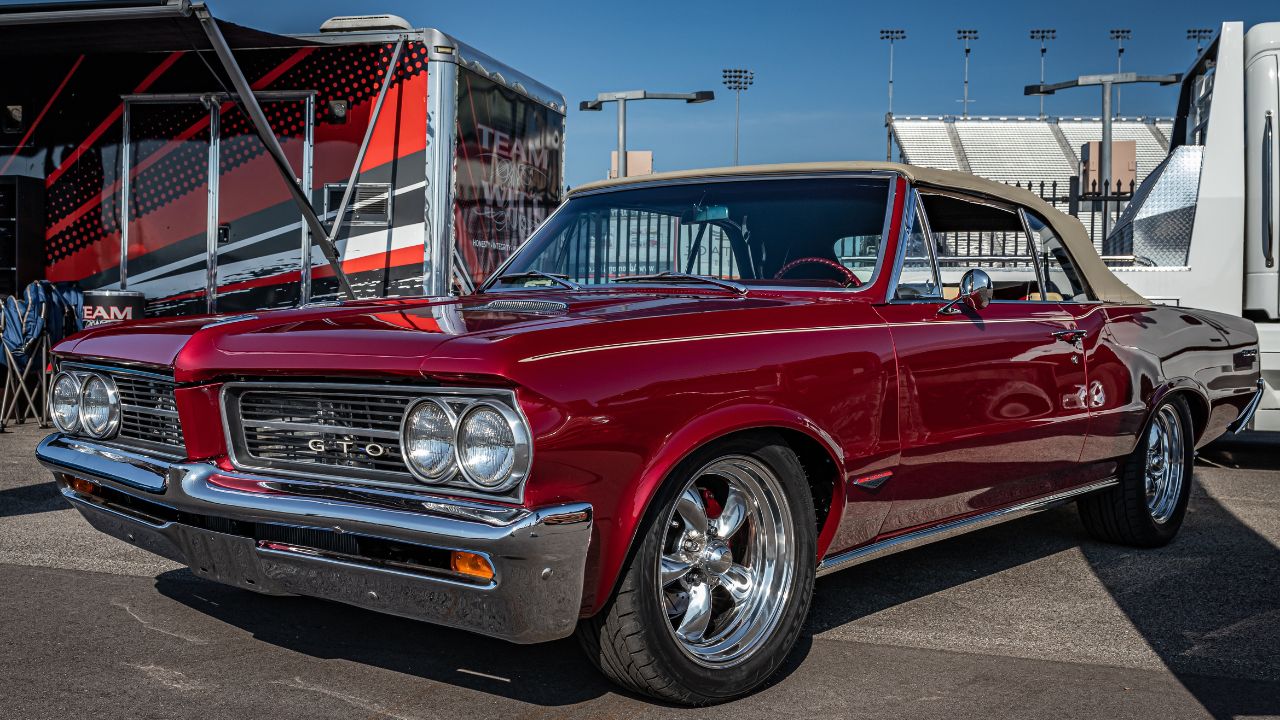
The term “muscle car” took off in the mid-1960s, and thank god someone came up with it before the marketing department could saddle us with something terrible like “power sedans” or “acceleration machines.”
The 1964 Pontiac GTO kicked off this whole beautiful madness by stuffing a 389-cubic-inch V8, originally intended for full-size cars, into the mid-size Tempest/LeMans body. And somehow it worked perfectly. The GTO could hit 60 mph in 6.6 seconds, which doesn’t sound impressive until you realize that most family cars of the era took about as long to reach 60 as it takes to microwave a Hot Pocket.
Pontiac sold 32,450 GTOs in 1964, proving that Americans were ready to sacrifice trunk space, fuel economy, and their children’s college funds for the simple pleasure of making BMW drivers cry at red lights. The term “muscle car” stuck because it perfectly captured what these machines were all about: pure, unadulterated automotive machismo wrapped in steel and chrome.
Insurance Companies Pushed Buyers to New Directions

By 1970, insurance companies had figured out that young guys driving cars with names like “Super Bee” and “Road Runner” might not be the safest bet. Who could have seen that coming? These corporate buzzkills started charging premiums that were higher than some people’s mortgage payments, effectively pricing an entire generation out of the horsepower game.
A 20-year-old trying to insure a high-performance car in 1970 could get hit with premiums so brutal they sometimes rivaled the cost of the car itself, which helped push buyers toward cheaper-to-insure trims and “sleeper” builds. Suddenly, Dad’s practical advice about buying a sensible Volkswagen Beetle didn’t seem so unreasonable, but who wants to give up exhilaration for sensible?
This led to the rise of “sleeper” cars, machines that looked boring but packed serious heat under the hood. The Plymouth Duster 340 became legendary for looking like your grandmother’s grocery getter while packing enough horsepower to embarrass muscle cars that cost twice as much. Smart buyers learned to avoid flashy stripes and aggressive hoods in favor of cars that could surprise unsuspecting Corvette owners without bankrupting them at insurance renewal time.
Pontiac Borrowed a Legendary Name from Italian Racing

When Pontiac’s marketing team was brainstorming names for their new performance car, someone apparently looked at Ferrari’s 250 GTO and thought, “You know what? We’ll take that.” The letters “GTO” stood for “Gran Turismo Omologato”, Italian for “grand touring homologated,” which basically means “fancy race car that’s street legal.” Ferrari had earned the right to use this badge through decades of racing excellence and European sophistication.
Pontiac’s version? They slapped those same letters on a mid-size American car with an engine that had more in common with a bulldozer than a precision racing machine. Ferrari’s GTO badge was already legendary in racing circles, and Pontiac borrowing the letters gave them a very American second life.
The beautiful irony is that the Pontiac GTO became more famous than the Ferrari that inspired its name. While Ferrari built 39 examples of their 250 GTO, Pontiac cranked out hundreds of thousands of their version. Sure, the Italian car is now worth tens of millions and the Pontiac might fetch tens of thousands on a good day, but which one do you think had more fun at American drive-ins?
Quarter-Mile Thinking Created a Generation of Straight-Line Heroes

Muscle car engineers had a beautifully simple philosophy: “Why make it turn when you can make it go really, really fast in a straight line?” This led to cars that could demolish a quarter-mile like they were shot from a cannon but handled corners about as well as a shopping cart with a broken wheel.
The 1968 Dodge Charger R/T exemplified this approach. With its big-block V8 options, it was brutally quick in a straight line for a heavy coupe, impressive enough to make European sports car owners question their life choices. However, ask that same Charger to navigate a curvy mountain road, and you’d quickly understand why chiropractors did such good business in the 1970s.
Engineers focused obsessively on weight transfer, traction bars, and launch techniques. The rear suspension was designed to plant the back tires and minimize wheel hop during hard acceleration. Some cars came with “slapper bars”, traction devices that literally slapped the rear axle when it tried to twist under power. It was crude, effective, and about as subtle as a brick through a window.
This single-minded focus on straight-line speed created a generation of drivers who could execute perfect burnouts and nail their shift points but had no idea what “understeer” meant. European car magazines loved to mock American muscle for this, right up until a bone-stock Super Bee would walk away from their precious sports cars on any piece of straight road.
NASCAR Made Muscle Cars Grow Wings

The late 1960s saw NASCAR devolve into what was essentially a government-sanctioned arms race between Detroit automakers. The phrase “Win on Sunday, Sell on Monday” wasn’t just marketing speak, it was a battle cry that led to some of the most gloriously insane machines ever to grace American roads.
Dodge’s response was the Charger Daytona, a car so aerodynamically advanced that it looked like it had been designed by aliens who had a really good understanding of physics. The massive nose cone and towering rear wing weren’t just for show; they helped the Charger Daytona crack 200 mph in NASCAR superspeedway running, a headline moment for the aero-war era. Only 503 were built for the street, and each one looked like it was ready to blast off to another planet.
Plymouth one-upped their corporate siblings with the Superbird, which took the already-outrageous Daytona concept and cranked the crazy up to eleven. The wing stood so tall that you could walk under it without ducking, and the nose was so pointed that parking became an act of aggression against innocent bumpers. Richard Petty famously said the wing was so big that he had to be careful not to take off during races.
These cars could be ordered with the 426 HEMI, factory-rated at 425 hp, and that alone was enough to rewrite the rulebook. The wing cars dominated NASCAR until sanctioning bodies changed the rules specifically to slow them down, the ultimate compliment in racing.
The Gas Crisis Couldn’t Kill American Horsepower (But It Sure Tried)

When the 1973 oil embargo hit and gas lines stretched around blocks, conventional wisdom said muscle cars were finished. Someone forgot to tell Pontiac, who responded by building the Trans Am with a 455 Super Duty engine that laughed at both fuel shortages and common sense.
The Super Duty 455 was the last of the truly great muscle car engines, producing 290 hp and 390 lb-ft of torque in an era when most manufacturers were busy figuring out how to make their cars run on unleaded fuel without exploding. Pontiac achieved this by building an engine tough enough to survive nuclear winter, with four-bolt mains, forged pistons, and cylinder heads that could probably stop bullets.
While other manufacturers were installing catalytic converters and strangling their engines with emissions equipment, Pontiac was still building cars that could light up the rear tires from a rolling start. The 1973-74 Trans Am Super Duty could run 13.9-second quarter-miles, which was competitive with the best muscle cars from the peak years.
The irony wasn’t lost on anyone: during America’s worst fuel crisis, one of the thirstiest, most powerful cars ever built became a symbol of defiance. Buyers lined up to pay premium prices for cars that got single-digit fuel economy, proving that Americans would rather walk than drive something boring.
The Trans Am with its screaming chicken hood decal became a way to flip off practicality, and sales numbers proved that flipping off the status quo could be surprisingly profitable.
COPO: When Dealers Decided Factory Specs Were for Amateurs
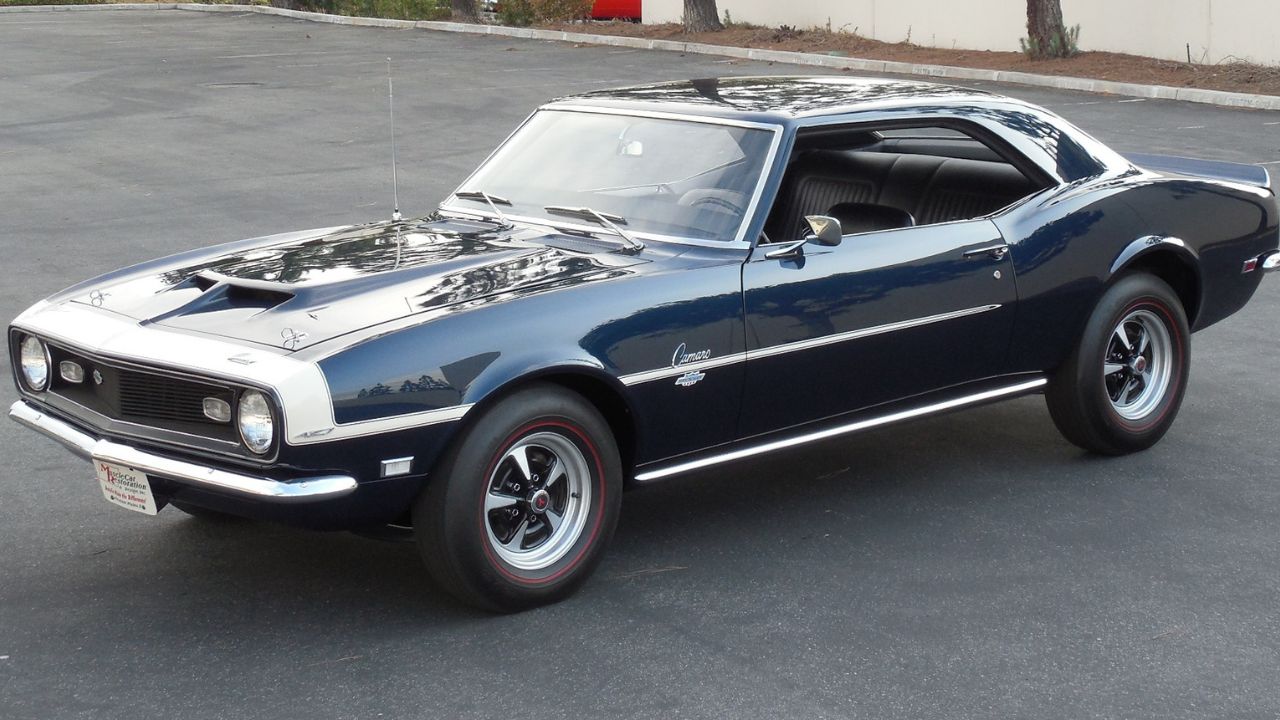
The Central Office Production Order (COPO) system was supposed to be a boring administrative tool for fleet sales and special equipment orders. Don Yenko saw it as his personal loophole to automotive anarchy. This Chevrolet dealer from Pennsylvania figured out how to game the system, ordering “economy” cars that just happened to arrive with engines powerful enough to rearrange your internal organs.
Yenko’s masterstroke was ordering Camaros and Novas with the COPO 9561 option, which stuffed the 427-cubic-inch L72 engine, rated at 425 hp but making closer to 500, into vehicles that had no business carrying that much firepower. The result was a 3,200-pound Camaro that could hit 60 mph in 4.8 seconds and run 12.8-second quarter-miles. For reference, that was faster than most Corvettes of the era.
Only 201 COPO Camaros were built, making them incredibly rare by muscle-car standards and significantly more likely to kill you in a parking lot. Yenko added his own graphics package, racing stripes, and badges that proclaimed these cars for what they were: street-legal race cars built by a dealer who had apparently lost his mind in the best possible way.
The COPO Novas were even more insane, lightweight, compact cars with big-block power that could launch so hard they’d lift the front wheels off the ground. Drag racers loved them, insurance companies banned them, and collectors now pay six figures for the privilege of owning a car that was essentially a factory-built accident waiting to happen.
Mopar’s Six Pack: Because Three Carburetors Are Better Than One (Obviously)

While other manufacturers were content with boring single four-barrel carburetors, Chrysler’s engineers apparently decided that if three carburetors were good enough for Italian exotic cars, they were good enough for American street machines. The “Six Pack” setup, three two-barrel Holley carburetors mounted on a special intake manifold, became synonymous with serious Mopar muscle.
The 440 Six Pack engine was a masterpiece of over-engineering that produced 390 horsepower and 490 lb-ft of torque, numbers that could transform a Plymouth Road Runner from a cartoon-themed family car into a tire-shredding monster. The center carburetor handled idle and cruise duties, while the outboard carbs kicked in under wide-open throttle, creating a progressive power delivery that was surprisingly civilized until you planted your foot.
The setup wasn’t just about power, it was about theater. The distinctive “Six Pack” graphics, functional hood scoops, and aggressive engine note announced these cars’ intentions from three blocks away. Owners loved revving their engines just to hear the mechanical symphony of six carburetor throats gulping air and fuel in perfect harmony.
Dodge Super Bee and Plymouth Road Runner models equipped with the Six Pack could run mid-13-second quarter-miles while maintaining enough street manners to drive to church on Sunday (assuming your church was okay with tire smoke and profanity). The setup was so effective that modern tuners still copy the concept, proving that sometimes the old ways really are the best ways.
Hurst Shifters Became Muscle Car Staples
In an era when most cars came with shifters that felt like stirring pudding with a pool cue, Hurst Performance developed shifters that made every gear change feel like a mechanical precision strike. Their Competition Plus shifter became standard equipment on serious muscle cars, transforming the mundane act of shifting gears into something approaching automotive art.
The Hurst shifter’s distinctive T-handle and positive engagement made drivers feel connected to their machines in ways that modern paddle shifters can’t match. There was something deeply satisfying about slamming through the gears with a Hurst shifter, each click confirming that you were in complete control of several hundred horsepower worth of American anger.
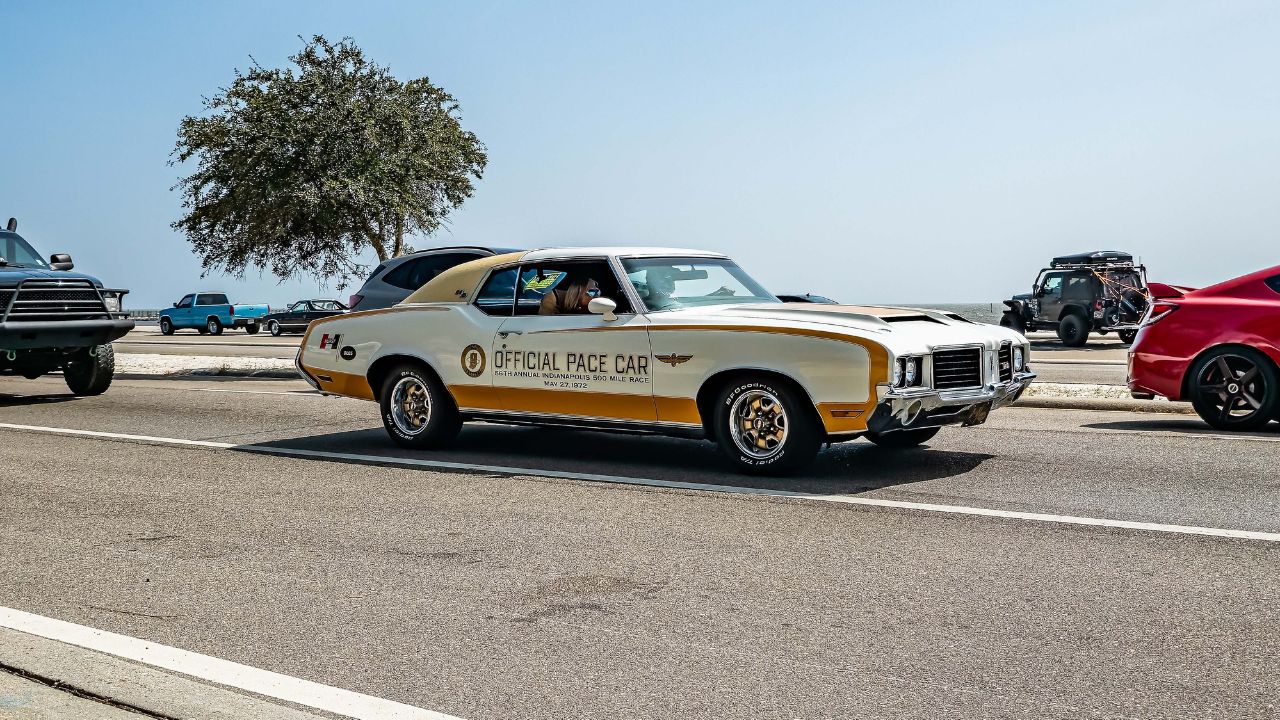
Hurst’s partnership with Oldsmobile produced the legendary Hurst/Olds, a limited-production muscle car that combined Oldsmobile’s refined approach with Hurst’s performance expertise. The 1969 model packed a 455-cubic-inch engine producing 380 horsepower, wrapped in distinctive white and gold paint with racing stripes that looked like they were applied by someone who understood the assignment.
These cars were more than just fast, they were statement pieces. The Hurst/Olds represented everything great about muscle car collaboration: take a solid foundation, add more power than necessary, paint it in colors that could be seen from space, and sell it to people who understood that life’s too short for boring cars. Only 906 were built in 1969, making them rare enough to be special but common enough that you might actually see one at a car show.
Muscle Cars Launched a Thousand Plastic Dreams

The muscle car craze didn’t just happen on streets and drag strips, it exploded across kitchen tables and bedroom floors thanks to scale model manufacturers who understood that kids wanted to own these machines even if they couldn’t reach the pedals. Hot Wheels launched in 1968 with 16 models, and half of them were muscle cars because Mattel’s designers knew what sold.
The original “Sweet 16” Hot Wheels lineup included the Custom Cougar, Custom Firebird, and other die-cast replicas that let kids experience the thrill of muscle car ownership for 59 cents. These weren’t just toys; they were gateway drugs to automotive enthusiasm, introducing generations of future gearheads to the shapes and sounds that would define their automotive desires.
Model kit companies like AMT, MPC, and Revell turned muscle car assembly into a rite of passage. Building a 1:25 scale Super Bee or Judge taught kids the names of engine components, the importance of proper paint prep, and the satisfaction of creating something beautiful with their own hands. Hobby shops became shrines to automotive culture, with entire walls dedicated to plastic muscle cars waiting to be built, painted, and displayed.
The cultural impact was enormous. Kids who grew up building Hemi ‘Cuda models became the adults who restored real ones. The muscle car hobby survived the dark years of the 1980s partly because an entire generation had been raised on plastic dreams and die-cast fantasies.
When these cars became affordable classics, those kids knew exactly what they wanted to buy.
The 426 HEMI: When Chrysler Decided to Build a Street-Legal Wrecking Ball
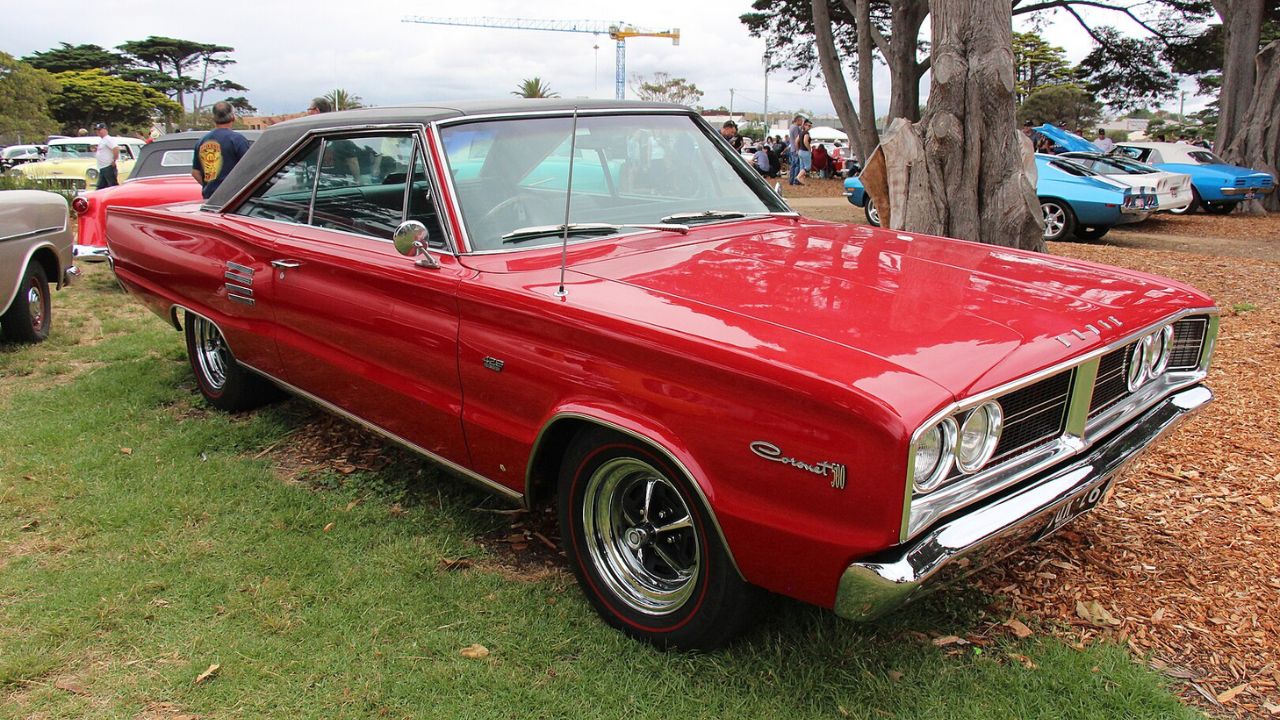
Chrysler’s 426 HEMI engine didn’t just raise the bar for muscle car performance, it launched the bar into orbit and then followed it up with a thermonuclear explosion. Introduced in 1966, this wasn’t an engine as much as it was controlled automotive violence disguised as a consumer product. The HEMI got its name from its hemispherical combustion chambers, a design that allowed massive valves and optimal airflow but required engineering compromises that would make accountants weep.
The street version was rated at 425 horsepower, but everyone knew that number was corporate fiction designed to keep insurance companies from declaring war on Chrysler. Real dyno tests showed these engines making 500+ hp in stock form, with some producing over 600 horsepower when properly tuned. A 1968 Dodge Charger R/T with the 426 HEMI could hit 60 mph in 4.8 seconds and demolish the quarter-mile in 12.8 seconds, numbers that made Corvette owners seriously reconsider their life choices.
The HEMI’s reputation was so fearsome that it spawned its own vocabulary. “HEMI under the hood” became automotive slang for serious business, and drag racers would literally step out of the staging lanes when they heard that distinctive idle rumble. The engine was so dominant in racing that sanctioning bodies kept rewriting rules and classifications around it, trying (and often failing) to keep the playing field level.
But the real genius was Chrysler’s marketing strategy: they offered the HEMI as an option on family cars like the Plymouth Belvedere and Dodge Coronet. Imagine explaining to your insurance agent that your sensible four-door sedan just happened to have an engine that could power a small aircraft.
The combination of sledgehammer performance in a Sunday-school wrapper made the HEMI the ultimate sleeper engine, until you fired it up and everyone within three zip codes knew exactly what you were packing.
Muscle Cars Returned with Force in the 2000s

After decades of front-wheel-drive mediocrity and fuel-sipping sensibility, American automakers remembered they were supposed to be building cars that made people’s hearts race. The revival started slowly with retro-styled pony cars, but it quickly escalated into a full-blown horsepower war that makes the original muscle car era look almost restrained. While some may argue that modern cars are not technically muscle cars, these are still cars that are significantly inspired by the real deal.
The 2015 Dodge Challenger SRT Hellcat didn’t just bring back muscle cars, it brought them back with 707 supercharged hp and a complete disregard for modern concepts like “efficiency” and “environmental responsibility.” This wasn’t a muscle car inspired by the classics; this was a muscle car that looked at the classics and said, “Alright, old timer, try saying this isn’t real muscle.” The Hellcat could hit 60 mph in 3.6 seconds and run quarter-miles in the high 11s, numbers that would have been pure fantasy in 1970.
Ford responded with the Shelby GT500, Chevrolet built the ZL1 Camaro, and suddenly, America was building production cars with over 700 horsepower while European manufacturers were busy explaining why their latest hybrid systems were actually quite exciting, really. The new muscle cars combined old-school attitude with modern technology, creating machines that could outrun their ancestors while still managing to pass emissions tests and achieve reasonable fuel economy (when driven by responsible adults, which obviously wasn’t the target market).
The revival proved that muscle cars weren’t just a historical curiosity, they were a fundamental expression of American automotive culture. In a world increasingly dominated by crossover SUVs and electric vehicles, these modern muscle machines represent a last stand for the idea that cars should be exciting, loud, and capable of inducing instant grin syndrome.
They’re proof that sometimes progress means looking backward, adding more power, and remembering that the best automotive experiences come from machines built by people who understand that life’s too short for boring cars.
A Legacy Cast in Steel and Thunder
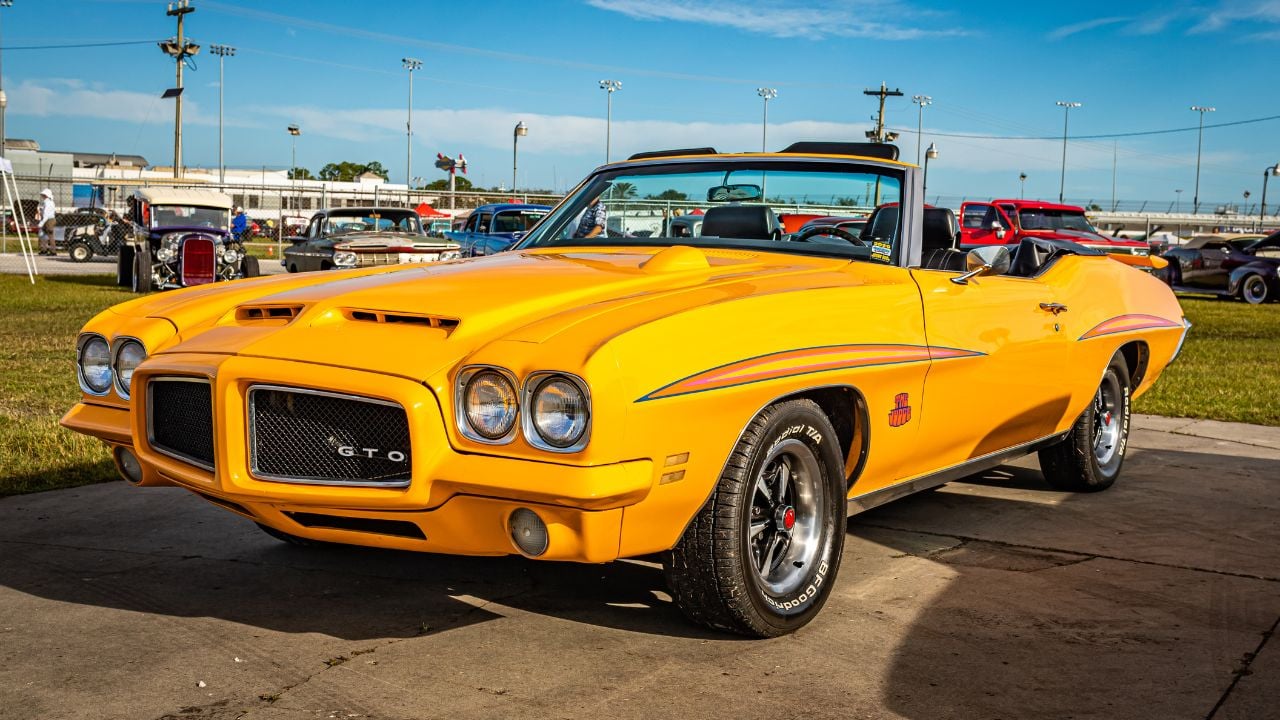
American muscle cars represent more than just transportation, they’re rolling rebellion against the very concept of “enough.” From the original GTO to the modern Hellcat, these machines have consistently proven that Americans will choose excitement over practicality, style over substance, and horsepower over good sense every single time. And thank God for that.
The muscle car story is far from over. As long as there are engineers willing to ask “what if we made it faster?” and customers willing to pay extra for unnecessary power, America will keep building cars that make European efficiency experts weep into their hybrid tea. Because in the end, muscle cars aren’t just about getting from point A to point B, they’re about making sure everyone within a three-mile radius knows you’ve arrived, and that you had way too much fun getting there.
These cars built more than quarter-mile times: they built dreams, memories, and a culture that refuses to die. Every burnout is a small victory against common sense, every gear change a celebration of mechanical excess, and every engine note a reminder that sometimes the best things in life are completely unnecessary.
Long may they roar.