Few things capture the raw, unfiltered spirit of American car culture like a proper muscle car. Born during the golden age of horsepower, these machines were built for one purpose: to dominate the streets with big engines, bold styling, and straight-line speed. They were roaring symbols of freedom, rebellion, and blue-collar performance.
Classic muscle cars were traditionally American-made, mid-sized coupes fitted with big V8s and serious performance packages, but the category evolved quickly. This list celebrates not only the undisputed legends of that formula but also the full-size bruisers, luxury-bodied hot rods, and high-performance pony cars whose engines and street presence earned them a permanent place in muscle-car culture.
From rumbling V8s to aggressive stances and unforgettable cultural impact, these icons have left tire marks on both asphalt and history. Here are the greatest American muscle machines ever built—and the ones every enthusiast should try to drive at least once.
Why We Chose These American Muscle Cars
Muscle cars were traditionally defined as American-made, mid-sized coupes powered by big V8s and fitted with serious performance packages. That classic formula shaped the era, but the spirit of muscle didn’t stay confined to one body style. As Detroit chased more power and presence, pony cars with high-performance equipment and even certain full-size or luxury-leaning models began delivering the same attitude, capability, and cultural impact.
For this list, we focused on vehicles that embodied that broader muscle-car spirit—whether they met the traditional mid-size blueprint or were machines that received the “muscle treatment” in the form of big engines, aggressive performance packages, and undeniable street presence. Some of these cars are universally accepted as muscle; others are considered close cousins. But all of them played a meaningful role in shaping American performance culture and earned a place in the conversation.
Pontiac GTO

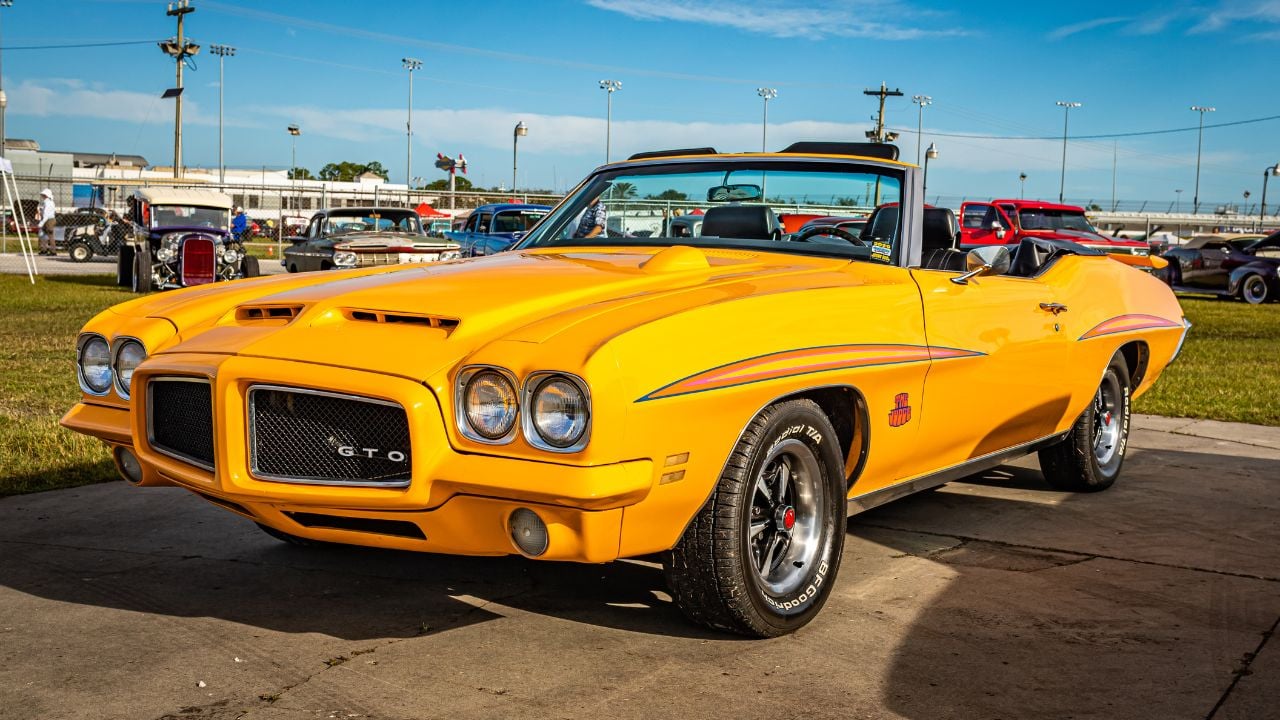
The Pontiac GTO is often credited as the first muscle car. It was the brainchild of none other than John DeLorean, who realized the market was ready for a new car with both style and horsepower.
Rolling off the assembly line in 1964, the first GTOs were simply an option package for the Pontiac LeMans. Two years later, the GTO became a separate model. The second-generation GTO emerged in 1968, and in 1969, the legendary GTO “The Judge” was born.
Chevrolet Chevelle SS

Like the GTO, the first Chevy Chevelle arrived in 1964. The upscale Malibu two-door hardtop and convertible versions were available with the SS, or Super Sport, package. Over the years, Chevy updated the first-gen Chevelle, even giving it a complete overhaul in 1966.
The second-generation Chevelle SS arrived in 1968, but the revised 1970 model is the one everyone wants, especially the rare 454 LS6 with 450 horsepower. There are no prizes for guessing it’s one of the fastest classic muscle cars money can buy.
Dodge Charger

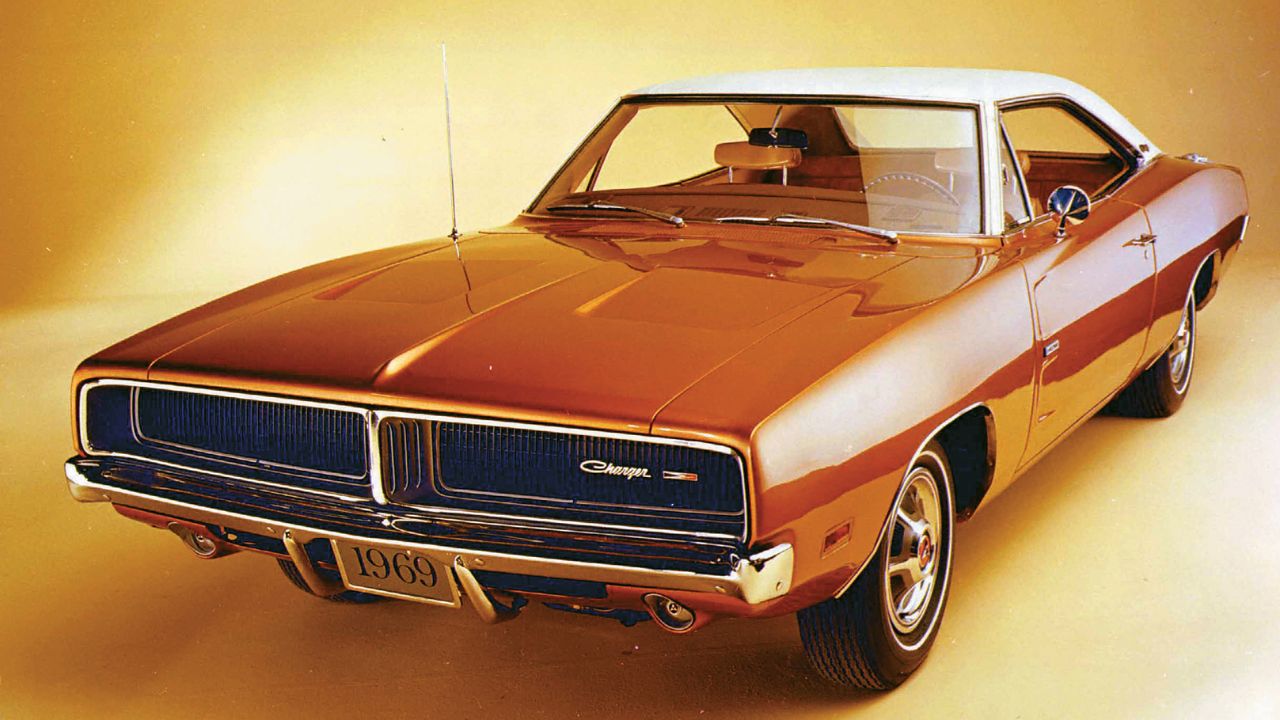
Dodge introduced the first-generation Charger in 1966 as a luxurious hardtop fastback. Its styling was a bit unconventional for the time, and sales never quite matched expectations, prompting Dodge to rethink the formula.
That rework arrived in 1968, and the transformation was dramatic. Dodge expected modest demand, but the second-generation Charger exploded in popularity, with nearly 100,000 units built that year alone. Although it shared the same mid-sized B-body platform as many classic muscle cars, its fastback profile and Coke-bottle shape gave it a distinct identity—one that quickly became legendary.
Powered by available big-blocks and the iconic 426 Hemi, the ’68–’70 Charger cemented its place in muscle-car history, helped along by unforgettable appearances in Bullitt, The Fast and the Furious, and The Dukes of Hazzard.
Oldsmobile 4-4-2
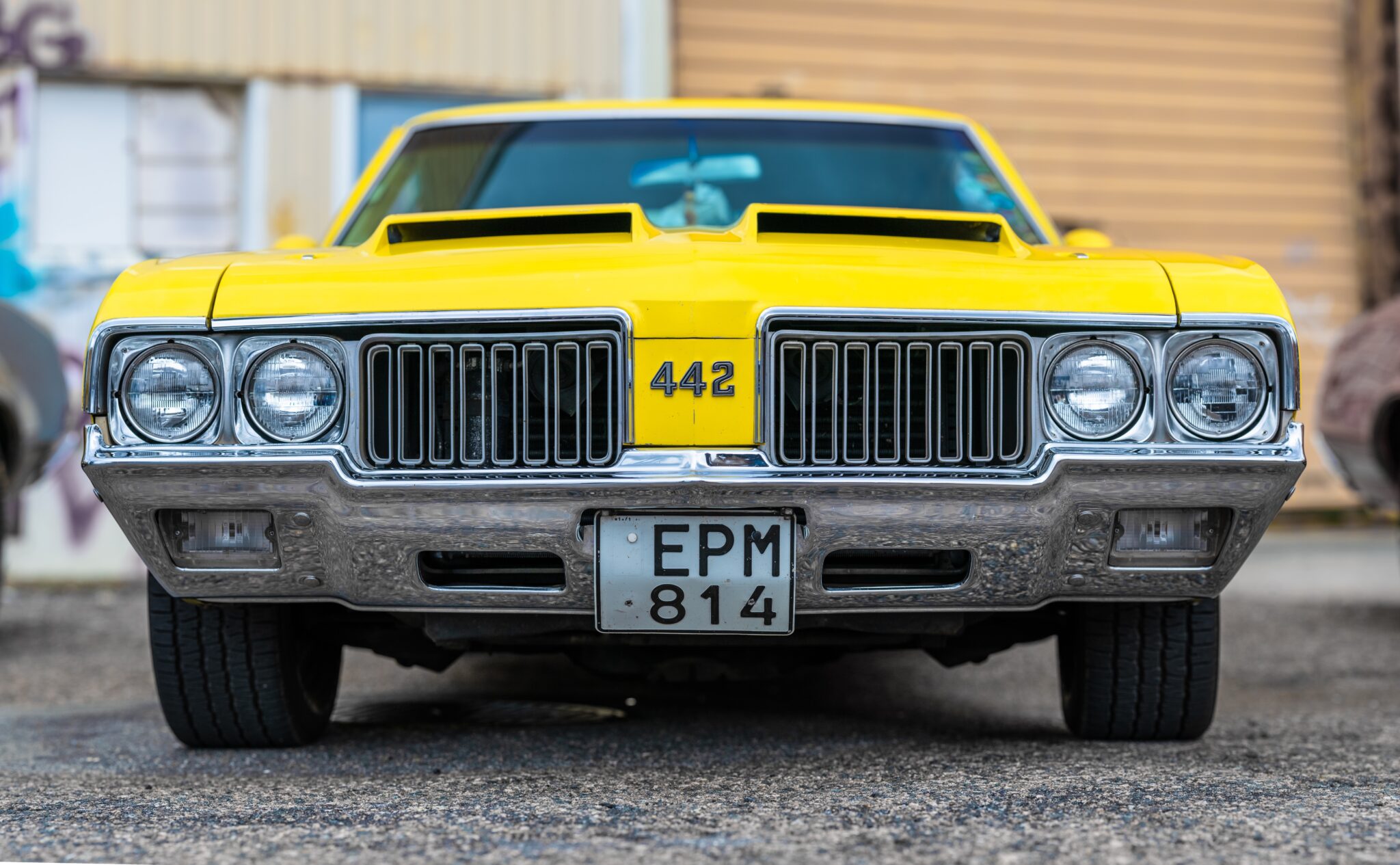
Oldsmobile introduced the 4-4-2 muscle car in 1964 as an option package for the F-85 and Cutlass models, but it became a separate model in 1968.
The name 4-4-2 is derived from its four-barrel carb, four-speed transmission, and dual exhausts. W-30 equipped 4-4-2s with the 400 cu-in engine produced 360 horsepower, but the real monster was the Hurst/Olds with 390-horsepower 455 engines.
Ford Galaxie
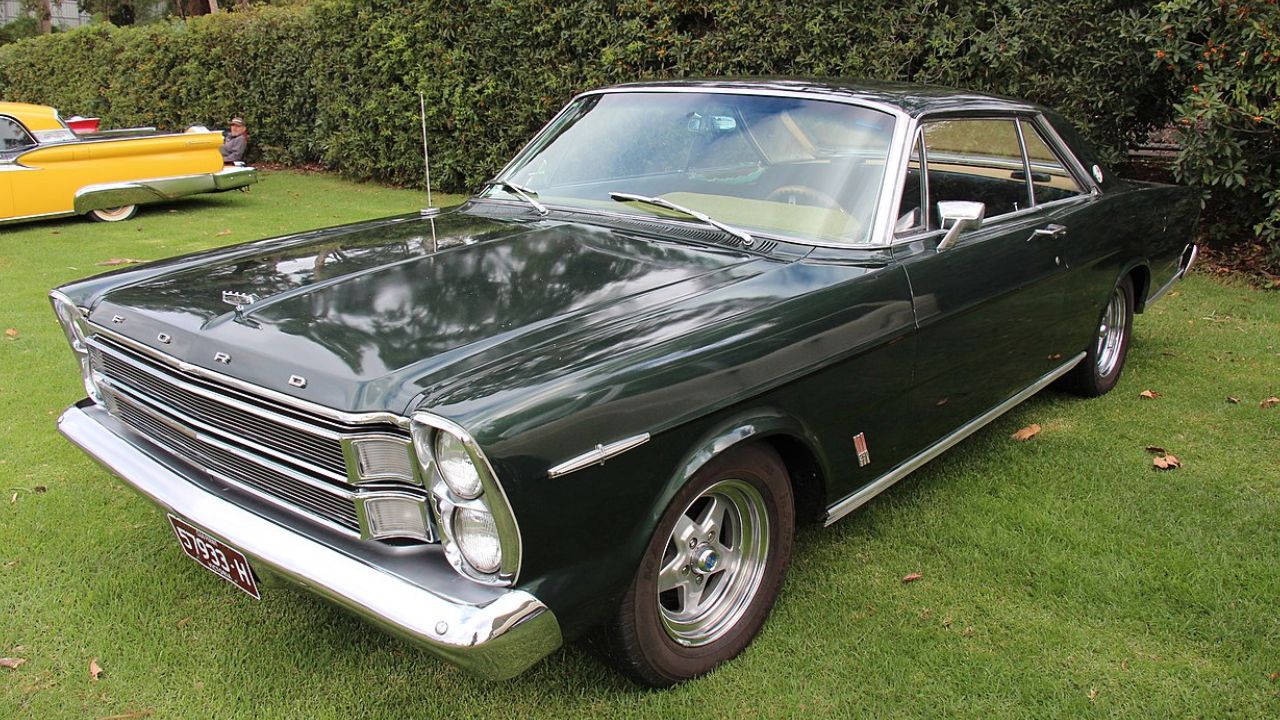
Ford introduced the Galaxie nameplate in the late 1950s to tap into America’s growing fascination with the space race. By 1965, the third-generation Galaxie arrived, and the following year Ford unveiled one of its most powerful versions ever: the Galaxie 500 7-Litre.
Although the Galaxie was a full-size car rather than a traditional mid-sized muscle coupe, the 7-Litre package gave it genuine muscle-car credentials. Ford dropped in the new 428 cu in (7.0-liter) V8—an engine shared with the Thunderbird and later the Mustang—which produced 345 horsepower and turned this big cruiser into a surprisingly fierce performer.
Buick GSX

Buick introduced the Gran Sport, or GS, name in 1965, and since then, it has appeared on multiple performance-oriented Buicks. The 1970 GSX option added an appearance, performance, and handling package to the GS455.
What really set the 1970 Buick GSX apart from other muscle cars was all its standard equipment. Other muscle cars could be ordered with basic options, suspension, or interior, but the GSX Stage 1 came with every available performance and handling part.
Ford Torino

Ford sold the Torino from 1968 to 1976. It was initially an upscale version of the Fairlane. In 1970, the roles were switched, and the Torino became the primary name, with the Fairlane as a subseries.
During its production run, Ford built the GT and Cobra high-performance versions of the Torino, using 351, 390, 428, and later 429 V8 engines.
AMC Rebel “The Machine”

AMC initially marketed it as the Rambler Rebel in 1967, but the Rambler name disappeared the following year. The best version of the AMC Rebel arrived in its last production year, 1970. Known as “The Machine,” this stunning muscle car often featured an eye-catching white, red, and blue paint job.
The Machine had a high-performance version of the 390 cu-in V8 engine, producing 340 horsepower and 430 lb-ft of torque. This may not sound like much compared to Mopar’s 426 Hemi engine, but it’s the most powerful unit AMC ever offered in a production car.
Plymouth Road Runner

In 1968, Plymouth needed a simpler, more basic model to sell alongside the upscale GTX. After paying $50,000 in licensing fees to Warner Bros., Plymouth could now use the Road Runner cartoon’s name, likeness, and “meep meep” sound.
Plymouth built the Road Runner on the Chrysler B platform, and the iconic 426 Hemi engine was available as a $714 option. The Road Runner sold like hotcakes, and by 1970, it spawned the Superbird homologation special.
Mercury Cougar Eliminator
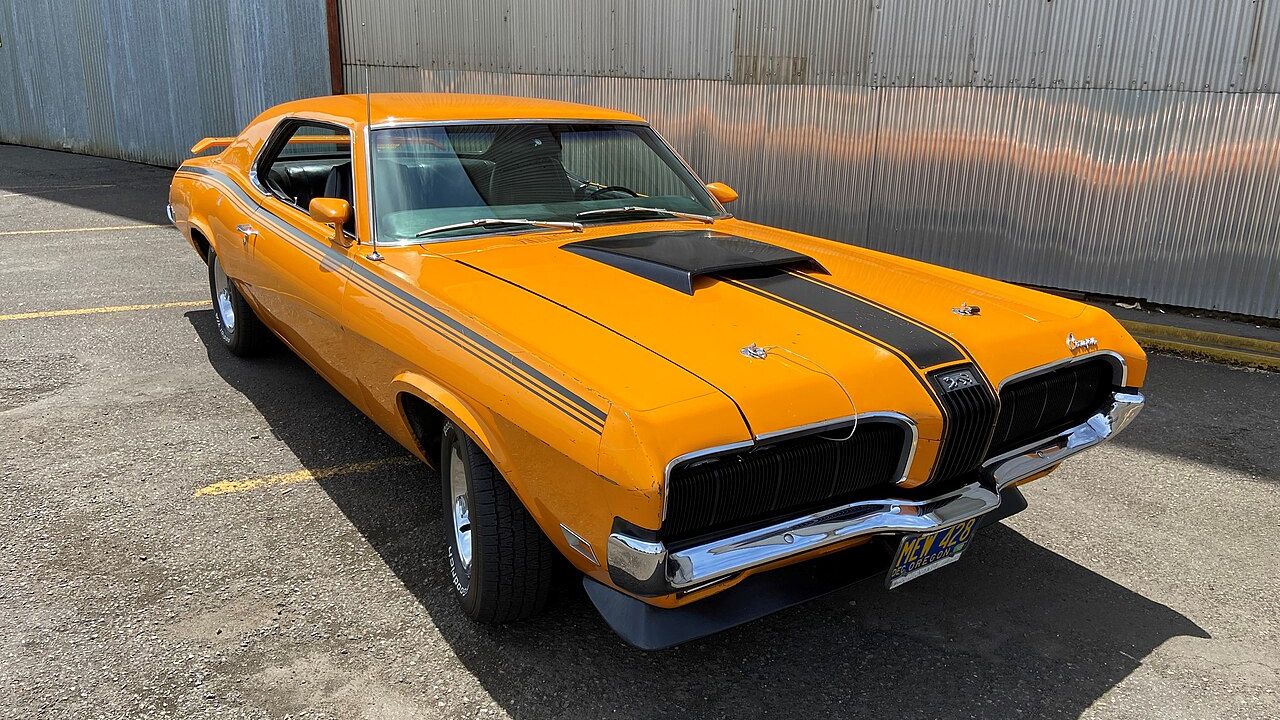
The Mercury Cougar often gets overlooked as Ford’s more refined pony car, but the Eliminator package brought serious heat. Offered from 1969 to 1970, the Eliminator turned the Cougar into a proper street bruiser with aggressive stripes, spoilers, and available big-block engines.
You could spec it with the 428 Cobra Jet or even the Boss 302, making it a surprising performer in muscle car circles. It brought Mustang GT performance with a touch more class, and in Eliminator trim, it looked ready to rumble.
Chevrolet Monte Carlo SS 454
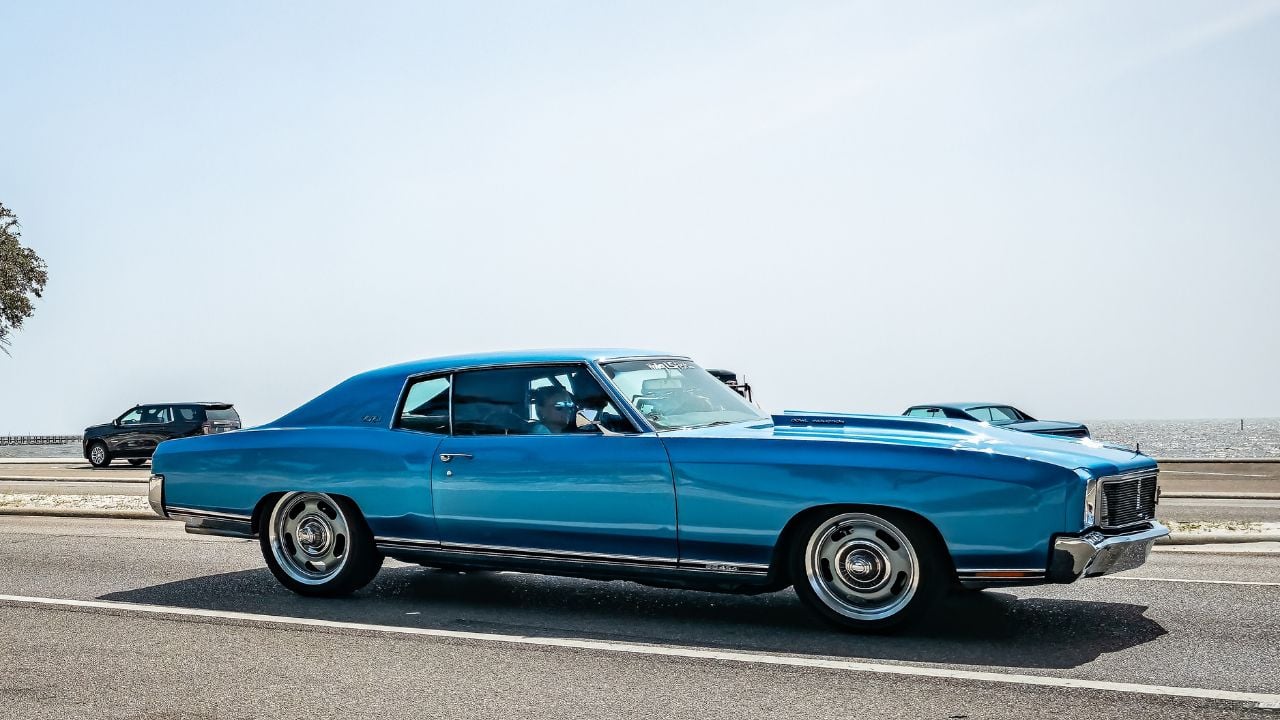
The Monte Carlo SS 454 might’ve been a luxury coupe, but Chevy stuffed it with proper muscle under the hood. The first-generation Monte Carlo SS, introduced in 1970, could be optioned with the 454-cubic-inch LS5 big-block V8 pushing 360 horsepower and 500 lb-ft of torque.
It had a longer wheelbase than most muscle cars, which made it better suited for highway pulls and rolling burnouts than tight curves. While it leaned into luxury, the Monte Carlo SS proved that comfort and brute force didn’t have to be mutually exclusive.
Dodge Challenger

Dodge arrived a bit late to the pony-car party, but they made a dramatic entrance by dropping the legendary 426 Hemi under the hood of the 1970 Challenger. Though technically a pony car by size, the Hemi and big-block versions delivered such brutal performance that enthusiasts have long treated the Challenger as an honorary muscle car.
With aggressive styling, serious engine options, and a reputation for straight-line dominance, the first-generation Challenger quickly earned its place among the most iconic performance machines of the era.
Cultural Icons
Muscle cars are more than just loud engines and straight-line speed. They spilled into pop culture, defined an era, and continue to shape automotive design today. Some of the cars on this list evolved over the decades, while others faded into history, but all of them left a lasting imprint on American performance culture.
Whether you’re drawn to the elegance of a Buick GSX, the brute force of a Chevelle SS 454, or the NASCAR-bred attitude of a classic Charger or Torino, these machines represent the very best of American horsepower—and you should absolutely drive one at least once.