
Montreal is a food city that tastes better when the weekend has room to wander. A good plan does not need three formal reservations a day. It can begin with a warm bagel in Mile End, continue through a market aisle, drift past colorful staircases, and end with a long dinner in a neighborhood that still has people on the sidewalks after dark.
The best meals here often come with a walk before or after. That is what makes the weekend feel bigger than a list of restaurants. A bagel tastes better when the oven is still behind you. Fruit from a market feels different when the stalls are noisy and crowded. Coffee on the Plateau lasts longer when spiral staircases and painted houses keep pulling your eyes away from the table.
A long weekend works because Montreal’s food culture is spread across compact, character-filled neighborhoods. Mile End, Little Italy, the Plateau, Old Montreal, and the canal-side areas each bring something different without forcing visitors to cross the city all day.
Wear comfortable shoes, leave room between meals, and do not treat every hour like a booking slot. Montreal rewards appetite, but it also rewards the walk between bites.
1. Start in Mile End With Warm Bagels and the Famous Rivalry
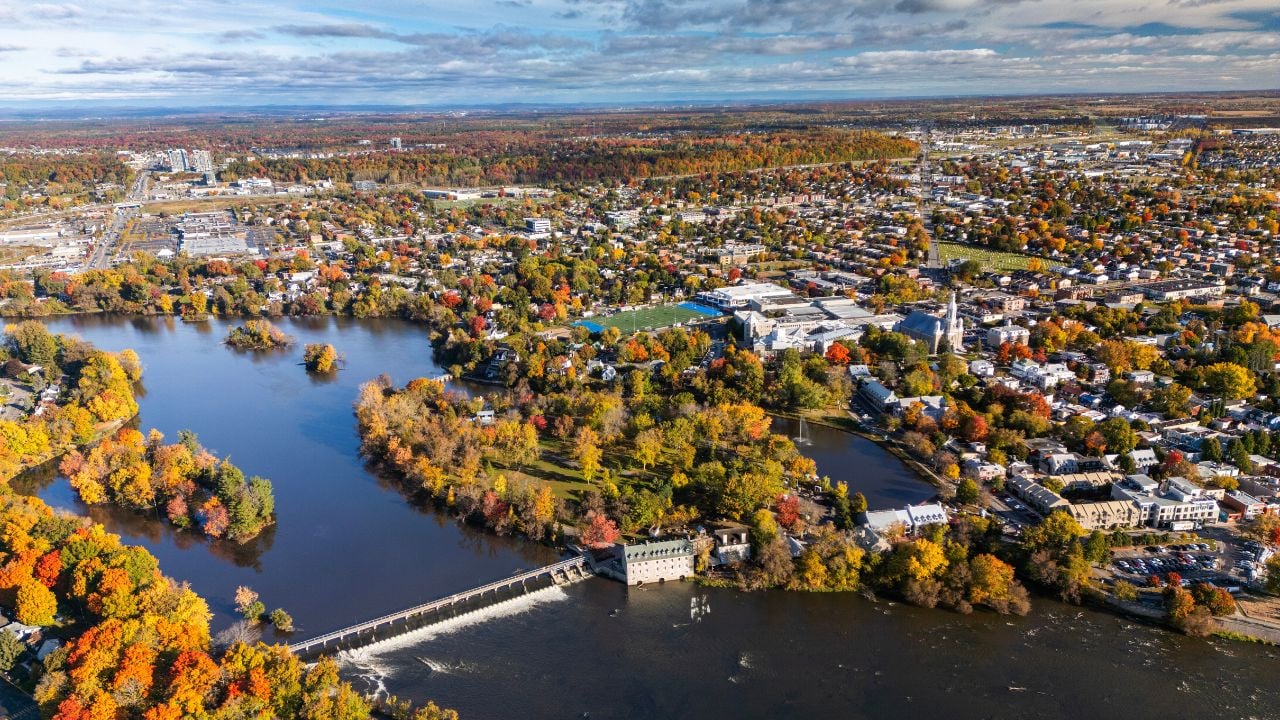
Mile End is the right place to begin because Montreal’s bagel culture still feels like street life, not a polished food trend. People walk out with paper bags, sesame seeds fall onto the sidewalk, and the best first bite is usually the one eaten while the bagel is still warm enough to make waiting feel foolish.
Bonjour Québec says St-Viateur Bagel has existed since 1957, while Fairmount Bagel traces Montreal’s first bagel bakery to Isadore Shlafman in 1919. The rivalry gives the morning an easy mission without turning breakfast into homework. Try one shop, walk a few blocks, and try the other if hunger allows.
Montreal bagels have their own personality: smaller, denser, slightly sweet, and baked in wood-fired ovens. Sesame is the classic order, but the real pleasure is not only the flavor. It is the heat from the oven, the smell inside the shop, the quick transaction, and the feeling that breakfast has already put you into the city rather than just fed you.
After the bagel, Mile End keeps the morning going. Tourisme Montréal describes the neighborhood as one of the city’s most charming areas, filled with independent boutiques, vintage shops, bakeries, coffee shops, and restaurants. In the streets, that means small storefronts, café windows, murals, old brick, bicycles, and people who look like they are not in a rush to leave.
This first morning should stay loose. A bagel, a coffee, a bookstore window, a bakery smell from the next block, and a few wrong turns through Mile End can do more for the weekend than a perfectly timed breakfast reservation.
2. Let Jean-Talon Market and Little Italy Take Over Late Morning
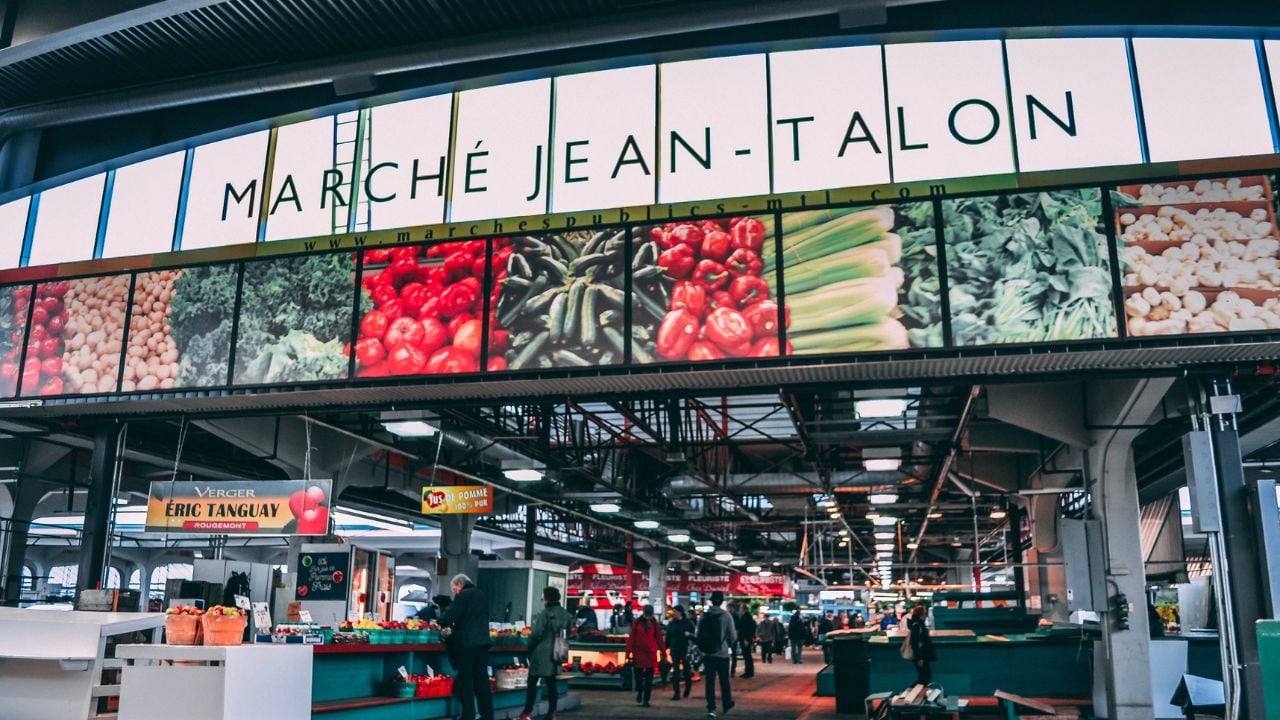
Jean-Talon Market brings the weekend from bakery heat into market noise. Stalls fill with produce, flowers, cheese, bread, fish, meat, spices, jars, prepared food, and enough color to make visitors slow down even when they claim they are only “looking.”
Tourisme Montréal calls Jean-Talon one of North America’s largest open-air public markets and says it has been drawing crowds to Little Italy since 1933. Montreal’s public market authority also notes that it is open year-round, with local producers and artisans supplying fresh agri-food products through the seasons.
The market works best when lunch is allowed to form in pieces. A pastry from one counter, fruit from another, cheese, coffee, something warm, something sweet, and one final thing bought because it looked too good to leave behind. It is not the kind of stop where visitors need to decide immediately. The aisles do some of the thinking.
Little Italy keeps the food mood outside the market walls. Coffee, old storefronts, neighborhood restaurants, and the slower movement around the surrounding streets make the area feel like more than a single market stop. If the weather is good, the best lunch may be assembled from several counters and eaten without much ceremony.
Jean-Talon is busiest when it is at its most enjoyable, so lean into the crowd rather than trying to outsmart it completely. The sound of vendors, the smell of produce, the bags brushing past your legs, and the argument over what to buy next are part of the experience.
3. Spend the Afternoon on the Plateau With Cafés, Murals, and Staircases

The Plateau is where the weekend starts feeling less like a food tour and more like a real Montreal afternoon. The neighborhood has cafés, bars, bookstores, restaurants, designer shops, colorful houses, murals, and the outdoor staircases that make so many Montreal streets instantly recognizable.
Tourisme Montréal describes the Plateau and Mile End through cafés, bars, bookstores, restaurants, designer shops, shopping streets, colorful houses, and spiral staircases. Bonjour Québec also points to murals, multi-colored homes, narrow streets, patios, coffee shops, and neighborhood restaurants in the area.
This is not a neighborhood that needs one dramatic stop. A good afternoon here comes from smaller collisions: coffee in a warm room, a mural on the side of a building, stairs curling up old facades, a bakery window, someone biking past with groceries, music from a bar door, and a dinner idea changing because something suddenly smells better than the original plan.
Avenue Mont-Royal has the movement, but the side streets often carry the detail. Painted houses sit beside old brick, balconies face leafy blocks, and exterior staircases make even ordinary homes look theatrical. The area feels good after the market because it lets the day digest slowly instead of sending visitors straight into another heavy meal.
By late afternoon, hunger usually returns in a more useful way. The Plateau has casual restaurants, bakeries, cafés, bars, and places where dinner can be lively without feeling formal. A food weekend needs this kind of stretch: enough walking to earn the next meal, enough street life to make the walking worth it.
4. Use Atwater Market and the Lachine Canal for a Softer Second Day
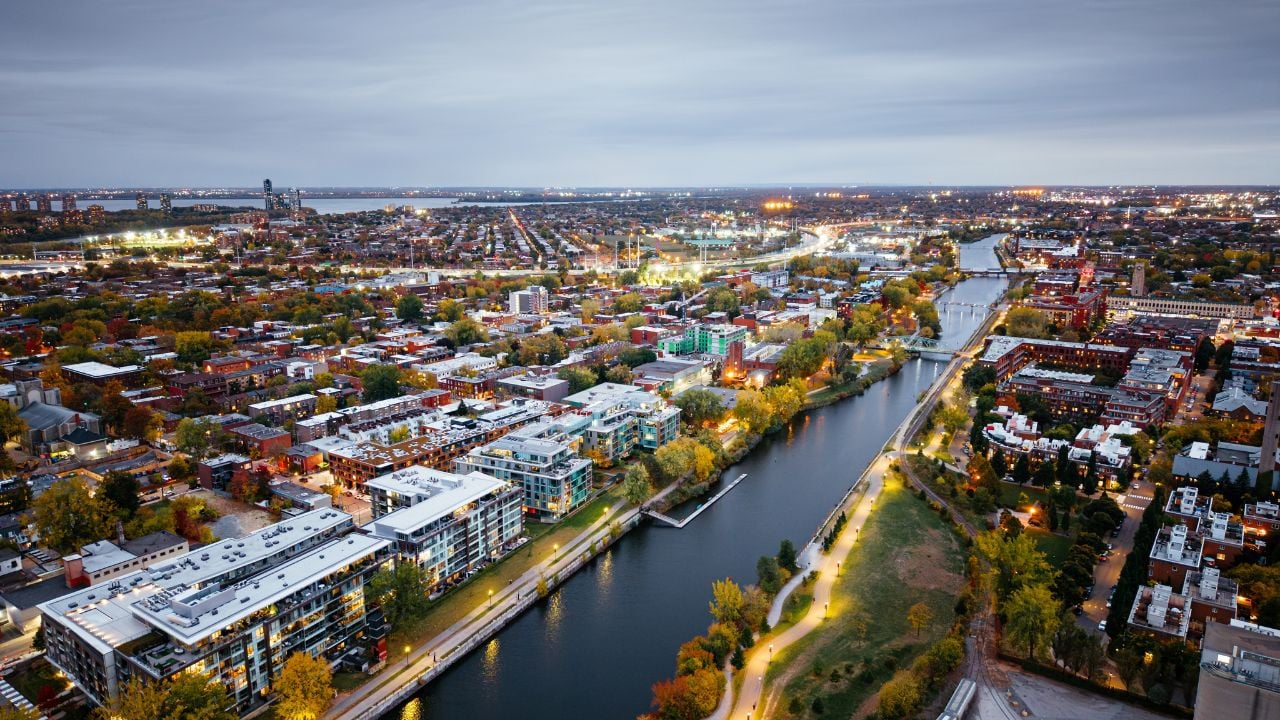
Atwater Market has a different feel from Jean-Talon. The building looks more formal, the canal sits nearby, and the surrounding area makes it easy to pair food with a slower walk by the water. After a first day of bagels, Jean-Talon, and the Plateau, this part of the weekend can feel calmer without becoming thin.
Bonjour Québec says Atwater Market opened in 1933 and offers year-round indoor merchants specializing in fresh meat, fish, and baked goods, along with fruits, vegetables, flowers, and caterers. Montreal’s public markets authority also notes that the Art Deco market stands near the Lachine Canal and is open in summer and winter.
The best part of Atwater is how easily food turns into a canal pause. Pick up bread, cheese, fruit, something sweet, or a full lunch from the market, then let the water pull the day outside. The canal path has walkers, cyclists, benches, bridges, and enough space to make the meal feel less like another stop and more like a break in the weekend.
Tourisme Montréal notes that one of the city’s longest bike paths follows the Lachine Canal from Old Montréal, past Atwater Market, and west toward green spaces and the canal’s edge. That makes the market especially useful for travelers who want to keep moving between meals instead of spending the whole day indoors.
Atwater is good for a late breakfast, a picnic-style lunch, or the kind of market visit where everyone buys more than planned. The Art Deco building, butchers, bakeries, cheese counters, flowers, canal path, and bike traffic give the second day a different texture from the busy produce aisles of Jean-Talon.
5. Finish With Old Montreal, Mount Royal, and One Last Dinner Worth Remembering
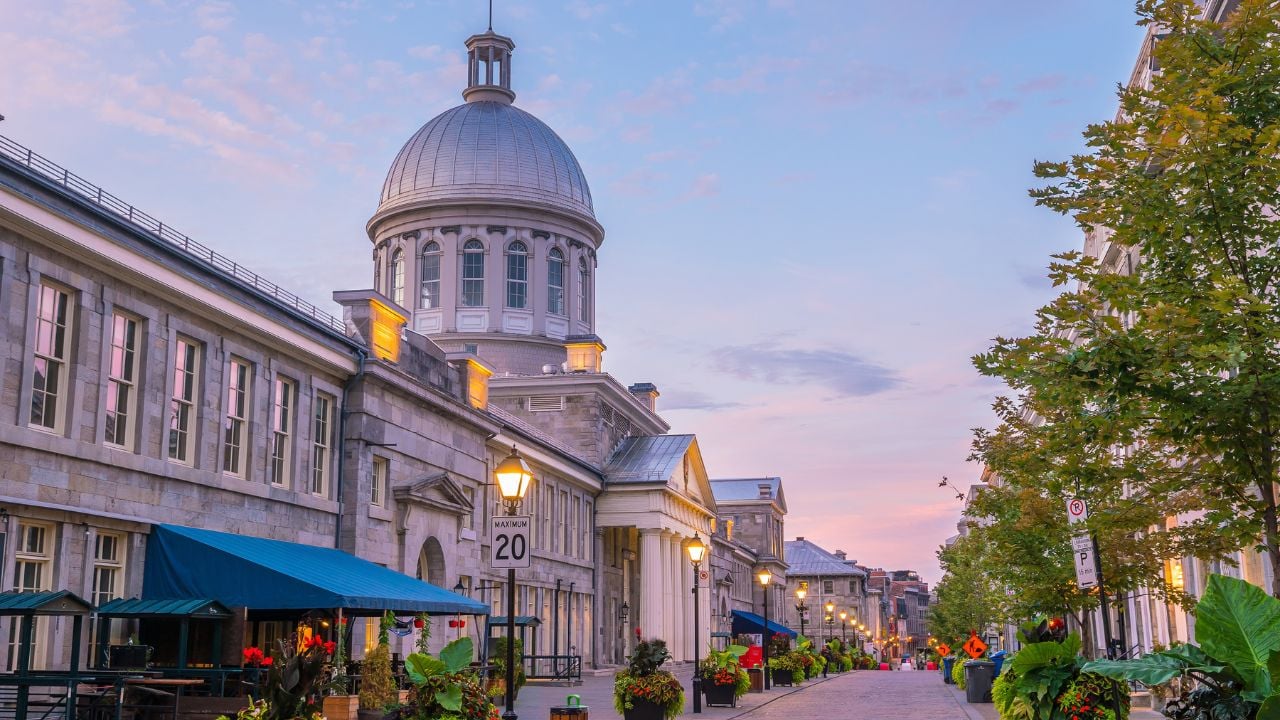
Old Montreal gives the weekend a more dramatic final setting after the neighborhood food stops. Cobblestones, stone buildings, church fronts, old warehouses, galleries, restaurant patios, and streets leading toward the Old Port make the area feel heavier and more theatrical than Mile End or the Plateau.
Tourisme Montréal points visitors toward Saint-Paul Street, Notre-Dame Basilica, the Grande Roue de Montréal, and Pointe-à-Callière in Old Montreal and the Old Port. Bonjour Québec also describes Old Montreal as a historic district facing the St. Lawrence River, with museums, art galleries, restaurants, bars with patios, shops, and narrow cobblestone streets.
This is a good place for the weekend’s more memorable dinner, especially if the earlier days have been built around bakeries, markets, and casual eating. The old streets feel different after dark, when restaurant windows glow, cobblestones catch the light, and the walk toward the river gives the meal a proper before-and-after.
Mount Royal can come before dinner or on the final morning, depending on weather and appetite. Tourisme Montréal says Mount Royal Park was inaugurated in 1876, designed by Frederick Law Olmsted, and offers the Kondiaronk scenic lookout with a striking view of downtown and the St. Lawrence River.
From above, the food weekend finally arranges itself into a map: Mile End and the Plateau to one side, markets in their neighborhoods, Old Montreal near the river, the canal stretching west, and the mountain sitting above it all. After that, one last meal should not feel rushed. Montreal is a city where the walk home is often part of dinner.