Most people think of a Rolls-Royce as the reward. You work hard, build a business, make your money, and one day you finally pull into the driveway behind the wheel of one.
Chase Matthew Griffin turned that formula upside down. According to federal court records, luxury cars, stacks of cash, and carefully curated social media posts became part of the image he used to recruit participants into a bank fraud conspiracy that attempted to negotiate more than $2.8 million in stolen and altered checks.
While most news coverage has focused on Griffin’s nine-year federal prison sentence, the court filings tell a much more interesting story for car enthusiasts. A Rolls-Royce, a BMW X6M Competition, a Mercedes-AMG GT, a Tesla, and another black Mercedes all appear in the affidavit, sometimes as status symbols and sometimes as part of the operation itself.
On Thursday, Griffin, 26, was sentenced to 108 months in federal prison after pleading guilty to conspiracy to commit bank fraud. He was also ordered to pay $307,386 in restitution.
How the $2.8 Million Scheme Actually Worked
One important point is that prosecutors did not accuse Griffin of personally walking away with $2.8 million in cash.
Instead, the $2.8 million represents the value of the stolen and altered checks the conspiracy attempted to negotiate between 2022 and September 2025. It does not necessarily represent the amount successfully withdrawn, the amount divided among participants, or the amount personally kept by Griffin.
According to court records, checks were stolen from the mail, altered or counterfeited, and then deposited into bank accounts belonging to recruited participants. Before banks detected the fraud, members of the conspiracy rushed to withdraw the money through tellers, ATMs, cashier’s checks, Zelle, Cash App, purchases, and other transactions.
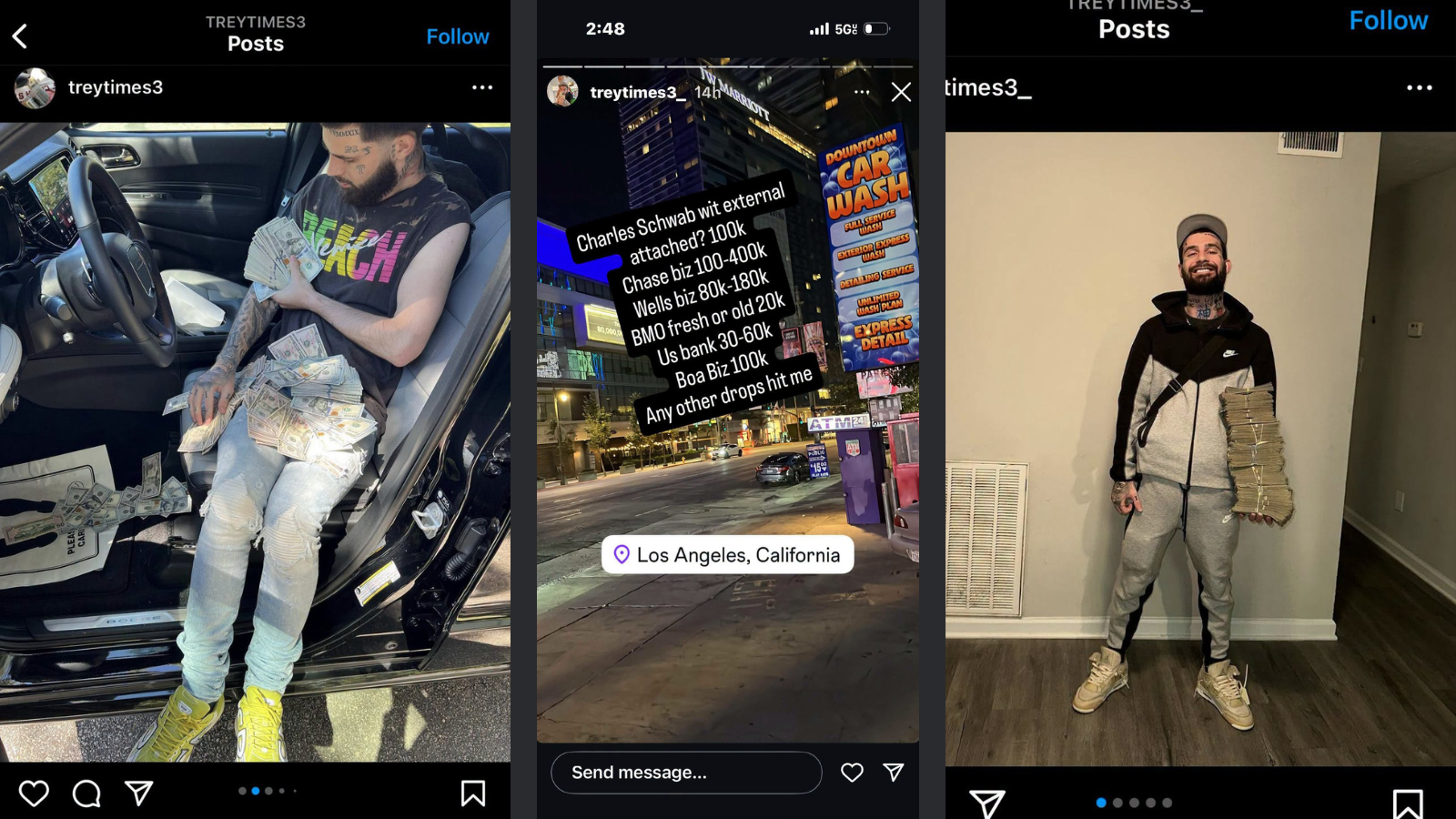
Griffin used Instagram to recruit people who had accounts at banks such as Chase and Wells Fargo. In exchange for a cut, participants provided access to their accounts, debit cards, PINs, or online banking credentials.
Once banks identified the fraudulent checks, the accounts could be frozen, transactions reversed, and any remaining funds recovered. Prosecutors have not said exactly how much the conspiracy successfully kept or how much Griffin personally received.
That also helps explain why Griffin was ordered to pay about $307,000 in restitution rather than $2.8 million. The restitution figure reflects the losses the court determined he was responsible for repaying, not the face value of every check the conspiracy attempted to deposit.
If that sounds confusing, you’re not alone. One of the most common questions in response to the Justice Department’s Facebook announcement was simply, “What exactly did he do?” Another commenter joked, “How did he do it? Asking for a friend,” while someone else wrote, “Tell us step by step what he did so we don’t accidentally do the same thing.”
Fortunately, the court filings answer most of those questions. They also show why the $2.8 million figure and Griffin’s restitution are two very different numbers.
The Luxury Lifestyle Was Part of the Brand
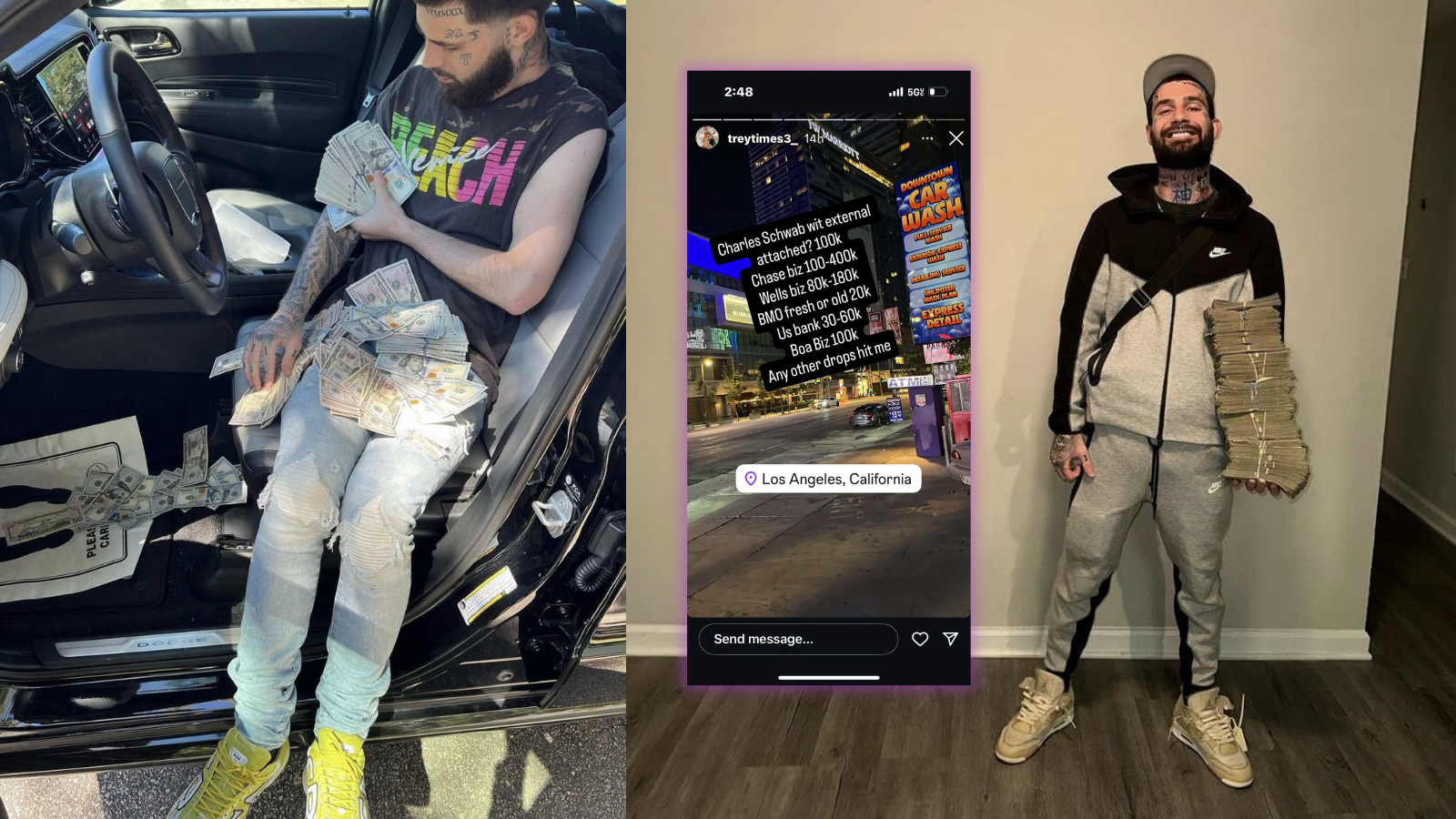
Griffin recruited participants through social media accounts operating under the handles @treytimes3 and @treytimes3_, court records show. The accounts featured photos of him holding stacks of cash, standing in front of ATMs, displaying deposit receipts, and posing with luxury vehicles.
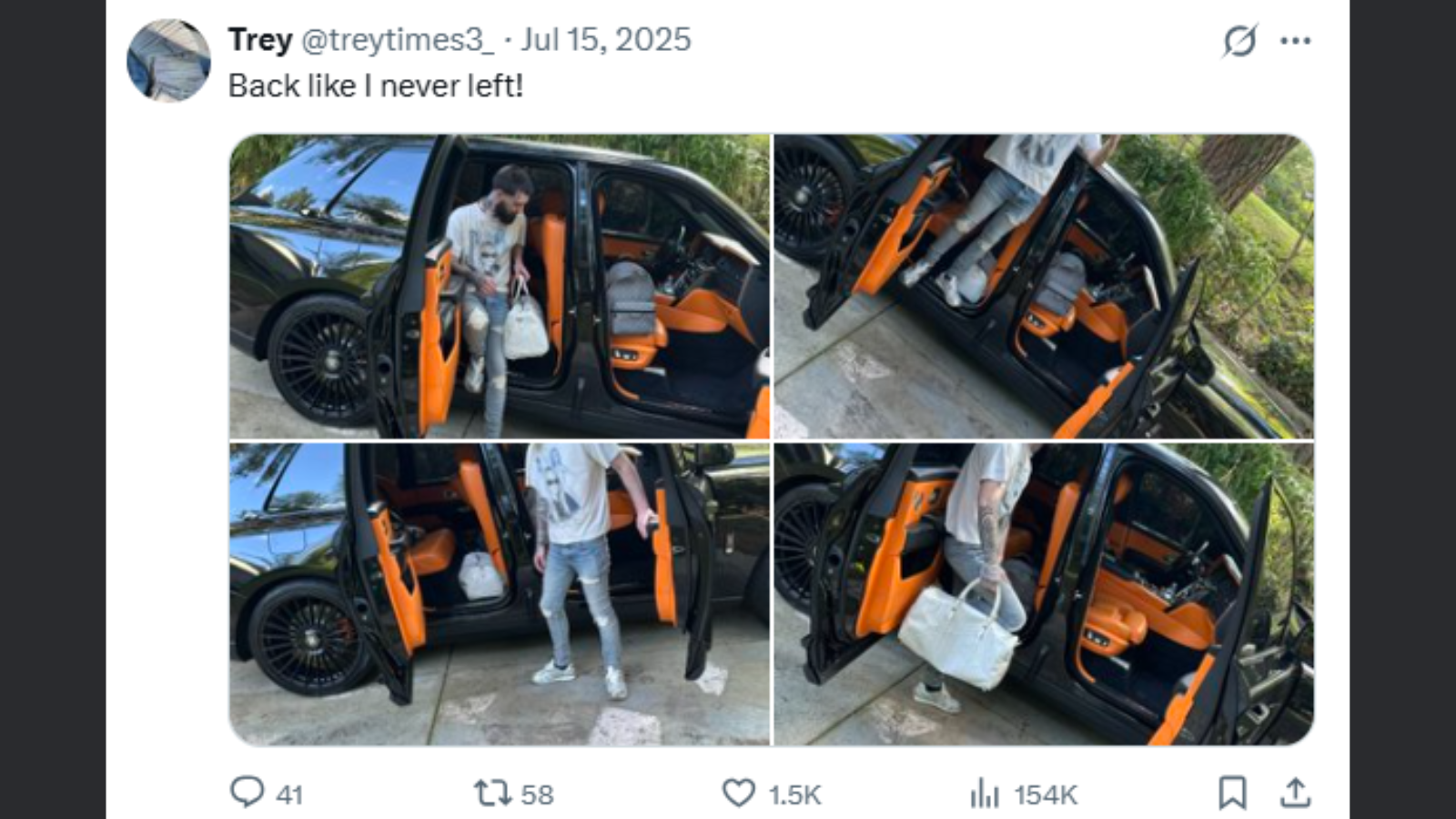
One X post published on July 15, 2025, just days after Griffin was released from custody in Georgia, featured four photos of what appears to be a black Rolls-Royce Cullinan with a bright orange leather interior. The caption read, “Back like I never left!”
According to the affidavit, an Instagram Story posted the following day showed the interior of a Rolls-Royce alongside the message, “Every Chase in la call me rn Next day 20-90k.” Another Story read, “Who got a chase for me rn? Next day 30k.”
The messages recruited Chase account holders willing to let fraudulent checks be deposited into their accounts in exchange for a share of the proceeds.
For investigators, Instagram wasn’t just social media. It was practically the case file.
Readers immediately picked up on that irony. One commenter summarized the case as, “When flexing for the gram goes wrong,” while another called it “dry snitchin’ at its finest.”
The BMW X6M Became an Investigative Clue
The Rolls-Royce may be the most attention-grabbing vehicle in the case, but a gray 2022 BMW X6M Competition appears repeatedly throughout the affidavit.
Court records identify the SUV as belonging to Griffin’s associate, Ishmael Sanchez. Federal authorities sought a warrant to search the BMW and a gray 2020 Mercedes-Benz AMG GT, both linked to Sanchez.
Investigators located the BMW in the parking garage of an apartment complex in Azusa, California, in July 2025. During later surveillance, a postal inspector watched Sanchez exit the Mercedes-AMG GT, which was parked immediately in front of the BMW in the same assigned parking space.
Both vehicles later disappeared from the garage around the time Sanchez was believed to have begun staying at a house in Porter Ranch. The BMW eventually resurfaced in the driveway of that property, which had recently been advertised for rent for $15,800 per month.
The affidavit says the Azusa apartment may have been maintained separately from the Porter Ranch residence as a place to carry out the scheme or to store evidence.
An Instagram Story posted on August 21, 2025, requested four Wells Fargo account holders and listed possible check amounts of $38,000, $78,000, $180,000, and $290,000. The Story included a photo of the rear of a BMW X6M Competition, the same relatively uncommon model connected to Sanchez.
The BMW linked Sanchez to multiple locations, appeared during surveillance, and resurfaced in a recruitment post, helping investigators connect people, vehicles, residences, and social media activity.
A Tesla and a black Mercedes Ran the Bank Route
Other vehicles were used more directly while money was being withdrawn.
According to a cooperating witness, he and another participant climbed into a Tesla driven by recruiter John Mejia before traveling to a Chase branch. The affidavit does not identify the Tesla model, but it describes the vehicle used to transport account holders among multiple banks in a single day.
When the Tesla arrived at the first bank, it met another group traveling in a black Mercedes. The witness identified Sanchez as one of the people inside the Mercedes and said he appeared to be helping coordinate the withdrawals.
According to witnesses, the occupants of the Tesla and Mercedes instructed account holders what to tell bank employees and how much money to request. One participant was told to claim the money was needed to purchase a truck because the fraudulent check appeared to have been issued by a trucking company.
After the first withdrawals were completed, the Tesla followed the Mercedes to another Chase branch, where the process was repeated. One witness said he withdrew $40,000 during the first stop and later requested a combination of cash and a cashier’s check at the second branch.
Another participant withdrew approximately $45,000 that day and was paid $4,000 for taking part.
The two vehicles operated almost like a convoy, moving participants and organizers between bank branches while tens of thousands of dollars were withdrawn.
One Participant Was Recruited at a Car Meet
The automotive connection even extended to how at least one participant entered the scheme. One cooperating witness said he was recruited on August 29, 2024, while attending a car meet in Corona, California.
He was contacted that evening and instructed to be ready early the following morning. He later met Mejia, rode in the Tesla to two Chase branches, withdrew approximately $45,000, and handed over the money.
The affidavit does not suggest the car meet itself was organized for recruitment or that anyone else at the event was involved. However, it shows that Griffin’s associates were not only looking for participants online. At least one person was approached within Southern California’s car community and brought into the scheme shortly afterward.
Even the Driving Became Part of the Online Persona
Location data placed Sanchez’s phone at Los Angeles International Airport on August 26, 2025, around the same time Griffin posted that he was traveling there. Two days later, Griffin’s Instagram account posted, “Someone tell DB it’s ok not to drive 150mph everywhere.” Investigators identified “DB” as a name used for Sanchez.
An X post from the same period asked why Griffin’s friends drove as though they wanted him to pass out from anxiety while riding with them. The posts do not prove anyone actually drove 150 mph, but they reinforced the image Griffin projected online: expensive vehicles, fast driving, stacks of money, and access to a lifestyle followers were invited to join.
When Social Media Becomes Evidence
For decades, exotic cars have represented success. Today, they’re also content.
Luxury SUVs, supercars, designer bags, private jets, and stacks of cash have become familiar visual shorthand across Instagram, TikTok, and X. Whether the lifestyle is owned, financed, rented, or borrowed, the goal is often the same: project success before anyone asks where the money came from.
It’s rare to see an affidavit where screenshots of Instagram Stories are almost as important as bank records, but that’s exactly what happened here.
According to court records, Griffin’s social media accounts didn’t simply show luxury cars and stacks of cash. Prosecutors say they also documented ATM activity, deposit receipts, travel, and recruitment messages seeking account holders at specific banks.
Investigators weren’t piecing together a handful of cryptic posts from an anonymous account. Griffin’s own face, tattoos, vehicles, locations, and social media handles helped establish timelines and relationships throughout the conspiracy.
As one commenter joked, “Instagram snitches… tellin all they business… be their own star witness.” Another simply wrote, “Social media does it again.”
Was Nine Years Worth $2.8 Million?
The sentence sparked almost as much discussion online as the scheme itself.
Numerous commenters argued that nine years sounded like an acceptable trade for a conspiracy involving $2.8 million. “2.8 million for 9 years I’ll do that,” one person wrote. Another added, “Nine years for 3 million ain’t a bad trade.”
Others quickly pushed back.
One commenter noted that investigators would likely have “forensic accountants running through every fiber of this guy’s existence,” while another put it more bluntly: “They don’t let criminals keep the money.”
Those responses highlight a common misunderstanding. The $2.8 million represents the value of checks the conspiracy attempted to negotiate, not necessarily money Griffin personally pocketed. Authorities also have not disclosed how much was recovered or seized during the investigation.
The Instagram Stories Outlived the Scheme
Griffin admitted to participating in a conspiracy that stole checks from the mail, altered or counterfeited them, recruited bank account holders through social media, deposited fraudulent checks, and withdrew money before banks detected the fraud.
The luxury vehicles may be what first catch readers’ attention, but the affidavit tells a broader story about how social media changed financial crime. The same posts used to project wealth and recruit participants ultimately helped investigators reconstruct the conspiracy.
The case serves as a reminder that investigators don’t just follow the money anymore. Sometimes they follow the Instagram Stories.
This report is based on the U.S. Attorney’s Office press release, the agency’s official Facebook announcement, and federal court documents obtained by Guessing Headlights.