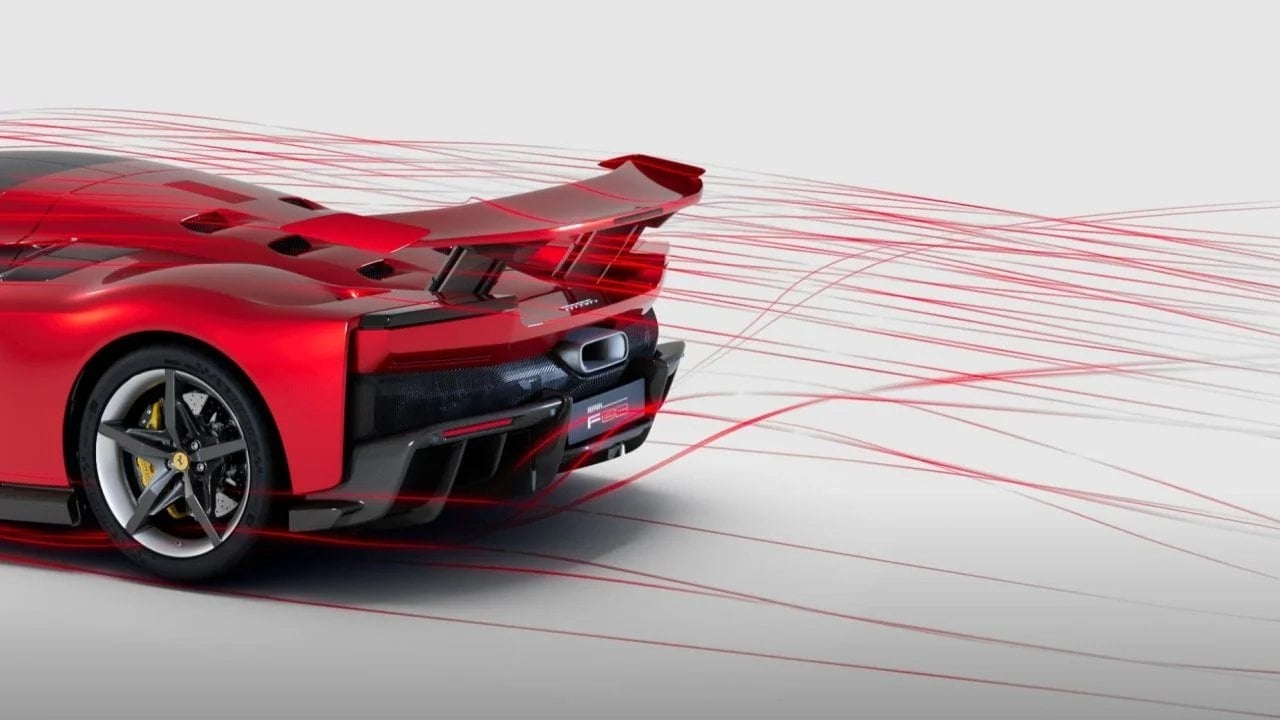
Ferrari is a company not afraid to push boundaries. The Luce EV is an indicator of this, as while its design hasn’t been universally popular, it has certainly proved Maranello is happy to deviate from the norm. Now, a new patent is showing Ferrari is getting very adventurous with its aerodynamics.
It is possible Ferrari took inspiration for this from the Zenvo multi-axis hydraulic rear ‘centripetal’ wing seen on the Zenvo TSR-S supercar. Because its new patent shows it is designing a rear wing that bends and twists on purpose, not as a result of a major design flaw.
A glance at the patent suggests this is a wing that will heavily rely on material that can be bent using actuators. A more thorough read of the patent reveals plenty of engineering jargon, but it is fascinating to look at how Ferrari is attempting to make this work.
Maranello looks to be trying to ditch the more traditional design of a wing that tilts up and down with just a single hinge. This new design is much more complex, and it could come with several aerodynamic benefits if it does make it into production.
What the Patent Reveals About the Ferrari Wing
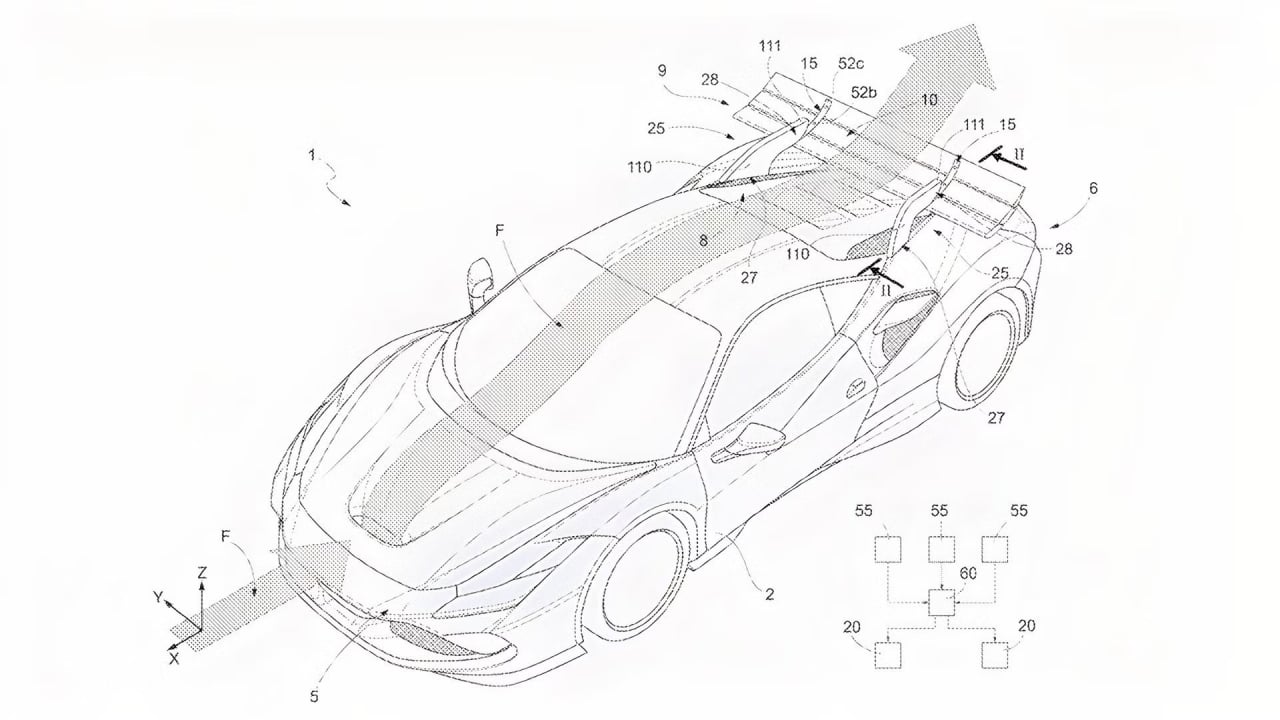
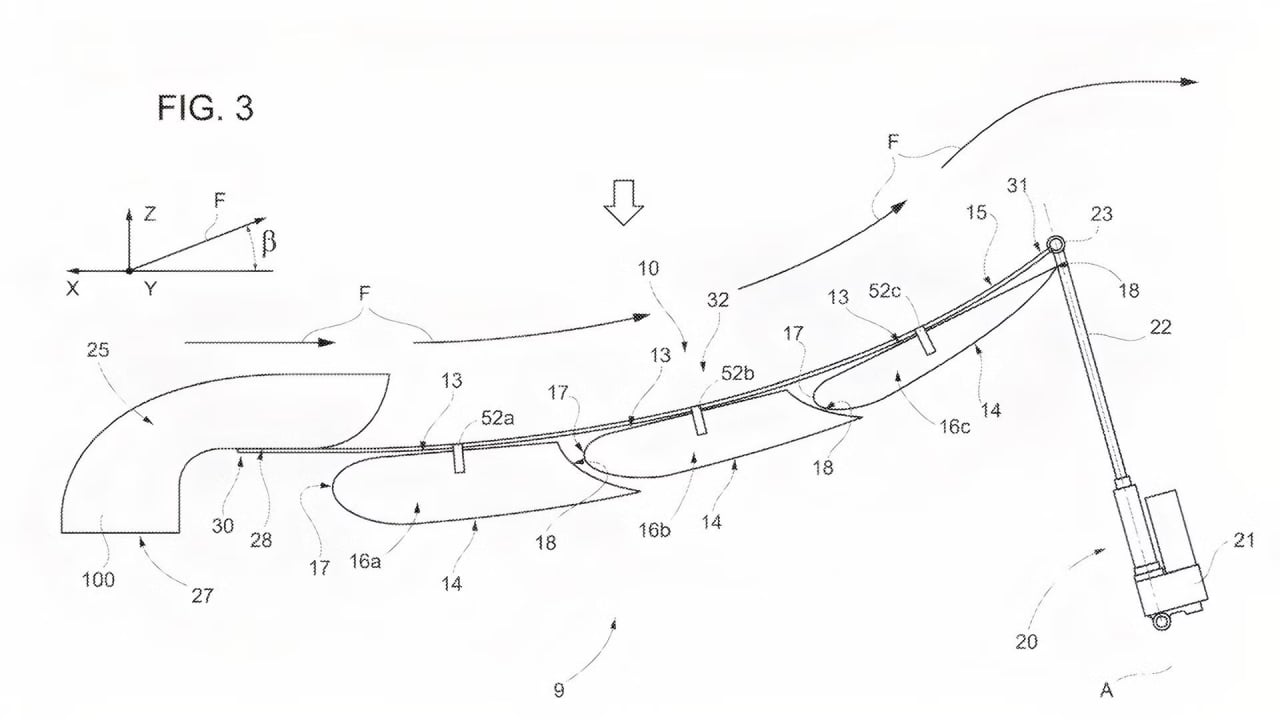
Gone is the traditional rigid wing we would normally see that tilts up and down with a single hinge. Instead, Ferrari’s new design uses multiple airfoils, which are attached to a flexible and bendable plate. Almost like the window blind slats you may find in your house, the actuators bend each of these according to how much downforce is required.
As this is not a single-piece wing, these airfoils, or slats, can curve upward under braking. It is the actuators that curve them, and as each part of the wing has separate actuators, the whole wing can then twist and flex. That can give extra downforce to a particular wheel, before the wing straightens up again on a straight. Think of it in a similar way to the active aero on the 2026 F1 cars, and how the wings close up again for the corners.
The patent reveals two structural elements to help reshape the wing in as many ways as possible. However, the patent doesn’t reveal what material Ferrari might use in this design. This is likely to be the big stumbling block. You want something light enough to flex, but strong enough that the levels of downforce won’t break it. That will prove to be quite the dilemma for the Ferrari engineers.
What Material Might Ferrari Use for Its Rear Wing?
As many materials aren’t meant to flex over and over again, Maranello has an interesting decision to make. One material that could be used is spring steel. But this would make the wing quite heavy, and we can’t see Ferrari willing to compromise by adding vast amounts of weight to the car. That feels like a last resort solution, and even then, Ferrari would likely abandon the wing rather than pursue this concept.
A polymer company, however, could provide the solution. A material could be made that keeps the strength in the wing, even if it is flexing time after time around corners. But it would also allow it to have that flexibility, and give Maranello the flexibility they were looking for. For now, this design is remaining firmly in the patent stage. But this is certainly something to keep a close eye on.