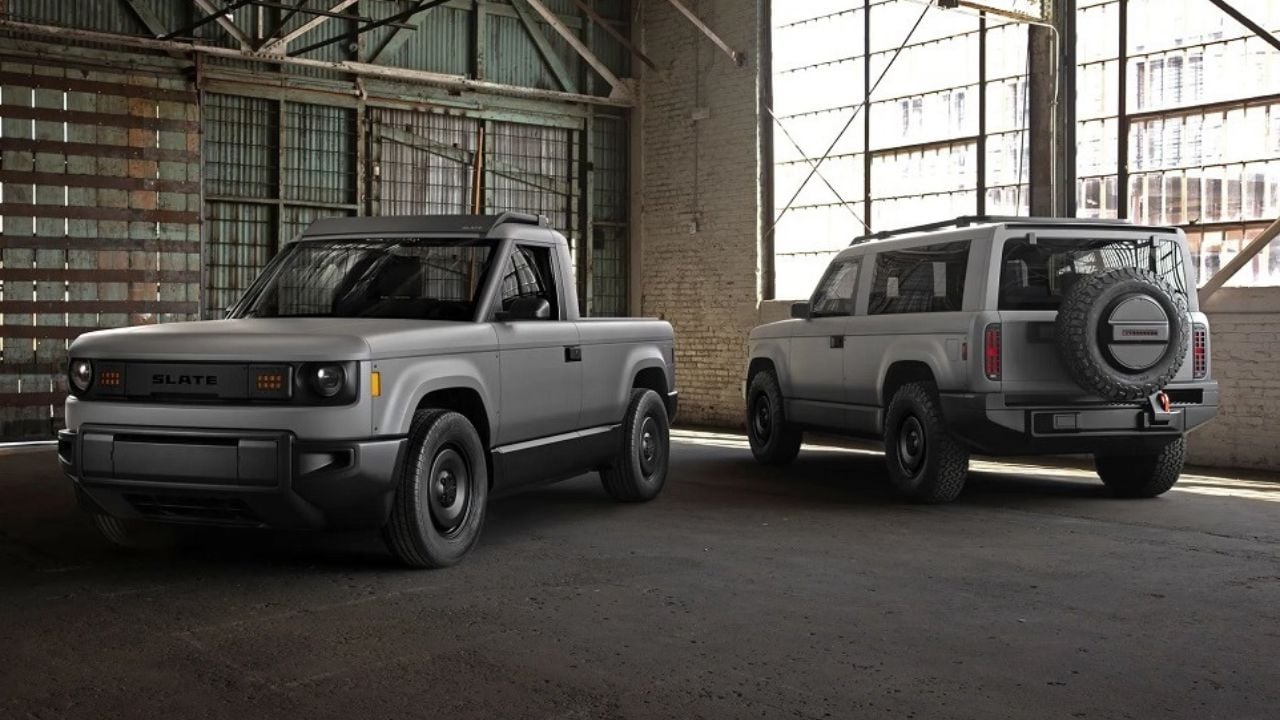
A new name is starting to pop up on the horizon of the U.S. auto industry, and it is one that could shake up the pickup segment if the company delivers on its headline promise.
Slate Auto says it remains on schedule to launch what it claims will be the most affordable pickup truck in the United States.
The target price is about $25,000, a figure that would make the planned Slate EV not only the cheapest pickup on sale but also by far the least expensive fully electric truck on the market.
A Low Price Promise That Comes With Real Baggage
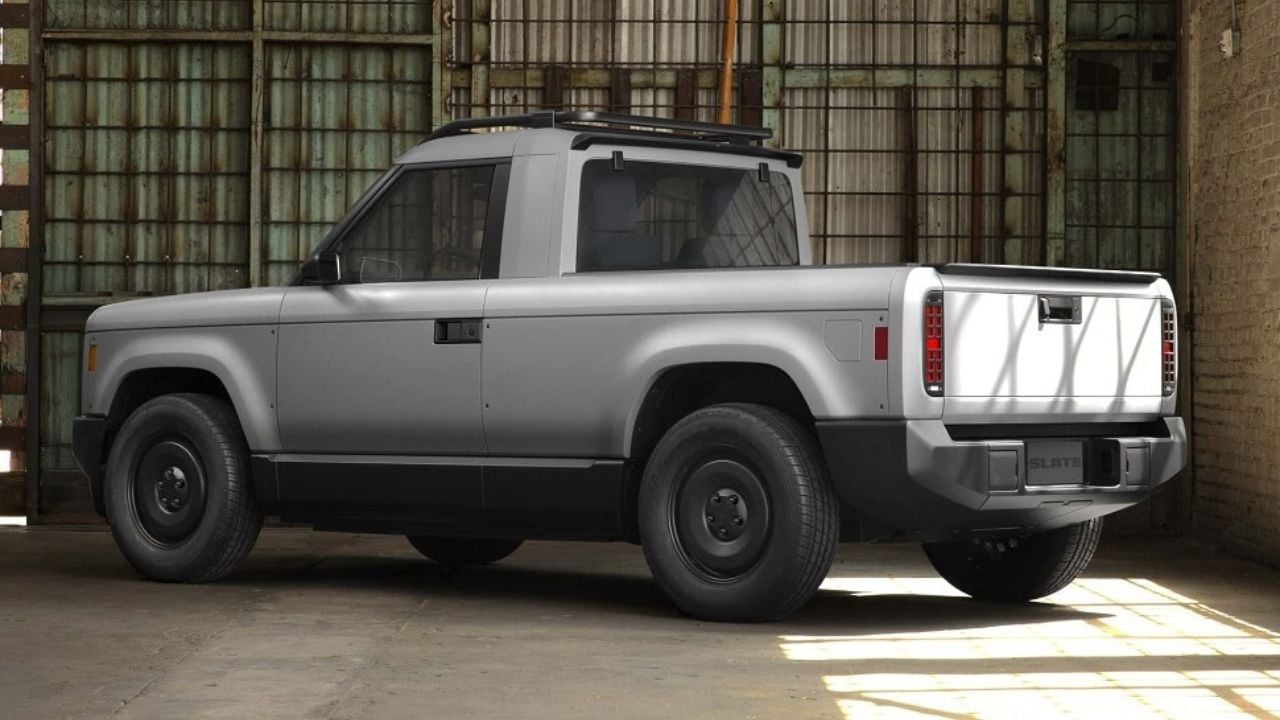
History is littered with ambitious pickup pricing that did not survive the walk from announcement to production. The best-known recent example is Tesla’s Cybertruck, which was originally priced far lower than what buyers ultimately saw in the real world. That context is why Slate Auto’s latest pricing comments are drawing attention and why they also come with plenty of skepticism.
In a video message shared on social media, Slate Auto chief executive Chris Barman addressed the question most shoppers care about first: price. He said the team is working aggressively to keep the number as low as possible and that final supplier negotiations are still underway. More specifics are expected in June, but the core message remains unchanged.
Barman reiterated that the entry-level version, described as the blank slate, is still expected to land around $25,000.
The Tax Credit Reality Check
That statement matters because the original pricing narrative was tied to federal incentives that helped some electric vehicles undercut their true cost.
Those federal electric vehicle tax credits are no longer available in the way Slate’s early math depended on, which makes the $25,000 target harder to hit. Without that built-in support, Slate has to make the business case work through manufacturing cost, supplier pricing, and tight control of standard equipment.
Where The Market Sits Today
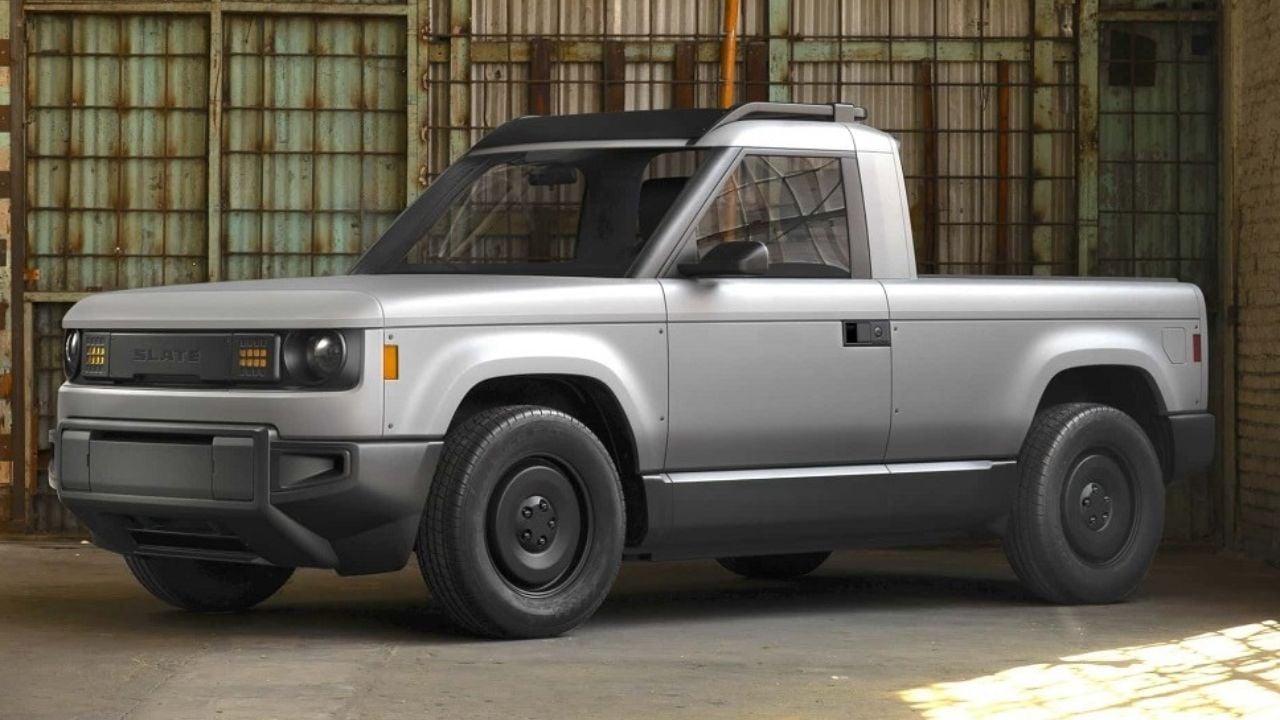
Right now, the price floor for a new pickup remains firmly in the compact category. Ford’s Maverick holds the title as the most affordable new pickup in the U.S., starting at $27,145 in turbo gas form without hybrid assistance. On the electric side, entry prices are in an entirely different universe. Chevrolet’s Silverado EV starts at $52,800, and other electric pickups also live well north of what many mainstream buyers consider attainable.
If Slate can truly bring an electric pickup to market at about $25,000, the gap would be dramatic. It would also create pressure on every automaker that has argued that affordable electric trucks are not financially feasible.
A Back-to-Basics Truck By Design
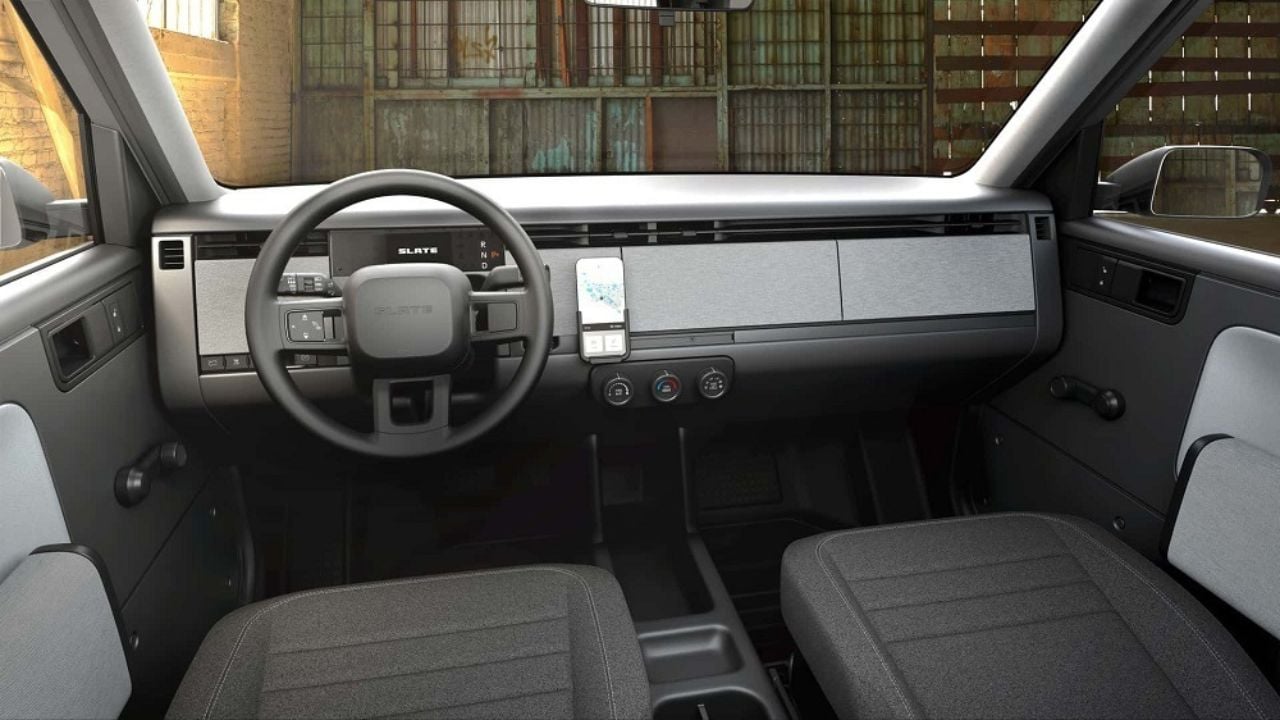
Slate’s strategy is not to out-tech the market. It is to strip the product down to essentials and let the buyer decide what matters. The base truck is described as intentionally utilitarian. Manual window cranks are part of the plan. A central infotainment screen is not. Even the exterior approach is aimed at lowering cost, with composite-style body panels positioned as an alternative to traditional paint.
That philosophy is a throwback to the idea of a pickup as a tool first. It also hints at easier repairs and simpler ownership, especially at a time when many modern trucks have become expensive, complex, and loaded with features that buyers may not want but still pay for.
The Entire Bet Rests On One Number
Of course, this is where the story either works or collapses. The minimalist spec only becomes a strength if the price is truly aggressive. If Slate EV lands near Maverick money, its advantage evaporates, and the stripped equipment list becomes harder to justify.
But if Slate holds the line at around $25,000, the company could spark something bigger than a single product launch. It could trigger a new pricing fight in the $25,000 range and revive interest in straightforward, honest vehicles in a truck market that has steadily marched toward higher prices and heavier feature content.
This article originally appeared on Autorepublika.com and has been republished with permission by Guessing Headlights. AI-assisted translation was used, followed by human editing and review.