
Hollywood has always had a talent for making stars out of more than just actors. Some of the most memorable performances on screen came from four-wheeled co-stars that captured our imagination and became automotive legends in their own right.
These classic cars didn’t just drive characters around; they helped define entire films and became cultural icons that enthusiasts still chase today. Whether it was the sleek curves, the powerful engines, or just the perfect timing of being in the right movie at the right moment, these vehicles earned their place in both cinema history and our collective automotive dreams.
The Hollywood A-List
For this list, we’re celebrating classic cars as iconic vehicles manufactured from the 1950s through the 1980s that gained significant screen time in popular films from that same era.
We focused on cars that either gained fame due to their Hollywood roles or finally received the spotlight they deserved. These aren’t background vehicles — they’re memorable machines that played essential parts in defining their films and leaving lasting impressions on audiences and car lovers alike.
1961 Ferrari 250 GT California Spyder – Ferris Bueller’s Day Off (1986)

The Ferrari that launched a thousand garage dreams, this stunning Italian masterpiece became one of cinema’s most famous cars despite spending much of the film parked. When Cameron’s dad’s prized possession finally hits the screen, you can practically feel every car enthusiast’s anxiety through the cellophane.
The 250 GT California Spyder was already rare and valuable in 1986, with only around 100 ever made, but Ferris Bueller introduced it to a whole new generation. That parking garage scene remains one of the most nerve-wracking moments in movie history for anyone who truly appreciates fine automobiles.
Interestingly, the production used replicas for most of the shots, which was probably a wise financial decision given what happened to the car by the film’s end. No spoilers, of course!
1968 Ford Mustang GT 390 Fastback – Bullitt (1968)

Steve McQueen’s Highland Green Mustang redefined what a car chase could be when it appeared in Bullit. The 10-minute pursuit through San Francisco’s streets remains the gold standard against which all other movie chases are measured.
This wasn’t some flashy body-kitted build; on the surface it was a relatively modest Mustang GT 390, though under the skin the engine, suspension, and brakes were seriously upgraded for the chase. It proved American muscle didn’t need loud graphics to look cool on screen. McQueen, a genuine racing enthusiast, did much of the driving himself, and you can feel that authenticity in every frame. It’s now considered one of the coolest Mustangs in movie history.
One of the two Mustangs used in filming sold at auction in 2020 for $3.74 million, proving that Hollywood magic has real-world value.
1977 Pontiac Trans Am – Smokey and the Bandit (1977)

Burt Reynolds and this black and gold Trans Am created one of the most joyful partnerships in film history. The Trans Am already had performance credentials with its 400-cubic-inch V8 producing 200 horsepower, but Smokey and the Bandit made it a cultural phenomenon.
That screaming chicken on the hood became an instant icon of American cool, and Pontiac couldn’t build Trans Ams fast enough to meet demand after the film’s release. The movie was pure entertainment — no deep message, just a man, his car, and a truckload of Coors beer outrunning the law. Reynolds reportedly kept several of the Trans Ams used in filming, which says something about the bond between actor and automobile.
Sales of the Trans Am jumped from around 68,000 units in 1977 to over 117,000 in 1979, proving that Hollywood influence is real.
1958 Plymouth Fury – Christine (1983)

John Carpenter took a beautiful late-1950s Plymouth and turned it into one of horror’s most memorable villains. The Fury’s distinctive styling — with its dramatic fins and aggressive front grille — was perfect for a car with a personality problem.
In the novel and film, Christine is a 1958 Plymouth Fury in “Toreador Red,” though actual ’58 Furys only came with a white body, making the film cars custom creations. The production used over 20 Plymouths from 1957-1958, destroying many of them for various scenes, which probably makes collectors wince today.
Christine proved that classic cars could be more than just props or symbols: they could be characters themselves. The film gave the Plymouth Fury a sinister reputation it never had before, which is quite an achievement for a family sedan.
1963 Volkswagen Beetle – The Love Bug (1968)
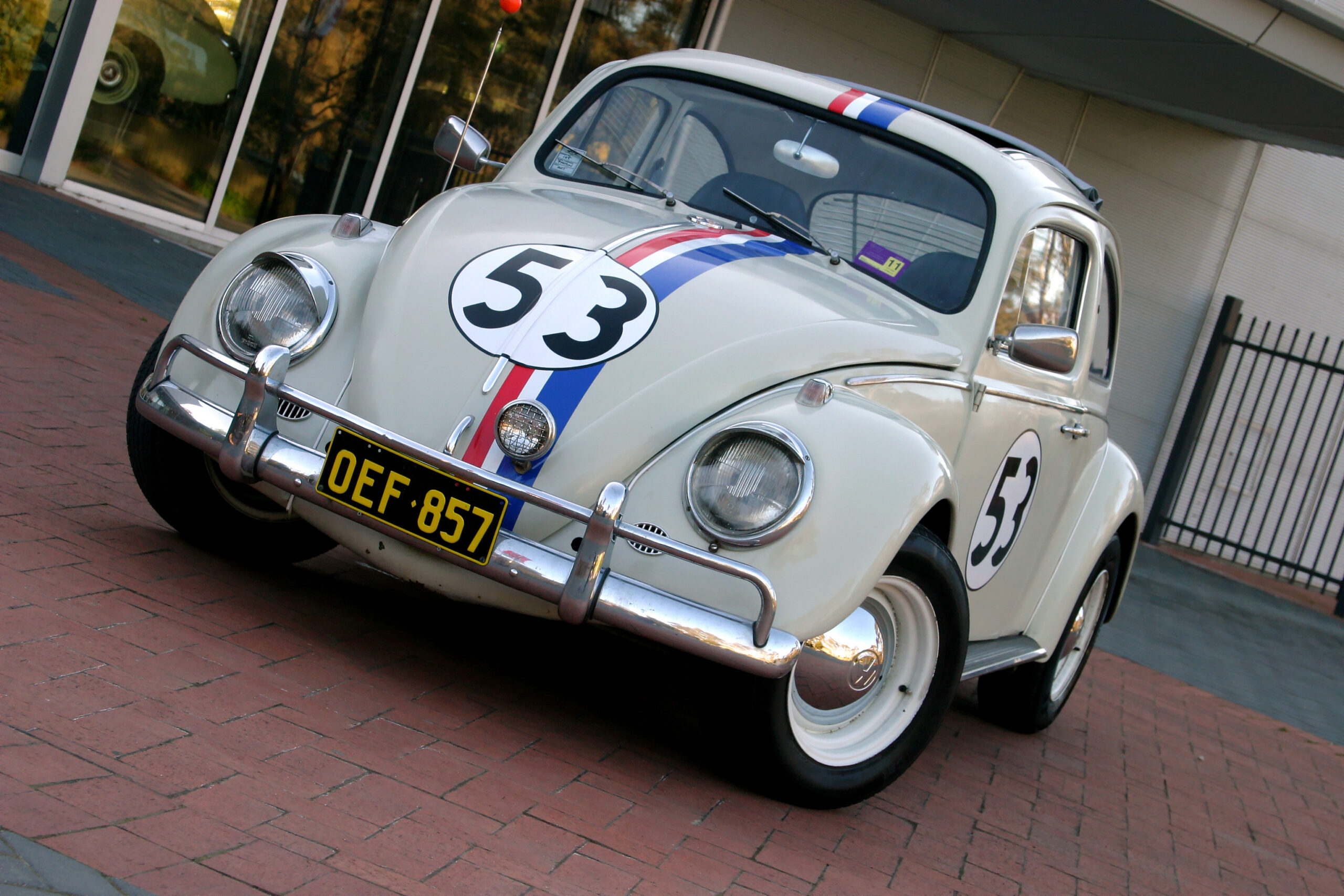
Herbie turned the humble Volkswagen Beetle into a racing legend and proved that personality matters more than horsepower. The people’s car from Germany found its perfect American story in this Disney film about a Beetle with a mind of its own and a racing number that added up to good luck: 53.
The original Beetle was practical and affordable transportation, but Herbie made it lovable and gave the model a charm that transcended its economy-car origins. Disney used multiple Beetles for the film, equipped with various modifications for different stunts and scenes. The franchise spawned multiple sequels and made the Beetle even more iconic in American culture, introducing it to families who might never have considered the German import otherwise.
Herbie showed that you don’t need a V8 and chrome to be a star.
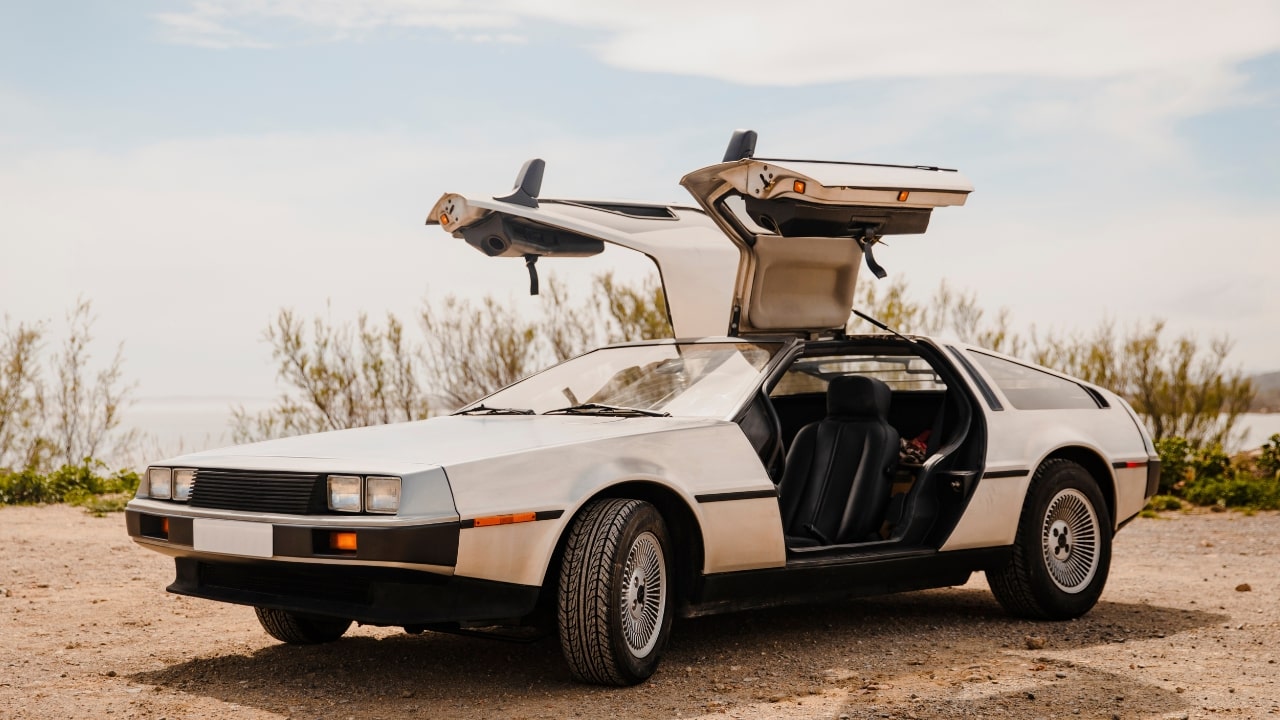
1981 DeLorean DMC-12 – Back to the Future (1985)

The stainless steel DeLorean was struggling in the marketplace when Back to the Future gave it immortality. With its gull-wing doors and futuristic appearance, the DMC-12 looked like it belonged in a science fiction film, even if its PRV V6 engine only produced a modest 130 horsepower.
Doc Brown’s time machine became so iconic that it’s nearly impossible to see a DeLorean today without thinking about traveling to 1955 or 2015. The car’s failure as a commercial product was completely overshadowed by its success as a cultural icon. Only about 9,000 DeLoreans were produced during the company’s brief existence from 1981 to 1983, making them relatively rare today.
The franchise gave the car a second life that its creator, John DeLorean, could never have anticipated. However, it’s fun to imagine what other cars could have taken Doc Brown into the past.
1970 Dodge Challenger R/T – Vanishing Point (1971)

This white Challenger became the ultimate symbol of freedom and rebellion in American cinema. Barry Newman’s character, Kowalski, turns a simple car delivery job into an existential high-speed journey across the American West.
The Challenger R/T featured a 440 Magnum V8 engine producing 375 horsepower, giving it genuine muscle to match its aggressive looks. The film elevated what was then a relatively new model into legend status among performance car enthusiasts. Multiple Challengers were used during filming, as the demanding driving scenes took their toll on the vehicles.
Vanishing Point captured something essential about American car culture—the idea that the open road and the right machine can represent pure freedom.
1959 Cadillac Miller-Meteor – Ghostbusters (1984)

The Ecto-1 started life as a combination ambulance and hearse before finding fame as paranormal transportation. Based on a Cadillac professional chassis, the Miller-Meteor was already distinctive before the Ghostbusters production added all the ghost-hunting equipment and emergency lights.
The car’s imposing size and unique styling made it perfect for a team that needed to transport both personnel and proton packs. That distinctive siren and the sight of Ecto-1 racing through New York City streets became as iconic as the film’s theme song. The Cadillac represented a time when professional vehicles were actually stylish and built to last.
The production used a 1959 model that was already 25 years old during filming, proving that classic Cadillac craftsmanship could handle another big adventure.
1973 Ford Falcon XB GT – Mad Max (1979)

Australia’s own muscle car became the ultimate post-apocalyptic ride in George Miller’s dystopian classic. The Falcon XB GT featured aggressive styling and a powerful 351 cubic-inch Cleveland V8 engine producing around 300 horsepower in Australian specification.
After Max adds the Concorde front end and supercharger, it becomes the Pursuit Special: one of the most menacing vehicles ever put on film. The Falcon perfectly matched the film’s gritty, desperate atmosphere while remaining believable as something a resourceful mechanic could build. Australian Ford products weren’t well known in America when Mad Max was released, making this car’s appearance even more exotic and memorable to international audiences.
The Interceptor, as it’s often called by fans, gave the Falcon immortality well beyond its home market.
1963 Aston Martin DB5 – Goldfinger (1964)

When James Bond trades his Bentley for an Aston Martin in Goldfinger, automotive history was made. The DB5 came equipped with Q Branch modifications including machine guns, an ejector seat, a bulletproof shield, and revolving license plates — gadgets that seemed fantastical in 1964 but defined the Bond formula forever after.
The Aston Martin was already an exclusive, expensive sports car, but Bond’s endorsement elevated it to the pinnacle of sophistication and cool. With its 282-horsepower inline-six engine and gorgeous Italian-influenced styling by Carrozzeria Touring Superleggera, the DB5 had the performance to back up its image.
The car became so synonymous with 007 that it has appeared in multiple Bond films over the decades. Aston Martin couldn’t have bought better publicity if they’d spent millions.
1976 AMC Pacer – Wayne’s World (1992)

Wayne’s World arrived in the early ’90s, but the AMC Pacer was pure ’70s oddball genius that deserved the recognition for its unique place in automotive history. This wide-bodied compact with its enormous glass area was AMC’s bold attempt to reimagine the small car, even if the execution didn’t quite match the ambition.
The Pacer’s distinctive styling made it instantly recognizable, and its appearance as the Mirthmobile perfectly matched Wayne and Garth’s basement-dwelling aesthetic. With only 280,000 Pacers produced from 1975 to 1980, it was already a curious relic by the time the film introduced it to a new generation. The car’s starring role in those memorable scenes, including the iconic “Bohemian Rhapsody” sequence, gave the Pacer a second act as a symbol of unpretentious fun.
The quirkiest choices make the most lasting impressions. Always, always, always.
Conclusion
These classic cars prove that the right vehicle at the right moment can transcend its original purpose and become something truly special. Hollywood didn’t just borrow these machines for a quick drive — it gave them stories, personalities, and legacies that continue decades later.
Car enthusiasts still seek out these models, often paying premium prices for vehicles that were once everyday transportation or weekend toys. The connection between cinema and automotive culture runs deep, with each feeding the other’s sense of style and adventure.
Whether it’s the rumble of a V8, the gleam of chrome, or the perfect profile captured in the golden hour, these cars remind us that sometimes the journey really is more important than the destination — especially when you’re driving something this cool.