Some casting is so perfect you wouldn’t dare imagine anyone else in the role. Harrison Ford is Indiana Jones. Arnold is the Terminator. Brigitte Nielsen is Red Sonja. Eddie Murphy is Axel Foley. And the Dodge M4S Turbo Interceptor is the star of The Wraith.
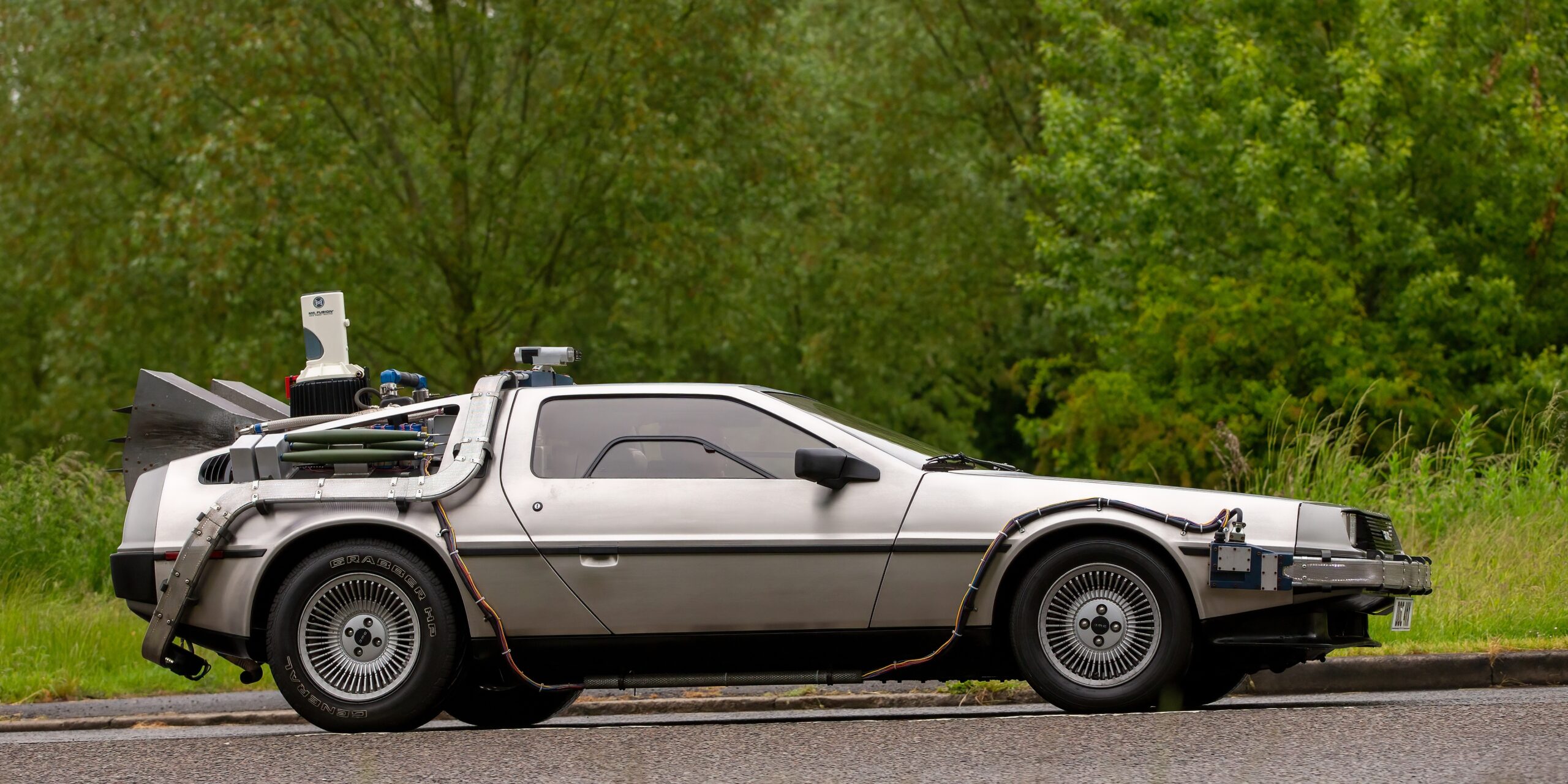
The same goes for the DeLorean DMC-12 in Back to the Future, one of those rare cases where a car became inseparable from its role.
Every October 21, Back to the Future Day, fans revisit the trilogy, post Pepsi Perfect jokes, and marvel that a movie about 1985’s version of the future still feels timeless.
So, in that spirit, we looked across the internet to see what fans were suggesting — and then had a little fun ourselves, picking a few possibilities and letting AI reimagine what Back to the Future might have looked like if Doc Brown had gone in a different direction.
Methodology (and a quick AI note)
To find out, we dove into a Reddit thread where fans debated exactly that question, what other car could have worked? Then we added a few of our own picks, looking for cars that fit three simple rules:
- Would it look futuristic to a 1955 onlooker?
- Could a slightly chaotic scientist plausibly afford or scavenge it?
- Would it make sense in the movie’s tone — cool, but not too cool?
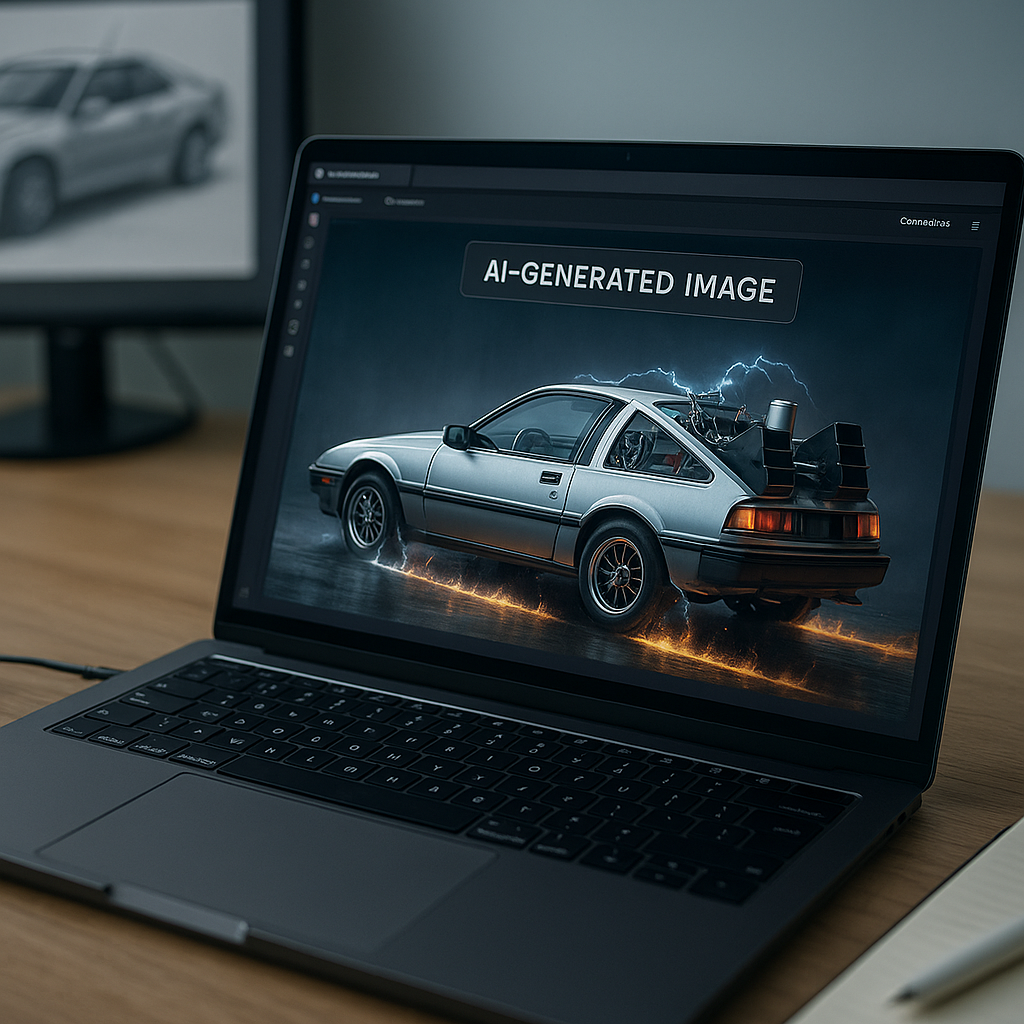
Since you really don’t want to see my stick-figure car sketches, we used AI to help generate visual concepts.
AI has gotten surprisingly good at generating realistic-looking cars, but it’s certainly not perfect. From a distance, the vehicles look convincing, yet a closer look reveals oddities and errors that sometimes defy explanation (and physics). These aren’t perfect recreations of the base cars, so you don’t get the full picture and of course, we can’t know how designers might have reworked the time-traveling treatment for different body styles.
AI also tends to repeat details or blend features in strange ways. Nevertheless, despite those shortcomings, these images give us something fun to think about — a glimpse into what Back to the Future might have looked like in an alternate automotive timeline.
AMC Gremlin

The Gremlin already looked like something Doc might’ve cobbled together from spare parts in his lab. Its quirky proportions and “what is that?” design would’ve sold the eccentric-inventor vibe instantly.
Why it might have worked: Cheap, oddball, and perfectly offbeat.
Why it wouldn’t: Too slow, too dated — more shag carpet era than sci-fi future.
AMC Pacer

We’ll admit it, we’re powerless to resist a good AMC Pacer reference. It’s practically a tradition at this point. If there’s even a 1% chance to include one, we will.
But honestly, this bulbous beauty almost makes sense. The Pacer’s panoramic glass, oddball proportions, and fishbowl aesthetic would’ve looked completely alien in 1955. Imagine Doc Brown stepping out of that curved greenhouse with a wild grin, audiences would’ve bought it.
Why it might have worked: Those wraparound windows would make for an incredible view of a time vortex. Plus, the whole car already feels like it was designed by someone with a flux capacitor in mind.
Why it wouldn’t: The same reason we love it, it’s just too funny. Marty and the Libyans chasing each other in a Pacer might have turned Back to the Future into an unintentional comedy.
Bricklin SV-1

A Canadian-built gull-wing coupe that dreamed big and failed spectacularly — sound familiar?
Why it might have worked: The gull-wings alone scream “time machine.”
Why it wouldn’t: Fragile, heavy, and underpowered — the SV-1 had style, not speed.
Porsche 928

Few cars blend future-sleek lines with real-world usability like the 928. Its long hood and fastback shape could easily pass as something out of 2050 when parked in 1955.
Why it might have worked: Elegant, futuristic, and just exotic enough to look out of place.
Why it wouldn’t: It feels too posh for a garage inventor — unless Doc sold off the family mansion to fund his experiments.
Fox-Body Mustang

Believe it or not, Ford offered Universal money if they made the Time Machine a Mustang. Writer Bob Gale famously shot that down, saying, “Doc Brown doesn’t drive a [expletive] Mustang.”
Why it might have worked: A true 1980s icon — simple, fast, and accessible.
Why it wouldn’t: Too mainstream. Doc was an eccentric genius, not a showroom shopper.
Pontiac Fiero

Compact, mid-engine, and futuristic for its price point, the Fiero has always been a small car with big ambition.
Why it might have worked: It already looked forward-thinking and could’ve handled the techy aesthetic perfectly.
Why it wouldn’t: Too common, too modest — the DeLorean’s drama helped make the story believable.
Dodge Daytona

A turbocharged wedge of 1980s tech with digital gauges and bright graphics.
Why it might have worked: Futuristic interior, affordable performance, and very era-correct.
Why it wouldn’t: Not weird enough — it feels too normal for a mad scientist.
Toyota Corolla AE86

Light, reliable, and rear-drive — Doc would’ve appreciated its engineering, even if it wasn’t glamorous.
Why it might have worked: Dependable, efficient, and quick enough to hit 88 mph.
Why it wouldn’t: Too down-to-earth.
Nissan 300ZX (Z31)

Pop-up headlights, T-tops, a digital dash, and angular ’80s flair, the 300ZX checks a lot of boxes. It looks futuristic, but in a relatable way.
Why it might have worked: A perfect blend of sleekness and sci-fi presence.
Why it wouldn’t: Too grounded. Viewers might just see “cool sports car” instead of “mad scientist’s cosmic creation.”
C4 Corvette

America’s digital-dash dream machine. When it debuted, it looked like it came straight from a sci-fi movie.
Why it might have worked: Sleek, fast, and technologically advanced.
Why it wouldn’t: Too clean and too expensive for a tinkerer’s garage project.
Chrysler Conquest / Mitsubishi Starion

Pop-up headlights, turbocharged power, and a widebody stance — this thing looked faster than time itself.
Why it might have worked: Wild styling and plenty of under-hood tech.
Why it wouldn’t: Too polished. Doc’s inventions always feel half-mad, half-miraculous.
Yugo

The anti-DeLorean. Cheap, slow, and unreliable, but endlessly entertaining as a “what if.”
Why it might have worked: The best punchline in movie history.
Why it wouldn’t: It might not survive its first time jump — or its first oil change.
Why Nothing Else Could Replace the DeLorean

A few of these cars might have pulled off the look, the stainless-steel sparkle, the futuristic wedge, the hint of 1980s eccentricity. However it’s hard to imagine any of them becoming as beloved as the DeLorean.
When it debuted, the DMC-12 cost more than a brand-new C4 Corvette, yet after John DeLorean’s company collapsed, reports surfaced of unsold cars going for as little as $9,500. It’s the kind of twist that feels almost scripted, the perfect car for a time-traveling scientist who probably wouldn’t have paid retail anyway.
You can almost picture Doc Brown cutting a deal with DeLorean himself, trading some mysterious “experimental tech” to DMC in exchange for one of the gull-wing wonders. The story would fit right in with the rest of his madcap legend — somewhere between smuggling plutonium and rewriting history.
In the end, the DeLorean works in a way no other car could. It wasn’t the fastest, or the most advanced, or even the most practical. But somehow, it became timeless, a machine that blurred the line between pop culture and mythology, forever frozen at 88 miles per hour.