
I’m a sucker for gimmicks, I’ll admit it. I love pop-up headlights, slammed tires, artistic taillights, anything that makes a car stand out. One of my favorite features is the gullwing door. There’s something so exciting about a car that pushes boundaries and adds features that don’t really need to be there, they could just have regular old doors, but chose to have dramatic, upward swinging doors that make it difficult to park in certain garages. I admire that.
This decades-spanning collection highlights iconic gullwing-door machines, from the Mercedes-Benz 300 SL (the production car that made the layout famous) to the Autozam AZ-1 kei coupe and plenty of strange in-betweens. As long as it has gullwing doors, I’m sold.
Step Inside
Putting together this collection was quite easy, there really aren’t that many cars with gullwing doors. Good ol’ Wikipedia only has 48 cars in the “gullwing” category. But how did I narrow it down, you may be wondering? That was also quite easy, I picked the cars that I felt stood out the most.
This could be due to true beauty or straight-up strangeness. Either way, I wanted to showcase the entire gamut of gullwing doors’ exceptionally creative and unique design. These are cars that stand out, for better or worse.
Mercedes 300SL
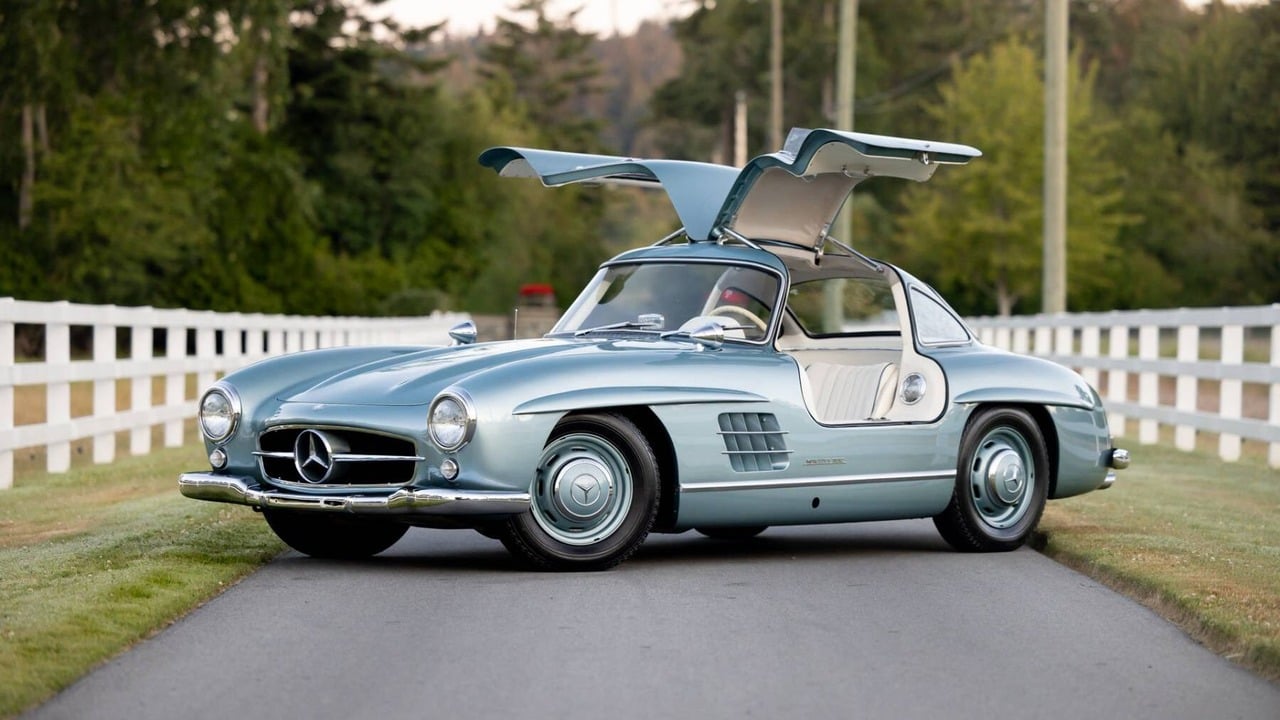
For the Mercedes 300SL, the gullwing doors weren’t for style but for functionality. Still, they look incredibly gorgeous paired with the car’s race-inspired curves, which almost replicate the shape of the gullwing doors when opened.
The racing 300 SL (W194) was built for Mercedes’ 1952 sports-car program, and its high tubular spaceframe sills made conventional side-hinged doors impractical, hence the roof-hinged design. The doors hinged at the roof, allowing them to lift relatively high. These became the 300SL’s signature, earning it the nickname “Gullwing,” according to Mercedes.
Corvette Aerovette

Corvette loves its concept cars, and there are plenty of them, and the Aerovette is oftentimes lost in the mix. The Aerovette name is tied to GM’s later mid-engine Corvette concepts (notably the 1976 Aerovette), and it was seriously explored internally as a possible production mid-engine Corvette before the program was ultimately shelved.
Across its concept evolution, GM experimented with different powerplants, including a four-rotor Wankel and later a 400-cu-in (6.6-liter) V8, before the program was shelved. While it was approved in that final form, the production cost would have been too high, and it never came to be, putting an end to the dream of a mid-engine Corvette.
Apollo Intensa Emozione

The Apollo IE is a mid-engine car, but I truly don’t care enough to know its horsepower, top speed, or anything. I just see this car and am immediately floored. There might be no car more beautiful and invigorating than the Apollo IE, with its sharp, almost deadly edges, its massive spoiler, its exaggerated splitter, and those glorious, incredibly dangerous-looking gullwing doors. The Apollo IE looks like a weapon.
Only 10 Apollo Intensa Emozione were made, costing $2.7 million when it was first revealed in 2017. Those 10 buyers would be crazy to put this car up for auction.
Bertone Genesis
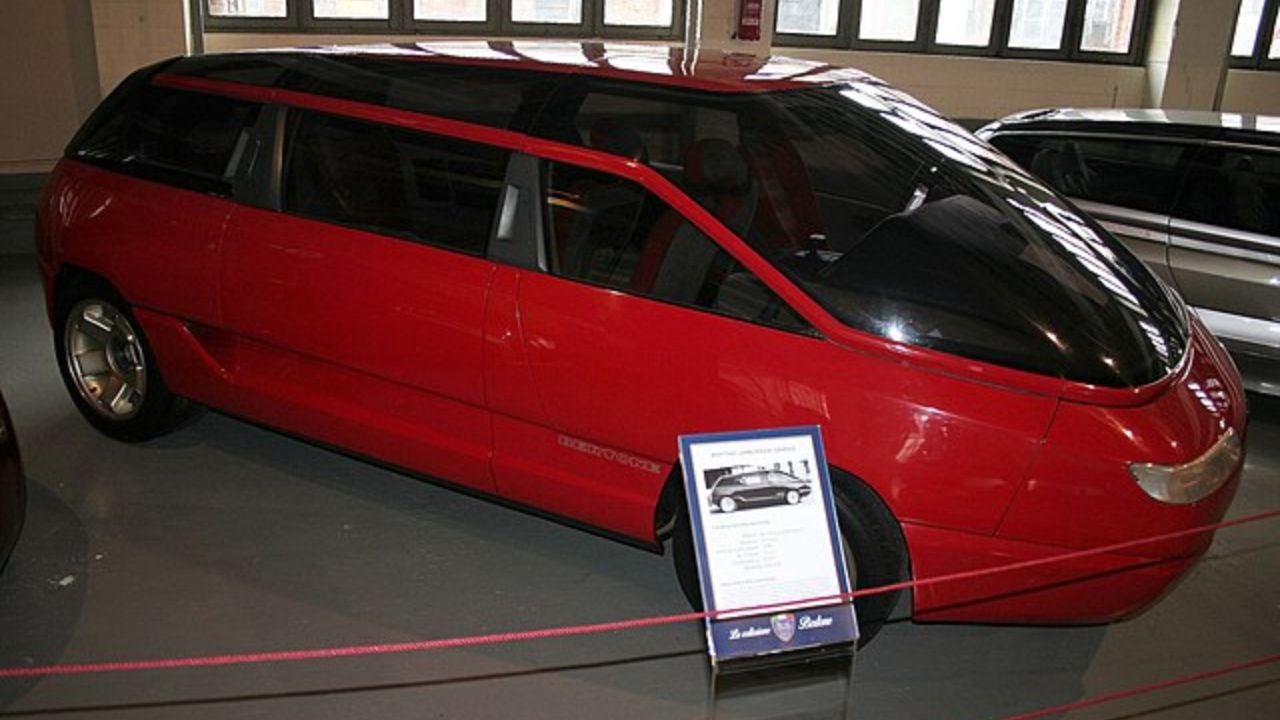
This is probably one of the strangest concept cars nobody asked for. Slightly connected to Lamborghini, the Genesis appeared for the first time at the 1988 Turin Motor Show as a “people carrier.” It could fit five people, which I guess sort of permits that kind of label.
The Genesis used a Lamborghini-sourced V12 and a quirky door layout with dramatic front gullwing-style openings paired with rear sliding doors to access its five-seat cabin. All five people. This car isn’t my thing, but it’s definitely interesting enough to include.
DeLorean DMC-12

Despite starring in one of the most iconic sci-fi films of the 80s, the DeLorean was a real bummer. Opening its futuristic gullwing doors won’t lead you to a time machine but rather a pretty abysmal interior. The DMC-12 didn’t live up to performance expectations either, with period road tests generally recording top speeds well short of early 130 mph claims and 0-60 times closer to about 10 seconds than the optimistic figures floating around at launch.
While DeLorean went bankrupt and about 9,000 were built, the DMC-12 still remains iconic beyond its Back to the Future appearance, thanks to an intense stainless steel body and its intense gullwing doors to match.
Pagani Huayra
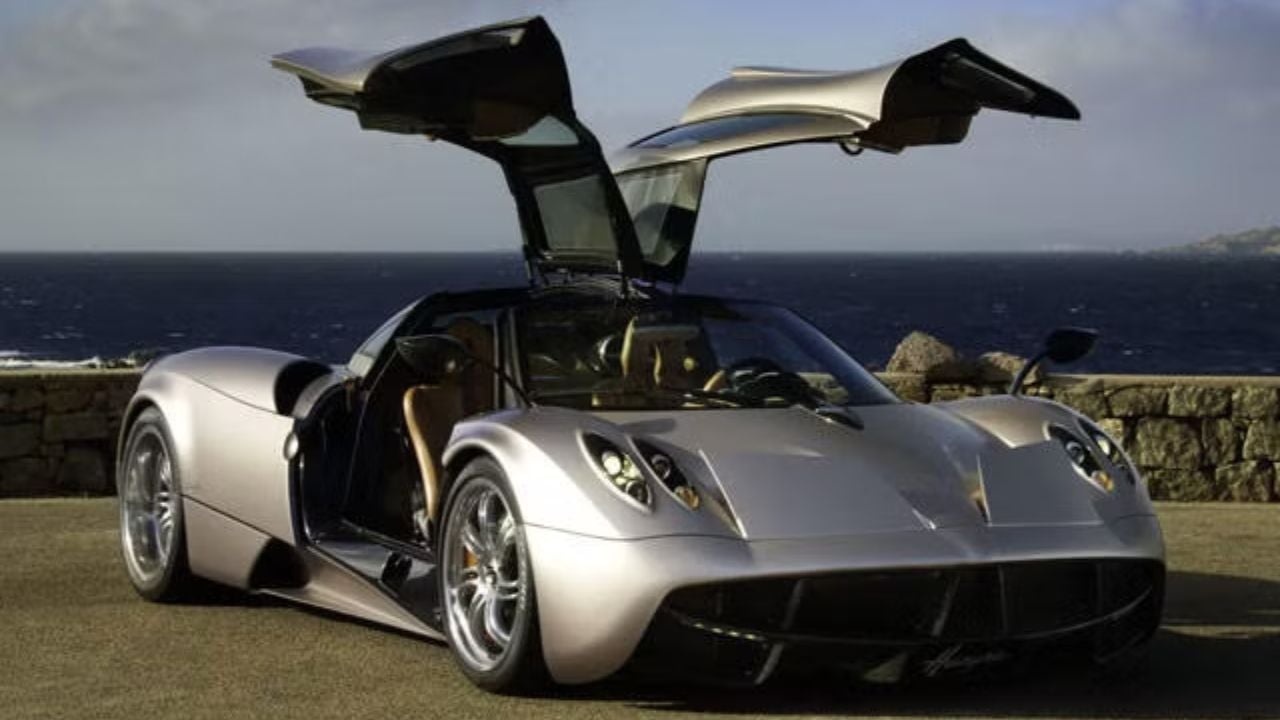
When the Huayra was revealed for the first time in 2011, the car community went crazy. This supercar has an unmatched aura, with its elegant yet aggressive styling. The quad exhaust and high, dramatic gullwing doors are just a few signature Pagani touches that have made the Huayra ever-desirable over a decade later.
The Pagani Huayra isn’t just a showpiece, either. It features an AMG-sourced 6.0-liter twin-turbo V12 that makes 700-plus hp in most versions, with claimed top speed in the 230 mph range depending on model.
Aston Martin Bulldog

This wedge-shaped car is an iconic symbol of the 1980s postmodern era, with extreme lines and bold features that captured the hearts of young car enthusiasts when it appeared. This includes gullwing doors that flew up like bat wings, adding to the brutal aggression of this one-off concept car.
The Bulldog is a drivable supercar concept powered by a twin-turbo Aston Martin V8 that was originally rated around 600 horsepower. While some claims put the Bulldog at a top speed of 237 miles per hour, it likely never reached that. During early testing, it hit 192 mph, which is still impressive. Recently, a restored Bulldog finally surpassed 200 mph.
Tesla Model X

If you know me at all, you’d know that this car isn’t my taste. I still wanted to include it, however, for fans of electric vehicles who are looking for something unique in a sea of repetitively styled SUVs.
While the rest of the car basically looks like an oversized version of the usual Tesla, the gullwing doors in the back definitely add a stylistic flair. Tesla calls them ‘Falcon Wing’ doors and says sensors help them open in tighter spaces.
Aston Martin Valkyrie

This heart-pounding hypercar boasts a lot of incredible performance stats, but I can’t stop looking at its gullwing doors, which truly look like works of art. Lifted straight up into the air, the wings’ outline resembles the overall curvature of the car’s body, creating a sense of symmetry that belongs in a museum.
However, the Valkyrie is more at home on a track, and Aston Martin has touted its 6.5-liter V12 at 1,000 bhp-plus in road-car form, with hybrid assistance adding additional output depending on version. The Valkyrie is luxury and power at its finest.
Autozam AZ-1

Mazda and Suzuki collaborated on this one-of-a-kind kei car, creating a miniature car with supercar aesthetics. It uses an FRP (fiberglass-reinforced plastic) body over a steel chassis, plus the supercar flourishes—spoiler, vents, and those glorious gullwing doors.
The Autozam AZ-1 is just fun. It’s not super fast, but its 650cc mid-mounted engine makes this low, small ride feel zippy and exciting. I have to stop myself from buying one of these things every few months, but one time, I won’t be able to stop myself.
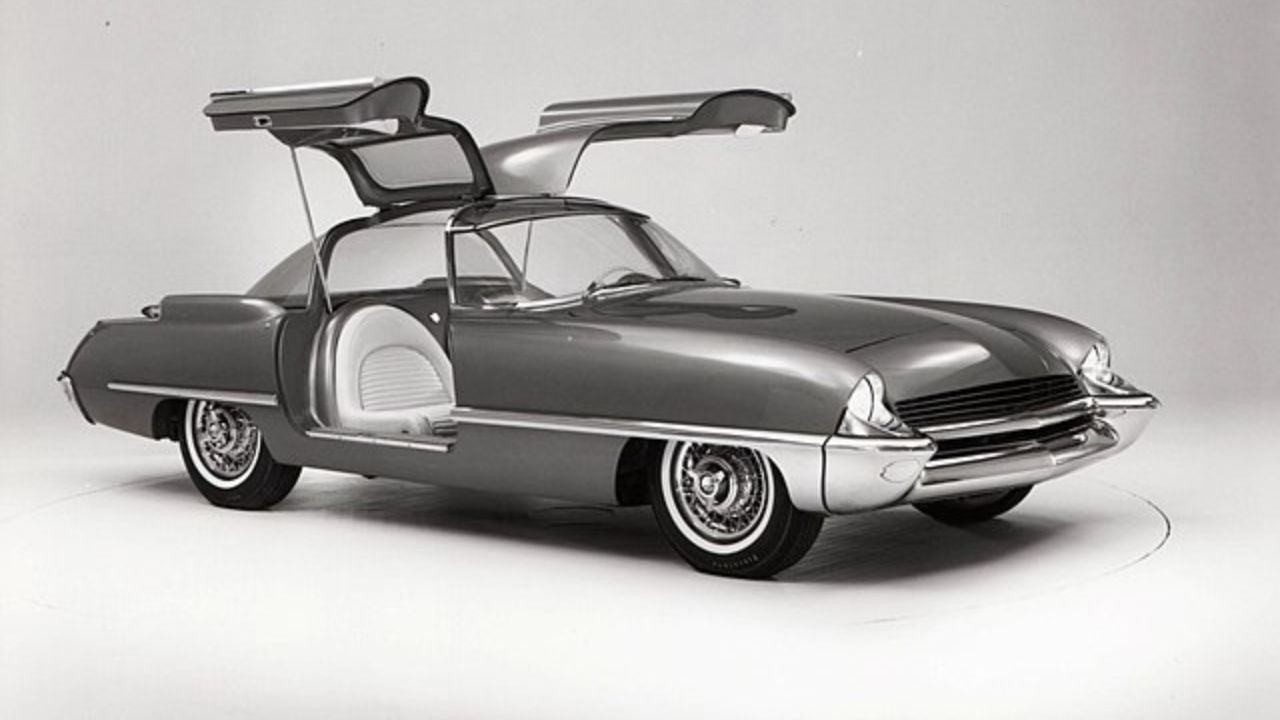
Ford Cougar 406

This is one of Ford’s many concept cars. It started as a scale model and was then brought to life, a streamlined, chrome beauty that embodied the atomic age’s fascination with science and innovation.
Some of its many stunning features included pop-up headlights, two small fins with stop lights on the back, and elegant gullwing doors. There are rumors that the car used the 300SL’s doors, modified to fit the Cougar, but the shapes are a bit too different to confirm this.
Mercedes-Benz C111

Only a small number of C111 experimental cars were built as Mercedes testbeds for aerodynamics and advanced powertrains (notably rotary and later diesel experiments), not as a pure ‘alternative to fossil fuel’ project. Some C111 variants used multi-rotor Wankel engines and recorded very high speeds in testing, but the program also included other configurations, so the four-rotor claim needs a variant qualifier. However, the outer visuals are what really make this car memorable, fiberglass-reinforced plastic creating a sharp, downturned front end and dynamic gullwing doors.
The C111 debuted at the 1969 Frankfurt Motor Show and sparked huge public interest, but Mercedes treated it as a research program rather than a car intended for customer production. Unfortunately, this never came to be.
Gumpert Apollo

The often forgotten Gumpert Apollo will leave its mark on you once you take a good look. Unlike a lot of sleeker supercars of the 2000s, the Apollo had a very brutal and rigid appearance. Every feature it has appears exaggerated, and that includes its impressive gullwing doors.
The Apollo used an Audi-sourced 4.2-liter twin-turbo V8, with output varying by version and generally rated in the 650 hp range depending on specification. Despite its bold appearance, the Apollo was actually quite light. Its light weight combined with all that power allowed the Apollo to hit 60 mph in under three seconds and top out at 224 mph.
Ultima MK2

Ultima Sports revealed the Ultima Mk2 kit car in 1984, and period sources commonly describe production as very low-volume. Two of those 13 were MK2 5000 race cars, using a steel square-tubed chassis from the MK1. Ted Marlow was the first customer, eventually fitting it with a small-block Chevrolet V8 engine, a four-speed Porsche transaxle, and revised suspension.
The Ultima MK2 got a lot of press attention for its striking appearance, including its intense gullwing doors.
Porsche 906

This limited-production street-legal race car had a mid-engine, lightweight construction, and an aerodynamic design that propelled Porsche to the forefront of endurance racing. This includes quite a successful showing at the 1966 24 Hours of Le Mans. It was also victorious at hill climbs and endurance races all over Europe.
The dramatically sporty and curvy appearance of the 906 is what really makes it stand out all these decades later. This includes its aggressively angled gullwing doors, which set it apart from others in its class.
Renault Nepta

This has to be one of the wildest gullwing doors to exist, I can’t even make sense of it. Despite the Nepta being a convertible, it also had gullwing doors. They pivot on an aluminum strip that runs down the center of the hood and ends behind the rear seat. For some reason, I still don’t get it.
The Renault Nepta was designed under Patrick Le Quément’s direction and debuted at the 2006 Mondial de l’Automobile with one of the strangest door mechanisms of the era. While it probably turned heads, I’m not sure anyone wanted to sign up to own one.
De Tomaso Mangusta

A mid-mounted rear Ford V8 engine made the De Tomaso Mangusta live up to its name, mangusta is Italian for “mongoose,” an animal that hunts cobras, and the De Tomaso Mangusta was gunning for the Cobra after a failed partnership with Carroll Shelby earlier in the ’60s. The dramatic lines and aerodynamic shape of the Mangusta added to its predatory nature, reaching a top speed of 155 mph.
What really stood out about the Mangusta, however, were its rear gullwing-style engine-cover panels rather than gullwing passenger doors. The front doors remained conventional, but the gullwing doors in the back granted access to the engine and storage. While its looks are some of the best out there, the supercar was uncomfortable to drive thanks to non-adjustable seats and a heavy clutch.
Bristol Fighter

This British supercar has a wild blend of power and performance that makes it a shame it isn’t more well-known. Designed by former Brabham Formula One engineer Max Boxstrom, the Fighter features a dramatically curved body, side exhaust, and incredible gullwing doors.
To match its extreme looks, the Fighter was given an 8.0-liter V10 engine, the same one found in the Dodge Viper. This gave the small yet mighty car 525 hp, enabling it to race to 210 mph.
Mercedes SLS AMG

This supercar is almost overwhelming to look at, almost emotional. It looks like the dream car of anyone who has ever hung up a sports car on their wall as a kid, with its blend of flowing lines and aggressive shapes. It’d be hard to know where to even look if it weren’t for the gullwing doors, which is where my eyes went automatically.
Said Autoweek Editor Wes Rayna: “The gullwing doors are novel and work well; they’re light, easy to open and close, and these are what will bring out the neighbors for an ogle or two.”
Take Flight

So there you have it, a solid cross-section of the most memorable gullwing (and gullwing-adjacent) cars people actually talk about. Not many cars have this feature, so when you see it, it truly stands out. Gullwing doors have remained iconic design elements that make cars feel special. Which gullwing doors are your favorite?