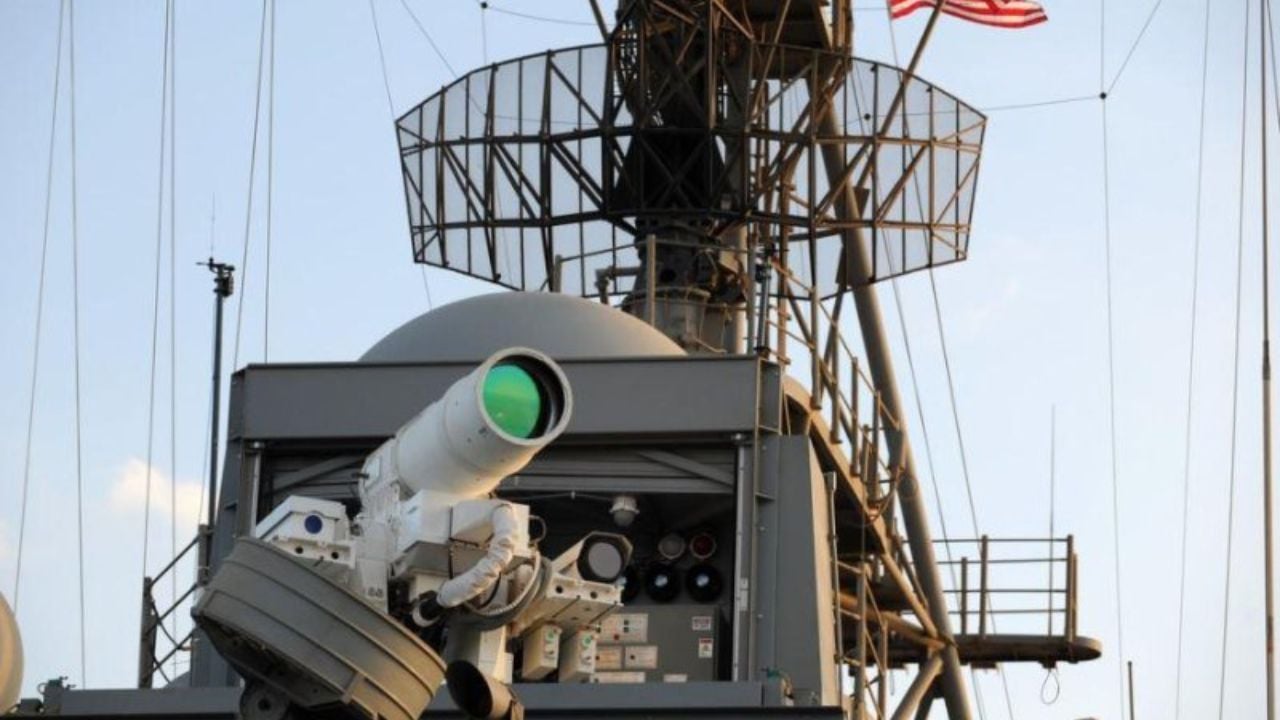

As drone warfare continues to expand, naval analysts increasingly see laser weapons as a critical component of future ship defenses, capable of neutralizing swarms of inexpensive unmanned aircraft without exhausting expensive missile inventories.
One of the most significant systems currently being fielded by the United States Navy is the High Energy Laser with Integrated Optical‑dazzler and Surveillance (HELIOS), a directed-energy weapon developed by Lockheed Martin to counter drones, missiles, and other aerial threats at dramatically lower cost than conventional interceptors.
What HELIOS Is and How It Works
HELIOS is a 60-kilowatt class solid-state laser weapon designed to be integrated directly into a warship’s combat systems. Unlike conventional defensive weapons that rely on explosive interceptors, HELIOS fires a concentrated beam of electromagnetic energy that travels at the speed of light.
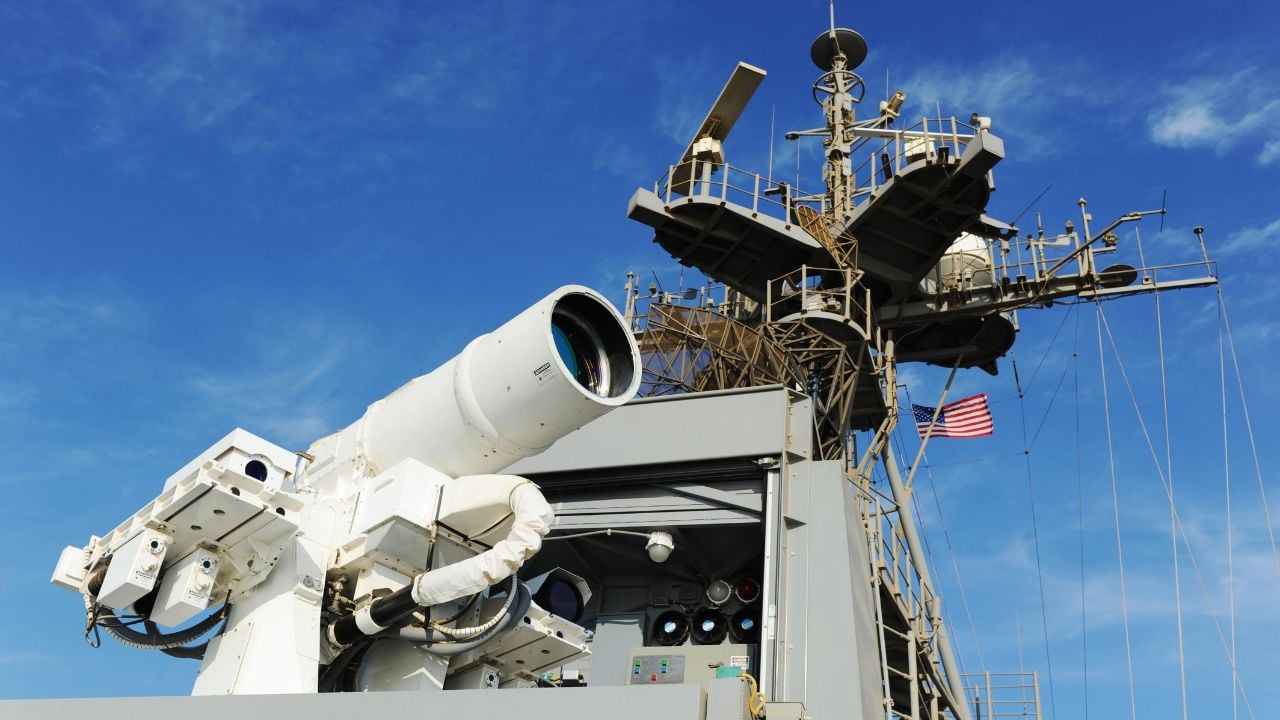
When focused on a target, the beam rapidly heats structural components or sensors until they fail.
The system operates in two distinct engagement modes. The first is a “soft-kill” function known as dazzling. In this mode the laser does not physically destroy the target but instead blinds optical sensors or guidance systems on drones and missiles, causing them to lose navigation capability and crash.
The second is a “hard-kill” mode that applies sustained heat to physically damage or destroy the airframe.
Technically, HELIOS is an integrated sensor and targeting system designed to work with a warship’s combat architecture.
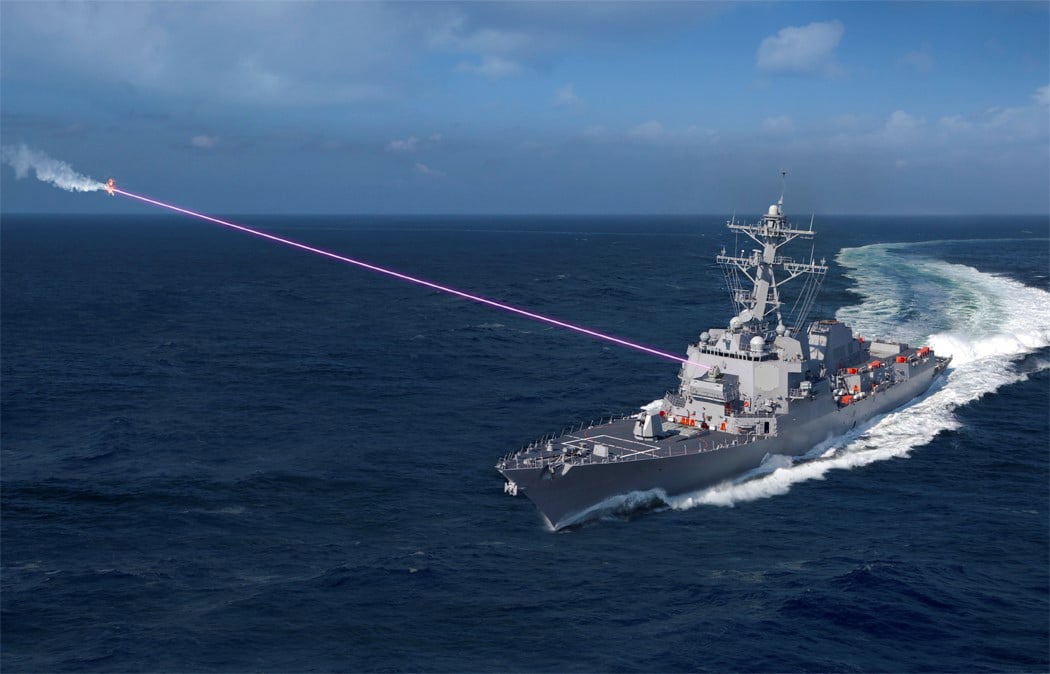
The weapon is tied directly into the Aegis Combat System used aboard many U.S. destroyers, allowing the ship’s radar and tracking sensors to identify aerial threats and automatically assign the laser as a defensive weapon.
The system also contains advanced surveillance capabilities. Its sensor suite includes thermal imaging, night-vision optics and high-resolution tracking cameras that allow operators to identify and track aerial threats several miles away. These sensors can be used independently of the laser for reconnaissance and battle damage assessment.
Another defining characteristic is its scalability. The current operational configuration produces roughly 60 kilowatts of power, but the architecture allows expansion toward 120 kilowatts or higher in future upgrades.
This modular design uses fiber-laser modules combined into a single coherent beam, allowing the system’s output to increase as power generation and cooling technologies improve.
Development Timeline
The HELIOS program began in January 2018 when Lockheed Martin received a contract from the U.S. Navy to develop an integrated shipboard laser weapon capable of countering unmanned systems and small surface threats.
High Energy Laser with Integrated Optical-dazzler and Surveillance #HELIOS 60 kW (scalable to 120 kW) Laser Weapon System installed on the USS Preble (DDG 88) DDG-51 class destroyer. pic.twitter.com/TlPGPtKgOF
— Air-Power | MIL-STD (@AirPowerNEW1) January 22, 2024
Between 2019 and 2021, the system underwent design reviews and early land-based testing. Engineers focused on integrating the laser with naval power systems and combat software while validating beam stability, targeting accuracy, and thermal management.
The first major milestone occurred in August 2022, when Lockheed Martin delivered the first operational HELIOS unit to the U.S. Navy. The weapon was installed aboard the USS Preble (DDG‑88), an Arleigh Burke-class guided-missile destroyer, making it the first warship equipped with the system.
Following installation, the Navy conducted sea trials beginning in 2023 to evaluate how the system functioned under real operational conditions at sea. These tests focused on integrating HELIOS with the ship’s sensors and combat systems while verifying reliability during prolonged deployments.
Operational Testing and Early Combat Demonstrations
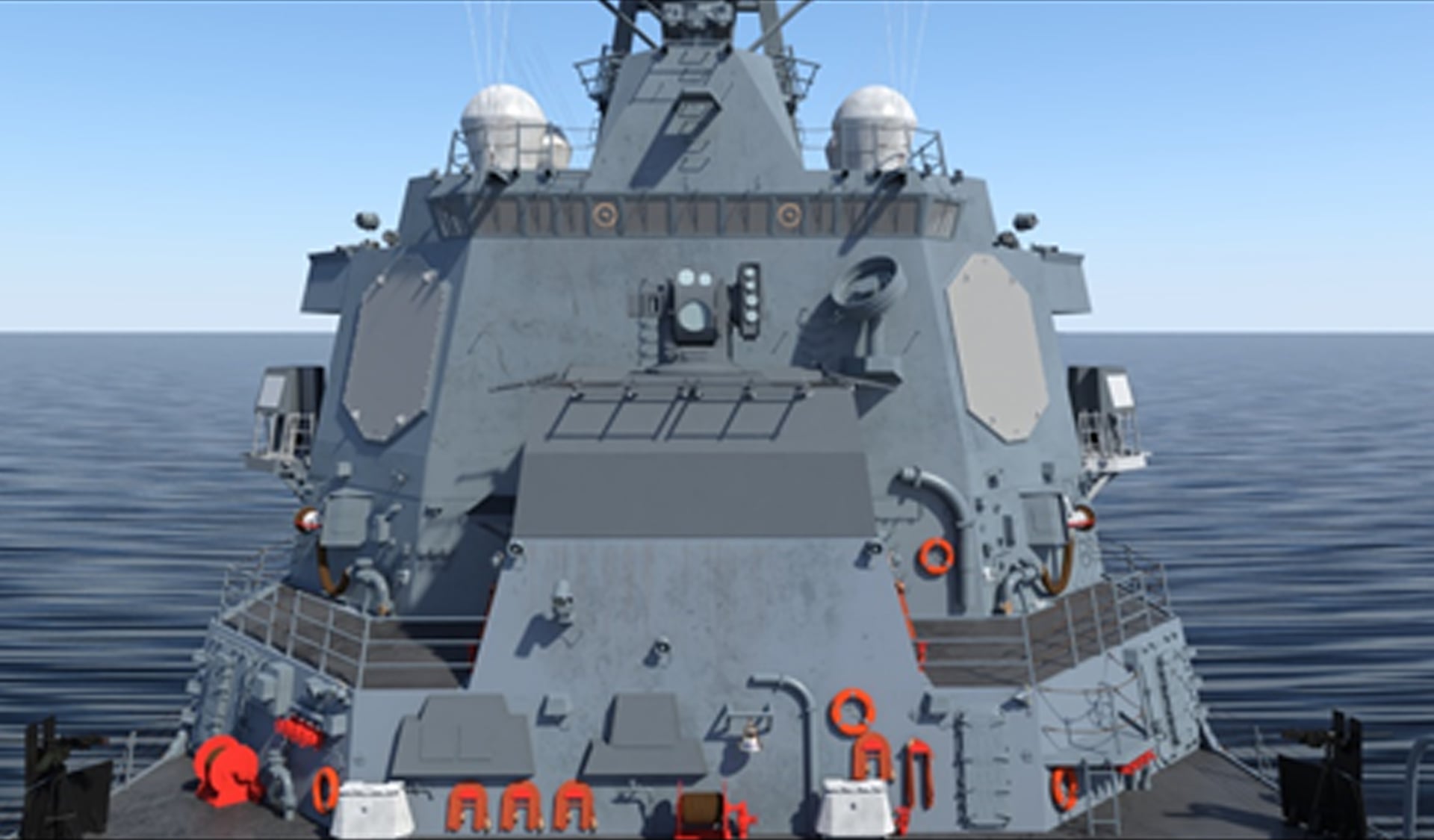
The system achieved a major demonstration milestone in fiscal year 2024 when the USS Preble used HELIOS to engage and destroy an unmanned aerial drone during testing. The exercise validated the system’s ability to detect, track, and neutralize airborne threats.
Additional tests continued through 2025. During a counter-drone demonstration at sea, the destroyer reportedly used HELIOS to neutralize four unmanned aerial vehicles in a single exercise. The demonstration showed that shipboard lasers could provide a viable defense against drone swarms, a growing threat to naval vessels.
These demonstrations paved the way for limited operational deployment as part of the U.S. Navy’s broader directed-energy strategy. In operational scenarios such as the ongoing Operation Epic Fury, HELIOS has been used to counter inexpensive drones launched in large numbers.
Unlike missile interceptors that cost millions of dollars each, a laser engagement primarily consumes electrical power, meaning each shot costs only a small fraction of traditional weapons.
HELIOS in Epic Fury
Contrary to some reports, the U.S. Army has not publicly reported using the HELIOS system during Operation Epic Fury. The operation, launched on February 28, 2026, has focused on dismantling Iran’s missile, drone, naval, and air defense infrastructure, but official sources do not mention HELIOS deployment.
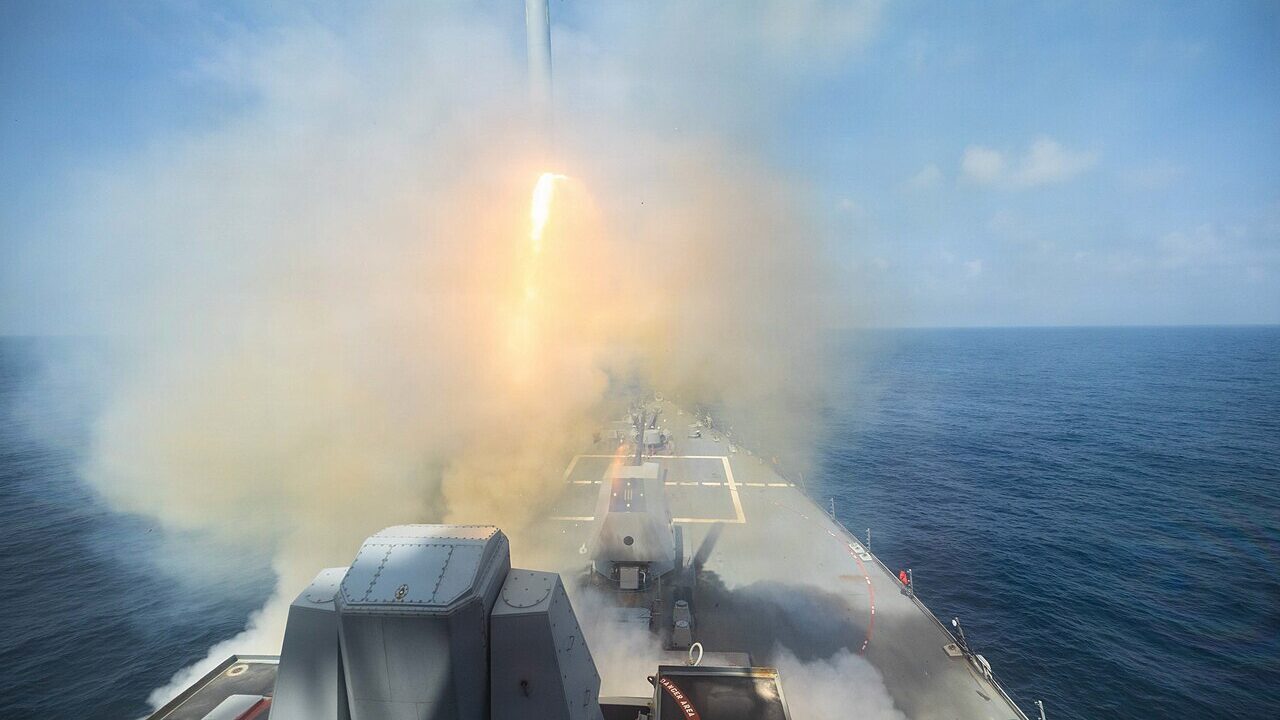
So, while HELIOS represents a cutting-edge directed-energy capability, its role remains limited to naval platforms. Operation Epic Fury has relied on conventional airstrikes, missile attacks, and electronic warfare rather than laser weapons.
If HELIOS were deployed, it would most likely be aboard U.S. Navy ships in the Persian Gulf, but no evidence confirms such use in this operation.
That said, HELIOS has reportedly been deployed aboard a U.S. Navy destroyer during Operation Epic Fury, but its use has not been officially confirmed.
The U.S. military is primarily relying on Patriot and NASAMS interceptors, fighter aircraft, and electronic warfare to counter Iran’s Shahed drone swarms, though these are far more expensive than the drones themselves.
So, what has the US been using to against Iran’s cheap, Shahed drones?

The U.S. has been countering Iranian drones in Operation Epic Fury with a mix of conventional and experimental tools. Patriot and NASAMS batteries are positioned across the region to intercept drones and missiles, while fighter aircraft such as F‑15s, F‑16s, F/A‑18s, and F‑35s conduct patrols and direct intercept missions.
Electronic warfare and cyber operations are being used to disrupt the command links of Iranian drones, and, more importantly, the U.S. has also employed low‑cost suicide drones modeled after Shahed designs to strike Iranian positions offensively.
The CENTCOM or Department of Defense have not made official confirmation of directed‑energy weapons like HELIOS been tested in limited or large-scale engagements.
Strategically, HELIOS offers a cheaper way to deal with swarms since each shot costs little more than electricity, but its deployment is limited to naval platforms.
Iran’s tactic of launching hundreds of drones at once puts immense strain on missile defenses, and while lasers promise efficiency, missiles remain the backbone of U.S. defenses because they are proven and reliable in combat, whereas lasers are still experimental.
The Future of Naval Laser Defense
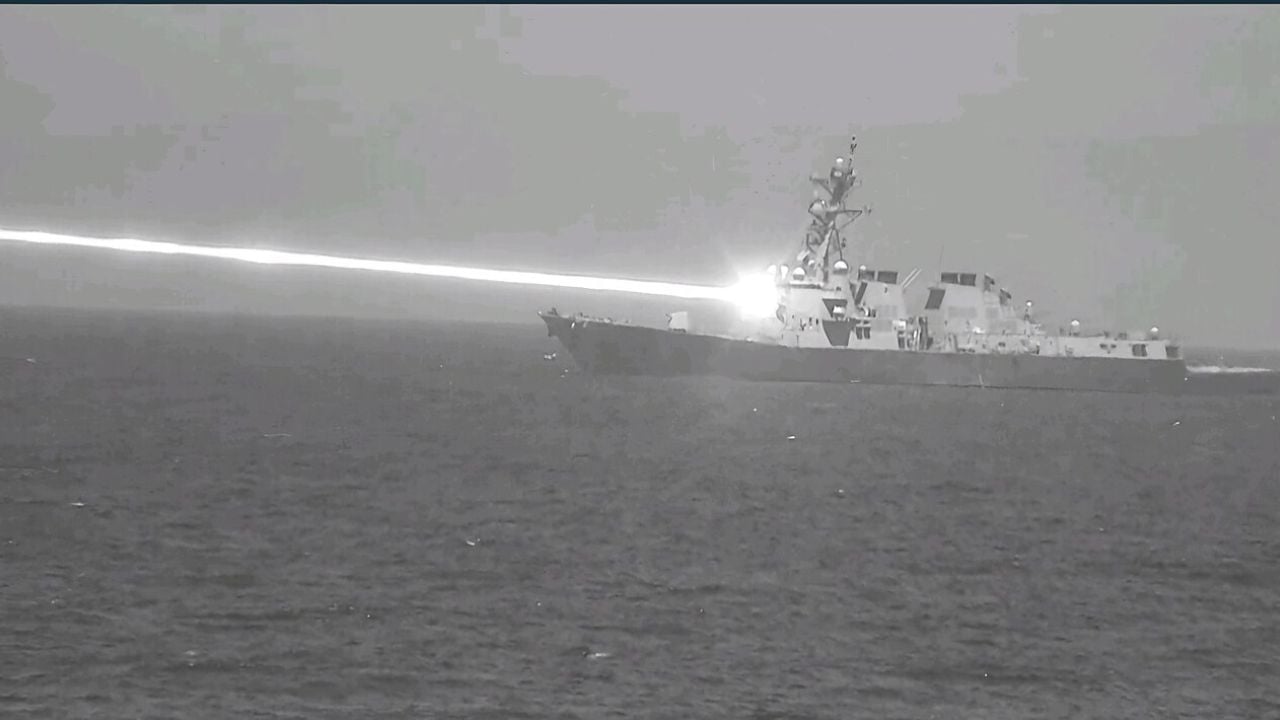
The primary advantage of HELIOS is economic. Modern missile defense systems such as the Patriot missile system or Terminal High Altitude Area Defense (THAAD) interceptors cost millions of dollars per launch, while drones may cost tens of thousands. Laser weapons reverse this cost equation by reducing the cost per engagement to the price of electricity.
However, the technology still has limitations. Laser beams can be degraded by atmospheric conditions such as fog, rain, dust or smoke, which scatter energy and reduce effectiveness.
The system also requires large amounts of electrical power and cooling capacity from the host vessel. These constraints currently limit both range and sustained firing capability.
Despite these limitations, HELIOS represents a major step toward operational directed-energy weapons at sea. By combining surveillance sensors, targeting software and a scalable high-energy laser into a single integrated system, the technology offers a new layer of defense against modern aerial threats.
Sources: Aaj English TV, dailygalaxy.com, U.S. Department of War, Navy Times, European Security & Defence