

Things are changing, as the world witnesses a subtle but surely unfolding new world order. And the automotive space isn’t excluded in this shift in world order. Cars that made a thousand horsepower were few and typical. These days, they’re building family, road-legal, mass-market SUVs that produce that much power.
What’s sad is that the West still think of a thousand horsepower as low-slung coupes with carbon fiber wings and a price tag that makes your mortgage nervous.
And wagons?
They’re for hauling dogs, hockey gear, and regret.
But then, BYD shows up with the Denza Z9 GT and casually drops a version with up to 1,140 horsepower.
In a wagon.
Tell me that’s not one of the boldest moves yet in the global EV arms race.

This comes as Volvo, the brand that basically made love to estate wagons, closes that chapter in its storied automotive history, with the V60, V90, and S90 (sedan) scheduled to retire in 2026.
Wagons have been central to the Swedish maker’s identity since the Duett’s debut in the 1950s. It now feels like in another world that former Volvo CEO Håkan Samuelsson said, “In many people’s minds, we are known as the definitive estate brand.” The current CEO has hinted wagons will be back — sometime. “Watch this space,” he said.
A New Contender from the East
Meanwhile, the Z9 GT comes from Denza, BYD’s premium arm that once partnered with Mercedes and now operates squarely under BYD’s direction. The headline number is staggering.
The tri-motor all-wheel drive version produces 850 kW, or roughly 1,140 hp. That puts it in the same raw output conversation as America’s quickest EV sedans and hypercars, not family log roofs.
For the few auto shoppers in America who still mourn the shrinking wagon market, this is almost surreal. The closest spiritual neighbors here would be the RS6 Avant from Audi or Porsche’s Taycan Sport Turismo.
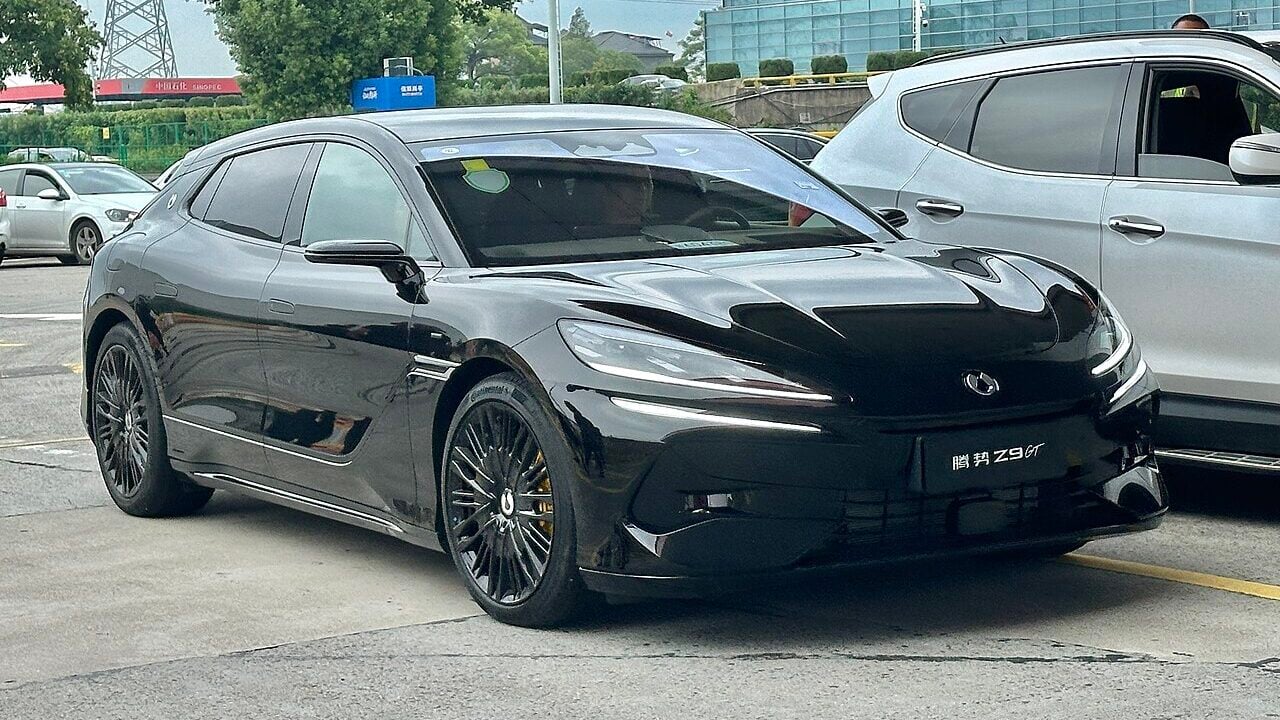
Both are quick, luxurious — and expensive. And neither breaks the four-digit horsepower barrier in stock form. The Z9 GT does, at least on the spec sheet.
What works is obvious. The powertrain ambition is real. A tri-motor layout promises brutal acceleration and advanced torque vectoring. If BYD’s recent EVs are any indication, the software control over those motors will be smooth and responsive.
The platform packaging also seems smart. The wagon body offers real cargo space and a long wheelbase, which should translate to high-speed stability and everyday usability.
The battery upgrades, especially on the plug-in hybrid version, are another strong point. A nearly 64 kWh pack in a PHEV is enormous by current standards. That means meaningful electric only range rather than the token 20 or 30 miles many US hybrids deliver.
For drivers who want flexibility without range anxiety, the Z9 GT could be a compelling middle ground.
The Subjective Nature of Style and Status

The design is more subjective though. The Z9 GT looks modern and clean, but it does not yet have the instant brand recognition of a Porsche or Audi. And we know perception is a big deal in the West.
An unfolding reality from China’s ascendency that no one seems to notice is that “it’s a BMW; it’s a Mercedes” carries a lot more weight than it should in America. Luxury buyers are not just purchasing performance.
They are buying heritage, dealer experience, and resale value. Denza remains an unknown name in the US. And while that is not a small hurdle, America is starting to question the suitability of the crowns on the prevailing prestige brands’ heads.
There are also practical concerns. A 1,140 hp wagon will likely weigh well over 5,500 pounds. Physics does not take a day off. With that mass, braking performance, tire wear, and real-world efficiency become critical. Managing heat in a tri motor system at sustained high speeds is another engineering challenge.

It is one thing to produce a headline number for a launch sprint. It is another to deliver consistent performance on a road course or during repeated highway pulls.
Then there is the question of ride quality. High performance EVs often struggle to balance stiffness with comfort. If the suspension tuning leans too hard toward controlling that weight, daily driving could feel busy or harsh. If it leans too soft, the car risks feeling detached despite the power.
Striking that balance is where established performance brands have decades of experience. Someone needs to introduce the Denza Z9 GT to the Autobahn and tell us the story.
The American Market Hurdle
Finally, there is the US market reality. It’s not coming to America thanks to trade policy and import regulations.
Denza was born as a joint venture between BYD and Daimler (Mercedes-Benz’s parent company). Mercedes held a 50% stake and contributed design and engineering expertise, while BYD provided battery and EV technology.

In 2021, Daimler reduced its stake to 10%, leaving BYD with 90% ownership. BYD consequently became the dominant force behind Denza, repositioning it as a premium sub-brand under its umbrella.
Mercedes-Benz still has a small stake, but it no longer plays a major operational role. That’s why Denza’s recent models — like the Z9 GT — are very much BYD-led in design, technology, and strategy. And that also explains why Denza’s expansion strategy is focused on China and select overseas markets, rather than leveraging Mercedes’ global dealer network.
Denza Z9 GT vs. Lucid Air Sapphire
But let’s assume the Z9 GT is headed for the US; would it face stiff competition from domestic heavy hitters like the Sapphire from Lucid Motors, which has already proven that extreme EV performance can be delivered with refinement?
| Features | BYD Denza Z9 GT | Lucid Air Sapphire |
| Body Style | Shooting brake (Wagon) | Luxury Sedan |
| Power | ~952–1,000 hp | 1,234 hp |
| 0—60 | ~3.4 seconds | 1.89 seconds |
| Range | ~390 miles WLTP | 427 miles EPA |
| Price | $47,600–$85,000 | $249,000 |
| Market Positioning | Affordable high-performance EV | Ultra-luxury performance EV |
The Z9 GT massively undercuts the Sapphire — less than half the price, even at its highest trim. That could make it disruptive if BYD overcame brand recognition issues.

Lucid still wins on outright acceleration and horsepower, but the Z9 GT offers “supercar-like” performance at a family-car price.
And it’d be wise to not forget that, in the U.S., wagons are niche. Even with its performance, the Z9 GT might struggle against the SUV preference. Lucid’s sedan format is more aligned with U.S. luxury tastes.
If BYD entered the U.S. with the Z9 GT, it could attract enthusiasts who want exotic performance without the six-figure price tag. But mainstream success would be limited by body style and brand unfamiliarity, although the latter is quickly vaporizing.
In short: the Z9 GT would be a cult hit among performance wagon fans, even if Lucid Sapphire remain the prestige choice in the U.S. luxury EV space.
Still, the bigger story is what this car represents. BYD did not build a thousand horsepower halo coupe. It built a thousand horsepower wagon. That shows confidence in its engineering and in the idea that practicality and absurd performance do not have to be mutually exclusive.
The pressing question now is if the Denza Z9 GT can back up its numbers with real world polish It already lands with authority as a statement of intent.