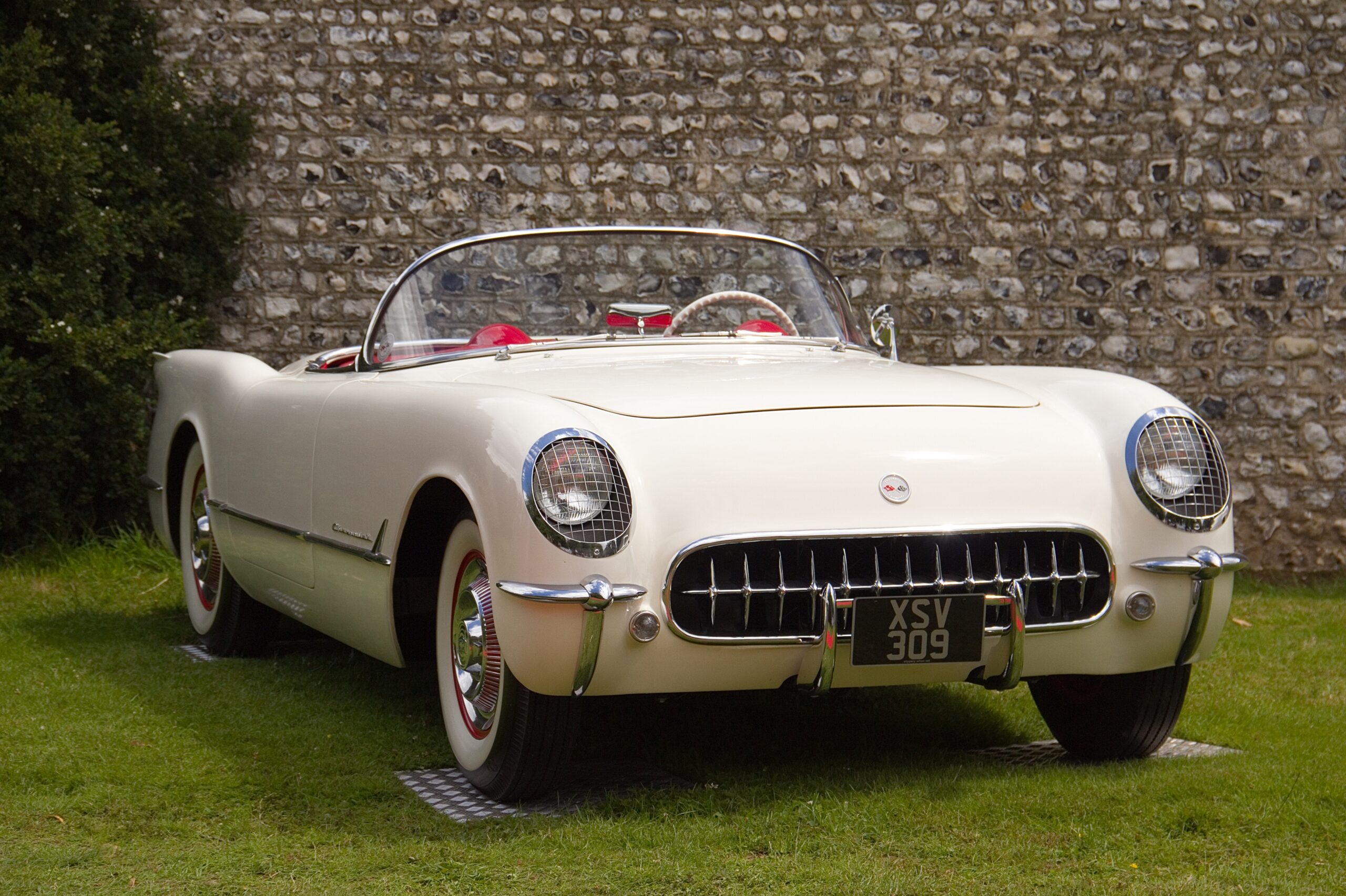
When the doors of the Waldorf Astoria Hotel opened on January 17, 1953, visitors to General Motors’ annual Motorama show expected spectacle, gleaming chrome, futuristic concepts, and the promise of postwar prosperity on wheels. What they did not expect was the birth of a car that would become one of the most enduring symbols of American performance: the Chevrolet Corvette.
The Corvette did not roar onto the scene as a fully formed legend. Its rise was gradual, shaped by experimentation, engineering evolution, and a growing national appetite for speed and style. But its debut at Motorama marked the moment the world first saw what would become America’s sports car.
A Bold Debut at Motorama

Motorama was GM’s traveling showcase of design ambition, part auto show, part theatrical production. It was the perfect stage for something daring, and Chevrolet delivered. The Corvette prototype, displayed under bright spotlights in the Waldorf Astoria’s grand ballroom, was unlike anything the brand had ever built.
Low, sleek, and wrapped in a fiberglass body, a radical choice at the time, the Corvette was a two-seat roadster inspired by the European sports cars American GIs had fallen in love with during World War II. Harley Earl, GM’s visionary head of styling, believed Chevrolet needed a car that captured that same spirit of freedom and excitement.
The crowd’s reaction proved him right. The Corvette was an instant sensation.
From Prototype to Production
Just six months after its Motorama debut, Chevrolet began limited production of the 1953 Corvette in Flint, Michigan. Only 300 units were built that first year, all hand-assembled and finished in Polo White with a red interior. The car looked exotic, modern, and aspirational.
But beneath the fiberglass skin, the Corvette’s mechanicals were more modest. Its 150-horsepower “Blue Flame” inline six and two-speed Powerglide automatic transmission were borrowed from Chevrolet’s parts bin. The car was stylish, but not yet the performance machine its appearance suggested.
Still, the Corvette represented something new: an American sports car with the potential to evolve.
The Slow Start: Style Without Speed
The early Corvette struggled to find its identity. Enthusiasts loved the design but criticized the lack of power. Sales were slow. Some within GM questioned whether the Corvette had a future at all.
But the car had two things working in its favor:
- Harley Earl’s unwavering belief in its potential
- A young engineer named Zora Arkus Duntov
Duntov, a Belgian-born racer and engineer, saw what the Corvette could become. He joined GM in 1953 and immediately began pushing for performance upgrades. His passion and technical expertise would change the Corvette’s destiny.
The Turning Point: Power Arrives
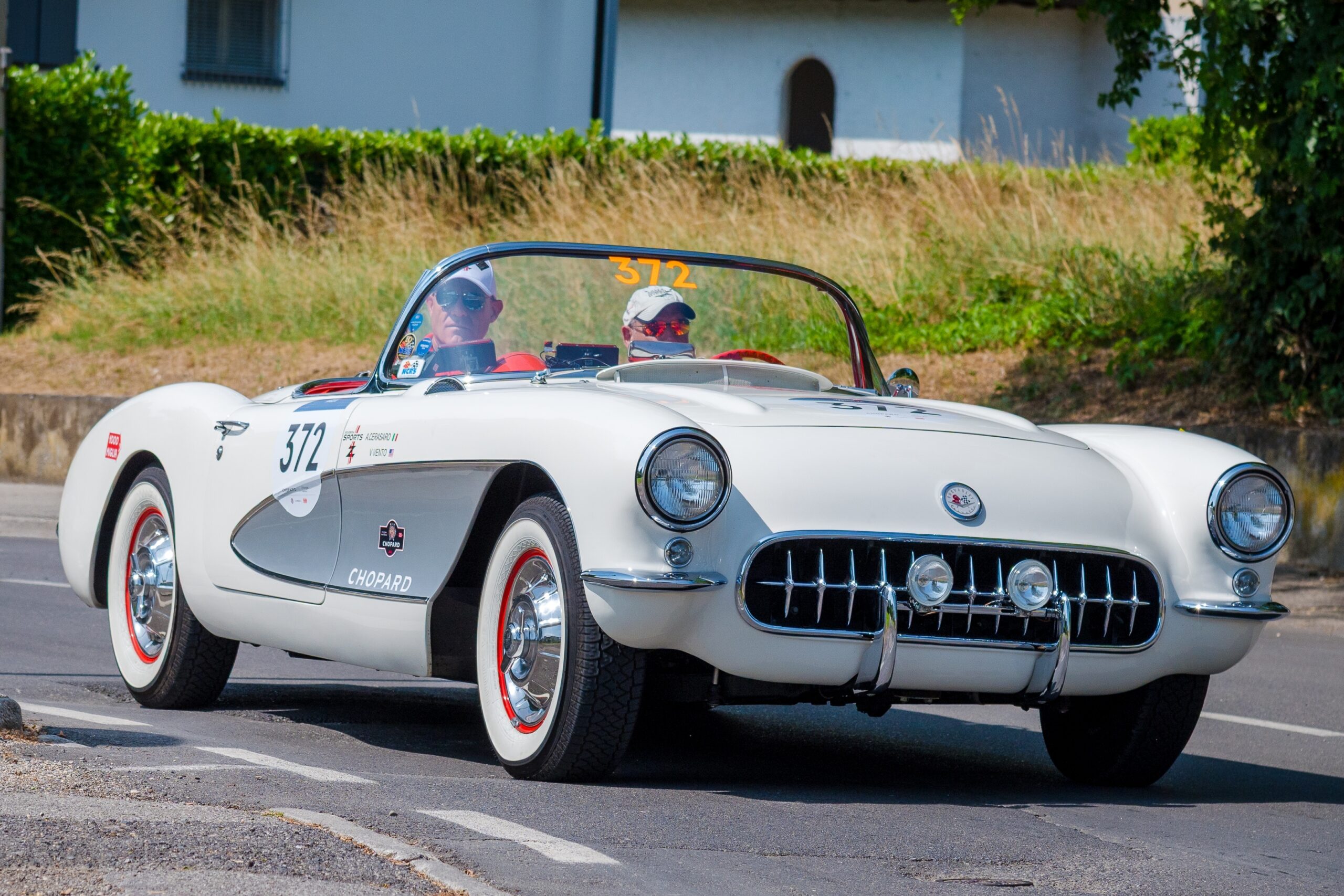
The Corvette’s transformation began in 1955 with the introduction of Chevrolet’s new small block V8. Suddenly, the Corvette had the heart of a true sports car. Duntov continued refining the platform, improving handling, braking, and overall performance.
By 1956 and 1957, the Corvette had evolved dramatically:
- A redesigned body
- Optional manual transmission
- Fuel-injected V8 engines
- Genuine sports car handling
The Corvette was no longer a stylish experiment. It was a contender.
Becoming a Legend
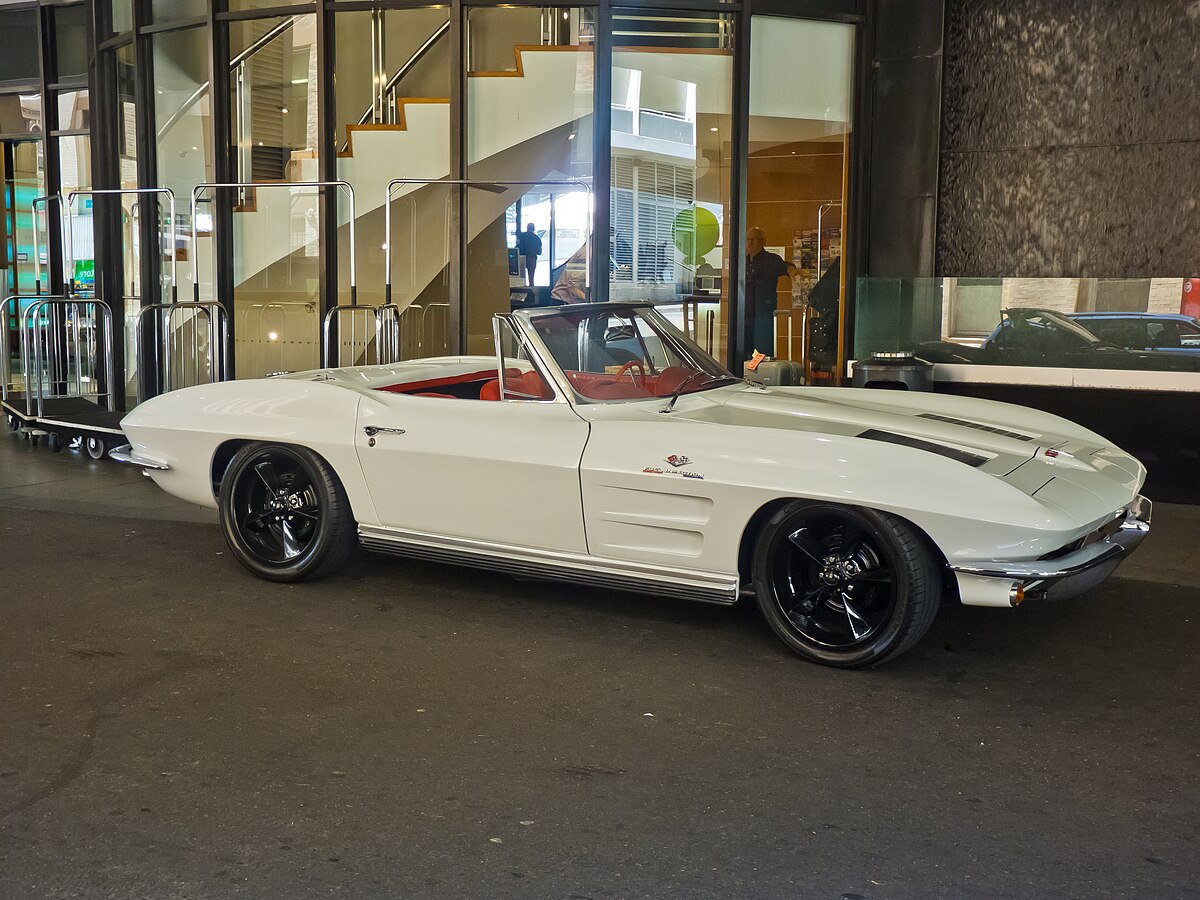
By the early 1960s, the Corvette had fully embraced its identity. It was fast, competitive, and uniquely American. The arrival of the second-generation Corvette in 1963 cemented the Sting Ray’s status as a cultural icon.
But none of that would have happened without the modest prototype unveiled at Motorama in 1953. That car, with its fiberglass body and European-inspired proportions, set the stage for seven decades of innovation.
The Corvette’s story is one of evolution. It began as a stylish showpiece, became a performance experiment, and transformed into one of the most celebrated sports cars in the world. Its debut on January 17, 1953, was not just the launch of a new model; it was the beginning of a legacy.
From the Waldorf Astoria ballroom to racetracks, garages, and highways across America, the Corvette is a symbol of ambition, engineering ingenuity, and the belief that the United States could build a sports car worthy of global respect.
Seventy years later, the Corvette still embodies the spirit that first captivated Motorama crowds: bold, innovative, and unmistakably American.