
There’s something about a Corvette that transforms a grown adult into a slack-jawed teenager at a car show. Maybe it’s the way they idle like a caged dragon with indigestion, or how they make every other car in the parking lot look like it’s wearing khakis to a black-tie event. For over seven decades, America’s plastic fantastic has been blurring the line between luxury and mayhem, and it has offered absolutely zero apologies for existing.
Each generation has carried the torch of making insurance agents weep and neighbors complain about noise ordinances. From the days when chrome was king and fuel economy was a foreign concept, to the modern era where a Corvette can out-accelerate a Ferrari while still getting better gas mileage than your uncle’s pickup truck.
This isn’t just about quarter-mile times or skidpad numbers (though we’ve got those too). This is about the cars that made us fall in love with the idea that going fast should also look ridiculously cool.
How We Ranked These Corvettes

I’ll be a bit real with you, this is pretty biased. I ranked these Corvette generations by how awesome they are, alright? But here’s how I determined what’s awesome: style, presence, performance, and the lasting impression each one left behind.
Every generation received attention for its design choices, horsepower numbers, and emotional impact on drivers and fans. We included acceleration times, engine output, and innovation as part of the evaluation. Collector popularity, street reputation, and cultural influence also shaped the rankings. Reader nostalgia, historic moments, and iconic appearances were part of the conversation. We considered both base models and notable variants like Z06s and ZR1s where appropriate. Design legacy, tuner love, and community enthusiasm added to each score.
Rankings followed enthusiasm over engineering alone. The goal stayed clear from the start: highlight the joy each Corvette brought to the road and the stories it helped create.
For this reason, you may have another ranking. We’d love to hear it: which Corvette generation got your heart pounding and still makes you smile just remembering being behind the wheel?
C2 Corvette (1963-1967)
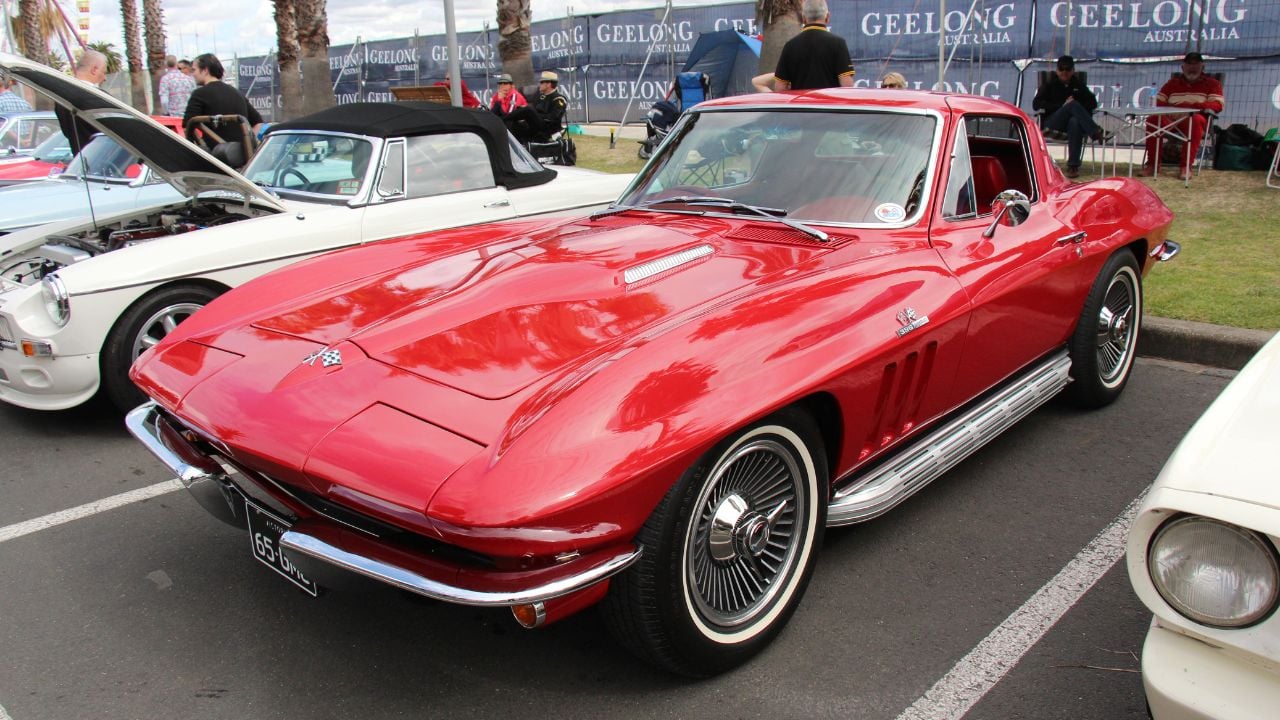
In 1963, the C2 Sting Ray descended from automotive heaven riding a cloud of tire smoke and alluring curves. That split rear window on the ’63 coupe was controversial at the time (Zora Arkus-Duntov hated it for blocking visibility), but holy heck did it look cool. So cool, in fact, that ’63 split-windows now sell for more than most people’s houses.
The body was pure sculpture with curves that would make Instagram models jealous and proportions that seemed to defy physics.In 1967, the optional L71 427 was factory rated at 435 hp, turning this beautiful machine into barely contained violence. Motor Trend clocked a 1967 L71 427 at 0 to 60 mph in 5.5 seconds, and in the mid 1960s that was neck snapping fast.
Independent rear suspension made the C2 handle like a proper sports car instead of a pretty truck, while side pipes made sure everyone within three counties knew you were coming. The interior was pure ’60s cool: deep-dish steering wheel, bucket seats that actually held you in place, and gauges that made you feel like Chuck Yeager.
The Sting Ray name alone is worth the price of admission. It just sounds fast, doesn’t it?
C7 Corvette (2014-2019)
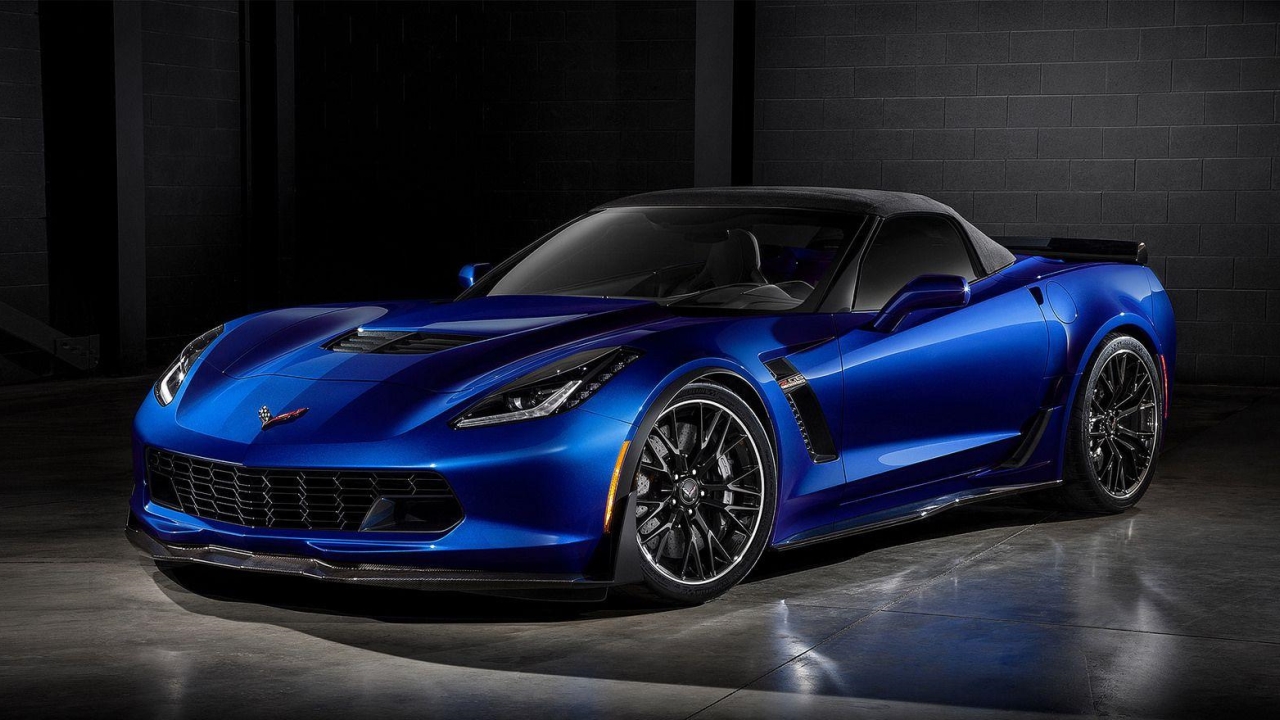
The C7 was Chevy’s way of saying, “fine, we’ll move the engine, but first, let us show you what we can do with it up front.” And sweet mother of horsepower, did they deliver. With the available performance exhaust, the LT1 was rated at 460 hp, and Chevrolet estimated 0 to 60 mph in 3.8 seconds for a Stingray equipped with the Z51 package.
The design was pure aggression: sharp lines that could cut glass and a stance that suggested it was always ready to pounce. Pop-up headlights were dead, but who cared when the C7 looked like it was doing 100 mph while parked.
Then came the Z06, and Chevrolet basically said, “hold my beer.” 650 supercharged horsepower turned this thing into a missile that could embarrass supercars costing twice as much. The magnetic dampers meant it could handle like a go-kart when you wanted it to, then transform into a reasonable daily driver when your spine needed a break.
The C7 was the last of its kind, a front-engine Corvette that refused to go quietly into that good night. It was loud, proud, and unapologetically American.
C6 Corvette (2005-2013)

Forget everything else on this list. The C6 ZR1 was the moment Chevrolet looked at the supercar establishment and said, “meh, we can beat that.” With 638 supercharged hp channeled through a body that could pass for a stealth fighter, the ZR1 didn’t just compete with supercars, it humiliated them.
This thing could hit 205 mph, making it faster than cars costing three times as much. The LS9 supercharged V8 was hand-built by a single technician who signed their name to each engine, because when you’re building something this insane, you want accountability.
The ZR1 package added carbon fiber everything, Michelin Pilot Sport PS2 ZP tires that could probably grip the International Space Station, and Brembo brakes that could stop time itself. The famous “Blue Devil” development car lapped the Nürburgring in 7:19, which was fast enough to make German engineers question their life choices.
But here’s the beautiful part: the 2009 ZR1 started at $103,300, about $105,000 once the gas guzzler tax was included, which in supercar terms is like finding a Rolex at a garage sale. While Ferrari owners were explaining to their accountants why they needed another mortgage, ZR1 owners were busy embarrassing million-dollar hypercars at track days.
The ZR1 was proof that sometimes, the Americans can build the best version of everything, even European-style supercars. It was loud, proud, and completely unapologetic about making every other high-performance car seem overpriced and underwhelming.
C3 Corvette (1968-1982)

The C3 was the automotive equivalent of bell-bottom jeans: undeniably cool when it debuted, questionably so by the end, but still somehow iconic. Those curves were heavily inspired by the Mako Shark II concept designed by Larry Shinoda under Bill Mitchell, then adapted for production by Chevrolet’s design studios.
Early C3s were monsters. The 427 big-block could crack pavement and vertebrae in equal measure, while the mythical L88 made 430 horsepower (on paper) but realistically could probably power a small city. These were the cars that got confused for American muscle: loud, fast, and completely impractical for anything resembling daily driving.
Then the EPA showed up like a hall monitor at a keg party. By the late ’70s, C3s were making about as much power as a modern Honda Civic, but hey, at least they still looked the part. The 1975 model year produced a whopping 165 hp, which in Corvette terms is like serving RC Cola at a Coke convention.
The T-tops were brilliant, though: nothing says “midlife crisis” like removing your roof panels and feeling the wind in your remaining hair.
C8 Corvette (2020-Present)

After decades of stubbornly putting the engine in front like some kind of automotive traditionalist, Chevy finally moved it behind the driver where god and Enzo Ferrari intended. The result is a car that looks like it escaped from a Transformers movie and performs like it’s late for an appointment with physics.
The LT2 V8 makes 495 hp and launches this thing to 60 mph in 2.9 seconds, which is fast enough to make your fillings loose and your passenger question their life choices. The dual-clutch transmission shifts smoother than a politician changing positions, and the whole package costs less than a loaded pickup truck.
The Z06 turns everything up to 11 with 670 hp from a flat-plane crank V8 that sounds like it’s personally offended by noise ordinances. It’s the first Corvette that can make a McLaren owner nervous at a stoplight.
Sure, the interior looks like a spaceship designed by someone who really liked the movie Blade Runner, and yes, the trunk can barely fit a weekend bag, but when you’re going this fast, who has time for luggage?
C1 Corvette (1953-1962)
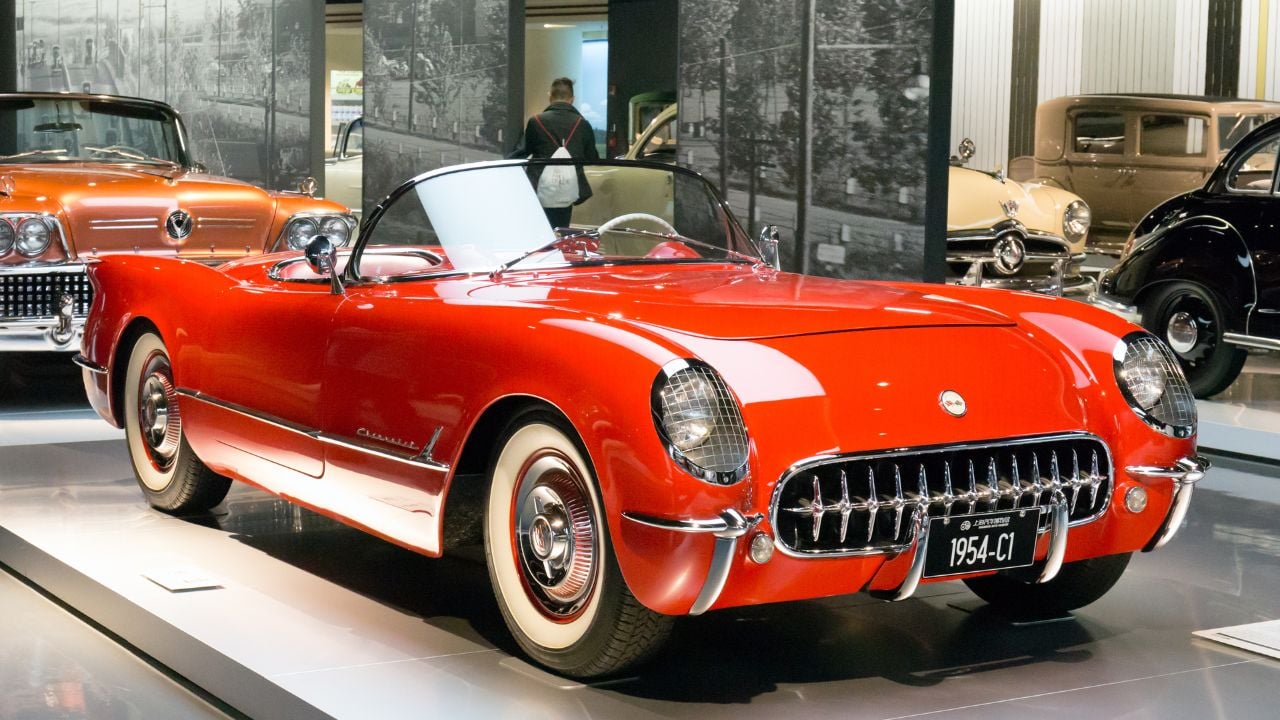
The C1 was America’s answer to European sports cars, focused more on fun than refinement. Early models came with a “Blue Flame” straight-six that produced all of 150 hp, making it about as sporty as a grocery cart with racing stripes. Thankfully, someone at Chevy realized that a sports car with less power than a modern minivan was about as useful as a chocolate teapot. The addition of the small-block V8 in 1955 gave the Corvette its proper voice: a rumbling baritone that said “I’m American and I don’t apologize for anything.”
The fuel-injected 283 was the pinnacle of C1 evolution, producing one horsepower per cubic inch (a big deal back when calculators weighed 40 pounds). Period figures put the 283 hp car at about 5.7 seconds from 0 to 60 mph, and it looked so good doing it that nobody cared.
The C1’s party trick was its fiberglass body, which was revolutionary for being both lightweight and completely unrepairable if you looked at it wrong. But dang, those curves were worth the inevitable insurance claims.
C4 Corvette (1984-1996)
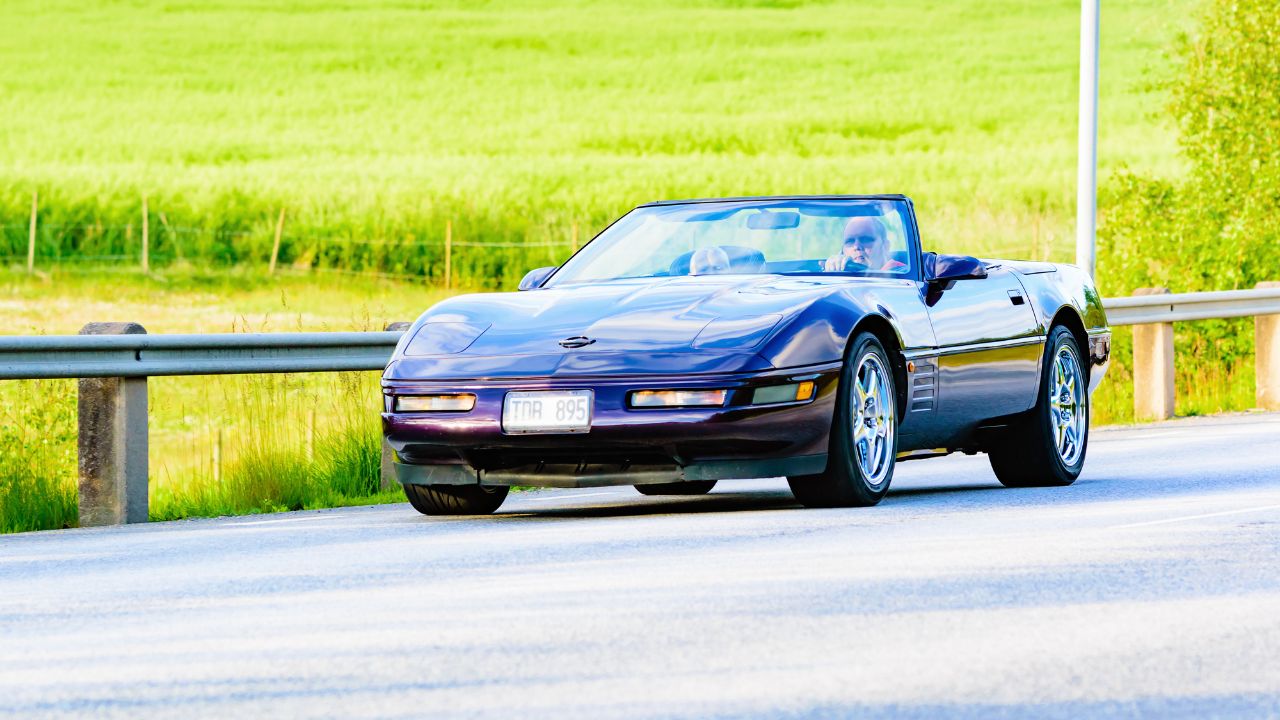
The C4 arrived wearing parachute pants and a digital dashboard that looked like it was designed by someone who thought Tron was a documentary. With its angular lines and pop-up headlights that had all the reliability of a Windows 95 computer, the C4 was the automotive equivalent of your dad trying to be cool by buying leather pants.
Early models came with engines so anemic they couldn’t pull a greased string out of a cat’s, well, you know. The early Cross Fire injected L83 was rated at 205 hp, and the later L98 brought the output up to 230 hp. The LT1 arrived for 1992 at 300 hp, and the 1996 LT4 took the C4 to 330 hp, though by then the damage to the C4’s reputation was already done.
The ZR-1 was the bright spot, a 375-horsepower monster built with help from Lotus, because apparently Chevy needed the British to teach them how to make a proper sports car engine. The irony was thicker than the coke residue on a Miami Vice set. Still, when it worked, Car and Driver tested the 1990 ZR-1 at 60 mph in 4.5 seconds, which was genuinely impressive for an era when most cars took longer than a commercial break.
C5 Corvette (1997-2004)

After the C4’s awkward teenage years, the C5 showed up looking like it had spent the ’90s at the gym and reading GQ. Gone were the sharp angles that could cut glass, replaced by curves that actually made aerodynamic sense. The LS1 engine was a revelation: 345 hp that didn’t require a team of NASA engineers to maintain.
The C5 introduced the revolutionary concept of “a Corvette that doesn’t break down every Tuesday.” The LS1 was so reliable that even Ford owners grudgingly admitted it was pretty good (in private, of course). With a 0-60 time of 4.7 seconds, it was quick enough to embarrass your buddy’s Camaro and refined enough that you could drive it to work without your chiropractor retiring early.
The Z06 cranked things up to 405 hp and added the kind of handling that made Porsche engineers nervous. It was the first Corvette in decades that European car snobs couldn’t dismiss with a wave of their pretentious hands.
Best of all, the C5 was affordable enough that regular humans could buy one, leading to the glorious sight of accountants and middle managers living their Fast and Furious fantasies at suburban car meets.
Corvette C8 E-Ray (2023-Present)

Leave it to Chevrolet to take the controversial concept of “electric assist” and turn it into 655 hp of all-wheel-drive insanity. The E-Ray doesn’t just add batteries: it adds a front-mounted electric motor that makes this thing launch like it’s been shot from a cannon.
2.5 seconds to 60 mph. Read that again. Two-point-five seconds. That’s fast enough to make a Bugatti Chiron driver do a double-take, and it comes from a car that can run in silent electric mode when you need to sneak past the neighbors at 2 AM after a spirited evening drive.
The all-wheel-drive system means you can finally use all that power in conditions other than “perfect sunny day on a prepped track.” Rain? Snow? The E-Ray just laughs and asks if you want to go faster. It’s the first Corvette that doesn’t turn into a very expensive paperweight the moment precipitation appears in the forecast.
Plus, it still sounds like a proper Corvette when the V8 kicks in. None of this silent electric car nonsense, when you want noise, the LT2 delivers a proper American symphony.
A Legacy Written in Tire Smoke

Seven decades later, the Corvette remains America’s finger to anyone who thinks fast cars have to be expensive, unreliable, or pretentious. From fiberglass pioneer to hybrid hypercar killer, each generation has carried the torch of making speed accessible to regular humans with irregular judgment.
Sure, they’ve had their awkward phases (looking at you, early C4), but even the worst Corvette is more exciting than the best sedan. These are the cars that taught us that going fast should be fun, loud, and just a little bit dangerous.
Whether you prefer the raw brutality of a big-block C2 or the technological wizardry of the C8 E-Ray, one thing remains constant: Corvettes exist to remind us that life’s too short for boring cars and reasonable insurance premiums.
The legacy continues to grow with each passing model year, each blown tire, and each story that starts with “you’ll never believe what happened when I floored it.” Because at the end of the day, that’s what Corvettes are really about, giving ordinary people extraordinary stories and the speeding tickets to prove it.