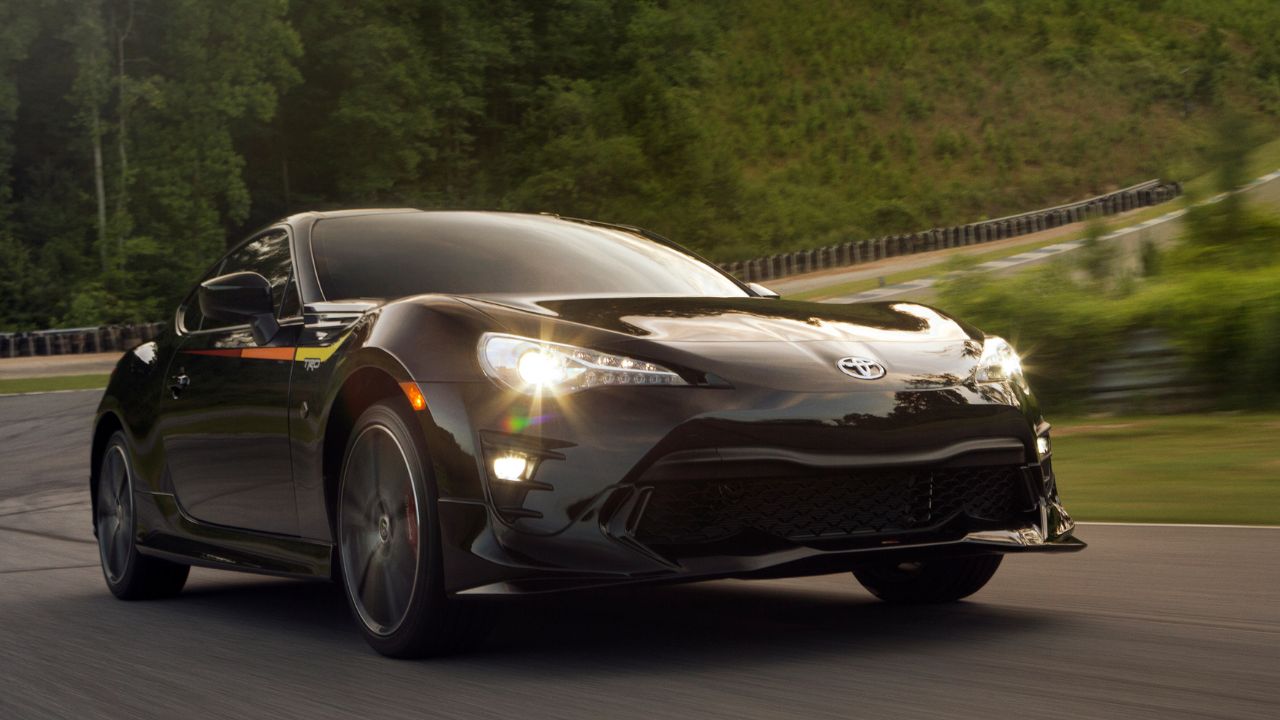
Toyota makes bulletproof Camrys and Corollas that’ll outlast your mortgage payments and probably most marriages, too. But before they cornered the market on sensible transportation, Toyota actually built cars that could make your heart rate spike above “concerned about gas mileage.” And no, we’re not just talking about the legendary Supra.
While everyone’s busy arguing about the new Supra’s BMW DNA (spoiler alert: it’s more German than lederhosen), let’s talk about the cars that proved Toyota could build something exciting without needing a Bavarian co-signer. These are the models that made enthusiasts forget, if only temporarily, that Toyota’s idea of performance was previously limited to how quickly you could rack up 300,000 miles.
Toyota’s Sporty Cars are Actually Awesome

So first of all… What makes a car sporty? Everyone may have a slightly differing definition depending on who you ask, but it’s generally a car that’s a bit lower, a bit more lightweight, and focused on performance. This could be quick acceleration, agile handling — just an engaging driving experience no matter what you’re into.
Selection began by identifying models that offered genuine driving excitement or a clear motorsport heritage (like the Supra, quite honestly, but we’re sick of hearing about that one). Each candidate had to deliver distinctive performance character, historic relevance, or innovative layout. Consideration was given to drivetrain configuration, such as the MR2’s mid-engine or the Celica’s rally-derived all-wheel-drive setup. Interior engagement and steering feedback mattered greatly. Visual identity had to reflect sportiness through purposeful design cues.
So if you’re also sick of hearing about Supras at car meets and on TikTok, take a closer look with us at some of the other sporty models that Toyota has to offer. You may be quite surprised.
Toyota Celica GT Four (ST205)

Engine: 2.0L turbocharged 4-cylinder (3S-GTE) producing 245 hp and 224 lb-ft of torque
0-60: 6.1 seconds (respectable for 1994, when dial-up internet was still new and exotic)
Notable Tech: Full-time AWD with center differential, active rear spoiler
Production: 1994-1999
The ST205 GT Four was Toyota’s answer to the question nobody asked: “What if we made a Celica that could embarrass a Porsche 911 in the snow?” You know, a very common situation for us. This wide-bodied monster packed more flair than a 1970s cocktail party and enough technology to make NASA jealous.
Under that functional hood scoop (yes, functional — take notes, modern cars with fake everything) lived the legendary 3S-GTE engine. This mill produced 245 horses when most “sports cars” were barely cracking 200. The all-wheel-drive system could shuffle power between wheels faster than a three-card monte dealer, while the active rear spoiler deployed at 50 mph like it was auditioning for a Transformers movie.
But here’s the reality: it was still a Toyota. You could thrash it on weekends and it’d still start Monday morning for your soul-crushing commute. The interior looked like it was designed by accountants, but who cares when you’re pulling rally car launches at every stoplight? The cult following exists not because it was pretty (it wasn’t), but because it worked. And in the 1990s, that was revolutionary.
Modern track day heroes still hunt for clean examples, proving that sometimes the best sports cars are the ones that don’t look like they’re trying too hard. Unlike your neighbor’s Corvette with its “FAST CAR” license plate.
Toyota MR2 (Second Generation, SW20)

Engine: 2.0L naturally aspirated or turbocharged 4-cylinder
Weight: 2,888 lbs (Turbo) – actually lighter than a modern Civic
Layout: Mid-engine, rear-wheel drive
Production: 1989-1999
Toyota looked at Ferrari’s mid-engine playbook and said, “Hold our sake.” The SW20 MR2 delivered exotic car handling at Toyota Tercel prices, which was either brilliant marketing or corporate insanity. Probably both.
The naturally aspirated version made 130 hp — more than enough when it only weighed 2,888 pounds. That’s roughly 1,000 pounds less than today’s “lightweight” sports cars. The turbo version bumped power to 200 hp and could embarrass cars costing three times as much — provided you didn’t lift off mid-corner and discover why “snap oversteer” became part of every MR2 owner’s vocabulary.
Speaking of snap oversteer, the early turbos were more tail-happy than a golden retriever. Toyota eventually sorted this out with revised suspension tuning, but not before establishing the MR2’s reputation as the car that could make you a legend or a cautionary tale, depending on your throttle discipline.
The Targa top model let you experience your impending spin in open-air glory, while the hardtop kept things serious. Either way, you got a cabin tighter than coach class seating and storage space measured in grocery bags, not cubic feet. But when you hit the perfect corner and felt that mid-engine magic, all was forgiven.
Today’s clean examples sell for more than they cost new, because apparently everyone forgot how terrifying 1990s turbo lag could be.
Toyota 2000GT

Engine: 2.0L inline-6 — more sophisticated than your wine knowledge
Production: 351 units (1967-1970) — rarer than a good Tinder date
Top Speed: 135 mph — fast enough to outrun your regrets
Current Value: $500,000+ (yes, you read that right)
In 1967, Toyota basically said, “Watch this” and built Japan’s first legitimate supercar. The 2000GT was so beautiful it made Italian designers weep into their espresso, so exclusive it made Ferraris look common, and so expensive that Toyota lost money on every single one.
Yamaha helped with the engineering, contributing their musical instrument expertise to create an inline-six that sounded better than most symphony orchestras. The body, crafted by hand, featured curves that would make a Jaguar E-Type jealous and proportions so perfect they could be taught in geometry class.
Only 351 were ever built, with 60 going to the US market. Sean Connery drove one in You Only Live Twice, cementing its status as the coolest car most people would never own. The movie car was actually a convertible (two were specially built for filming), making it rarer than a unique-looking electric SUV.
Today, clean examples trade hands for prices that could buy a decent house. Or several indecent houses, depending on your neighborhood. It proved Toyota could build something spectacular when they weren’t worried about fitting cup holders or achieving 40 mpg.
The 2000GT remains Toyota’s greatest flex: a car built not because it made business sense, but because they could. Modern Toyota executives probably break into cold sweats thinking about those margins.
Toyota Corolla Levin (AE86)

Engine: 1.6L twin-cam 4-cylinder — more soul than power
Weight: 2,350 lbs — lighter than your student loan debt
Layout: Front-engine, rear-wheel drive — as nature intended
Production: 1983-1987
The AE86 proved that sometimes the best sports cars are accidents. Toyota just wanted to build a practical rear-wheel-drive coupe, but instead created the Citizen Kane of drift cars. With a mere 128 horsepower, it had less power than a modern minivan, yet somehow became more influential than most supercars.
The magic was in the execution. Perfect 50/50 weight distribution, a responsive twin-cam engine, and suspension tuned by people who clearly understood that “fun” was more important than “comfort.” The rear-wheel-drive layout meant you could actually learn car control without needing a physics degree or a trust fund.
Enthusiasts called it the “Hachi-Roku” (Eight-Six in Japanese), which sounds way cooler than “Corolla.” It became the star of Initial D, Japan’s animated predecessor to Fast & Furious, but with more technique and fewer explosions. Suddenly, every teenager wanted to slide sideways through mountain passes while delivering tofu.
The AE86’s cult status is so strong that Toyota built the FR-S/86 as a spiritual successor, proving that sometimes the best marketing is just building something that doesn’t suck. Original examples now sell for more than they cost new, which is impressive for a car that was basically a Corolla with delusions of grandeur.
Modern drift kids treat these cars like religious artifacts, and honestly, they’re not wrong.
Toyota GR Corolla

Engine: 1.6L turbocharged 3-cylinder
Drivetrain: GR-Four all-wheel drive with torque vectoring
0-60: 4.9 seconds
Production: Limited numbers (because Toyota learned from the 2000GT)
Toyota looked at the Volkswagen Golf R and Honda Civic Type R and said, “That’s cute.” Then they built a hatchback with 300 hp, rally-bred all-wheel drive, and enough aero to generate actual downforce. The GR Corolla isn’t just hot; it’s thermonuclear.
The 1.6-liter three-cylinder engine makes noises that would make a McLaren jealous, while the all-wheel-drive system can send up to 70% of power to the rear wheels. That’s right — Toyota built a Corolla that can drift. The simulation is officially complete.
Track-focused suspension means it rides like a shopping cart on cobblestones, but who cares when you’re obliterating sports cars that cost twice as much? The interior features more carbon fiber than a Formula 1 car and seats that’ll hold you tighter than your grandmother’s hug.
Toyota limited production because they’re not stupid; they watched what happened to Ford with the Focus RS. Dealer markups are already approaching “mortgage payment” territory, proving that scarcity marketing works better than any advertising campaign.
The GR Corolla is Toyota’s way of showing off to anyone who thinks they’ve gone soft. It’s proof that even in the age of hybrid everything, Toyota can still build something that’ll melt your face off.
Toyota Sports 800

Engine: 0.8L air-cooled twin-cylinder
Weight: 1,279 lbs – you could literally pick it up
Production: 1965-1969
Fun Factor: Immeasurable
Before the MR2, before the 2000GT, there was the Sports 800: Toyota’s first attempt at making people forget about reliability and focus on pure, unadulterated fun. With 45 hp and a curb weight barely exceeding a modern motorcycle, it proved that power isn’t everything.
The air-cooled twin-cylinder engine sounded like a sewing machine having an anxiety attack, but the car was so light it could outrun its own shadow. The removable roof panels meant you could experience every mechanical symphony in glorious open-air acoustics.
This tiny terror could embarrass much more powerful cars simply by maintaining momentum where others had to brake. It was like automotive jiu-jitsu — using physics against bigger opponents. The Sports 800 taught an entire generation of Japanese engineers that lightweight beats everything else.
Today, clean examples are rarer than hen’s teeth and more valuable than most people’s retirement accounts. It remains Toyota’s purest sports car: no electronic aids, no complicated systems, just you, 45 horsepower, and the laws of physics.
The Sports 800 was Toyota’s proof of concept that small could be spectacular. Every lightweight sports car since owes it a debt of gratitude.
Toyota Celica (First Generation)

Engine: Various 4-cylinders
Design: Coke-bottle curves that aged like fine wine
Sales: Over 1.4 million worldwide
Production: 1970-1977
Toyota looked at the Ford Mustang’s success and decided they wanted a piece of that action. The result was the first-generation Celica, a car so pretty it could charm its way out of speeding tickets and so reliable it could survive nuclear winter.
The styling was pure 1970s muscle car poetry — long hood, short deck, and curves in all the right places. It looked fast standing still, which was important because the base model’s 86 hp couldn’t outrun much besides your grandmother’s Oldsmobile.
But the GT versions packed up to 144 hp and enough attitude to back up their aggressive looks. The optional “Rally Package” added flared fenders, racing stripes, and the kind of visual drama that made high school parking lots infinitely more interesting.
The Liftback variant offered practicality without sacrificing style, proving Toyota understood that sports car buyers occasionally needed to carry more than just their egos. It became the template for affordable performance that Toyota would perfect over the next five decades.
Rally success followed, because apparently, Toyota’s idea of marketing involved actually winning races. Imagine that novel concept in today’s world of purely theoretical performance metrics.
The first-gen Celica proved that Toyota could build beautiful, reliable sports cars without requiring a second mortgage. Revolutionary thinking for the 1970s.
Toyota MR2 (First Generation, AW11)

Engine: 1.6L twin-cam 4-cylinder (112-130 hp)
Layout: Mid-engine, rear-wheel drive
Weight: 2,350 lbs
Nickname: “Poor Man’s Ferrari” (and proud of it)
The original MR2 looked like it was carved from a single block of 1980s optimism. Sharp angles everywhere, pop-up headlights that seemed perpetually surprised, and proportions that screamed “I’m compensating for absolutely nothing.” It has character that modern cars lack. The interior was tighter than a jar of pickles, but nobody bought an MR2 for the backseat space.
With just 112 hp in base form, it wasn’t fast in a straight line. But Toyota engineers understood something Detroit had forgotten — cornering exists. The mid-engine layout provided balance that would make a gymnast jealous, while the lightweight construction meant every horsepower counted.
The AW11 became the darling of autocross events and driving schools because it was forgiving enough for beginners but rewarding enough for experts. You could explore its limits without needing life insurance or a roll cage, which was refreshing in an era when most sports cars tried to kill you.
Today, clean examples are automotive time capsules; reminders of when sports cars were about driving pleasure instead of Instagram worthiness. The AW11 taught Toyota that mid-engine magic didn’t require Italian prices or German complexity.
Toyota GR Yaris

Engine: 1.6L turbocharged 3-cylinder (268 hp)
Weight: 2,822 lbs
Drivetrain: GR-Four AWD with variable torque split
Homologation: Built to go rallying, ended up conquering hearts
The GR Yaris exists because Toyota wanted to go rallying again, and homologation rules demanded they build road cars. What started as a bureaucratic requirement became the most exciting Toyota in decades: proof that sometimes the best things happen by accident. We forgive you for forgetting about this little guy if you live in the US (we sadly don’t have this available).
With 268 hp from a three-cylinder engine, it makes more power per cylinder than most supercars. The all-wheel-drive system can send up to 70% of power rearward, transforming this pocket rocket into a drift machine that happens to be practical for grocery runs.
The body shell is bespoke — not shared with any other run-of-the-mill Yaris. Carbon fiber roof panels, wider tracks front and rear, and enough aerodynamic trickery to make Formula 1 teams jealous. It’s basically a rally car wearing a convincing street car costume.
Inside, the cabin features more performance-focused details than most dedicated sports cars. Bucket seats, short-throw shifter, and gauges that actually mean something beyond “you need gas.” It’s refreshingly honest about its intentions.
The GR Yaris proved that Toyota could still build something purely for enthusiasts without focus groups or committee decisions. It’s the car that made other manufacturers remember why they got into this business in the first place.
Why can’t America be trusted with nice things? We promise we won’t tariff it.
Toyota Altezza RS200

Engine: 2.0L naturally aspirated inline-6
Drivetrain: Rear-wheel drive with 6-speed manual
Rev Limit: 7,800 rpm — higher than your credit score
The Altezza RS200 was Toyota’s attempt to prove that sedans could be exciting. With a high-revving naturally aspirated six-cylinder and rear-wheel drive, it delivered thrills that most sports cars couldn’t match while still carrying four people and their luggage.
The 2JZ-GE engine loved to rev, producing peak power at 6,400 rpm and continuing to pull until the 7,800 rpm redline. It sounded like automotive angels singing, especially with aftermarket exhaust work. The six-speed manual transmission was butter-smooth and perfectly matched to the engine’s power delivery.
Chassis tuning emphasized balance over comfort, with suspension geometry that encouraged spirited driving. The rear-wheel-drive layout meant you could actually have fun in parking lots, unlike most modern sports sedans with their electronic nannies.
Those distinctive taillights influenced an entire generation of Japanese car design, spawning countless imitators but few equals. The interior focused on the driver with supportive seats and intuitive controls — revolutionary thinking for a sedan.
As the Lexus IS300, it conquered American hearts but lost some of its edge in translation, even though it gained a naturally aspirated 2JZ engine. The original Altezza RS200 remained purer, more focused, and more willing to sacrifice comfort for capability.
Today, clean manual examples are harder to find than parking at a Trader Joe’s when all the pickups show up and take four spaces, proving that sometimes the best sports cars wear four-door suits.
Toyota GT86
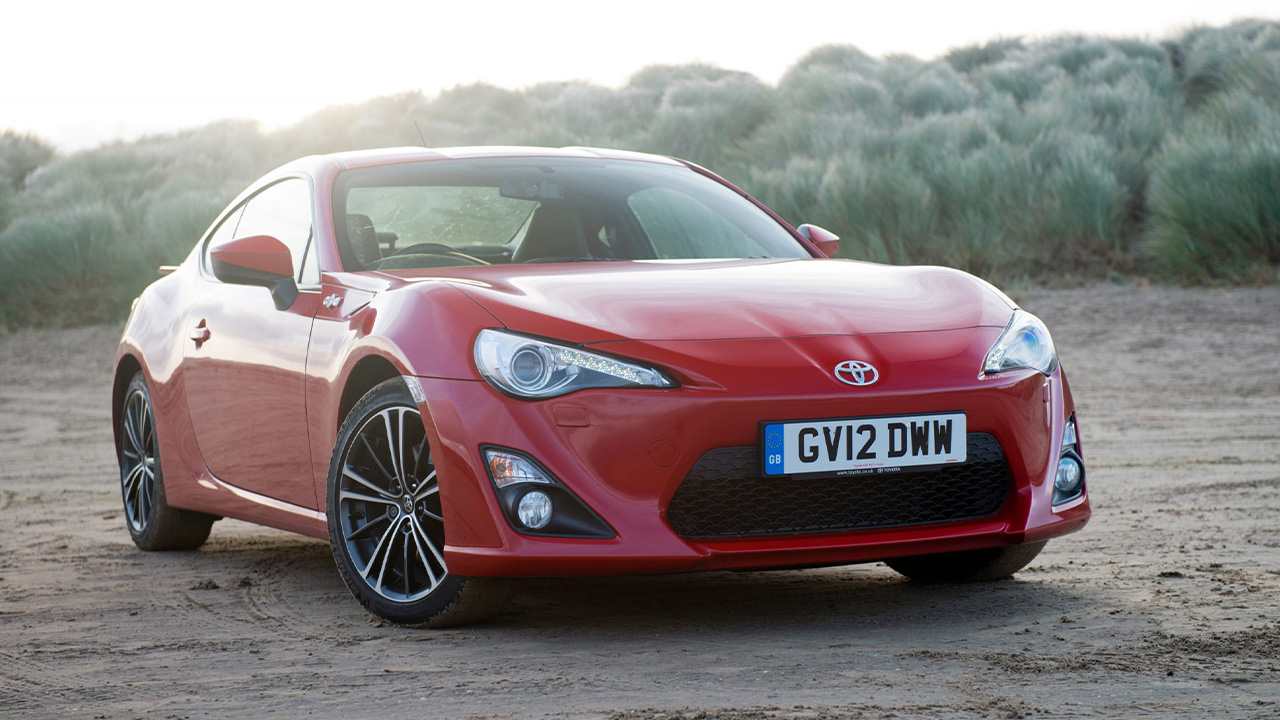
Engine: 2.0L naturally aspirated boxer-4
Weight: 2,758 lbs
Philosophy: Slow car fast > fast car slow
Achievement: Made everyone remember why they loved driving
The GT86 was Toyota’s love letter to the AE86 — and to anyone who missed when sports cars prioritized driver engagement over acceleration bragging rights. With just 200 hp, it was slower than most family sedans but more rewarding than cars with twice the power.
Subaru provided the boxer engine, which sat low and far back for perfect balance. The naturally aspirated mill encouraged high-rev driving and rewarded patience — foreign concepts in the turbo-everything modern world. It proved that immediate throttle response trumps peak numbers every time.
The chassis was the real star: balanced, predictable, and eager to play. You could explore its limits on public roads without becoming a highway statistic or YouTube sensation. The rear-wheel-drive layout meant every parking lot became a potential skid pad.
Critics complained about the “torque dip” around 4,000 rpm, missing the point entirely. The GT86 wasn’t about straight-line speed; it was about the journey. Every gear change, every corner entry, every moment behind the wheel was crafted to maximize involvement.
Track day regulars embraced it for its predictability and affordability. Grassroots racers loved its tunability and parts availability. Driving enthusiasts appreciated its honesty in an age of artificial enhancement.
The GT86 reminded everyone that sometimes the best sports car is the one that makes you a better driver, not a better drag racer.
Toyota C-HR GR Sport

Engine: 2.0L naturally aspirated 4-cylinder
Height: Too tall for sports car credibility
Mission: Bring GR DNA to the crossover masses
Result: Well-intentioned mediocrity
The C-HR GR Sport represented Toyota’s attempt to inject performance credibility into the crossover segment. It’s like putting racing stripes on a RAV4.
Sporting touches included unique bumpers, special wheels, and suspension tuning that was allegedly sportier than the standard model. The interior gained GR badges and contrast stitching, because nothing says performance like decorative thread work.
To be fair, it handled better than most crossovers and looked more aggressive than anything else in Toyota showrooms. The problem was physics — you can’t make a tall, heavy vehicle feel like a sports car without breaking several laws of nature.
The C-HR GR Sport served its purpose as a gateway drug to the real GR products. It introduced the brand to buyers who needed practicality but wanted to feel special. Marketing departments called this “halo effect”; enthusiasts called it “selling out.”
Still, it was better than nothing, and Toyota deserves credit for trying to inject some excitement into the most boring vehicle segment. Sometimes you have to start somewhere, even if that somewhere is a lifted hatchback with sport badges.
Toyotas Sporting Legacy Lives On

Toyota’s sports car history reads like a masterclass in doing more with less. While other manufacturers chased horsepower numbers and 0-60 times, Toyota understood that the best sports cars are about the total experience — the steering feel, the engine note, the way everything works together in harmony.
From the Sports 800’s featherweight philosophy to the GR Corolla’s technological tour de force, Toyota consistently proved that innovation trumps imitation. They didn’t just copy successful formulas; they reimagined what sports cars could be.
The reliability factor can’t be ignored either. While Italian exotics spent more time in repair shops than on roads, and German sports cars required PhD-level maintenance knowledge, Toyota’s performance cars actually worked. Novel concept, we know.
Modern GR products like the Yaris, Corolla, and 86 carry forward this tradition while adding contemporary capabilities. They’re proof that Toyota hasn’t forgotten how to make hearts race, even in an era obsessed with electrification and autonomous driving.
Questions remain about the future. Will we see electric MR2s? Hybrid Celicas? Whatever comes next, Toyota’s sports car DNA runs deep enough to survive any powertrain transition. After all, this is the company that built the 2000GT when everyone expected them to stick with economy cars.
The real question isn’t whether Toyota can build exciting cars — they’ve proven that repeatedly. The question is whether modern buyers are brave enough to choose driving pleasure over smartphone integration and whether Toyota is brave enough to keep building cars for people who actually love driving.
Based on recent evidence, the answer to both questions appears to be yes. And that’s something worth celebrating, even if your neighbors think you’re having a midlife crisis.
Supra who?