

The ongoing Iran conflict has removed as much as 10 million barrels per day from global supply chains, creating one of the largest oil shocks in modern history.
That supply squeeze has pushed crude toward the $90 to $100 range and lifted U.S. gasoline above $4 per gallon in several regions.
Energy shocks of this magnitude rarely stay confined to geopolitics.
They reshape consumer behavior and industrial strategy. In this case, the disruption of the Strait of Hormuz, which carries roughly 20 percent of global oil flows, has exposed how fragile fossil fuel supply chains remain.
History suggests that sustained price volatility accelerates efficiency and substitution. This time is no different. The difference lies in who benefits most from that shift.
China’s Clean Energy Windfall
China has emerged as the biggest indirect beneficiary.

Its dominance in batteries, solar panels, and electric vehicles means every spike in oil prices strengthens its export position. In March 2026 alone, Chinese clean tech exports hit $26 billion, up 52 percent year over year.
Battery systems led the surge with $10 billion in exports, while solar shipments jumped to $4.8 billion. At the same time, EV exports reached $21 billion in the first quarter, nearly doubling from a year earlier.
This is not a temporary spike. Structural demand is shifting. Around 90 percent of solar panels used in Europe now come from China, highlighting its grip on supply chains.
Meanwhile, Chinese EV exports rose 77.5 percent year over year in early 2026, reinforcing its lead in global electrification.
The deeper story is scale. China sold roughly 12 million EVs and plug-in hybrids last year, accounting for more than half of new car sales domestically. That manufacturing base allows it to flood global markets when demand spikes.
The Auto Industry’s Split Personality
The auto industry now faces a clear divergence between short-term profits and long-term direction.
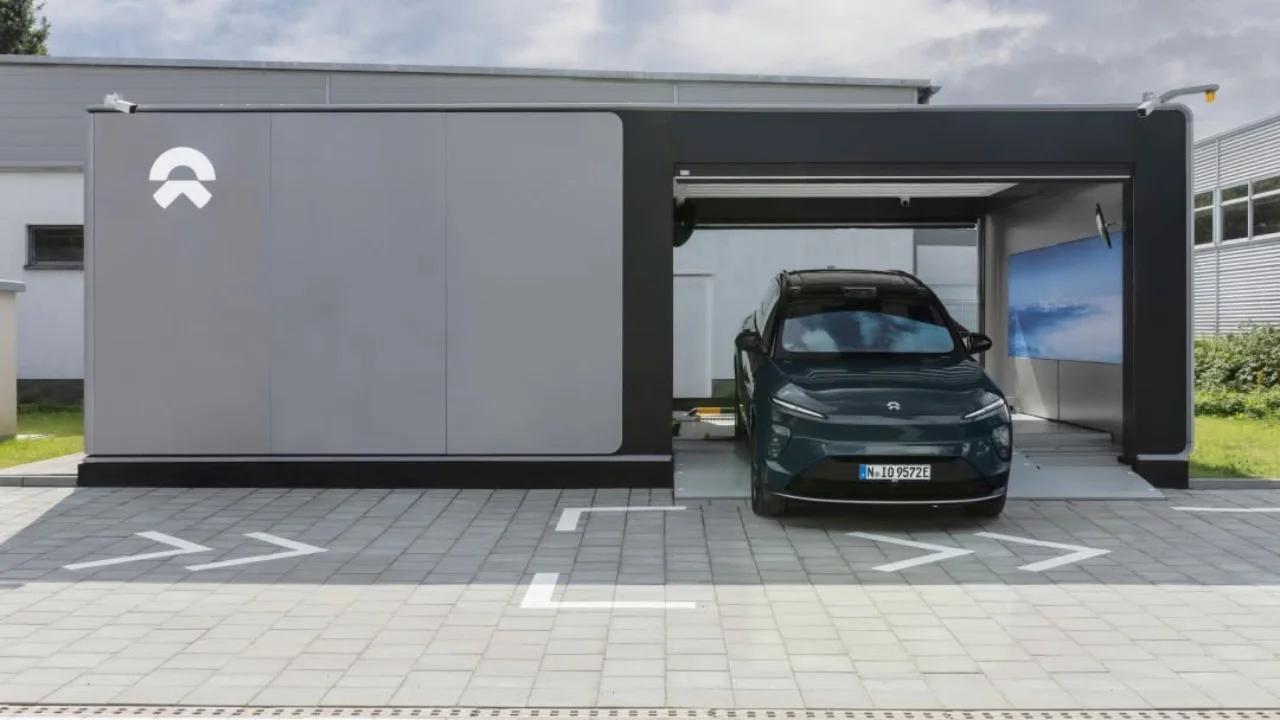
On one hand, high fuel prices are accelerating electrification. EV sales in Europe rose more than 50 percent in March, while used EV demand has surged as petrol prices climb. Globally, EV adoption already avoids 1.7 million barrels of oil demand per day, close to 70 percent of Iran’s exports.
On the other hand, U.S. automakers are leaning into gasoline vehicles for immediate profitability. General Motors reported strong earnings even as fuel prices climbed, driven by higher sales of trucks and SUVs.
The company has also scaled back EV spending, writing off billions in the process.
This creates a paradox. Consumers respond to fuel costs by considering EVs and hybrids, yet western manufacturers still depend heavily on internal combustion margins.
Analysts note that petrol cars could face fuel cost increases up to five times higher than EV charging costs during this crisis, tilting economics in favor of electrification over time.
The U.S. Market and the Price at the Pump
For drivers in America, the immediate impact is visible at gas stations. Prices above $4 per gallon are already influencing purchasing decisions, with EV interest rising alongside fuel costs.

Yet the U.S. market remains structurally different from Europe or China. Larger vehicles dominate sales, and consumer preference for pickups and SUVs has proven resilient even during price spikes.
In the short term, this cushions automakers. In the long term, it creates vulnerability. Every sustained oil shock increases the appeal of alternatives. Investment in clean energy has already reached $2.3 trillion globally, with more than $1 trillion flowing into electrified technologies.
The result is a slow but decisive shift. Oil demand may fluctuate, but the direction of travel is clear. Each geopolitical disruption accelerates electrification, strengthens battery supply chains, and deepens reliance on Chinese manufacturing.
That is the unintended consequence. A conflict rooted in energy geopolitics is accelerating the very transition that weakens oil’s strategic power, and in doing so, handing China a powerful advantage in the next era of the auto industry.
Sources: The Times, Energy Connects, The Wall Street Journal, TIME, T&E, Reuters, The Wire China, The Guardian, Electrek