

Rising tensions in the Middle East are casting a long shadow over the global automotive industry, as fresh warnings from the International Maritime Organization (IMO) underline just how fragile one of the world’s most critical energy corridors has become.
The IMO Secretary-General Arsenio Dominguez made these remarks in an interview with the Financial Times. He stated that naval escorts through the Strait of Hormuz cannot “100 percent guarantee” safe passage and emphasized that military assistance is not a long-term or sustainable solution.
The statement comes as geopolitical tensions involving Iran and Western powers continue to escalate, raising the risk of further disruptions in global oil flows.
Immediate Repercussions for Global Trade
The implications are immediate and far reaching for the automotive sector. The Strait of Hormuz handles a significant share of the world’s seaborne crude oil. Any instability in this narrow passage can quickly ripple through fuel markets, manufacturing costs, and ultimately auto prices.
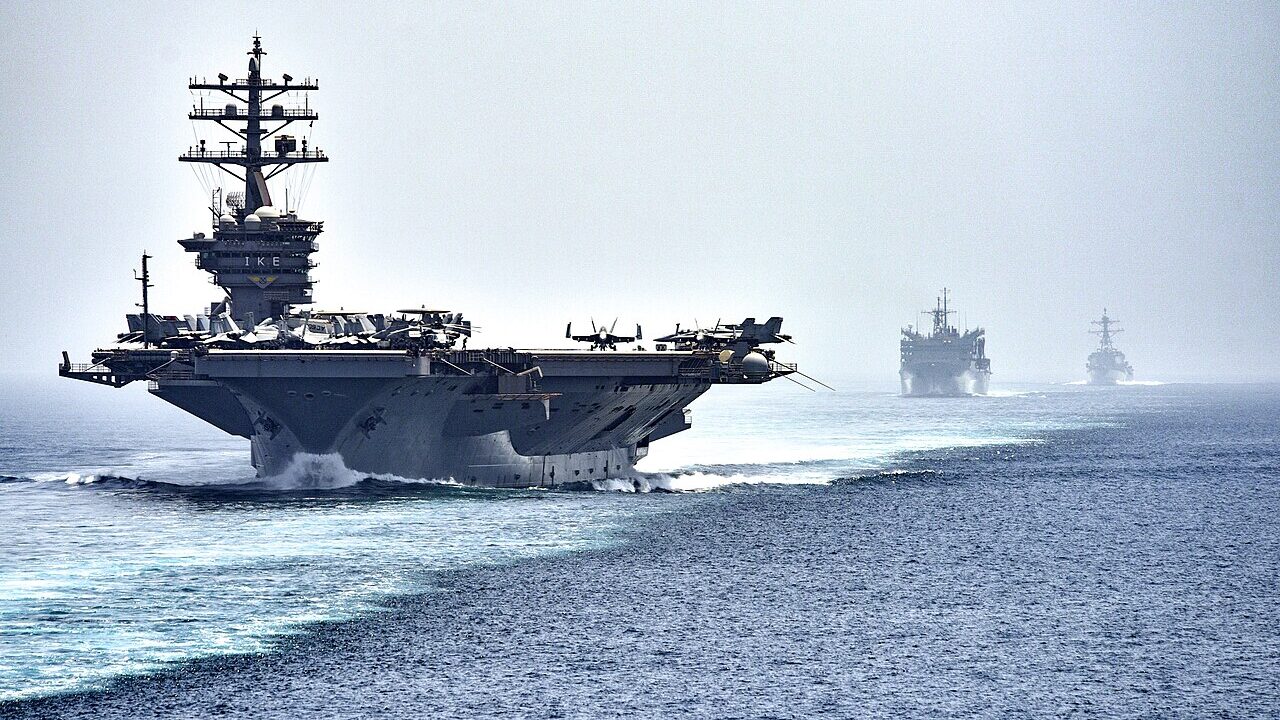
The IMO chief’s warning highlights a crucial reality. Even with increased naval patrols by countries such as the United States and its allies, modern threats at sea have evolved.
Commercial ships remain vulnerable to drones, mines, and fast attack craft, all of which are difficult to counter completely.
So far during the ongoing USA–Israel–Iran conflict, at least 11 merchant vessels have been damaged in or near the Strait of Hormuz, with one tugboat sunk and several ships abandoned. Casualties include at least 11 seafarers killed or missing.
In any case, US allies have so far all turned down President Trump’s call to help secure the strait. This creates a persistent layer of uncertainty for shipping companies and insurers.
That uncertainty is already translating into higher costs. War risk insurance premiums for vessels transiting the region have surged, and some shipping operators are reconsidering routes altogether. Longer alternative routes mean increased transit times and higher fuel consumption, both of which add pressure to global supply chains.
A New Challenge for an Embattled Sector
It is an unwelcome but familiar scenario for automakers. The industry has spent the past few years navigating semiconductor shortages, logistics bottlenecks, and pandemic related disruptions. Now, a potential energy supply shock threatens to add another layer of complexity.
Higher oil prices tend to have a dual impact on the automotive market. On one hand, they push up the cost of manufacturing and transporting vehicles. On the other, they influence consumer behavior. Buyers often shift toward smaller, more fuel-efficient cars or accelerate interest in electrified vehicles when fuel prices rise sharply.
However, the transition is not straightforward. EV production depends heavily on global supply chains that are themselves exposed to shipping risks. Batteries, raw materials, and components frequently travel long distances by sea. Any sustained disruption in maritime trade routes can slow production schedules and increase costs across the board.
There is also a regional dimension to consider. Many emerging markets, including parts of Africa and Asia, are particularly sensitive to fuel price swings. For consumers in these regions, higher petrol costs can significantly reduce purchasing power, dampening demand for new cars and altering market dynamics.
The Bottomline for the Automotive World

The IMO’s warning aligns with the critical fact that the security of global trade routes cannot be taken for granted. While naval escorts may deter some threats, they cannot fully eliminate the risks posed by asymmetric warfare tactics in a high-tension environment.
One of the most notable incidents was the Thai bulk carrier Mayuree Naree, which was attacked on 11 March 2026 and sustained smoke and fire damage, an event confirmed by the Royal Thai Navy. S
ix of the eleven merchant vessels attacked overall have been abandoned due to the severity of the damage. In Bahrain, one port worker was killed and two others wounded.
This all unfolds against the backdrop of Iran’s declaration in late February 2026 that the Strait of Hormuz would be closed in response to U.S.–Israeli strikes.
Given that the strait carries between 15 and 18 million barrels of crude oil daily—roughly 20 percent of global supply—the attacks and mine-laying operations have forced shipping companies to reroute vessels, driving up insurance costs and disrupting energy flows worldwide.
As the Financial Times report makes clear, the situation is not just a geopolitical issue, but a direct challenge to the stability of industries that depend on predictable energy supplies and efficient logistics networks.
The automotive world is witnessing yet again how what happens in a narrow stretch of water thousands of miles away can have a direct impact on showroom prices, production lines, and consumer choices. In an already volatile global market, that is a risk the industry cannot afford to ignore.