

U.S. defense officials deploy Ukrainian engineers to train troops on Sky Map, a battlefield-proven counter-drone system, after Iranian strikes destroyed a $270 million E-3 radar aircraft at Prince Sultan Air Base.
The quiet arrival of Ukrainian counter-drone expertise on Saudi soil signals a sharp shift in how the United States is responding to a growing and costly threat.
In recent weeks, American forces stationed at Prince Sultan Air Base have begun integrating Sky Map, a Ukrainian-developed command-and-control platform designed to detect and neutralize incoming drone attacks with striking efficiency.
This follows a series of damaging Iranian strikes that exposed vulnerabilities in U.S. air defenses.
Among the losses was a Boeing E-3 Sentry airborne warning and control aircraft, one of the most valuable surveillance assets in the American arsenal. Several KC-135 refueling tankers were also damaged, while critical infrastructure tied to missile defense systems suffered hits.
Sky Map: Battle-Tested Against Iranian Drones
Sky Map arrives with a reputation forged under constant pressure.
Built during Ukraine’s war with Russia, the platform combines data from acoustic sensors, radars, and video feeds into a unified interface that allows operators to identify and respond to threats in real time.
Ukrainian forces have used it extensively against Iranian-designed Shahed drones, the same type now targeting U.S. assets in the Middle East.
The system’s deployment is an acknowledgment that traditional air defense layers have struggled to keep pace with the scale and affordability of modern drone warfare. Analysts have long pointed to gaps in U.S. missile defense coverage, particularly against low-cost, high-volume threats.
Interestingly, this collaboration comes just weeks after President Donald Trump publicly dismissed Ukraine’s offer to assist with drone defense. Despite that stance, the Pentagon has moved forward with integrating Ukrainian know-how, reflecting the urgency created by repeated attacks.
Layered Defenses: FAAD, Coyotes, and a Toilet Incident
Sky Map is only one piece of a broader defensive puzzle at Prince Sultan.
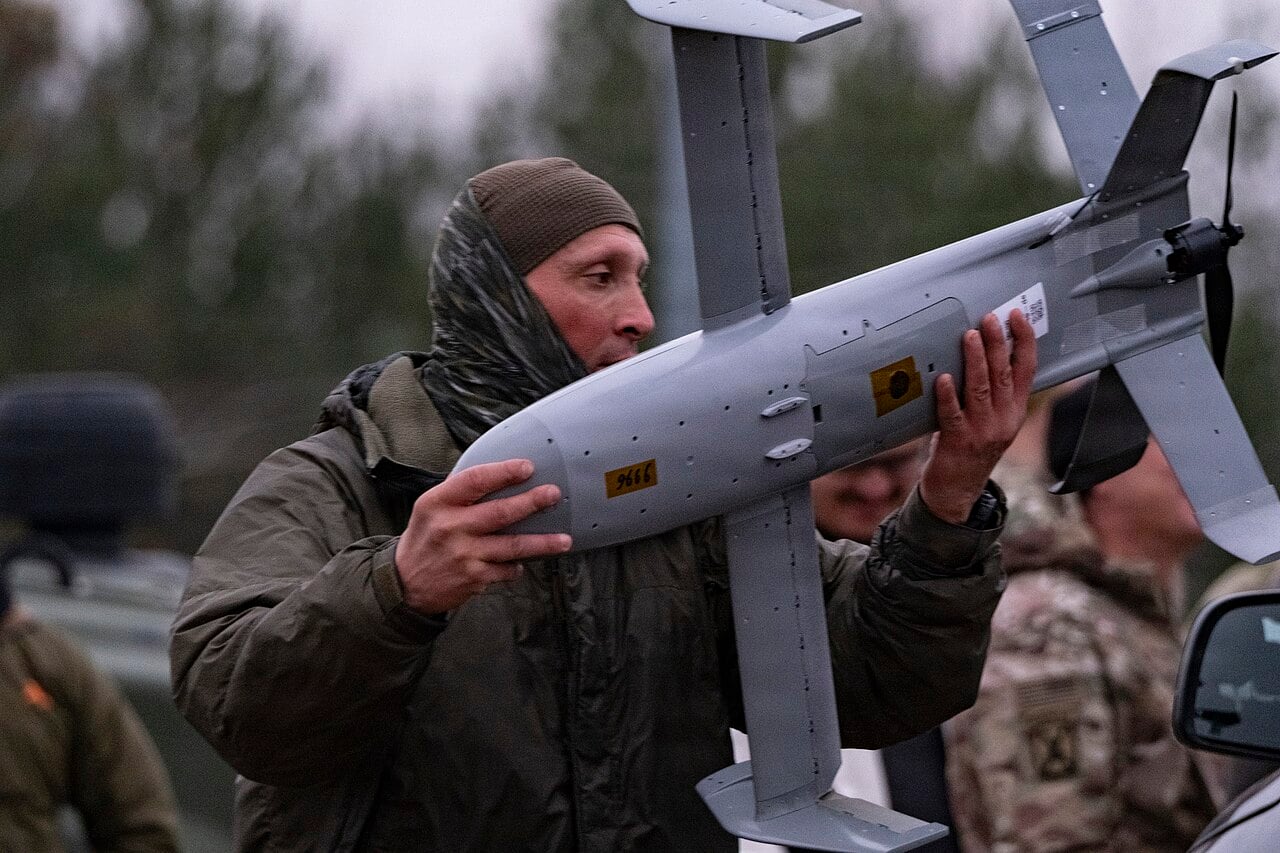
The base already employs the Forward Area Air Defense system, known as FAAD, developed decades ago to track threats ranging from rockets to drones. It also relies on Coyote interceptors, small but potent drones capable of destroying incoming targets either through direct impact or electronic disruption.
Newer additions include interceptor drones like Merops, developed by Project Eagle, a U.S.-based firm backed by former Google CEO Eric Schmidt. These systems are still being refined, and early tests have not been flawless.
In one instance, a Merops drone lost control during a trial and crashed into a toilet facility on the base, highlighting the experimental nature of some of these technologies.
Despite such setbacks, the Pentagon is accelerating investment in counter-drone capabilities.
A recent $350 million commitment tied to Operation Epic Fury underscores the scale of the effort. Officials emphasize that no single system can address every threat, making layered defenses essential.
What makes the Ukrainian contribution particularly valuable is its adaptability.
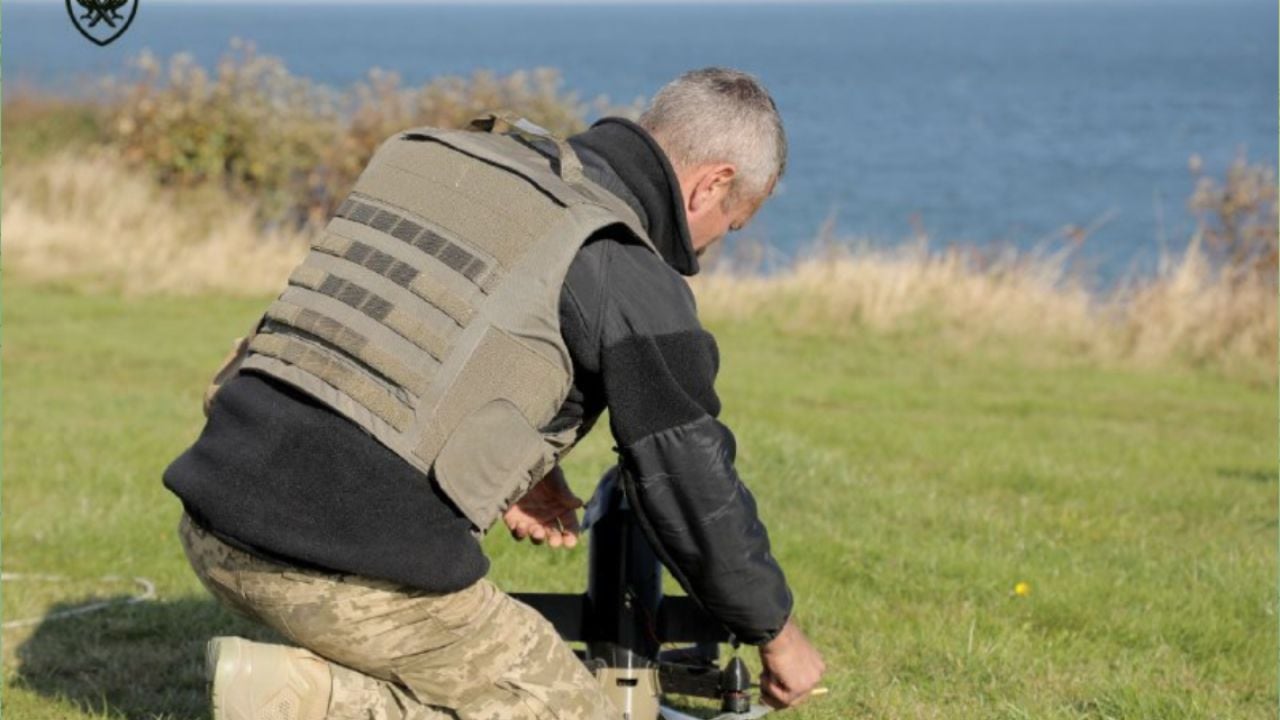
Unlike legacy systems designed for traditional warfare, Sky Map was built in an environment where drone attacks occur daily and evolve constantly. Its ability to integrate multiple data streams and coordinate rapid responses offers a level of flexibility that older platforms struggle to match.
A New Era of Drone Warfare Takes Shape
The situation at Prince Sultan Air Base illustrates a broader transformation in modern warfare.
Expensive, high-performance aircraft are increasingly vulnerable to swarms of inexpensive drones. This imbalance is forcing militaries to rethink not only how they defend assets but also how they prioritize technological development.
For the United States, turning to Ukrainian innovation is a practical decision as well as a symbolic one. It highlights how battlefield experience, even from smaller or less resourced forces, can influence the strategies of global military powers.
As drone threats continue to expand in scale and sophistication, the success or failure of systems like Sky Map could shape the future of air defense. At Prince Sultan, the experiment is already underway, with real consequences hanging in the balance.
Sources: Reuters