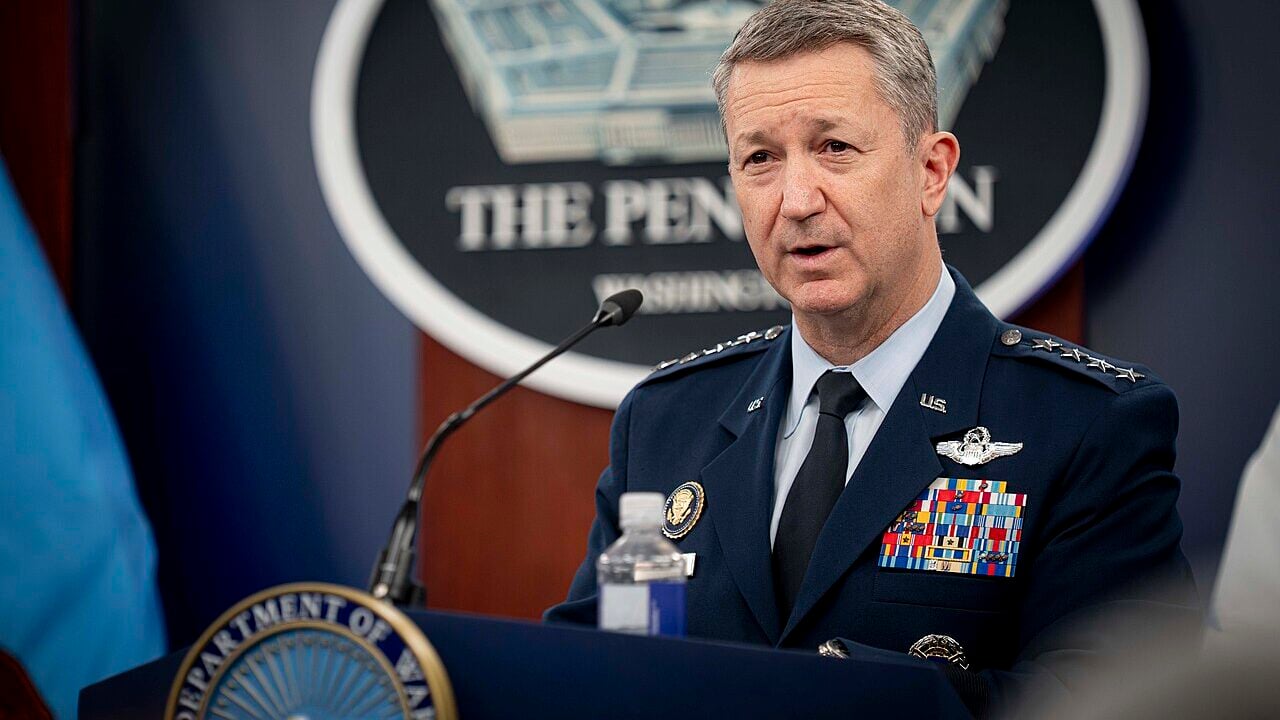

There are moments when a military briefing accidentally sounds like a car review, and this is one of them.
When Dan Caine described U.S. naval operations near the Strait of Hormuz as “like driving a sports car through a supermarket parking lot,” he handed the automotive world a metaphor that lands with surprising precision.
Because if you have ever guided something low, fast, and overqualified through a cramped parking lot on a busy Saturday, you already understand the tension he is talking about.
Picture it.
You are in a nimble 2-door drop-top built for open roads.

A proper sports car thrives on clean lines, predictable surfaces, and space to stretch its legs. The steering is sharp, the throttle eager, the brakes ready to bite. Everything about it is engineered for control at speed.
Now drop that same car into a chaotic parking lot filled with wandering pedestrians, distracted drivers, shopping carts drifting like loose debris, and blind corners between oversized SUVs.
Suddenly, performance is about restraint, not speed.
American Destroyers are the Sports Cars
In that environment, every input matters more.
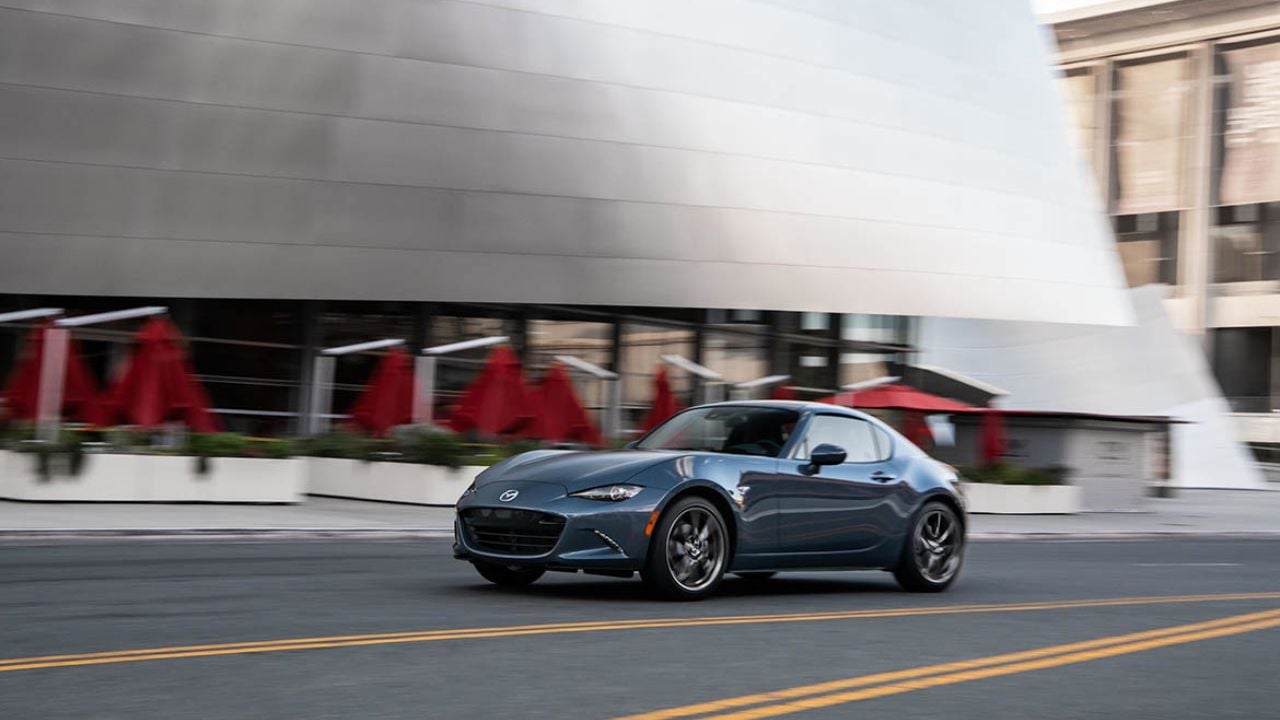
The throttle becomes a suggestion rather than a command. The steering wheel is no longer about carving apexes but about making tiny, constant corrections.
Your eyes are everywhere at once, scanning for movement, anticipating mistakes from others, calculating gaps that close as fast as they open. The car still has all its capability, but you are using only a fraction of it, because using too much would be disastrous.
That’s the point, if you ask us, of Caine’s comparison.
The U.S. Navy’s guided missile destroyers operating near Iran are, in Caine’s allegory, the sports cars. That’s in the sense that they are highly advanced machines, built for speed, agility, and overwhelming force if needed. In open water, they can maneuver with confidence and assert dominance without hesitation.
But the waters around the Strait of Hormuz are not open racetracks. They are crowded, complex, and unpredictable.
Commercial tankers, cargo vessels, and regional traffic all move through a relatively narrow corridor that carries a significant share of the world’s oil. Every vessel has its own intended destination, its own pace, and sometimes its own interpretation of the rules.
The Biggest Challenge is Restraint
Now layer in a geopolitical standoff.

Instead of pedestrians with shopping bags, you have ships whose intentions may not be immediately clear. Instead of tight parking rows, you have invisible boundaries that cannot be crossed without consequence. Instead of a minor fender bender, a miscalculation could spark an international incident.
So the destroyers move like that sports car inching through chaos.
They close distance with precision. They signal intent. They position themselves in ways that guide behavior without forcing a collision.
When a vessel approaches a restricted zone, the response is measured. A warning is issued. A path is suggested. The goal is compliance, not confrontation.
And just like in that parking lot, the biggest challenge is not your own capability. It is everyone else’s unpredictability.
A sports car driver in that setting knows the machine could accelerate out of trouble in an instant. But doing so would create new problems. The same logic applies here. The Navy has the power to escalate, to board, to seize. Yet the mission demands control, patience, and judgment.
Power is Nothing Without Control
That is why Caine’s analogy works so well. It strips away the abstraction of military language and replaces it with something that hits close to home, something tactile.
You can feel the tension in your hands, the careful modulation of power, the constant awareness that one wrong move changes everything.
Ultimately, Caine is not talking about speed at all. He is talking about discipline. About taking something built for dominance and using it with finesse in a space where there is no room for error.
And if you have ever crept through a packed parking lot in a machine that deserves better, you already get it.
Sources: WSJ