
As America built highways and suburban dreams, the pickup truck evolved from a humble farm tool into a symbol of freedom, grit, and gearhead glory.
Pickups are sold worldwide, but no country embraced them quite like we did. What started as workhorses became style icons, muscle machines, and cultural touchstones.
Today’s trucks are loaded with tech and luxury, but many lack the raw soul that made the classics unforgettable. This article celebrates old-school cool, the kind of trucks you dream about wrenching on, cruising in, or simply admiring in your driveway.
These aren’t just vintage haulers. They’re design icons, performance legends, and rolling pieces of Americana. From muscle-bound street monsters to trail-ready beasts, here are 24 classic pickups that belong in every enthusiast’s fantasy garage.
Methodology: How We Chose These Trucks
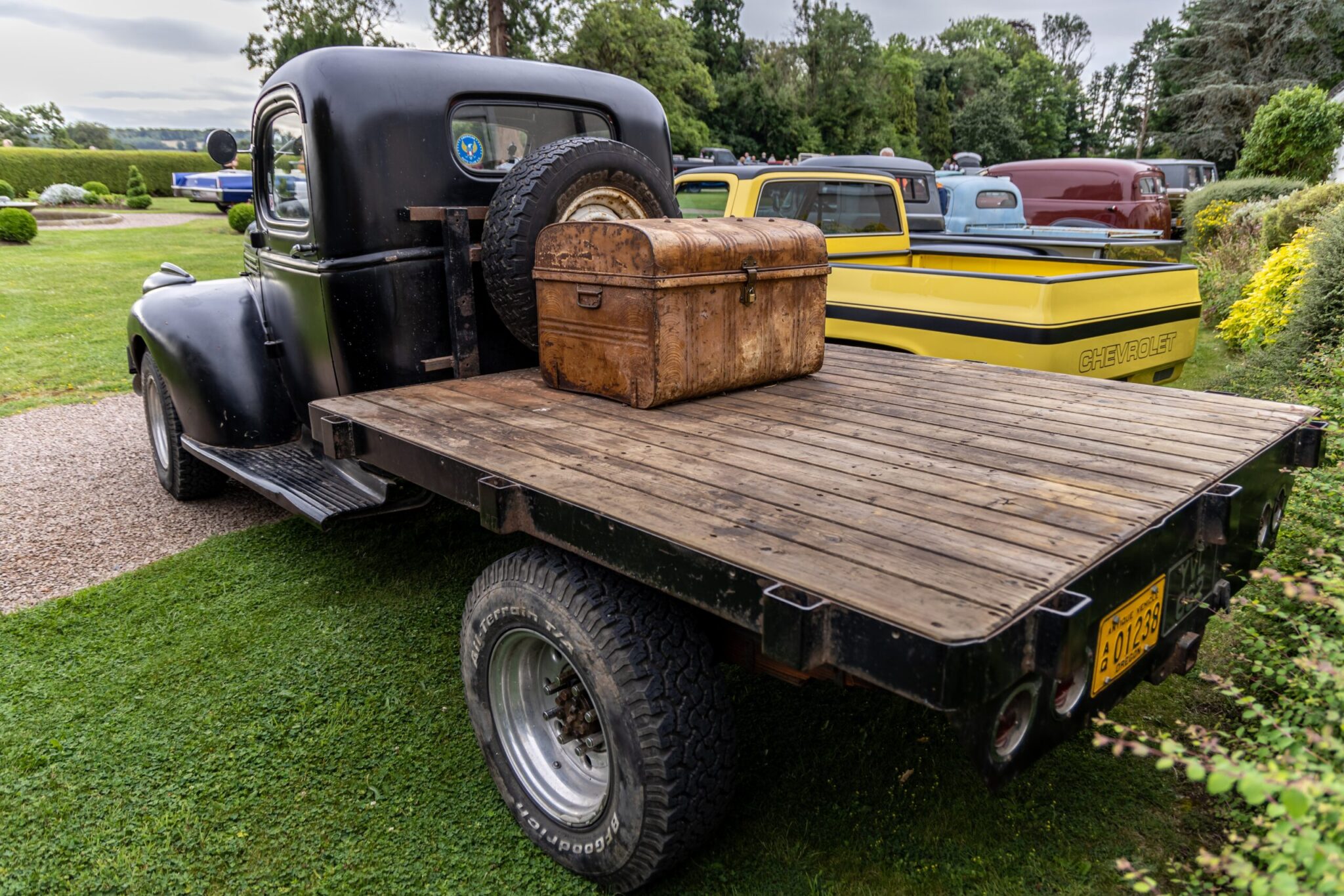
We focused on pickups that offer more than utility trucks with unique design, historical significance, performance credibility, or enduring cultural impact. Some were record-breakers, others trendsetters, but each earned its spot by being unforgettable. All models are at least 25 years old, and we gave extra credit to those with lasting enthusiast appeal or collector value.
1989 Toyota Hilux
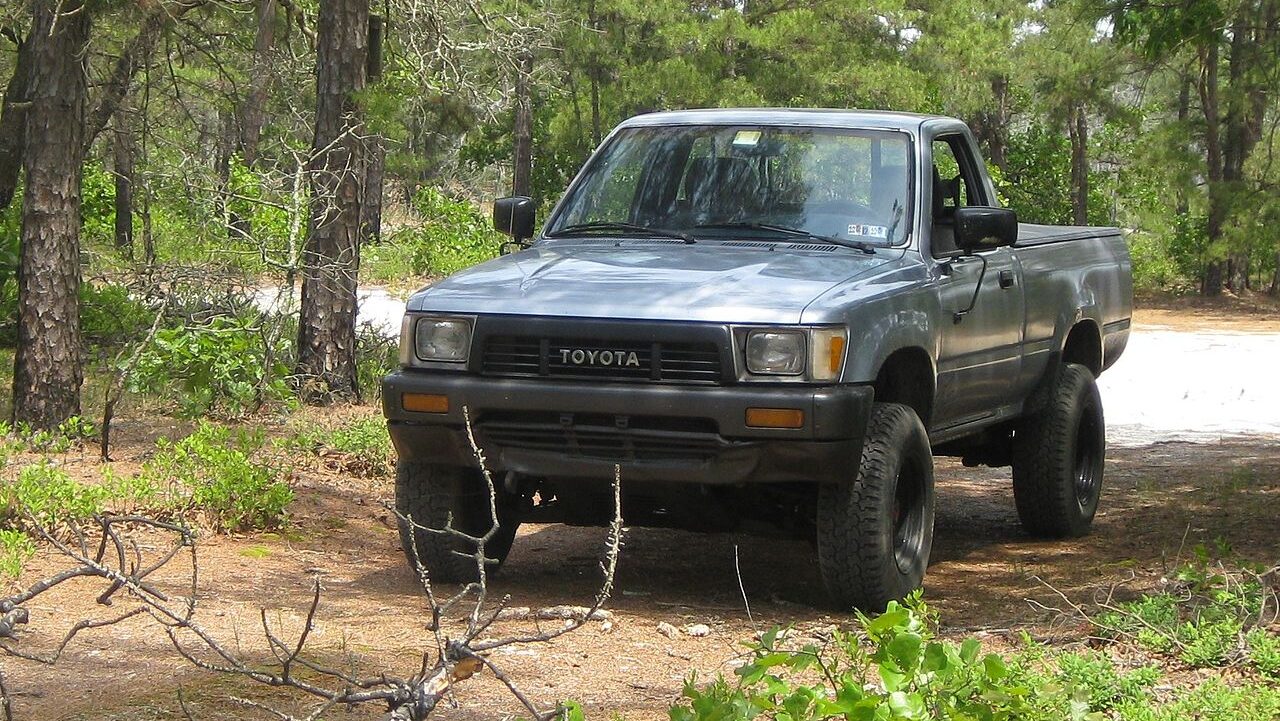
In North America, Toyota sold the Hilux under the no-nonsense name “Pickup Truck.” If they’d stuck with that theme, the Supra would’ve been “Sports Car” and the Camry just “Sedan.” Basic name, legendary truck.
The Hilux earned its mythos the hard way—by refusing to die. Top Gear famously tried to destroy one by drowning it, burning it, and even dropping a building on it. It still ran. Whether it’s climbing volcanoes in Iceland or hauling supplies across war zones, the Hilux has proven time and again that it might just be the toughest vehicle ever made.
Why It’s Cool:
Unstoppable, unpretentious, and immortal—this is the truck cockroaches will drive after the apocalypse.
1980–1984 Volkswagen Caddy (Rabbit Pickup)

If a Golf and a toolbox had a baby, it would be the VW Caddy—better known in the U.S. as the Rabbit Pickup. Based on the first-generation Golf platform, this front-wheel-drive oddball brought hatchback practicality to the truck world, complete with a fuel-sipping four-cylinder engine and unmistakably boxy ‘80s charm.
Built in Pennsylvania for the North American market, the Rabbit Pickup wasn’t fast or flashy—but it was cheap to run, easy to park, and weirdly fun to drive. Over the years, it earned a cult following among VW diehards and mini-truck enthusiasts alike. These days, clean examples are rare and often lowered, slammed, or diesel-swapped by folks who appreciate their Euro quirkiness.
Why It’s Cool:
It’s a truck for hatchback people—quirky, thrifty, and just practical enough to make no sense and total sense simultaneously.
1985 Toyota Land Cruiser J70
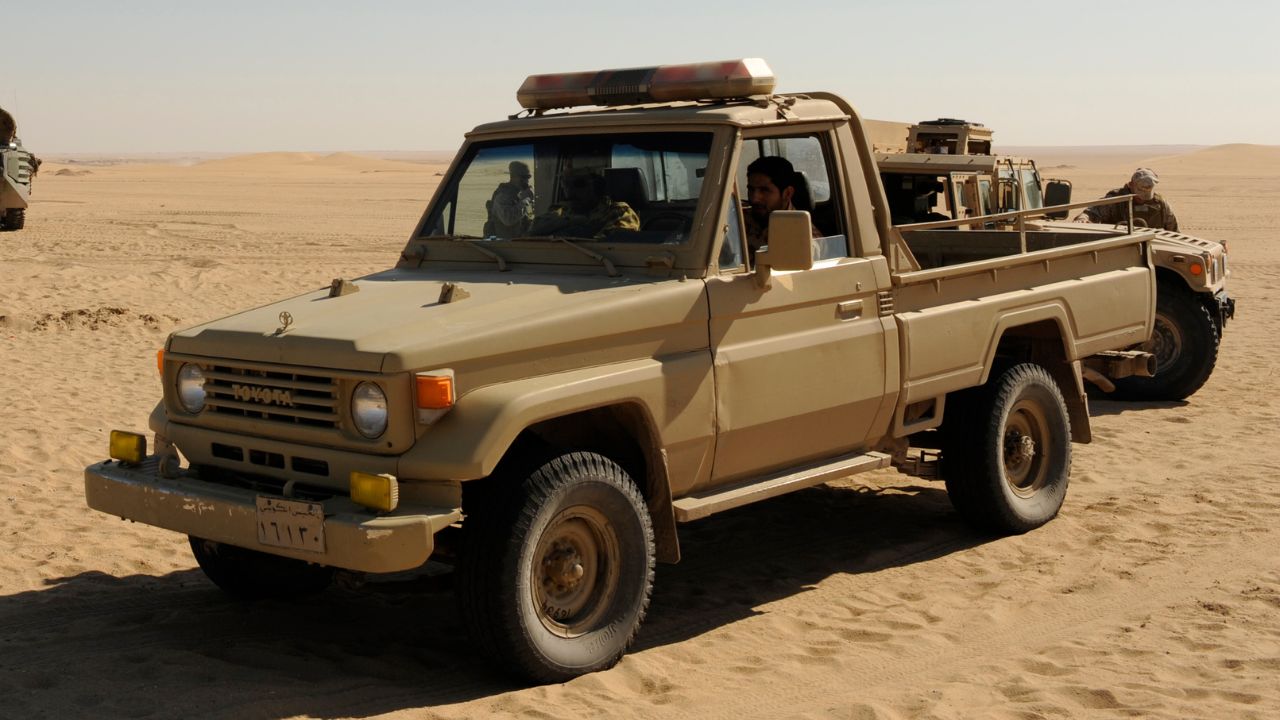
The Toyota Land Cruiser has long been synonymous with reliability, and the J70 series might be its purest, most purposeful form. Introduced in 1984 to replace the FJ45, the J70 kept everything people loved about the original—rugged capability, body-on-frame toughness, and dead-simple engineering—and just made it better.
Decades later, it’s still in production in parts of the world where roads are optional and dependability isn’t. Whether it’s bouncing across the Outback or climbing mountain passes in Africa, the J70 is a reminder that simplicity, when done right, never goes out of style.
Why It’s Cool:
It’s the truck you buy if you want to drive into the middle of nowhere—and actually come back.
1957–1959 Ford Ranchero (First Gen)
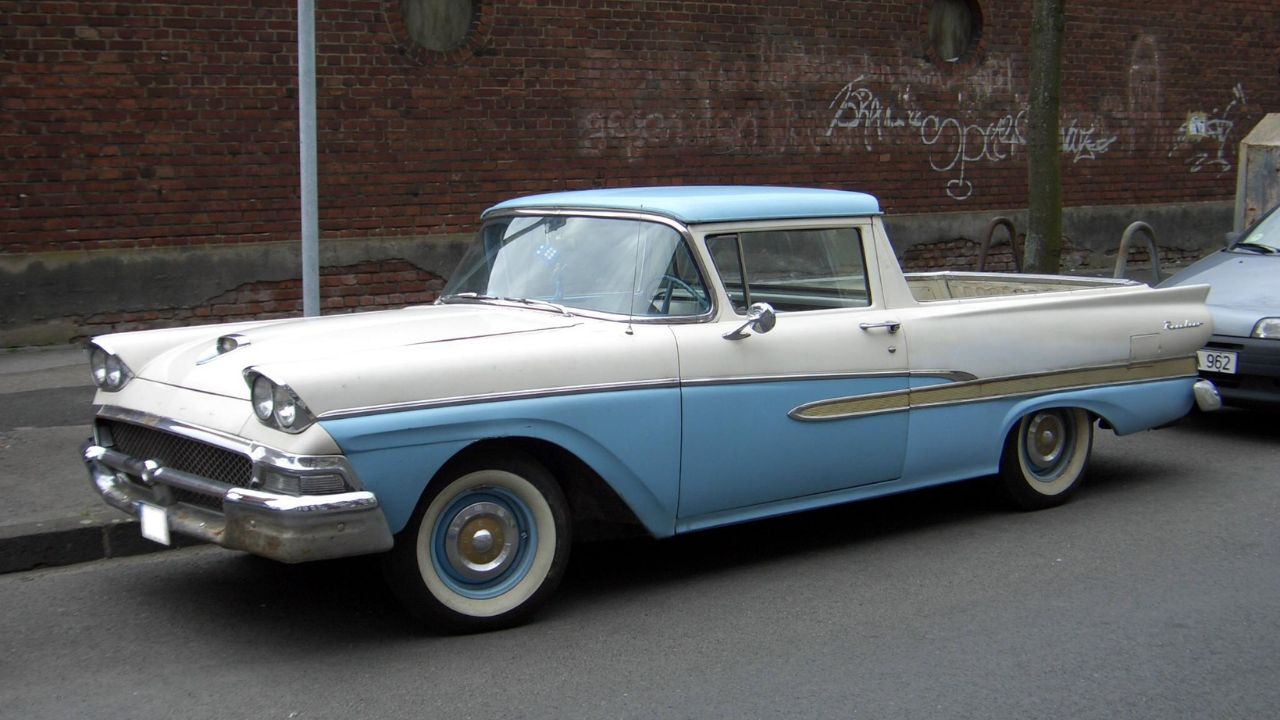
Long before “crossover” became a buzzword, the Ranchero was already doing it—mixing a car’s ride with the bed of a truck. Based on the full-size Ford sedan, it offered surprising utility in a package that still looked good pulling up to church or a diner.
It wasn’t built for the farm but for people who wanted to haul garden mulch on Saturday and impress a date on Sunday. The Ranchero kicked off an entire segment that GM would chase with the El Camino.
Why It’s Cool:
The original car-truck mashup made practicality look cool and set the stage for decades of “utes” and lifestyle haulers.
1967–1972 Chevrolet C10 / Cheyenne Super
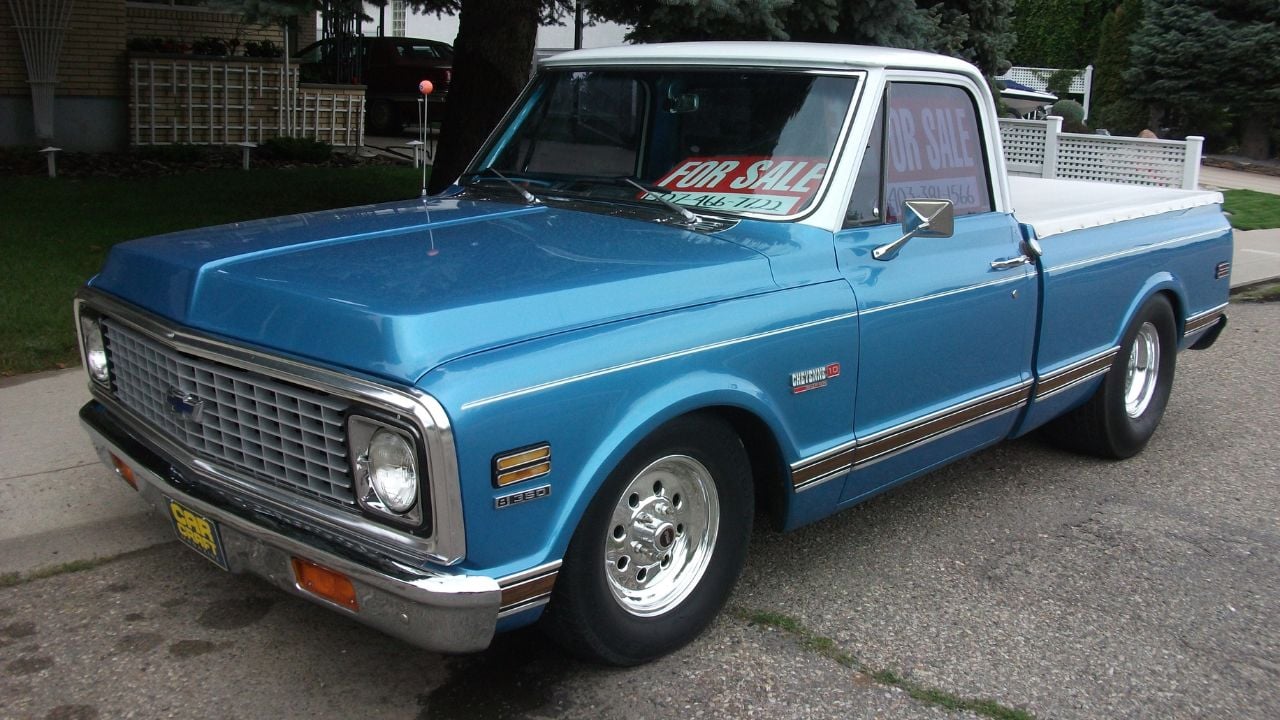
Ask any Chevy fan for their favorite truck, and odds are they’ll say “’71 or ’72 C10.” These trucks struck the perfect balance of brawn and beauty, with smooth body lines, comfortable cabins, and strong small-block V8s.
The Cheyenne Super trim added plush touches like woodgrain dash panels and upgraded trim, making it a luxury truck before that was a thing. It’s no wonder these are among the country’s most restored and customized pickups.
Why It’s Cool:
It’s the truck everyone wishes Grandpa never sold—classic styling, killer stance, and still cool 50 years later.
1947–1965 Willys Jeep Pickup
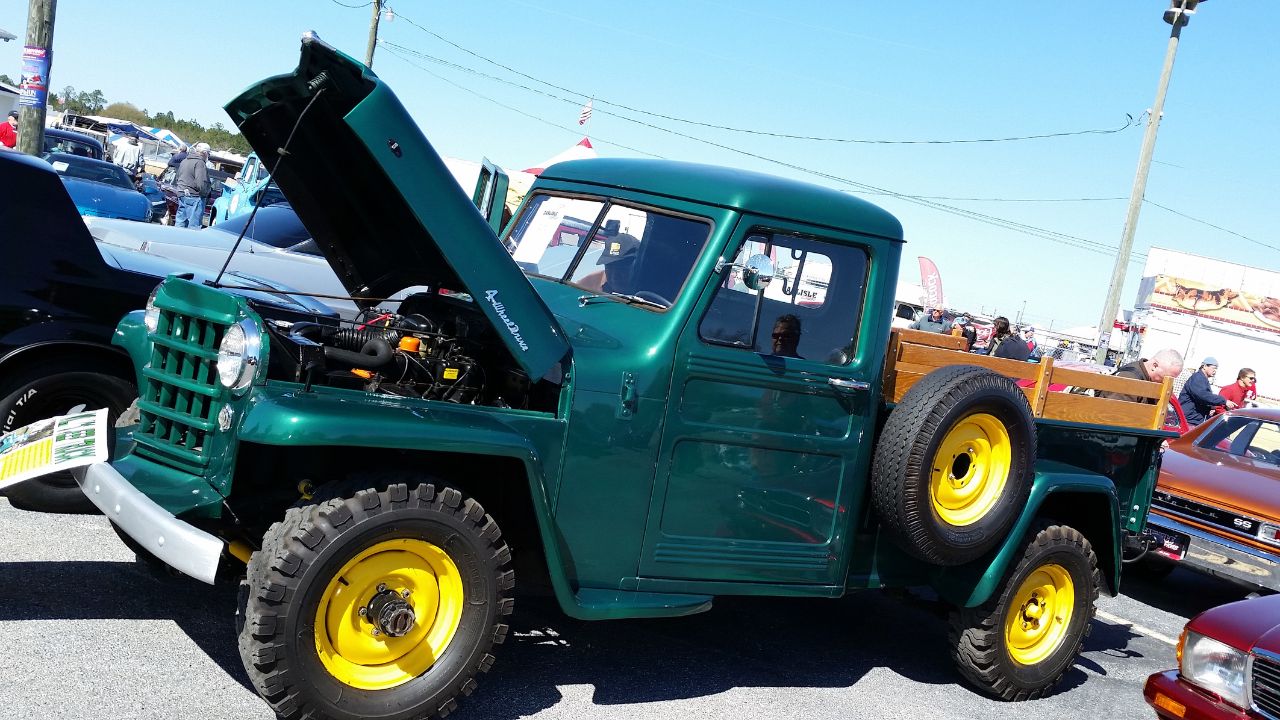
After WWII, Willys took what it learned from the battlefield and built a civilian pickup with the same go-anywhere attitude. The early Willys trucks were rugged, boxy, and ready to work—no frills, no nonsense.
They weren’t the most refined or powerful, but their 4WD chops and honest design made them beloved among rural buyers and off-road enthusiasts alike. They’re the spiritual ancestors of today’s Jeep Gladiator—but with much more grit.
Why It’s Cool:
It’s the OG trail truck—pure function, wartime pedigree, and much off-road soul.
F-250 Highboy
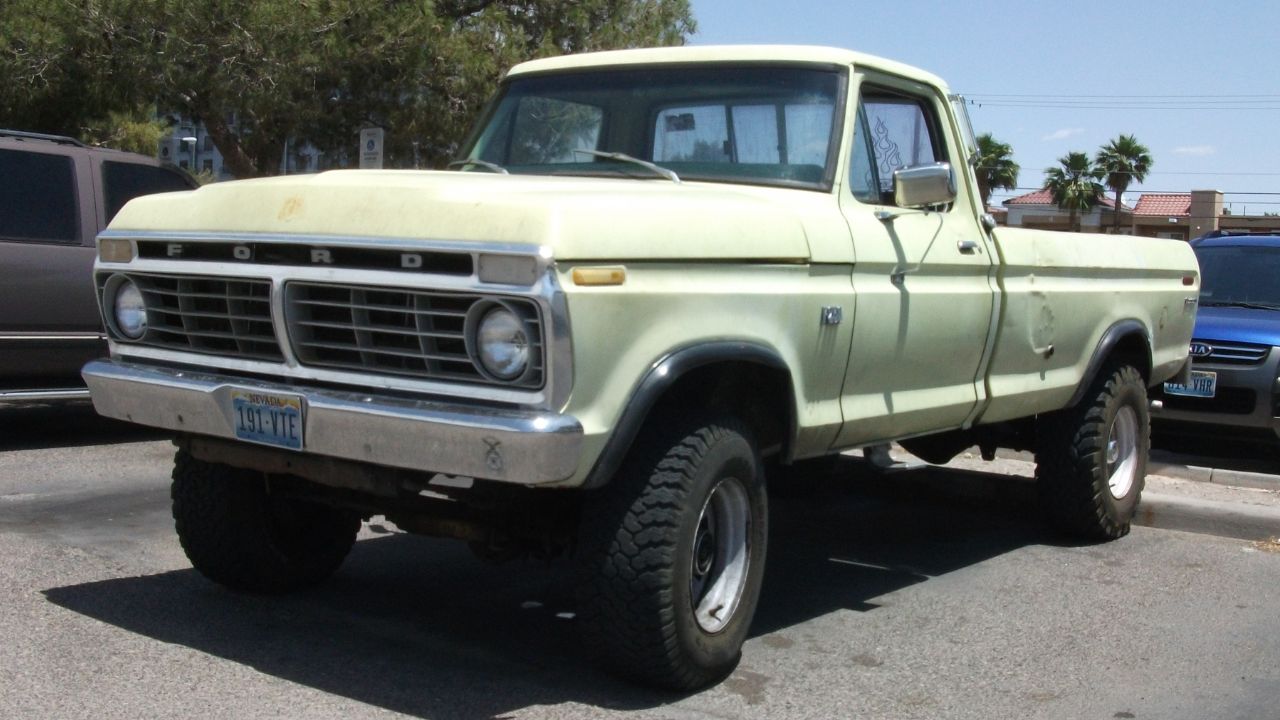
Ford’s F-Series has been America’s best-selling vehicle for decades, and the 1975 F-250 Highboy is one of the toughest, coolest classics in the family tree. Built before Ford switched to a lower stance and integrated suspension, the “Highboy” earned its nickname from its tall factory ride height, perfect for serious off-roaders.
One of its signature traits? You could slap on 35-inch tires without lifting a wrench. Add in a divorced transfer case, solid axles, and a no-nonsense look, and you’ve got a truck that’s as ready for the trail as it is for the worksite.
Why It’s Cool:
Factory-tall, off-road ready, and built like a tank—it’s the original lifted truck before lifting was cool.
1974–1977 Mazda Rotary Pickup (REPU)
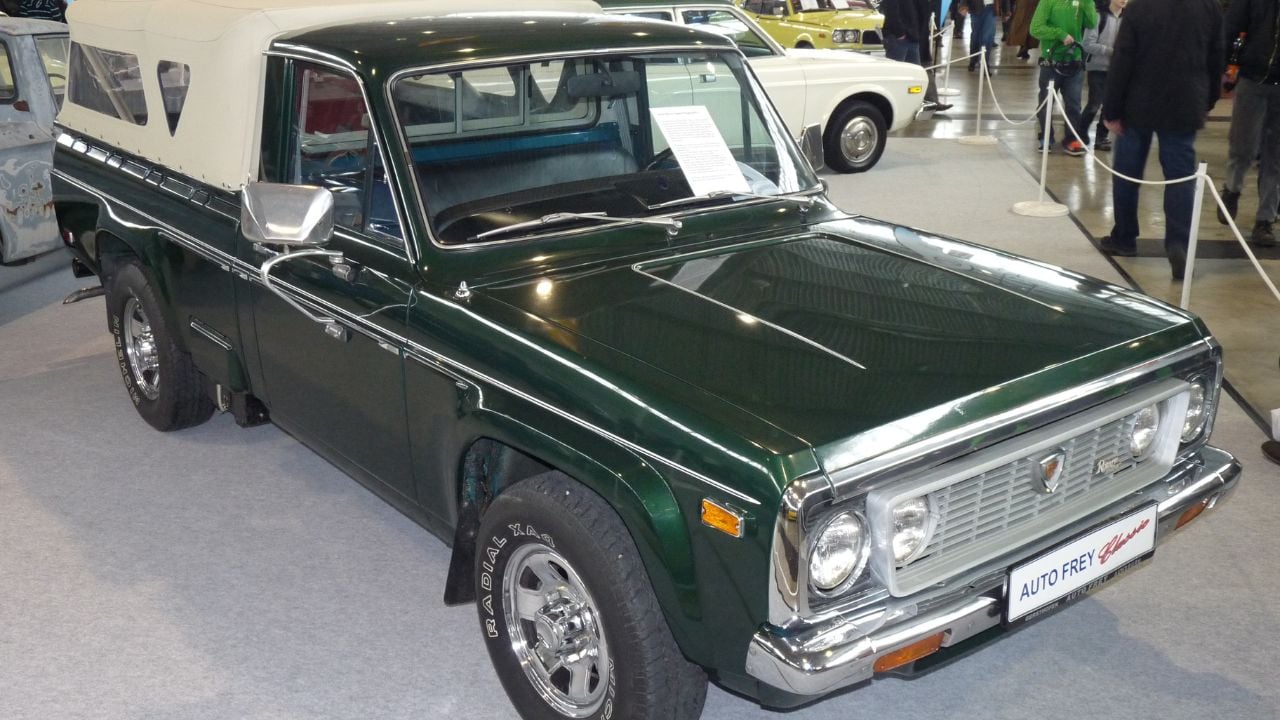
Most trucks are all about torque, towing, and toughness. Mazda said, “What if we did the opposite?” Enter the Rotary Engine Pickup (REPU), the world’s first (and only) mass-produced pickup powered by a rotary engine.
Based on the Mazda B-series chassis equipped with a 1.3-liter 13B rotary from the RX-4, the REPU delivered high-revving fun in a very unexpected package. It wasn’t exactly built for hauling, low-end torque was scarce, and the fuel economy made V8s blush, but it was quick, loud, and totally unique.
Fleet buyers didn’t bite, but enthusiasts sure did. Fewer than 15,000 were sold in the U.S. before emissions laws and oil crises ended the party. Today, it’s a cult classic, especially among rotary lovers who enjoy explaining apex seals to strangers at Cars and Coffee.
Why It’s Cool:
A rotary-powered pickup makes no practical sense, and that’s precisely why it’s brilliant.
1991 GMC Syclone
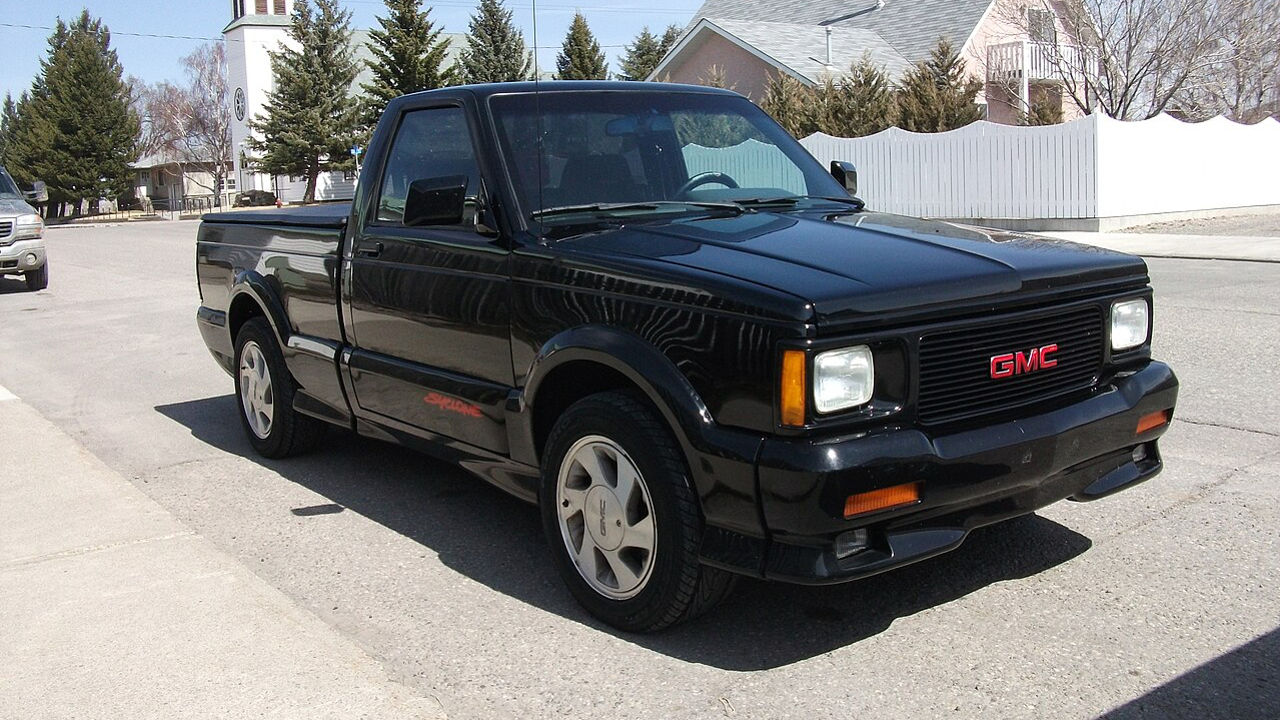
The GMC Syclone wasn’t built to haul hay bales but to embarrass Ferraris. With a turbocharged 4.3-liter V6, all-wheel drive, and a 0–60 time of just 4.3 seconds, it was quicker than a Corvette and nearly as fast as a Ferrari 348… in a compact pickup.
Only 2,998 Syclones were ever made, and while they couldn’t haul more than 500 pounds, they redefined what a truck could be: fast, flashy, and outrageously fun. Think of it as a muscle car wearing a work shirt, not bothering to tuck it in.
Why It’s Cool:
Turbo V6. AWD. Faster than a Ferrari. It’s the muscle truck that made no sense, and that’s exactly why everyone wants one.
1959 Chevrolet Apache

The 1959 Chevrolet Apache wasn’t just a truck but a style statement on wheels. As part of Chevy’s Task Force series, the Apache brought a serious attitude to the pickup world with bold curves, a wraparound windshield, and quad headlights mounted in the fenders. It looked like it belonged in a 1950s sci-fi flick, and that’s part of the charm.
These days, finding a clean example will cost you, but that’s the price of timeless cool.
Why It’s Cool:
Classic American curves meet mid-century muscle in this truck, which James Dean would’ve driven if he needed to move furniture.
1990 – 1993 Chevrolet 454 SS
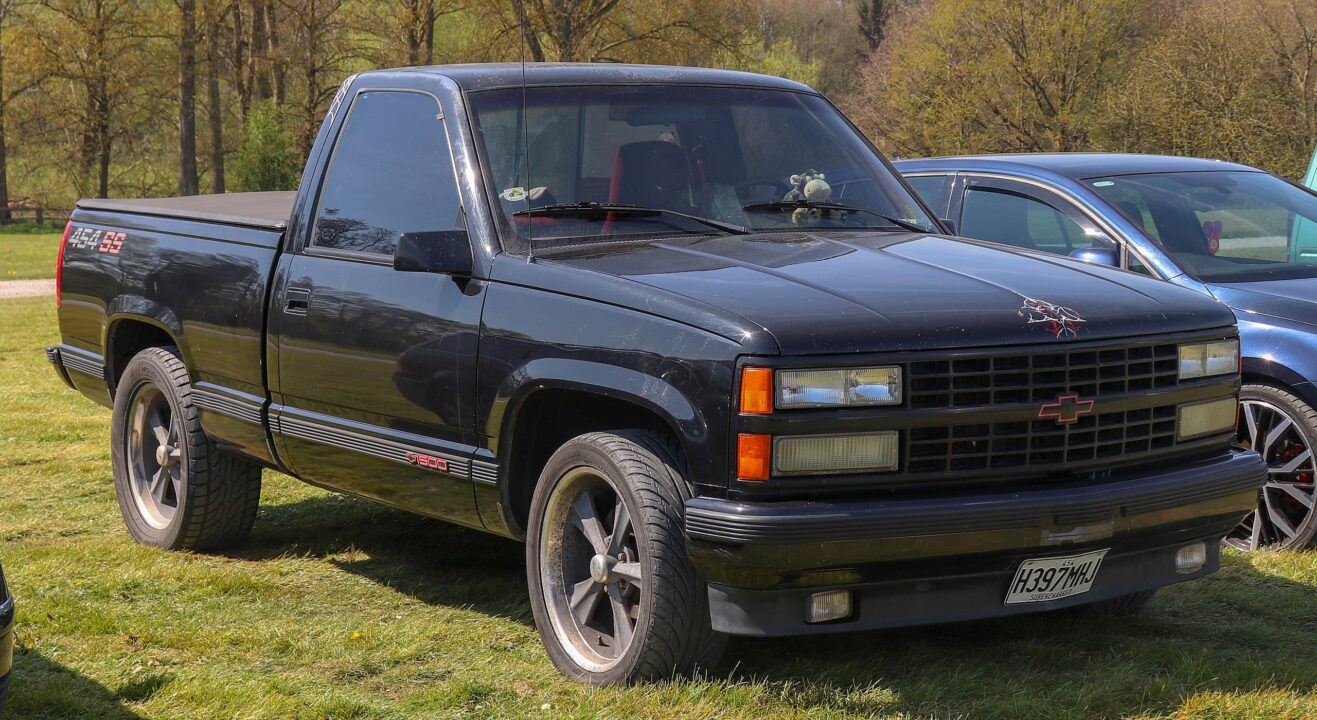
Say “454 SS” and most gearheads think of a Chevelle ripping down the drag strip. But in the early ’90s, Chevrolet gave that iconic nameplate a new home—on the side of a full-size pickup. The 454 SS was a short-bed, regular-cab C1500 with a big-block 7.4-liter V8 stuffed under the hood and a sinister black-on-black look to match.
With 230 horsepower and a thumping 385 lb-ft of torque, it wasn’t quite as quick as the Syclone or Ford Lightning, but it had old-school muscle truck attitude in spades. And with a few bolt-ons, that big V8 can easily roar to life.
Why It’s Cool:
It’s a factory-built burnout machine with muscle car DNA—and a bed big enough to haul your trophies.
1978 Dodge Li’l Red Express Truck

In the dark days of the malaise era—when muscle cars were neutered and performance was a joke—one bright red pickup roared onto the scene and stole the spotlight. The 1978 Dodge Li’l Red Express wasn’t just cool-looking with its chrome stacks and wood trim; it was also the fastest new vehicle you could buy in America that year.
Dodge found a loophole in emissions regulations that let trucks bypass certain restrictions, and they ran with it, straight past the Corvette in a drag race. Powered by a high-output 360 V8 (not a 390, despite popular belief), the Li’l Red Express turned heads and lit up rear tires equally.
Why It’s Cool:
Outran sports cars, looked like a Hot Wheels truck, and gave gearheads a reason to smile when everything else had gone soft.
1979 Datsun 620

It didn’t have a big V8 or chrome stacks, but the Datsun 620 was a different kind of cool. Nicknamed the “Li’l Hustler” in the U.S., this compact Japanese pickup became a cult favorite thanks to its bulletproof reliability, sharp styling, and surprisingly fun driving dynamics.
Production ended in the States in the late ’70s, but it lived on in the garages of tuners and mini-truck enthusiasts worldwide. Today, modified 620s wear everything from widebody Rocket Bunny kits to classic Skyline front clips, proving that even a humble hauler can become a custom legend.
Why It’s Cool:
Compact, dependable, and endlessly customizable, the JDM truck punches way above its weight.
1974 Jeep J10
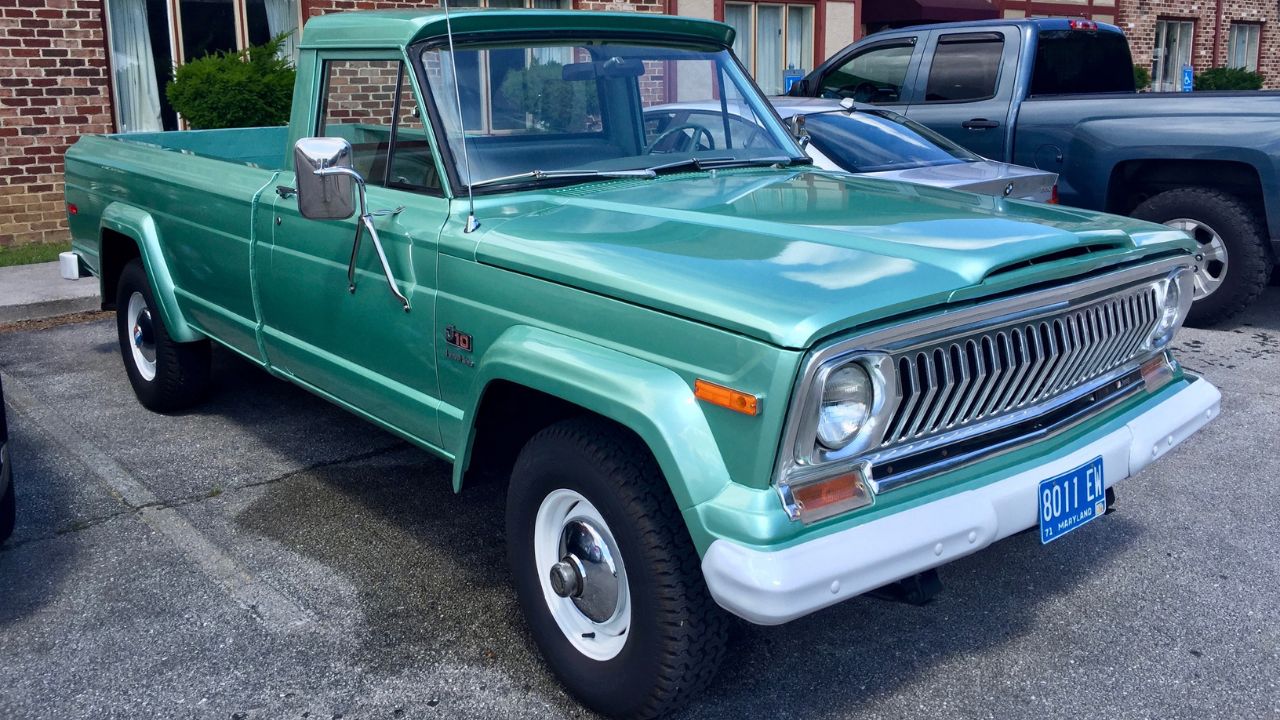
In 1971, Jeep dropped the Gladiator name and rebranded its rugged full-size pickups as the J-Series. The J10, in particular, struck a perfect balance between rugged and stylish, especially when equipped with the optional 401-cubic-inch V8—an engine that cranked out a muscular 330 horsepower.
But the real head-turner was the Honcho package. Available on short-bed sportside models, it added bold stripes, decals, and a roll bar, turning the macho truck into a full-on off-road flex. Long before “lifestyle trucks” were a thing, the J10 Honcho was out there blazing trails and looking good.
Why It’s Cool:
Big V8, bold attitude, and a name like “Honcho”—this is what peak ‘70s truck swagger looked like.
Diamond T Model 201
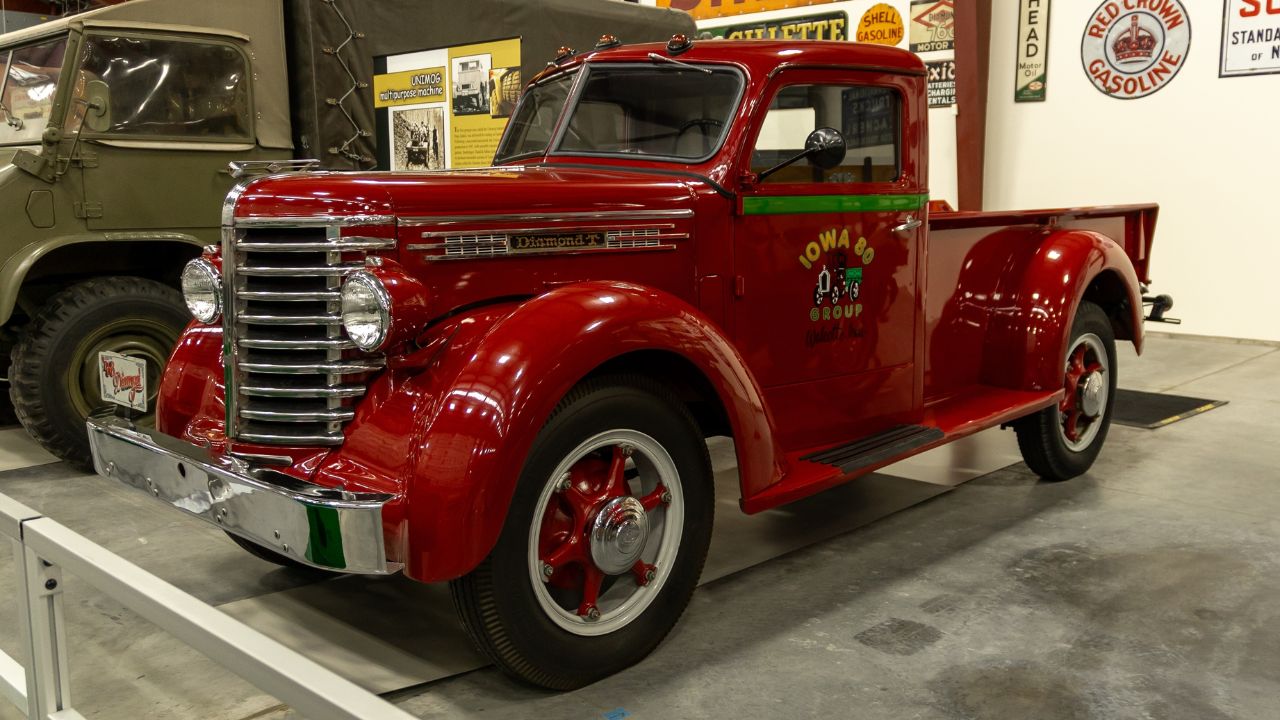
Nicknamed the “Cadillac of Trucks,” the Diamond T Model 201 didn’t just haul cargo—it hauled it with class. Built in Chicago by the Diamond T Motor Car Company, the 201 debuted in 1938 as a premium pickup with stout engineering and surprisingly refined styling for the era.
Underneath the elegant curves was a heavy-duty chassis, often paired with a Hercules inline-six good for 73 horsepower in early models and 91 in later years. It wasn’t fast but built like a bank vault and finished like a luxury car. Today, the Model 201 stands as one of the most collectible prewar trucks ever made.
Why It’s Cool:
Old-school craftsmanship meets industrial strength; the vintage pickup dresses like a gentleman and works like a mule.
1954 Dodge Power Wagon

Born from World War II battlefields and built for the toughest jobs back home, the Dodge Power Wagon is the original heavy-duty off-roader. Adapted from military vehicles, the civilian Power Wagon brought serious 4WD capability to the masses and helped pioneer what we now consider modern off-road trucks.
With massive wheels, high ground clearance, and a brutally simple design, the Power Wagon wasn’t about speed—it was about getting through anything, anywhere. Whether it was hauling timber, plowing snow, or crawling through backwoods trails, this truck earned its reputation the hard way.
Why It’s Cool:
A war-tested brute in civilian clothes, it’s the granddaddy of every trail-ready truck that came after.
Studebaker Coupe Express
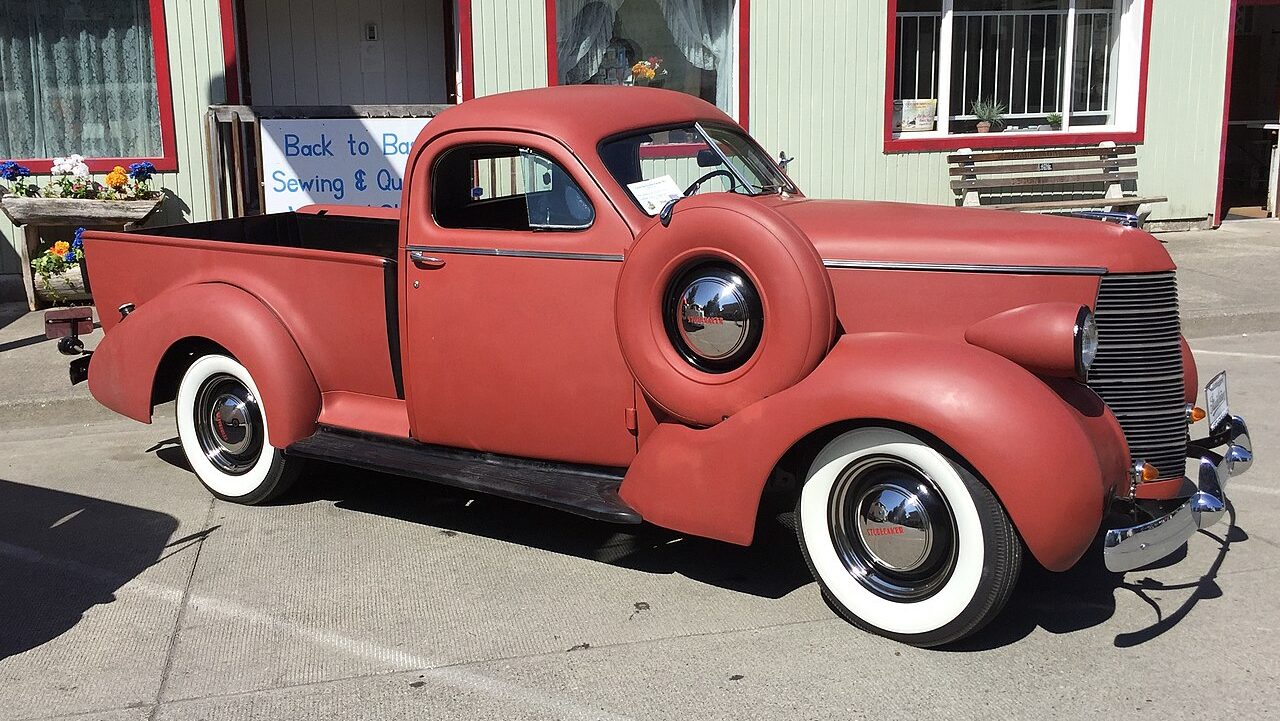
Long before the El Camino or Ranchero hit the scene, Studebaker was already blending car comfort with truck utility. Enter the Coupe Express—a sleek, all-steel pickup built in the late 1930s that looked more like a streamlined coupe than a workhorse.
With graceful curves, car-like handling, and an available cloth or leather interior, the Coupe Express was one of the first true “utes”—a practical hauler that didn’t sacrifice style or comfort. It may not have been a massive success in its day, but today it’s recognized as a design-forward pioneer and an Art Deco dream on wheels.
Why It’s Cool:
Decades ahead of its time, it proved that a pickup could be stylish, smooth, and just a little bit glamorous.
1993 Ford F-150 Lightning
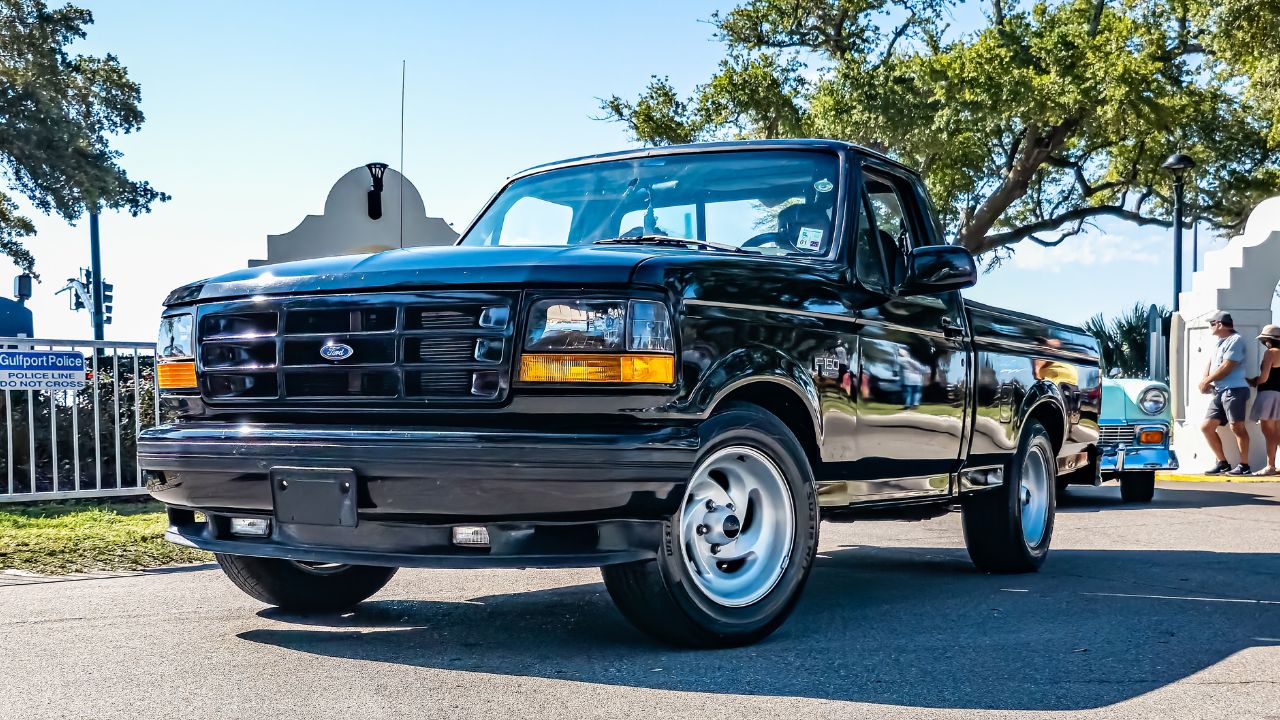
Before the nameplate went electric, the original Ford F-150 Lightning was a muscle truck with gasoline in its veins. Developed by Ford’s Special Vehicle Team (SVT), it took the humble F-150 and transformed it into a tire-shredding street machine with a 5.8-liter V8 pushing 240 horsepower and 340 lb-ft of torque.
But the real magic was in the chassis. Ford lowered the suspension, tightened the handling, and gave it a sportier feel, letting it outmaneuver rivals like the Chevy 454 SS. It wasn’t just about straight-line speed but about turning your work truck into a backroads bruiser.
Why It’s Cool:
V8 grunt, SVT tuning, and muscle truck attitude were Ford’s answer to “what if a pickup could actually corner?”
1964 Dodge Custom Sport Special

In the early ’60s, Dodge decided to inject a little muscle car spirit into its work trucks. The result was the Custom Sport Special package for the D100—a stylish, street-smart pickup with bucket seats, racing stripes, and more attitude than anything else on the job site.
But the real prize was under the hood. In 1964, buyers could option it with Chrysler’s 413-cubic-inch wedge-head V8. By 1965, Dodge went even bigger, offering the legendary 426 V8 with 365 horsepower, turning this humble hauler into a full-blown muscle truck, years before that was even a thing.
Why It’s Cool:
It’s a muscle car in work boots, a V8-powered sleeper that could run with the big dogs and still haul a load of lumber.
1956 Ford F-100

The second generation of Ford’s iconic F-Series may not have sold as many units as the later F-150s, but it arguably remains the most beautiful truck Ford ever built. The 1956 F-100, with its one-year-only wraparound windshield and aggressive stance, is a design classic that looks just as sharp today as it did nearly 70 years ago.
Under the hood, it marked a turning point, too, swapping out the old flathead for a modern overhead-valve V8 that cranked out up to 167 horsepower. It wasn’t just form over function. The F-100 delivered the goods, whether you were hauling equipment or just showing off at the local diner.
Why It’s Cool:
Mid-century muscle wrapped in timeless curves, it’s the truck that made blue-collar look downright glamorous.
1952 International Harvester L Series

International Harvester made its name building farm equipment, but by the mid-20th century, it was also building some of the toughest trucks on the road. Introduced in 1949, the L Series shifted toward more refined pickups, without sacrificing workhorse durability.
Available in configurations from the L110 half-ton to the L130 one-ton, these trucks offer bed lengths up to nine feet and come with a choice of stout inline-six engines, including the ruggedly named “Silver Diamond” and “Super Blue Diamond.” The Comfo-Vision cab delivers better visibility and a surprisingly roomy interior, making long days behind the wheel a little easier.
Why It’s Cool:
Farm-bred toughness with big-rig style, it’s the classic work truck that looked as serious as it hauled.
Mercedes-Benz 170 Pickup
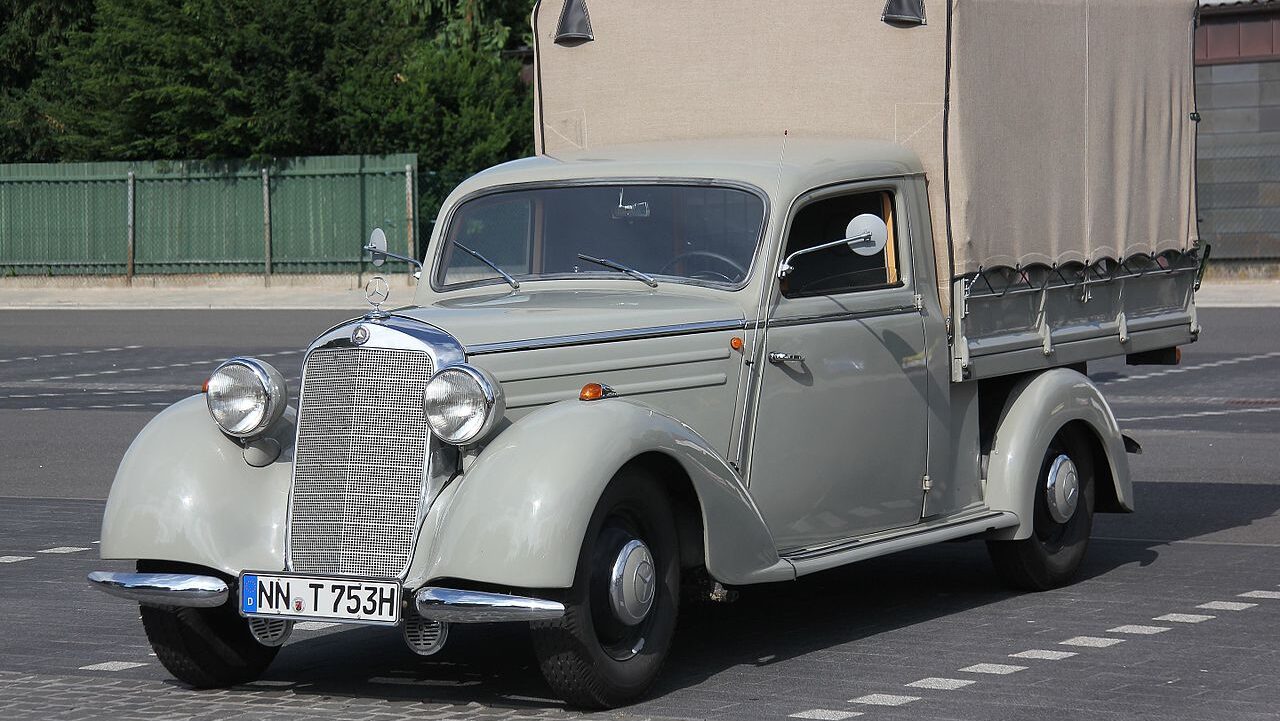
Mercedes-Benz may have stumbled in the modern truck game with its ill-fated X-Class, but back in the 1930s, it quietly built one of the most elegant pickups of its time. Based on the 170 V—a compact, front-engined car whose name stood for “Vorn” (German for “front”)—the Mercedes 170 pickup was a classy, understated hauler with luxury roots.
After World War II, the 170 V returned to production and became the brand’s top seller through the early 1950s, available in a surprising range of body styles: sedan, cabriolet, roadster, van—and yes, pickup. It may not be a rock-crawler or muscle machine, but as a rare piece of Mercedes history, it’s a dream truck for collectors with a taste for the unusual.
Why It’s Cool:
It’s a vintage Benz with a bed, refined, rare, and nothing like the pickups you’re used to.
1962 Studebaker Champ

By the early 1960s, Studebaker was fighting to stay relevant, and the Champ was one of its last big swings in the truck world. Introduced in 1960, the light-duty pickup was a clever mashup of existing parts, blending a Lark sedan cab with a rugged truck bed. It was a parts-bin special, sure, but a surprisingly good one.
The Champ offered real utility at a competitive price, with solid build quality and decent power for the time. It may not have broken new ground, but it was practical, honest, and endearing—qualities that make it a beloved oddball today. It also holds the bittersweet title of being the last pickup Studebaker ever made before the brand exited the auto industry in 1966.
Why It’s Cool:
It’s the last hurrah from one of America’s most storied underdogs—a quirky classic with plenty of heart.
1989 Dodge Shelby Dakota
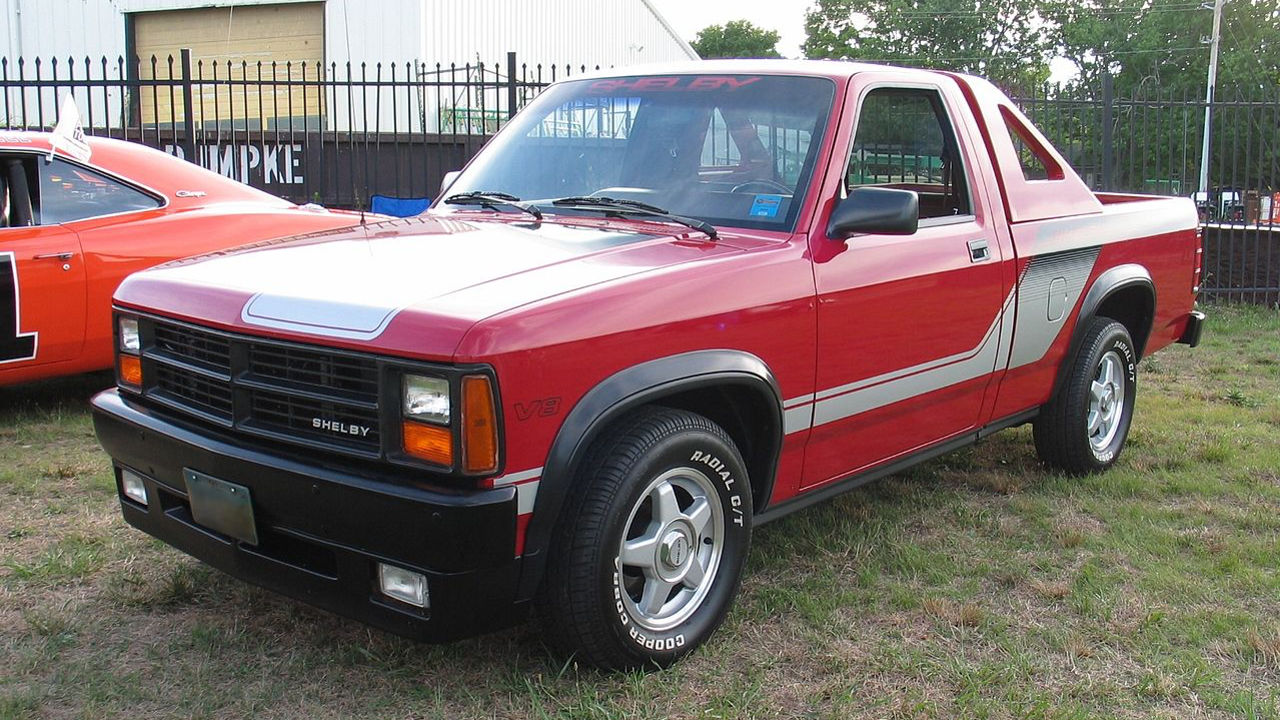
Carroll Shelby is best known for turning Mustangs into monsters and Cobras into legends—but in 1989, he brought his go-fast magic to something a little more unexpected: the Dodge Dakota. As a former chicken farmer, maybe he had a soft spot for practical haulers. But make no mistake—this was a Shelby through and through.
He swapped out the stock V6 for a 5.2-liter V8, giving the Shelby Dakota 175 horsepower and 270 lb-ft of torque, stong numbers for a compact pickup in the late ’80s. It wasn’t the fastest Shelby ever made, but it was one of the most surprising. Naturally, it came with racing stripes and limited production numbers, making it a collectible piece of muscle-truck history.
Why It’s Cool:
Because it’s a V8-powered Shelby pickup, equal parts oddball and awesome, with just enough attitude to back up the name.
1986 Lamborghini LM002
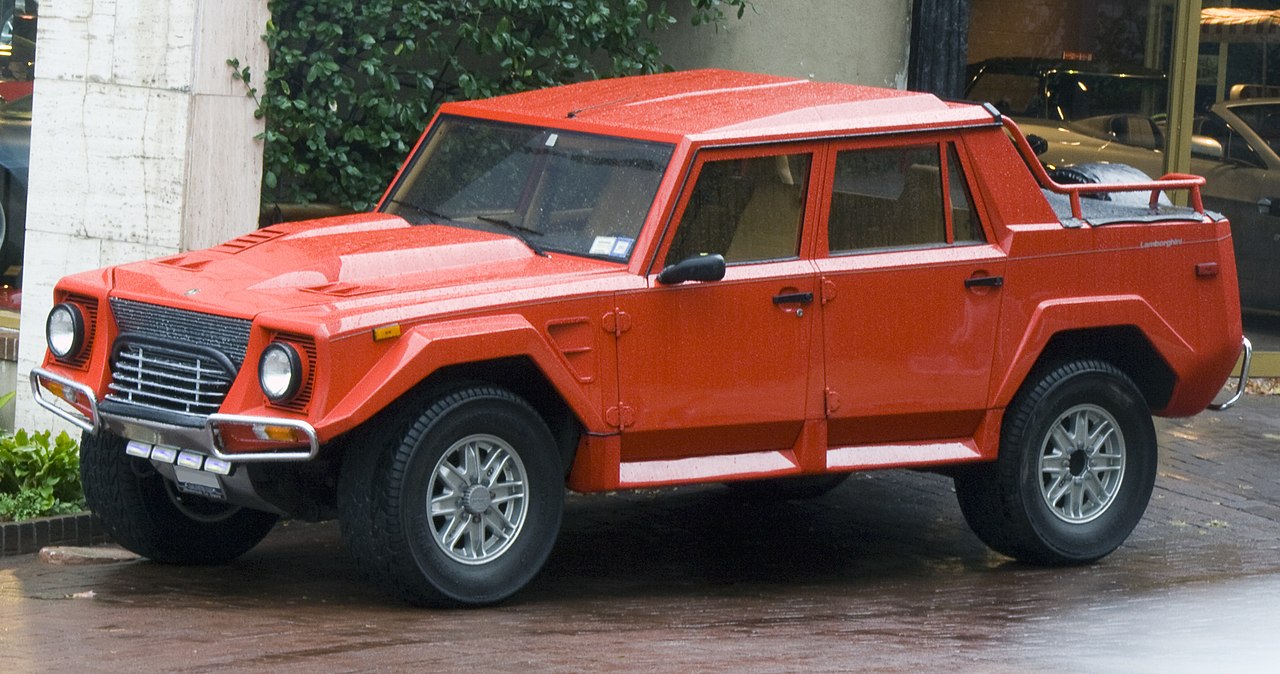
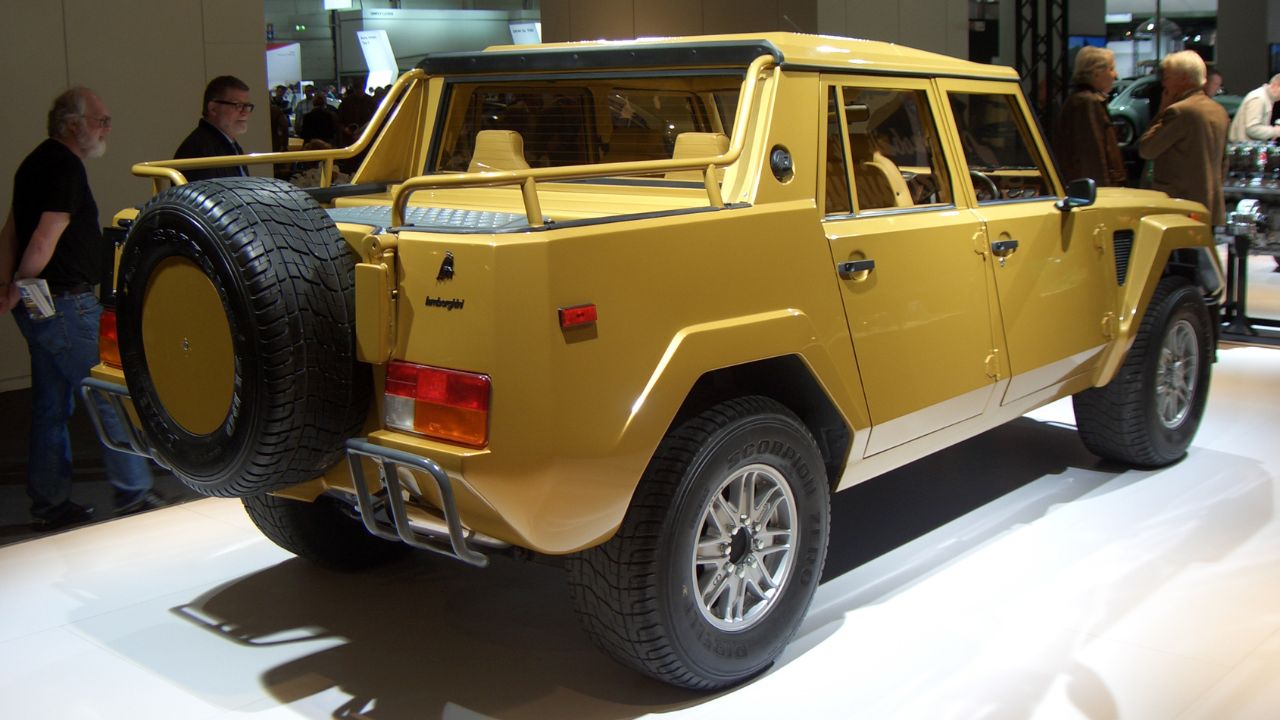
Long before the Urus, Lamborghini built something far more wild and far less sensible: the LM002. Originally developed as a military prototype, the LM002 was reborn as a civilian SUV-truck hybrid, and then stuffed with the same screaming V12 engine found in the Countach. The result? A 4WD monster nicknamed the “Rambo Lambo.”
It had outrageous presence, 444 horsepower, and a footprint the size of a small country. It guzzled fuel, rode like a tank, and cost a fortune—but it was absolutely perfect for a certain kind of enthusiast. Only about 300 were built, which makes it rarer (and way cooler) than today’s mass-produced luxury SUVs.
Why It’s Cool:
Because nothing says “dream truck” like a V12-powered desert assault vehicle built by Lamborghini.
1947 Hudson Big Boy

Hudson might be best known for its sleek postwar sedans, but the Big Boy pickup was a bruiser with real presence. Introduced in 1939 and produced through 1947, the Big Boy was a 3/4-ton truck that blended Hudson’s streamlined styling with a seriously stout work ethic.
Especially striking in black, it had an intimidating, almost gangster-like vibe, with flowing fenders and an upright stance. Under the hood, it came with an 86-horsepower inline-six, or a slightly hotter 96-horsepower version if you wanted a bit more grunt. Rare today and full of prewar personality, the Big Boy is a forgotten heavyweight in the classic truck world.
Why It’s Cool:
Vintage muscle with art deco flair, it’s a tough old truck with real cinematic swagger.
Volkswagen Type 2
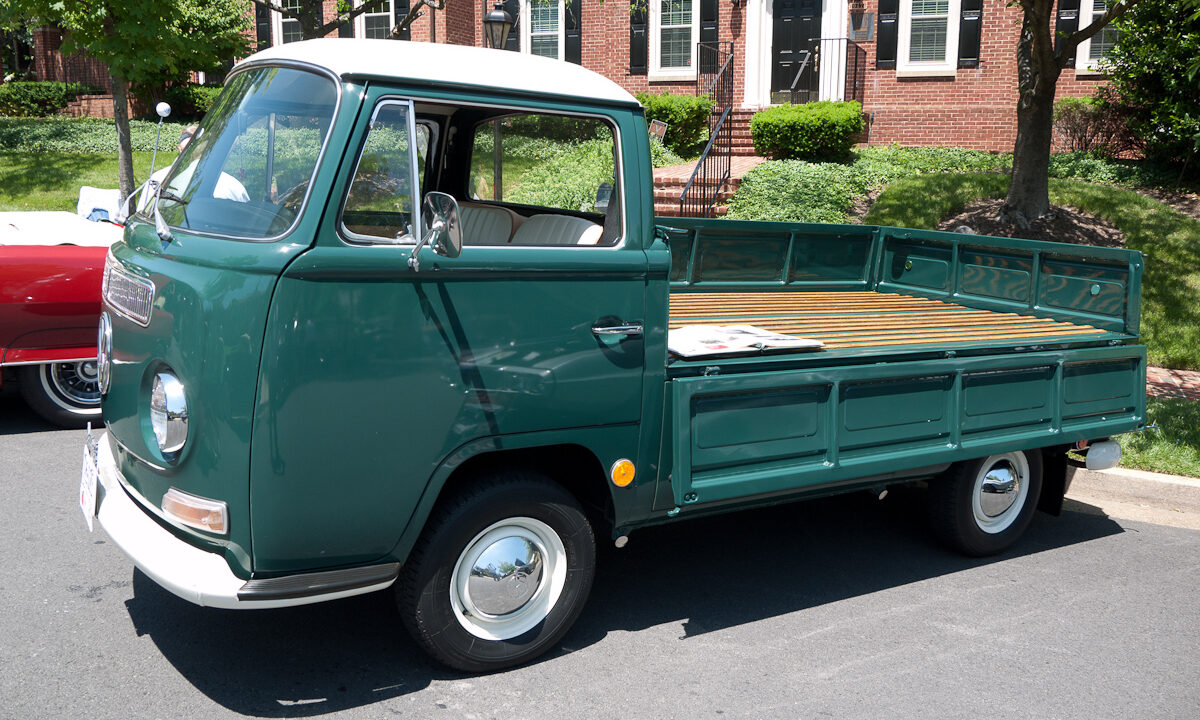
The 1960s Volkswagen Bus is an icon of counterculture cool, but fewer people know its flatbed sibling: the VW Type 2 Pickup. Built on the same platform, the pickup version offered all the quirky charm and utility of the van, with the added bonus of a bed for hauling gear, surfboards, or crates of Hoffmann’s soda.
So why are they so rare in the U.S.? Blame the Chicken Tax. In 1964, President Lyndon B. Johnson slapped a 25% tariff on imported trucks from Europe in retaliation for tariffs on American chicken. Passenger vans were exempt, but pickups like the Type 2 weren’t. As a result, this charming oddball stayed a European fixture and a gray-market gem.
Why It’s Cool:
It’s the hippie van’s hardworking twin, a funky, functional flatbed with global roots and cult status.
Where the Road Ends, the Dream Garage Begins
From muscle-bound monsters and military workhorses to elegant coupes and JDM cult heroes, these trucks prove one thing: the pickup isn’t just a tool—it’s a canvas for creativity, performance, and personality. Whether you dream of carving backroads in a Lightning, conquering trails in a Power Wagon, or simply cruising town in a cherry-red Apache, there’s something timeless about a classic truck done right.
They may be rough around the edges, loud, quirky, or completely impractical—but that’s the point. These aren’t just vehicles—they’re milestones of automotive history, rolling reminders of an era when trucks had soul.
So here’s to the ones that came before: the trucks that hauled, roared, rusted, and endured. These are the ones that made us fall in love with the idea of horsepower in a steel box. May your dream garage always have room for one more.