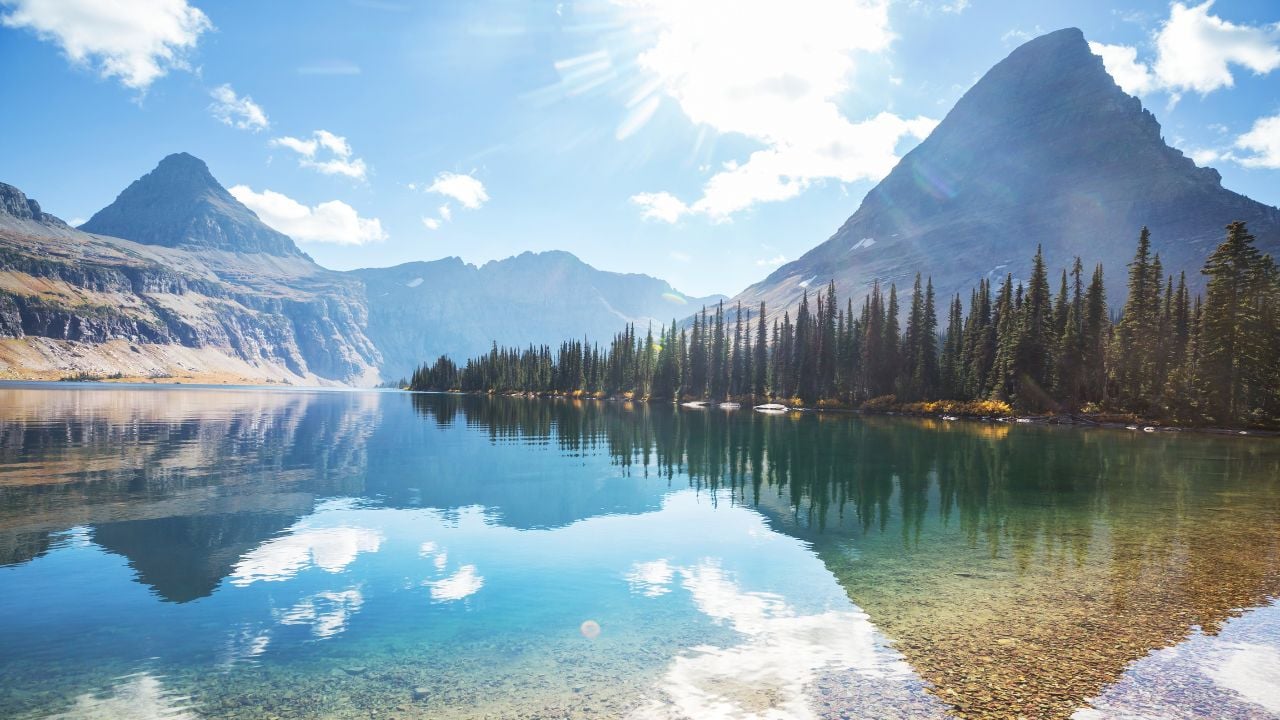
Glacier National Park, widely regarded as one of America’s most spectacular natural destinations, has been placed on Fodor’s prestigious “No List” for 2026, a stark warning to travelers that the Montana park can no longer handle the crushing weight of mass tourism driven by climate change fears.
Known as last-chance tourism, this relatively new trend sees people visiting many of the world’s natural wonders in increasingly unsustainable numbers, with visitors often ending up damaging the environments they’re so desperate to see, speeding up their deterioration.
Climate Crisis Fuels Tourism Rush
Glacier National Park is warming nearly twice as fast as the global average. Of the estimated 150 glaciers ringing its peaks in the early 20th century, only 27 remain, with experts predicting their complete disappearance by 2030.
Experts from Fodor’s Travel highlighted that Glacier National Park has become a destination of urgency due to the looming disappearance of over 100 glaciers by 2030, driven by climate change. This impending loss has triggered what researchers call “last-chance tourism,” as visitors race to witness the glaciers before they vanish forever.
Record Visitor Numbers Strain Infrastructure
Already one of the country’s most visited national parks, Glacier saw around 300,000 more visitors in 2024 than 2023, more than half of which came in just the months of July and August. Those coming in September and October went up by 60%.
Glacier National Park’s inclusion on the latest version of Fodor’s No List comes as it’s seeing its highest year-to-date visitor numbers in 2025. The surge has created serious operational challenges for park management.
Environmental and Infrastructure Impacts
These large and growing numbers have various impacts on the park, including increased traffic congestion on Glacier’s iconic Going-to-the-Sun Road, a narrow, snaking artery carved into the steep mountain slopes, the faster accumulation of garbage, and a greater risk of wildlife disturbance.
Park officials have implemented various measures to manage the crowds, but timed reservations for visitors during peak seasons and the use of solar and hydro power have helped slightly. Spreading visitors out has led to fewer road closures and less traffic congestion at times, but it hasn’t dropped the overall numbers.
Fodor’s Annual “No List” Warning
The infamous No List has been a yearly occurrence since 2017, highlighting places around the world suffering from overtourism while also persuading people to stop visiting them. The complete “No List 2026” includes eight destinations: Antarctica, Canary Islands, Glacier National Park, Isola Sacra, Jungfrau region, Mexico City, Mombasa, and Montmartre.
The designation represents a significant concern for what many consider America’s most beautiful national park. Glacier’s popularity landed it on the rare “No List” for 2026, which warns travelers to reconsider travel to destinations suffering from overtourism, curated by travel experts at Fodor’s Travel, a travel guidebook company.
Cultural and Historical Context
The park’s current crisis carries historical weight. When Glacier National Park opened in 1910, it ignited a scramble of “last chance tourism.” The U.S. government had decimated and displaced the Blackfeet tribe, and there was a general expectation that they were nearing extinction. More than 100 years later, it is not the Blackfeet, the resilient Indigenous guardians of Montana’s Northern Rockies, who have vanished—it’s the glaciers themselves.
Water Resources Under Pressure
The park experienced a notable water shortage this summer due to high consumption, and skipping Glacier National Park in 2026 could help alleviate pressures on its natural resources, such as its water supply.
Fee Increases Fail to Deter Visitors
In an effort to address overcrowding, Glacier National Park is implementing a fee increase for international visitors starting in 2026. Under the “America-First” campaign, international tourists will pay more than three times the fee charged to U.S. residents.
However, experts say the hiked fees have minimal impact on controlling visitor numbers, suggesting that economic measures alone cannot solve the overtourism crisis.
Alternative Destinations Recommended
Travel experts encourage visitors to explore alternatives that can better handle tourism pressure. The National Park Service recommends visiting Waterton Lakes National Park in Alberta instead, an uncrowded paradise of shimmering lakes. The NPS also highlights a range of other sites of natural beauty in Montana near Glacier National Park, which are worthwhile alternatives.
Expert Assessment of the Crisis
Park officials acknowledge the unprecedented nature of current challenges. “The challenges absolutely are unprecedented,” says one park spokesperson. “At no point in the history of Glacier Park have so many existential threats intersected all at once”.
Call for Responsible Tourism
Experts argue that “tourism management” through education and regulation is key to preserving these fragile environments for future generations, with sustainability and responsible tourism practices prioritized across the board.
The inclusion of Glacier National Park on Fodor’s No List represents more than a travel advisory, it’s a clarion call for the tourism industry and travelers alike to reconsider the true cost of our wanderlust. As climate change accelerates the loss of these natural wonders, the very urgency to see them threatens to hasten their destruction, creating a devastating paradox that demands immediate attention and action.