
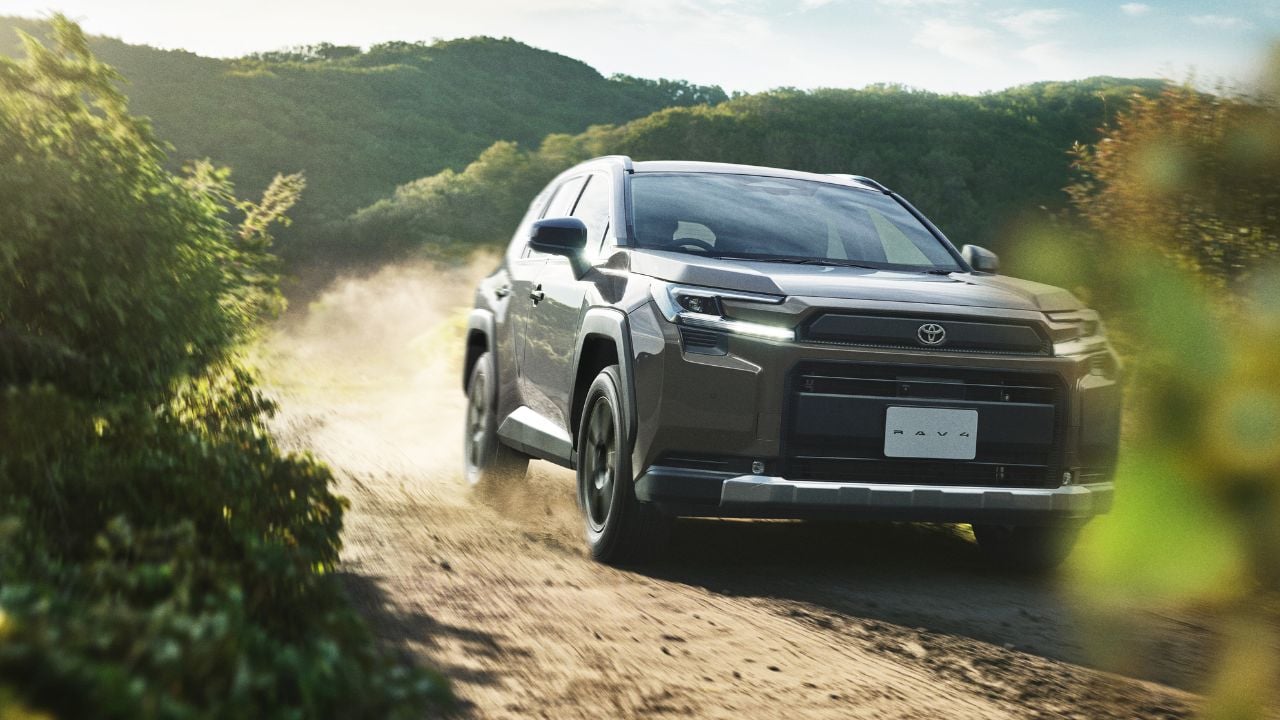
Toyota appears to be seriously exploring a new compact pickup truck aimed directly at the booming market created by the Ford Maverick. According to comments from Toyota Motor North America leadership, the long-rumored truck would likely use a unibody platform derived from the Toyota RAV4 rather than the traditional body-on-frame architecture used by the Toyota Tacoma.
The strongest indication yet came during an interview with Toyota Motor North America CEO, Tetsuo “Ted” Ogawa, who acknowledged that dealers have been asking for a compact pickup and specifically referenced a “RAV4-based pickup” as an opportunity for the brand.
The comments suggest Toyota is preparing to enter the compact truck segment with a completely different philosophy from the Tacoma. Instead of targeting serious off-roaders and heavy-duty towing buyers, the new truck would likely focus on urban drivers, light-duty utility, fuel efficiency, and affordability, the exact formula that turned the Maverick into one of Ford’s biggest recent success stories.
If Toyota moves forward with this, it could mark the company’s return to the American compact pickup segment for the first time since the original Toyota Truck, known globally as the Hilux, disappeared from the U.S. market decades ago.
Why A RAV4-Based Truck Makes Sense
Using the RAV4’s TNGA-K unibody platform would give Toyota several immediate advantages. Unlike traditional trucks that use separate ladder-frame chassis designs, a unibody pickup integrates the body and structure into one assembly, similar to a crossover SUV or sedan.
That setup generally produces a smoother ride, better fuel economy, lower weight, and easier maneuverability in urban environments. It also significantly reduces production costs compared to developing a dedicated body-on-frame truck platform.
The tradeoff is capability. A unibody truck typically cannot match the towing capacity, payload strength, or extreme durability of a traditional pickup like the Tacoma. However, Toyota appears to understand that many modern truck buyers no longer need heavy-duty performance.
Ford proved that theory with the Maverick. The compact pickup attracted buyers who wanted occasional truck utility without the cost, fuel consumption, or size penalties associated with larger pickups. Toyota now seems ready to target that exact customer base.
Ford’s Maverick Changed The Segment

When Ford launched the Maverick for the 2022 model year, many observers questioned whether American buyers would embrace a front-wheel-drive compact truck built on crossover foundations. The answer arrived quickly once demand exploded.
The Maverick became one of Ford’s hottest products thanks to its affordable pricing, hybrid efficiency, compact footprint, and practical utility. Ford sold more than 155,000 Mavericks in 2025 alone, proving there was massive demand for smaller, less intimidating trucks aimed at everyday drivers rather than traditional truck buyers.
The Maverick’s success also reshaped how automakers view the pickup market. Instead of a single category dominated by body-on-frame trucks, manufacturers are increasingly recognizing two distinct segments emerging simultaneously.
One lane still prioritizes towing, off-road capability, and rugged work use. The other focuses on efficiency, comfort, affordability, and versatility for suburban and urban lifestyles.
Toyota already dominates the traditional midsize truck category with the Tacoma. A compact unibody pickup would allow the company to compete in the second lane as well.
Toyota’s Hybrid Strength Could Become A Major Advantage
One of Toyota’s biggest advantages entering the segment would be its hybrid expertise. The current RAV4 platform already supports highly refined hybrid and plug-in hybrid systems that could transfer relatively easily into a compact pickup application.
The existing RAV4 Hybrid powertrain produces roughly 226 horsepower and has earned a strong reputation for efficiency and reliability. A pickup version using similar hardware could potentially offer fuel economy numbers that rival or even surpass the Maverick Hybrid.
Toyota also benefits from enormous consumer familiarity with the RAV4 nameplate. The crossover remains one of the best-selling vehicles in the world, giving Toyota an established customer base that already trusts the platform’s reliability and operating costs. That familiarity could help Toyota quickly attract buyers who might otherwise hesitate to try a new compact truck concept.
Pricing Will Determine Whether It Succeeds
If Toyota launches the truck, pricing will likely become the single most important factor determining its success. The Maverick initially succeeded partly because it delivered genuine affordability in a market where pickup prices had climbed dramatically.
Today, the Maverick starts around the mid-$20,000 range, while the Tacoma begins above $32,000. Toyota would almost certainly need to position a compact pickup significantly below the Tacoma to avoid overlap and attract budget-conscious buyers.
The company has one major opportunity working in its favor: consumer demand for smaller, practical vehicles remains strong as full-size truck prices continue rising.
Unlike the Hyundai Santa Cruz, which struggled to gain traction despite entering the same segment, Toyota brings decades of pickup credibility and one of the strongest reliability reputations in the industry.
Nothing has been officially confirmed beyond executive comments, and Toyota has not announced a launch timeline or production plans. Still, the signs are becoming increasingly difficult to ignore. Dealers want it, the market clearly exists, and Toyota already has the platform needed to make it happen. If the project moves forward, Ford’s Maverick may finally face its most serious competitor yet.