
Four wheels? Overrated. All around the globe, automakers, tinkerers, and wild-eyed visionaries have taken a different path, building vehicles that defy convention, balance, and sometimes belief by rolling out on just three wheels. Some emerged from the ashes of war, constructed to stretch limited resources and navigate narrow city streets. Others are sleek, high-tech experiments, shaped in wind tunnels and powered by solar panels, that appear to belong on another planet. And a surprising number are just… incredible. Stylish, sporty, road-ready, and legally drivable right now.
From oddball classics to futuristic prototypes, these 3-wheelers push the boundaries of design and imagination. Here’s a ride through the quirkiest, coolest, and most curious cars ever to skip a fourth wheel.
How We Chose These 3-Wheeled Wonders

We focused on vehicles that roll on exactly three wheels, whether they’re street-legal rides you can buy today, iconic oddballs from the past, or bold concept cars that never made it to production.
Some were built for efficiency, squeezing into tight city spaces or cutting down fuel use. Others were designed for pure fun, with open cockpits and head-turning performance. And a few exist simply because someone dreamed them up and decided the world needed something different and built it.
This list includes everything from retro microcars to futuristic EVs, and from hand-built roadsters to solar-powered space pods. We looked for designs that stand out, engineering that dares to be different, and stories that make us smile. If it made us say “wait, what is that?” — it made the cut.
Reliant Robin (UK, Oct 1973–1981; revived 1989–2001; final run Jul 2001–Oct 2002)

The wobbly legend that just won’t quit. Built in the UK from the 1970s through the early 2000s, the Reliant Robin was designed to be inexpensive, lightweight, and easy to drive with a motorcycle license, which explains its three-wheel setup and small engine.
The Robin’s fiberglass body kept weight down, but that also made it prone to… dramatic tipping in sharp turns, a trait famously showcased (and mocked) by Top Gear. Despite its quirks, or maybe because of them, the Robin earned a cult following. Today, it’s remembered with equal parts affection and disbelief, a true symbol of British eccentricity on wheels.
Morgan Super 3 (UK, 2022–present)

The Morgan Super 3 carries forward a legacy of three-wheeled motoring with a bold new look and a more modern heart. Built by hand in Malvern, England, it features a 1.5-liter Ford Dragon inline-three (118 bhp) integrated into a lightweight aluminum chassis, providing ample power without overwhelming the senses.
The design pays homage to vintage aircraft, featuring exposed rivets, wide front tires, and a minimalist cockpit that places the driver at the center of the experience. Every drive feels like a low-altitude adventure, with wind in your face, the engine humming, and the road unfolding like a runway.
Polaris Slingshot (USA, 2015–present)

The Polaris Slingshot resembles something that has escaped from a comic book and landed in your driveway. With two wheels up front, one in the back, and no roof or doors, it delivers a driving experience that’s raw, loud, and unapologetically bold. Powered by a four-cylinder engine (2.4L GM Ecotec for 2015–2019; 2.0L Polaris ProStar for 2020–present) and built low to the ground, the Slingshot hugs corners and turns heads wherever it goes.
You don’t sit in it so much as strap in and hang on. Legally classified as an autocycle in many states, it blurs the lines between car and motorcycle, and feels like nothing else on the road.
Vanderhall Venice (USA, 2016–present)
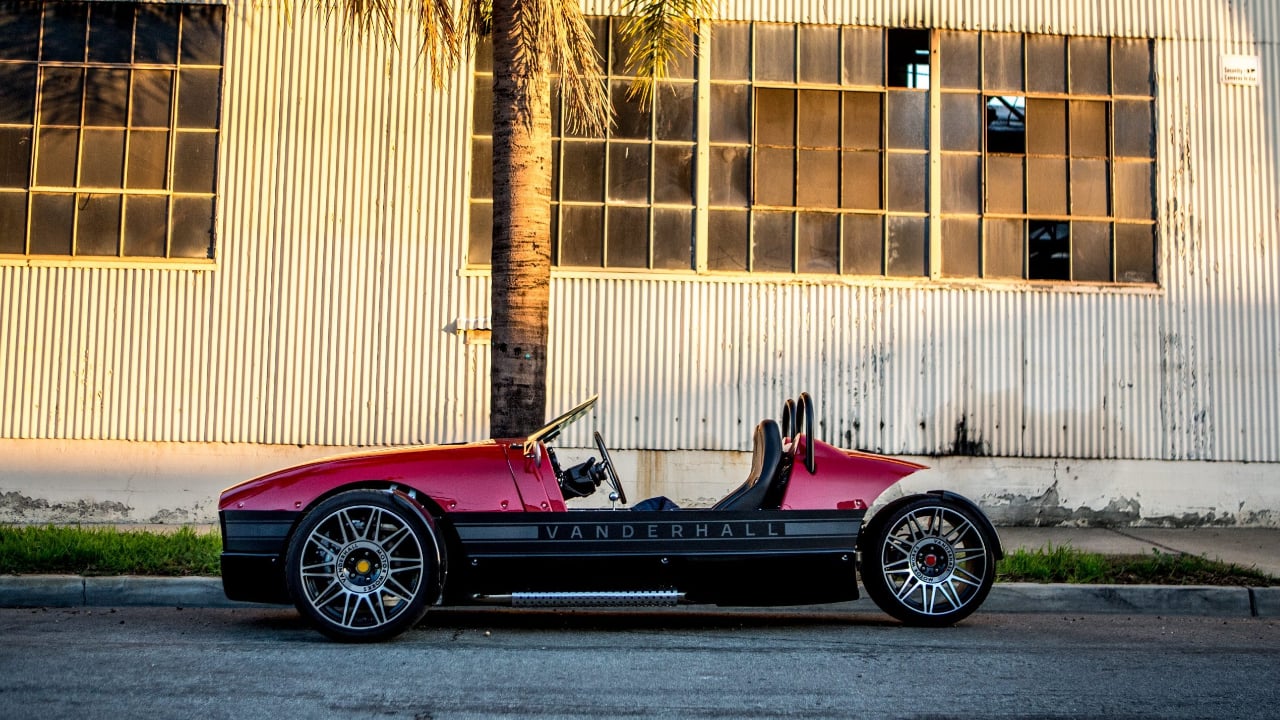
The Vanderhall Venice delivers classic roadster vibes with a futuristic twist. Built in Utah, this three-wheeled autocycle combines retro charm with modern performance, using a GM-sourced 1.4-liter turbo four-cylinder and front-wheel drive to ensure a fun and responsive ride.
It features an open cockpit, leather-trimmed bucket seats, a polished aluminum dash, and just enough creature comforts to make every drive feel like a weekend escape. With two wide wheels up front and a single rear drive wheel, it handles like a sports car while maintaining a light and lean profile. It may have three wheels, but it brings a full-on convertible attitude.
Campagna T-Rex (Canada, commercially launched 1995; produced since the early 1990s – present)
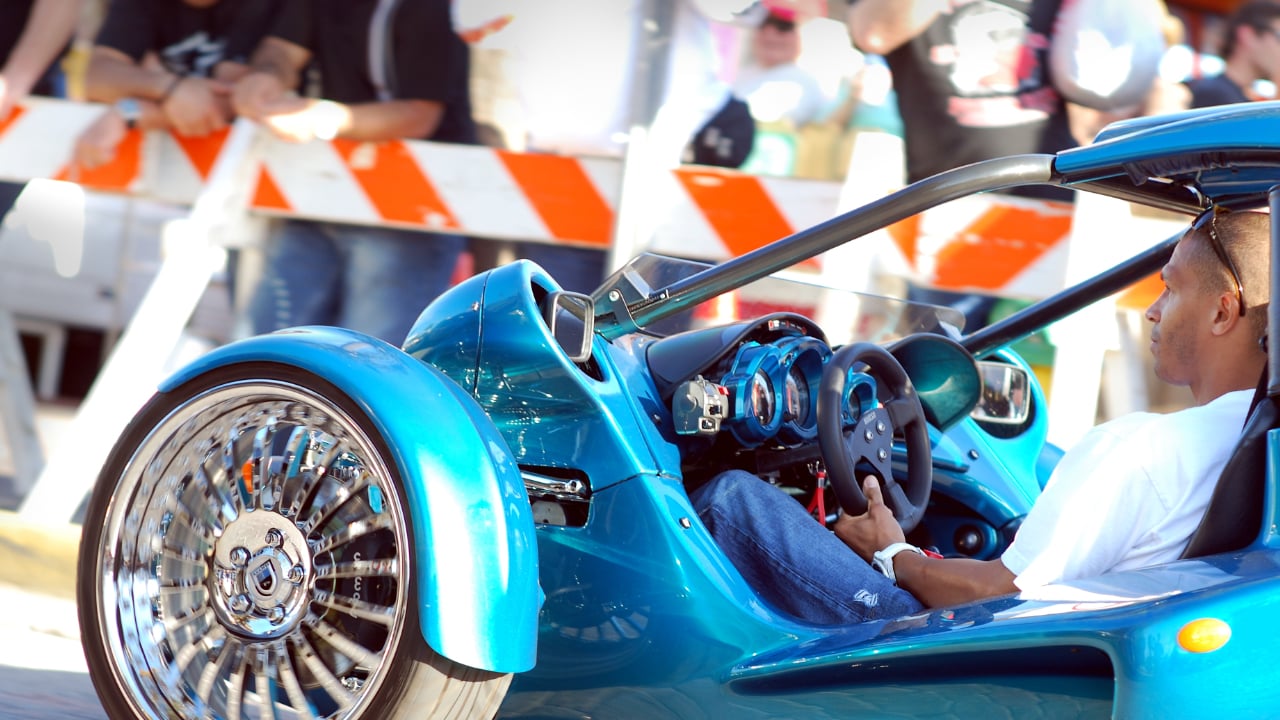
The Campagna T-Rex looks like it belongs on a racetrack, and drives like it too. This Canadian-built machine pairs a lightweight chassis with a high-revving motorcycle engine, using various motorcycle engines over its production history (including Kawasaki and BMW units in different versions), delivering blistering acceleration and sharp, precise handling. Its low, wide stance and exposed suspension scream performance, while the side-by-side seating and roll cage offer just enough structure to make it feel roadworthy.
Built for adrenaline junkies, the T-Rex corners like it’s on rails and launches like a rocket. It’s a head-turning, pulse-pounding ride that doesn’t just flirt with the edge, it lives there.
Arcimoto FUV (USA, 2019–2023; production halted while the company sought funding)
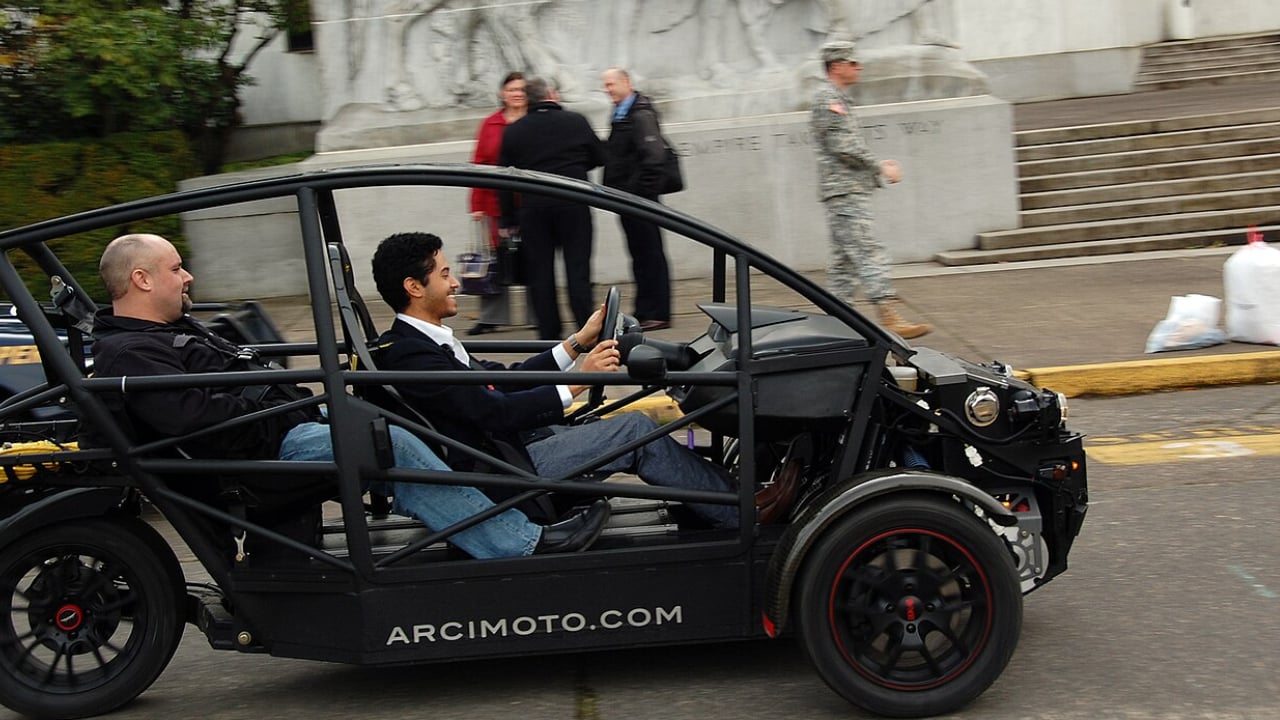
The Arcimoto FUV, short for “Fun Utility Vehicle”, is a three-wheeled electric commuter built for people who want something different from their daily drive. With tandem seating, a narrow footprint, and handlebars instead of a steering wheel, it’s built for urban agility and energy efficiency.
Despite its compact size, it includes seatbelts, a roll cage, and optional weather protection, making it far more practical than it first appears. Zippy, quiet, and eco-friendly, the FUV makes every grocery run or short commute feel like a mini adventure. It’s the kind of vehicle that turns heads, sparks conversation, and leaves you grinning at red lights.
Electra Meccanica Solo (Canada, 2019–2023; production discontinued and a repurchase program was offered after a recall)

The Electra Meccanica Solo takes the idea of a commuter car and strips it down to the essentials, one seat, three wheels, and an electric motor. Designed in Canada, this pint-sized EV is built for solo drivers who want to zip through traffic, fit into tight parking spaces, and skip the gas station entirely. With a top speed around 80 mph and a range of about 100 miles, it’s more capable than it looks.
The narrow body and low center of gravity make it surprisingly nimble around corners, and the fully enclosed cabin gives it a proper car-like feel. It’s practical, quirky, and tailor-made for individuals who prefer a quiet and solitary morning drive.
Aptera Solar EV (USA, 2020 prototype; deliveries TBD)
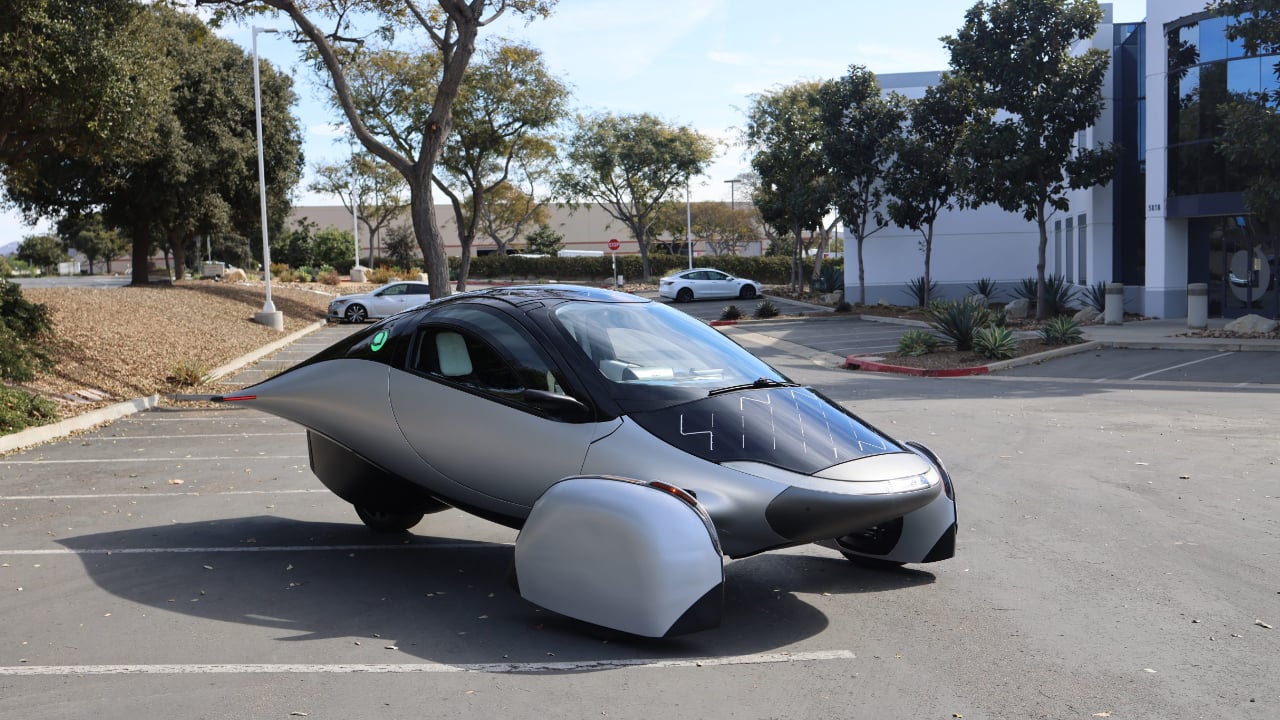
The Aptera Solar EV doesn’t just look like it came from the future, it’s trying to change the way we get there. This ultra-lightweight, three-wheeled electric vehicle is designed with aerodynamics in mind, achieving an almost unheard-of drag coefficient. Its sleek, teardrop shape helps maximize efficiency, and optional solar panels integrated into the body can add roughly 15–40 miles of solar range per day in favorable conditions (as reported/claimed) just by sitting in the sun.
Inside, it offers seating for two, digital displays, and storage space that rivals a small hatchback. With a claimed/targeted range of up to 1,000 miles for its longest-range configuration (with shorter-range versions also planned), it’s one of the boldest attempts yet at building a car that’s truly off the grid, and off the beaten path.
Toyota i-Road (Japan, 2013 Prototype; Trials began in 2014 including Grenoble-style city pilots in the mid-2010s)

The Toyota i-Road is what happens when a car and a motorcycle meet in a Tokyo tech lab. Designed for ultra-congested cities, this narrow three-wheeler leans into turns like a bike, thanks to Toyota’s Active Lean technology, but offers the comfort and enclosure of a tiny electric car.
It seats one or two people in tandem, and its ultra-compact size makes it perfect for slipping through tight spaces and squeezing into micro parking spots. With zero emissions and a turning radius sharper than most scooters, the i-Road is built for the kind of urban future where space, efficiency, and agility matter more than horsepower.
Peugeot 20Cup (France, 2005 concept)
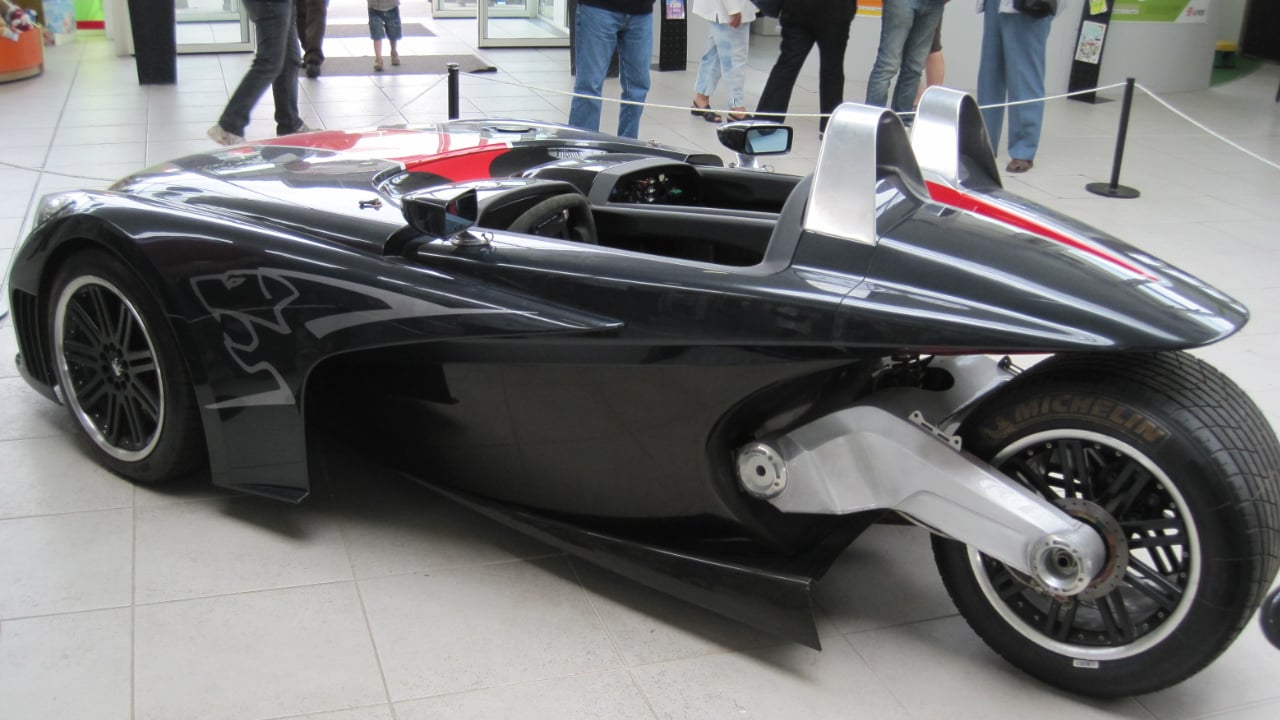
The Peugeot 20Cup looks like it escaped from a video game, and that’s exactly the energy it brings. Unveiled as a concept in the mid-2000s, this wild reverse trike features two wheels up front, one in the rear, and an open cockpit with tandem seating. Built on a carbon fiber frame and powered by a 1.6-liter turbocharged engine from the PSA–BMW “Prince” engine family, it was light, fast, and utterly unlike anything else in Peugeot’s lineup.
The asymmetrical rear swingarm, low-slung body, and aggressive styling gave it a motorsport vibe, even though it was never meant for production. It’s a reminder that sometimes the French throw out the rulebook, and the fourth wheel, to see what happens.
Carver One (Netherlands, 2003–2009; Carver returned with an electric model launched in 2019; the company went bankrupt in 2024, with a relaunch planned)

The Carver One is a physics lesson in motion. Built in the Netherlands, this futuristic tilt-trike utilizes Dynamic Vehicle Control (DVC) to lean into turns like a motorcycle, while maintaining its two-passenger cabin’s balance and enclosure. The result is a driving experience that feels like banking through corners in a fighter jet, all while staying dry and strapped into a cozy cockpit.
Powered by a small turbocharged engine, the Carver One isn’t about raw speed, it’s about feeling every curve like you’re carving down a mountain road. It’s strange, stylish, and unlike anything else on the road, even years after its debut.
Messerschmitt KR200 (Germany, 1955–1964)

Born from the ruins of postwar Germany, the Messerschmitt KR200 is one of the quirkiest and most iconic microcars ever built. Designed by an aircraft engineer and produced by a former airplane manufacturer temporarily banned from building planes, the KR200 borrowed heavily from aviation, from its tandem seating to the bubble-shaped canopy that lifted like a fighter jet’s.
It was tiny, lightweight, and powered by a single-cylinder engine mounted behind the seats, delivering modest speeds but excellent fuel efficiency. With its narrow footprint and unmistakable silhouette, the KR200 captured a moment in history when innovation was born from scarcity and proved that personality could come in tiny packages.
BMW Isetta (Germany, 1955–1962)

The BMW Isetta might be the most lovable oddball ever to hit the road. Originally designed by an Italian company and later reengineered by BMW, this microcar became a postwar icon across Europe. Its most famous feature? The entire front of the car is the door. Swing it open, and the steering wheel comes with it; a clever bit of design that still makes people smile.
Powered by a single-cylinder motorcycle engine, the Isetta wasn’t fast, but it didn’t need to be. It could fit in tight spaces, sip fuel like a scooter, and provide affordable mobility during a time when many families were getting their first car. Today, it’s remembered as the original bubble car, and one of the most charming vehicles ever made.
Twike (Germany/Switzerland, 1996–present)
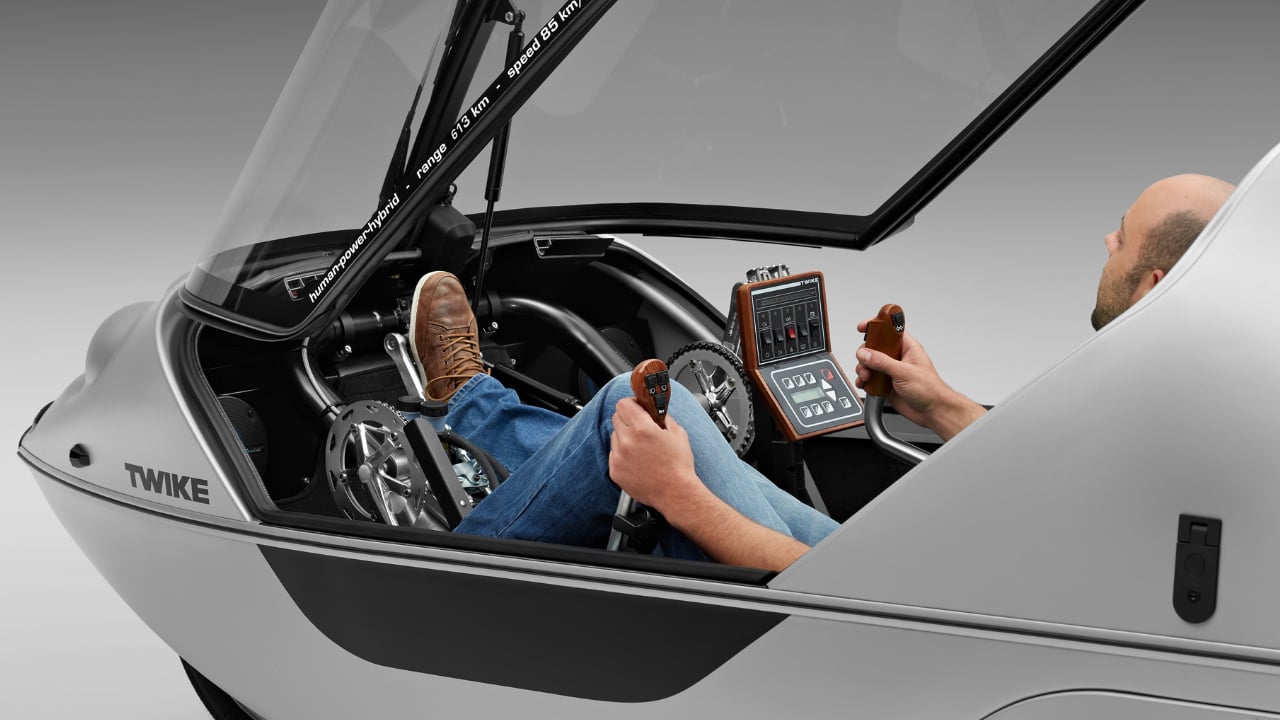
The Twike is part electric vehicle, part pedal-powered machine, and 100 percent unconventional. Designed for two passengers and built with efficiency in mind, this lightweight trike seamlessly blends human power with battery power, allowing you to extend your range by pedaling as you drive. It’s not a gimmick either; the pedal system generates electricity to charge the battery and extend range (it isn’t used for direct propulsion).
With its aerodynamic shell, joystick steering, and minimalist interior, the Twike feels more like piloting a capsule than driving a car. It’s ideal for eco-conscious commuters who want to shrink their carbon footprint, and maybe tone their legs in the process.
Bond Bug (UK, 1970–1974)

Few cars wear their personality as boldly as the Bond Bug. Launched in the early 1970s, this wedge-shaped three-wheeler looked like something out of a comic book, which was entirely the point. Most famously offered in bright tangerine orange (though other colors/special runs existed) and featuring futuristic swing-up canopy doors, it was aimed squarely at young drivers who wanted something fun, affordable, and just a little rebellious.
Underneath its fiberglass shell was a front-mounted 700cc Reliant four-cylinder, capable of reaching around 75 mph, which felt plenty fast given how close you sat to the ground. Built by Reliant and styled by Tom Karen of Ogle Design, the Bond Bug didn’t take itself too seriously, and that’s precisely why people still smile when they see one.
Why Three Wheels Still Turn Heads
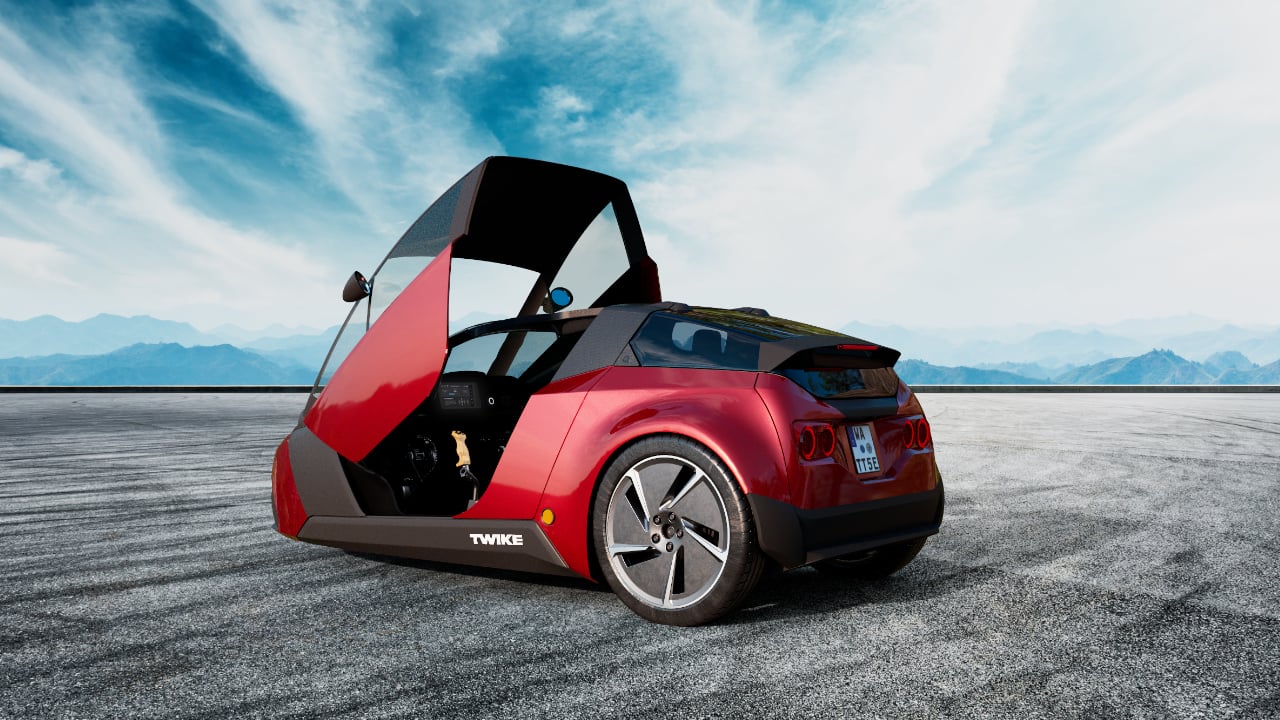
Three-wheeled cars may sit on the fringe of the automotive world, but that’s precisely what makes them so captivating. Whether built for fuel efficiency, urban agility, or just the thrill of doing something different, these vehicles prove that great design doesn’t always need four points of contact with the pavement. From postwar microcars to futuristic solar EVs, they reflect the creativity, resourcefulness, and sometimes downright whimsy that keep car culture exciting.
They’re not always practical, and they’re definitely not ordinary, but that’s what gives them their charm. In a world where most cars start to look the same, these three-wheelers stand out, reminding us that driving can still be imaginative, personal, and fun.