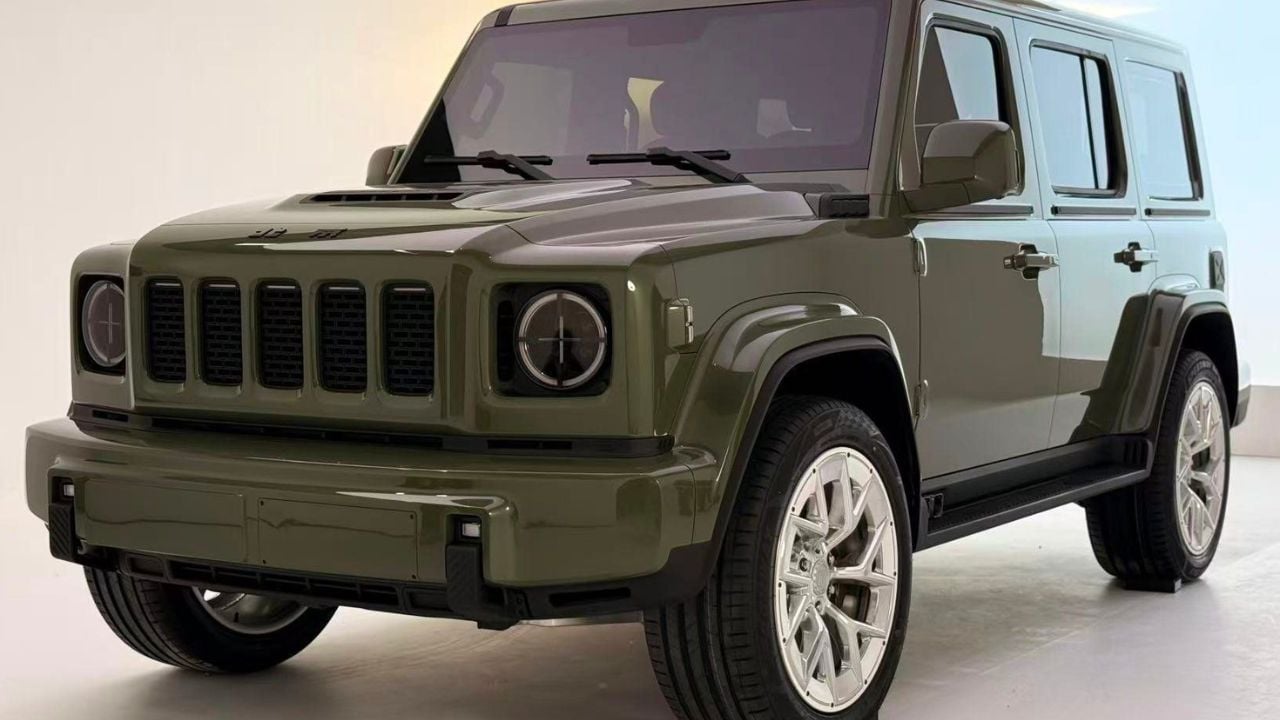

Beijing has a new SUV on the way, and if the internet reaction is anything to go by, the design team might want to keep their comment section closed for a while.
The ‘new’ SUV is just the latest reminder of a long-running tension in global automotive design: China’s meteoric rise has often been fueled by ‘borrowing,’ sometimes blatantly, from Western brands.
The mashup here is almost comical: Jeep Commander’s outline, Mercedes G-Wagon’s rear, Jeep Liberty’s face, and a whiff of Wrangler attitude. Is it a “new flagship SUV” or a collage of greatest hits from the off-road hall of fame?
Sadly, nothing new here.
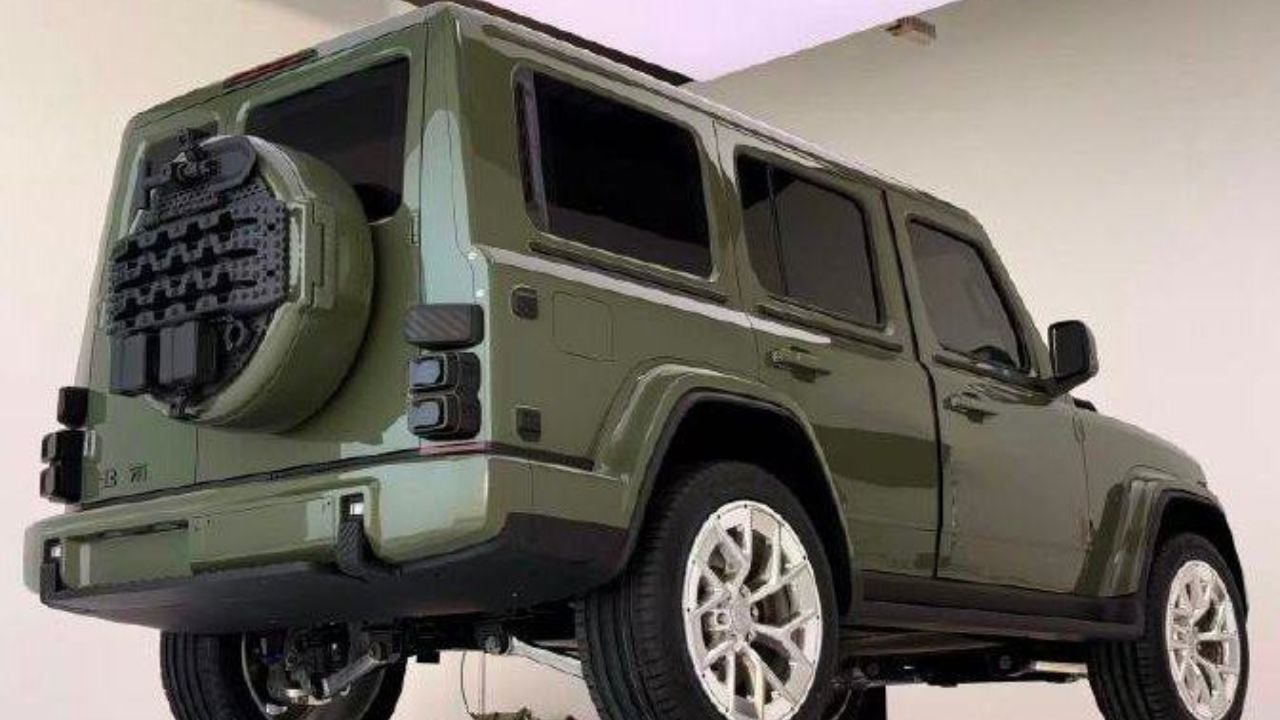
The Beijing BJ81 has surfaced in China, slotting in above the BJ80 as a new flagship off-road styled luxury SUV.
If you haven’t actually seen the darn thing, it sounds like a fairly straightforward product expansion for the Beijing brand, offering ICE and plug-in hybrid powertrains with outputs reported up to around 500 horsepower. Impressive. It is also part of a broader trio of new models expected from the marque this year, with a launch window set for late Q3.
So far, so normal. Then the photos hit.
Then the Internet Exploded
What followed was the familiar storm of automotive internet commentary, where every sharp angle becomes a courtroom exhibit and every grille shape is cross examined like a conspiracy board.
The BJ81’s design language leans heavily into retro off-road cues, squared-off proportions, and a deliberately chunky stance meant to signal toughness and luxury in equal measure. In China’s current design climate, that “bling but boxy” aesthetic is en vogue.
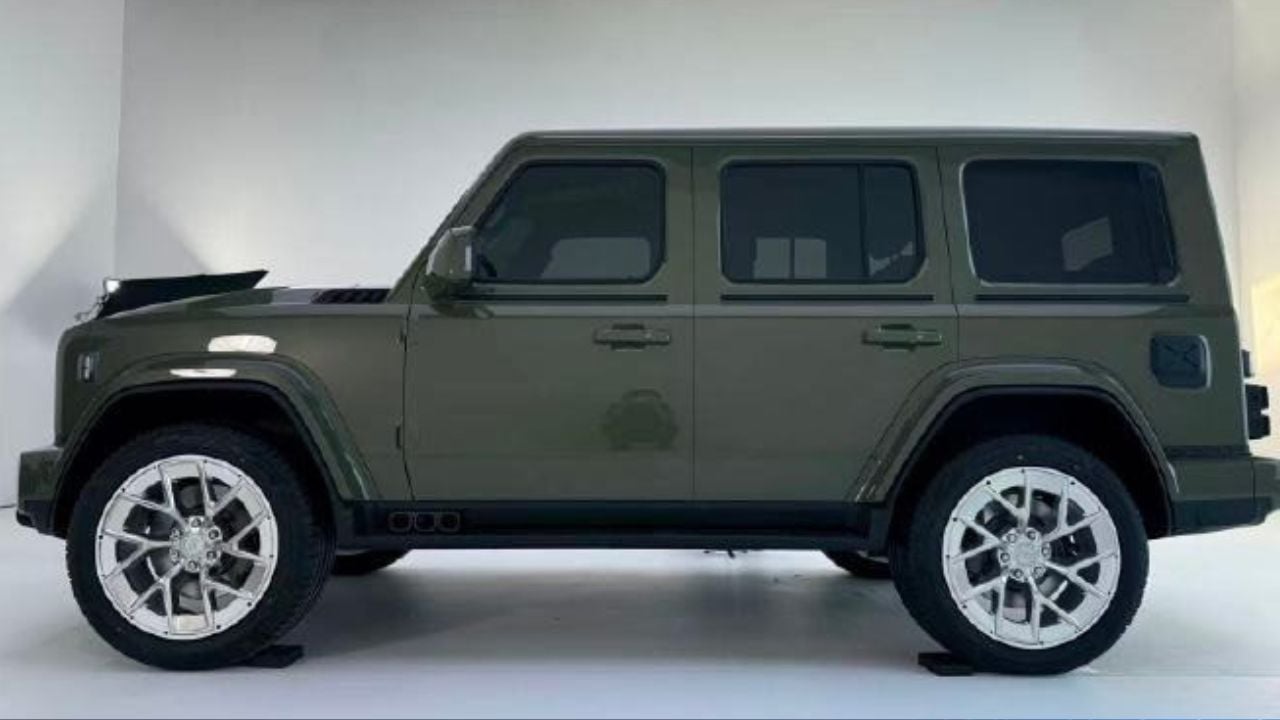
Still, critics online were quick to draw comparisons. Some pointed to the overall silhouette that’s unmistakably lifted from the Jeep Commander. Others noted the rear end that echoes the Mercedes G-Wagon’s upright, utilitarian posture, complete with twin windows.
The front fascia, depending on who you ask, has been compared to the Jeep Liberty, while a few voices in the crowd insist there is a Wrangler-like attitude somewhere in the stance and proportions.
Put all that together and you get the internet’s favorite cocktail: a new SUV described as a collage of familiar global off-road icons.
Copycat Cars: Nothing New
This isn’t a new conversation for Chinese automakers, nor is it unique to the BJ81.
Beijing BJ81 SUV for China – new pics
Beijing is a Chinese car brand, owned by BAIC. The BJ81 is the first concept of the successor of the long-running Beijing BJ80 SUV.
We have new, and rather dramatic, photos of the BJ81. The pics show a dark black example in the snow with a… pic.twitter.com/FKMaMjHqnl
— Tycho de Feijter (@TychodeFeijter) January 14, 2026
Western automakers have repeatedly clashed with Chinese firms over design plagiarism. Back in 2003, General Motors sued Chery over the QQ minicar, which looked suspiciously like GM’s Daewoo Matiz.
Land Rover fought a bruising battle against Jiangling Motors over the Landwind X7, a near carbon copy of the Range Rover Evoque. Jaguar Land Rover eventually won a Chinese court ruling in 2019, forcing Jiangling to halt production.
Today, there’s a “Temu Range Rover” (real name: Jaecoo 7) that’s finally succeeded in eating the British brand’s lunch in its own country, and it’s been eating that lunch legally for close to two years now.
Honda, Toyota, and Mercedes have all lodged complaints over models that seemed to trace their styling directly from their own catalogues. These disputes highlight the uneasy balance between “inspiration” and outright imitation.
For years, domestic Chinese brands have been praised and criticized for drawing inspiration from established Western design languages while rapidly iterating their own identity.
Beijing BJ81 unveiled in China
– new luxury SUV, positioned above the BJ80.
– ICE and PHEV versions, up to 500 hp.
– retro design.
– Bling! Bling is a new-old trend in China, and it looks great on the BJ81.
– One of 3 new Beijing models for this year.
– Launch in late Q3. pic.twitter.com/2DgaNUpuq3— Tycho de Feijter (@TychodeFeijter) April 21, 2026
The devil’s advocates say China’s copycatting finesse is a good thing because it reflects a fast-learning industry compressing decades of global automotive evolution into a much shorter timeline.
Critics, on the other hand, see too many borrowed cues and not enough original handwriting.
The BJ81 sits right in that tension zone, where interpretation becomes debate material. Is it homage, convergence, or something less flattering depending on your point of view? The answer tends to depend not on the car but on who is doing the looking.
Retro is Global, Folks
There is also a broader design trend worth acknowledging here.
Apparently, the “retro off-roader revival” is not exclusive to one market. From Land Rover’s modern Defenders to Ford’s revived Bronco, global manufacturers have been mining nostalgia and rugged simplicity for years.
Boxy shapes, exposed edges, and upright lighting signatures have become a shared visual language across continents.
In that context, the BJ81 isn’t entirely an outlier so much as another participant in a global styling loop where designers keep circling the same aesthetic territory, each adding their own regional accent. People just wish they’d recycle their own designs (assuming they have any) instead of plagiarizing others.
Copy First, Conquer Later
And it’s not just cars.
China’s industrial ascent is littered with examples of technology transfer that began with imitation. In aviation, the COMAC C919 owes much to Western suppliers and design philosophies, echoing Airbus and Boeing blueprints.
In high-speed rail, China’s CRRC built its empire by first importing Japanese Shinkansen and German Siemens technology, then rapidly localizing and rebranding.
In consumer electronics, Huawei and Xiaomi began by shadowing Apple’s design language before carving out their own identities. Even in renewable energy, China’s solar panel industry scaled by absorbing German know-how before dominating global production.
The BJ81, then, is merely a symbol of a broader pattern: copy first, refine later, dominate eventually. Critics see shameless plagiarism; defenders call it accelerated learning. Historically, both views hold water.
What’s undeniable is that China has repeatedly turned imitation into innovation, building industries that now rival or surpass their Western counterparts. The BJ81’s mashup styling may be clumsy, but if history is any guide, today’s copycat could be tomorrow’s trendsetter. So, don’t laugh.
The question is whether Beijing Auto will eventually find its own handwriting—or remain content stitching together the silhouettes of others.