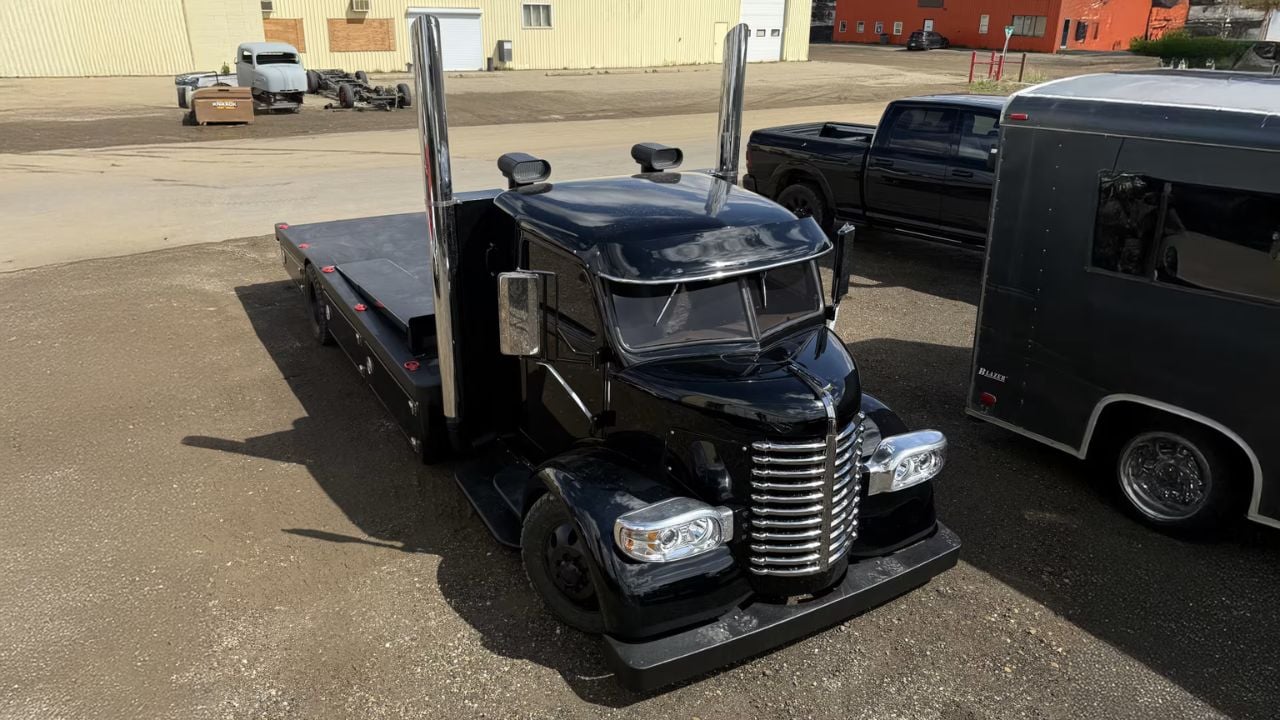
A distinctive piece of postwar American trucking history is set to cross the auction block. The heavily customized 1947 Diamond T COE flatbed is featured in the upcoming Mecum Houston auction, scheduled for April 9–11, 2026. Built during a period when commercial trucks were engineered first and foremost for durability and demanding workloads, Diamond T distinguished itself by giving its vehicles a level of styling and finish rarely seen in the industry.
The company’s vehicles were often described as the “Cadillac of trucks,” a nickname that reflected their higher prices, polished appearance, and attention to detail compared with many mainstream competitors. Today, surviving examples are relatively rare, particularly in cab-over-engine (COE) form.
This custom build combines classic industrial styling with modern modifications, highlighting both the legacy of Diamond T’s mid-century trucks and collectors’ continuing fascination with reimagined vintage commercial vehicles.
A Truck Brand Known for Style and Strength
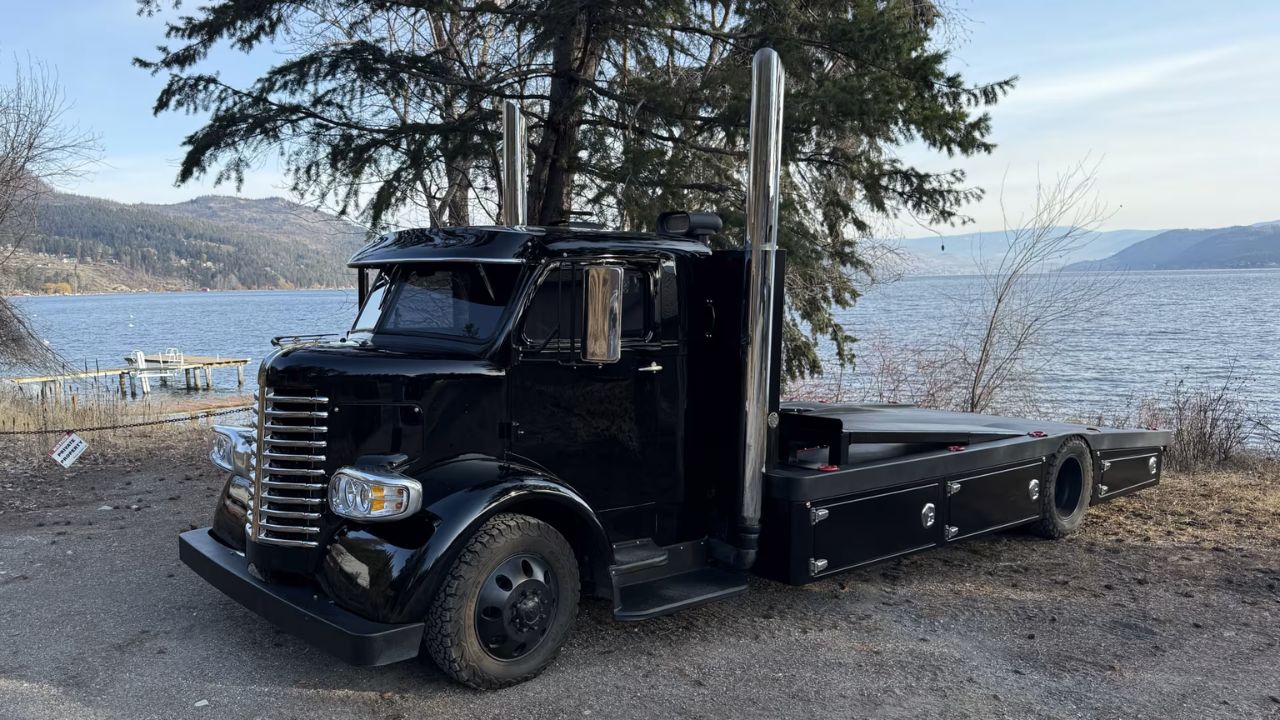
Diamond T trucks occupy a unique place in American automotive history. Founded in 1905 by C.A. Tilt, the company began producing trucks in 1911 and quickly established a reputation for blending heavy-duty capability with refined styling. The brand stood apart from other manufacturers by emphasizing aesthetics, polished trim, distinctive grilles, and sculpted fenders at a time when most commercial vehicles were built primarily for practical use.
By the late 1930s and 1940s, Diamond T’s lineup included a wide range of trucks, from light-duty pickups to large commercial haulers. The company continually updated its designs with improved suspension systems, more powerful engines, and evolving cab styling. Diamond T vehicles were sold across North America and were also exported internationally during this period.
Cab-over-engine designs like the one featured in this auction were particularly valued in commercial settings. With the driver positioned above the engine rather than behind it, the configuration allowed for a shorter overall vehicle length while maintaining cargo capacity. This layout proved especially useful for maneuvering in tight urban or industrial environments and became common in delivery, freight, and specialty applications.
The 1947 COE Custom Flatbed
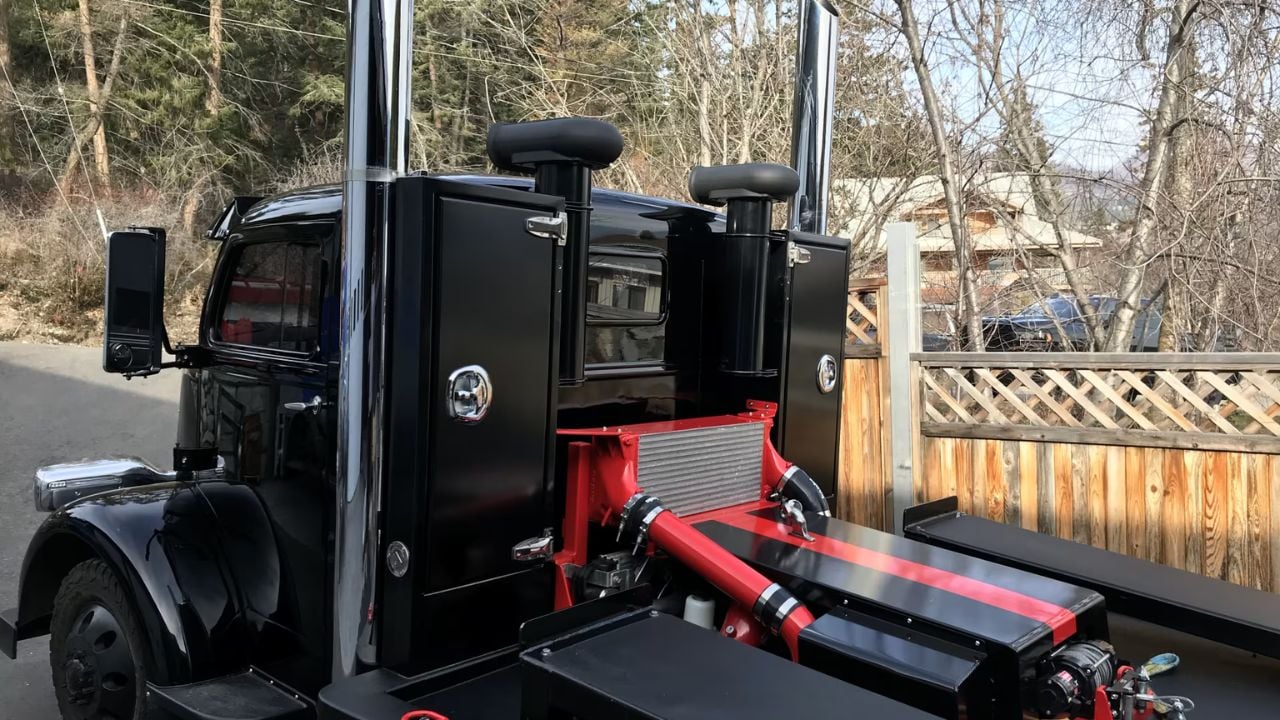
The example offered takes the original concept of the Diamond T COE and pushes it in a radically different direction. While the truck retains the recognizable Diamond T cab design, the rest of the vehicle has been heavily modified to create a modern custom build.
The cab-over configuration places the driver directly above the front axle, giving the truck its distinctive forward-leaning profile. This layout, common among mid-century commercial vehicles, contributed to the truck’s compact footprint while maintaining a large cargo platform.
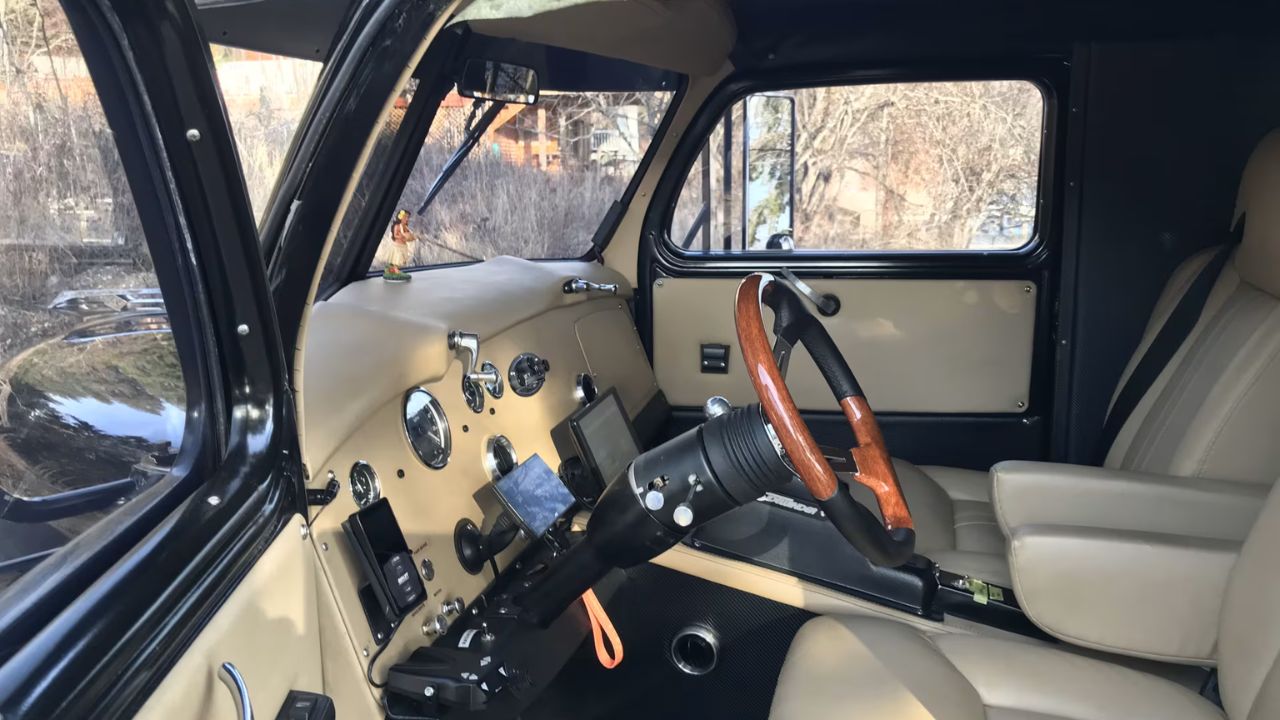
In its current form, the vehicle features a custom flatbed and a stance more reminiscent of a show vehicle than a traditional working hauler. Custom builds like this often combine original bodywork with newer chassis components, modern powertrains, or updated suspension systems to make the vehicle more drivable by contemporary standards.
Restomod approaches like this have become increasingly common with vintage trucks. By preserving the visual character of the original vehicle while improving reliability and performance, builders create machines that function as both rolling art pieces and usable road vehicles.
Why Diamond T Trucks Remain Collectible
Vintage Diamond T trucks have steadily gained recognition among collectors over the past two decades. Several factors contribute to their appeal. Production numbers were far lower than those of larger manufacturers such as Ford, General Motors, or Dodge, which means surviving examples are comparatively scarce today.
The trucks’ distinctive styling has also aged well. Sweeping fender lines, bold grilles, and prominent hood shapes give them a presence that stands out even among other classic trucks. Enthusiasts frequently cite these design cues as a key reason the vehicles remain desirable decades later.
The truck also represents an important transitional moment in American industrial history. Built in the years immediately following World War II, vehicles like the 1947 Diamond T were part of the nation’s rapid shift from wartime manufacturing back to civilian industry.
During the war years, manufacturers had focused heavily on military contracts and heavy-duty vehicles, including large tactical trucks produced for the U.S. Army. When peace returned, companies such as Diamond T resumed civilian production with updated models that reflected both wartime engineering advances and renewed commercial demand.
Today, custom builds such as the COE flatbed offered by Mecum demonstrate how these machines continue to evolve long after their working lives ended. What began as a practical work truck has been transformed into a collectible centerpiece, bridging mid-century industrial design and modern custom craftsmanship.