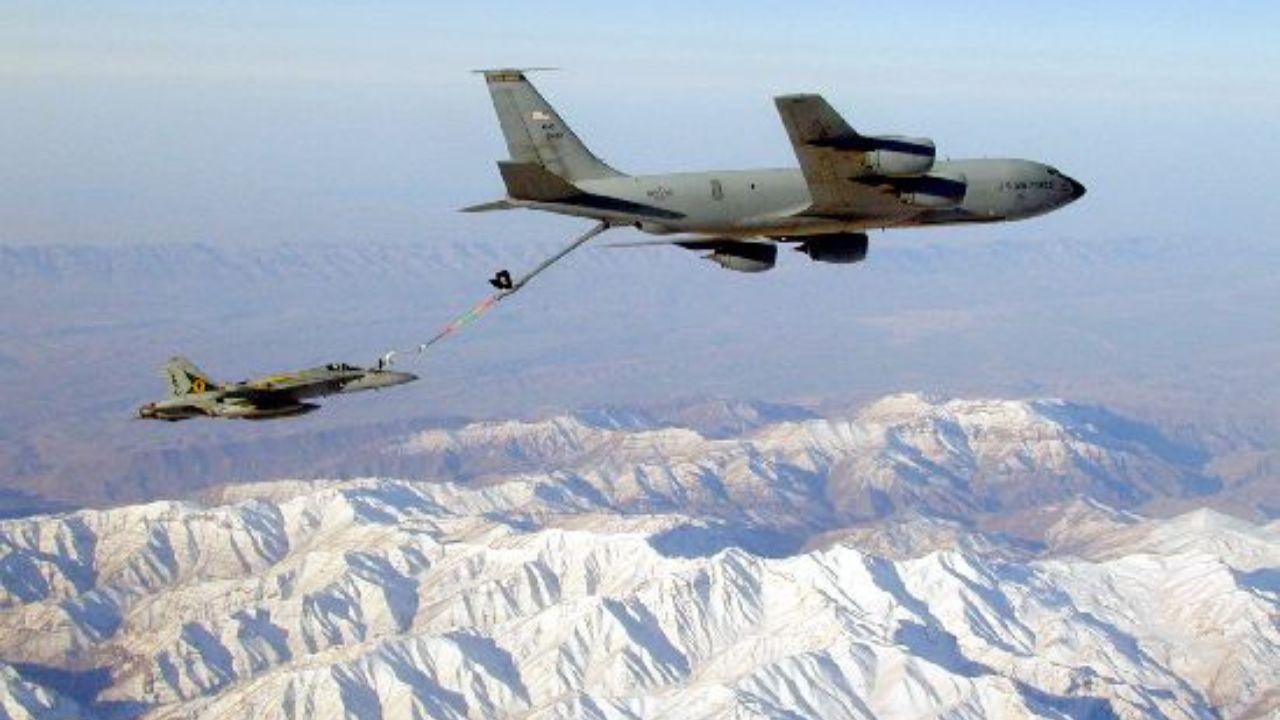

In the tense air campaign known as Operation Epic Fury, aerial refueling aircraft played a decisive role in enabling long-range strike missions across the Middle East.
But the tankers that helped sustain the operation trace their lineage to a bold gamble made more than seventy years ago, when a single experimental jet quietly reshaped both commercial aviation and military airpower.
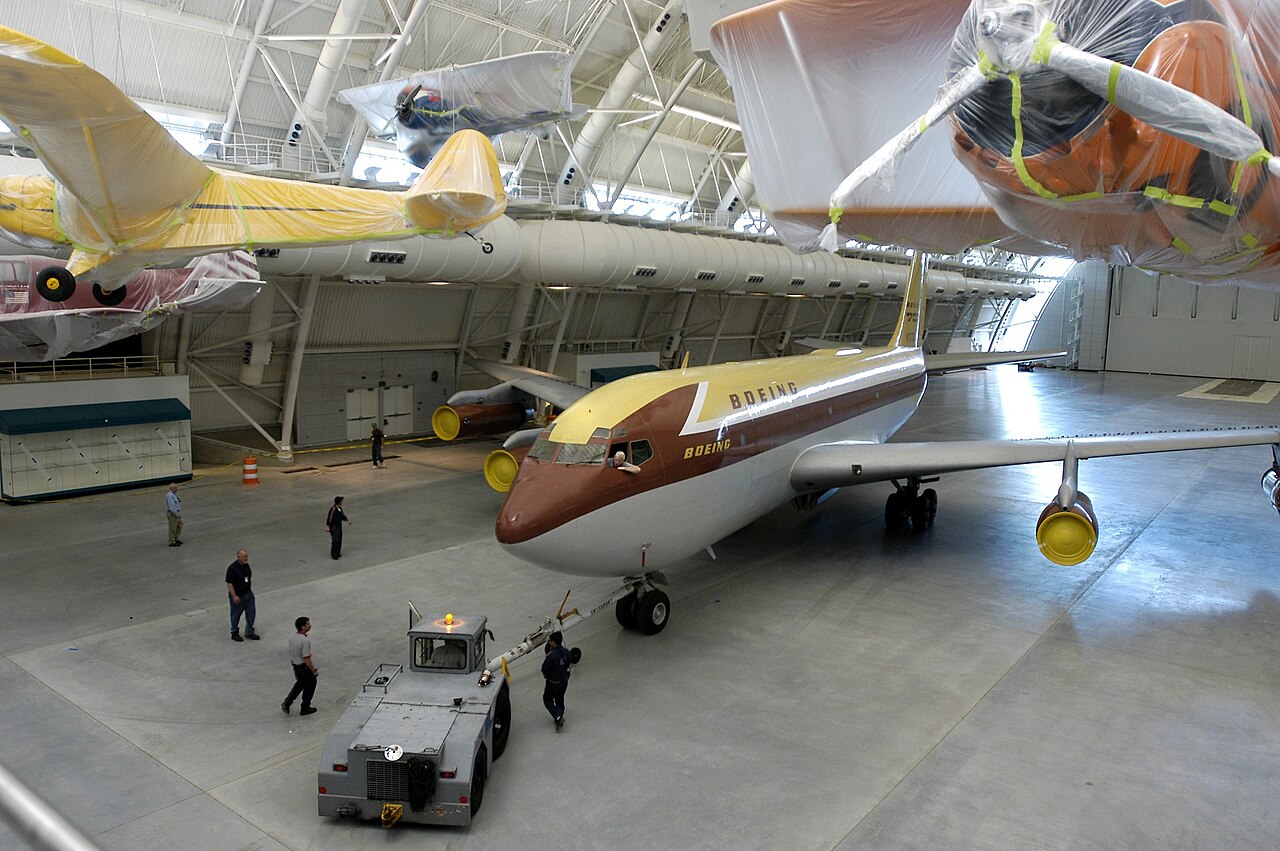
At the center of that story is the Boeing 367-80, a prototype aircraft developed by Boeing in the early 1950s. Known simply as the “Dash 80,” the jet transport demonstrator eventually became the foundation for two of the most influential aircraft ever built: the Boeing 707 and the Boeing KC-135 Stratotanker.
The Problem: Propeller Tankers Couldn’t Keep Up with Jets
The story began with a risky decision by Boeing leadership during the Cold War. At the time, the U.S. Air Force relied on the propeller-driven Boeing KC-97 Stratofreighter to refuel bombers in midair.
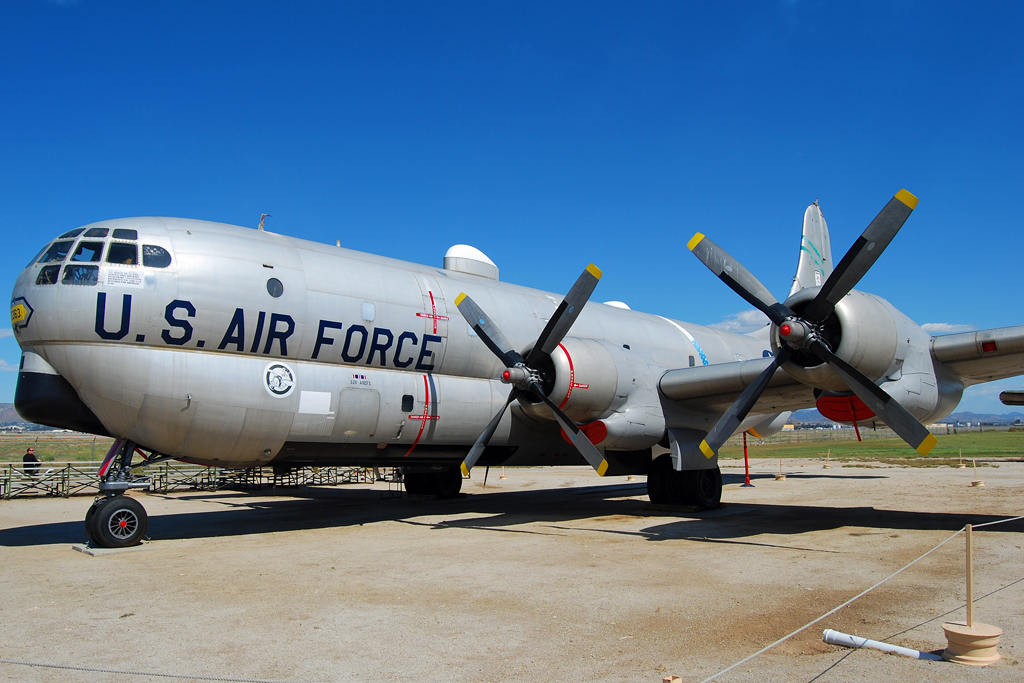
The problem was speed. New jet bombers entering service were far faster than the tanker aircraft meant to support them. To refuel, those bombers had to slow dramatically, sometimes approaching dangerous flight conditions.
Recognizing the growing mismatch, Boeing president William McPherson Allen made a daring call. Even though the U.S. Air Force had not requested a jet tanker, Allen believed the military would eventually need one. Boeing invested about $16 million of its own money to build a prototype jet transport aircraft that could demonstrate the future of aviation.
Development of the Dash 80 began in 1952. Engineers designed the aircraft with swept wings angled at roughly 35 degrees to reduce drag and allow higher speeds.
The four turbojet engines hung beneath the wings blessed the aircraft with a level of performance that piston-powered planes could not match. The prototype took to the skies for the first time in July 1954 over Washington state.
The Barrel Roll That Shocked Boeing and Captivated the World
The aircraft’s most famous moment came the following year during a demonstration flight near Seattle. Boeing invited airline executives attending the city’s Gold Cup hydroplane races to watch the new jet in action.
As the aircraft roared overhead, test pilot Alvin M. “Tex” Johnston stunned the crowd by performing two full 360-degree barrel rolls in the massive jet. The unexpected stunt reportedly horrified Boeing executives but inadvertently captivated the aviation industry.
The spectacle achieved its goal. Airline leaders immediately saw the aircraft’s potential. Soon after, Juan Trippe ordered a passenger version of the design, which Boeing expanded into the 707 jetliner.
The aircraft would revolutionize commercial travel by dramatically reducing the time required for transcontinental and transatlantic flights. More than 1,000 examples were eventually produced before the model was phased out decades later.
At the same time, the U.S. Air Force recognized the military value of the Dash 80 platform. Boeing adapted the design into the KC-135 Stratotanker, a jet-powered aerial refueling aircraft capable of transferring massive amounts of fuel to other planes mid-flight.
Introduced in the late 1950s, the KC-135 became the backbone of American aerial refueling operations and remains in service today.
From Cold War Gamble to Middle East Skies
Fast forward to the present Middle East conflict. During Operation Epic Fury, KC-135 tankers were deployed alongside newer platforms such as the Boeing KC-46 Pegasus to support long-range strike aircraft and maintain continuous air operations.
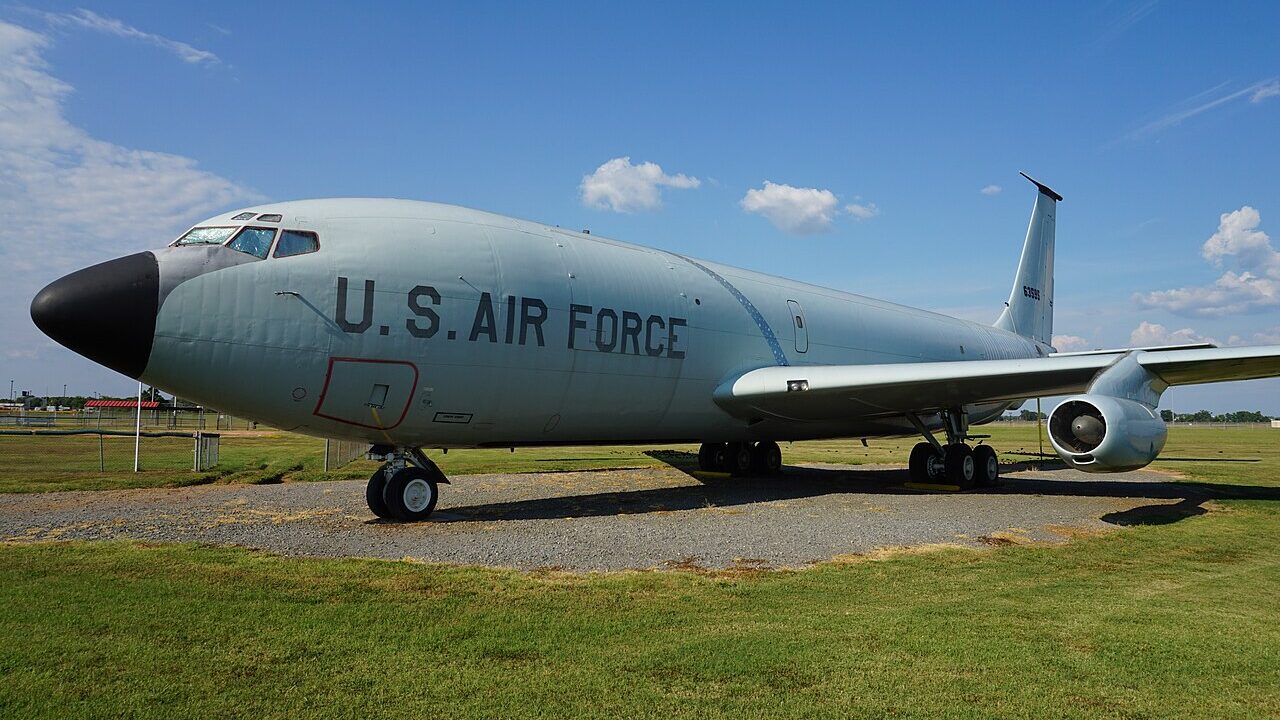
These tankers allow fighters and bombers to stay airborne for extended periods, dramatically increasing the reach and endurance of military missions.
Without such refueling aircraft, modern air campaigns would be far more limited. Fighters would need to return to base frequently for fuel, and that alone would cut the tempo of operations and restrict how far aircraft could travel from friendly airfields.
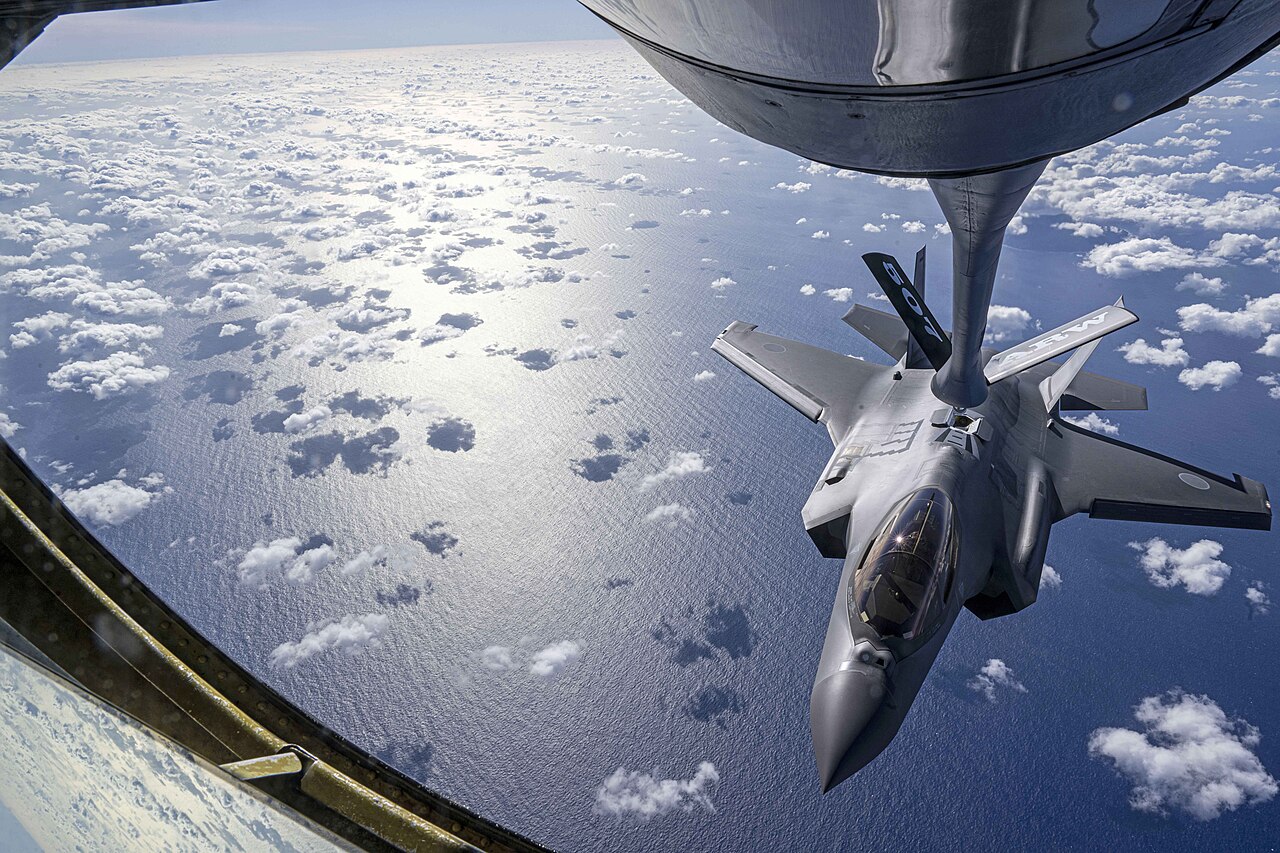
Tankers effectively act as flying fuel stations, enabling strike aircraft to operate thousands of miles from their launch points.
Yet behind that crucial capability lies a remarkable historical twist. The tankers that sustained Operation Epic Fury can trace their heritage back to a single experimental jet built in the 1950s.
Only one Dash 80 was ever constructed, but its influence reshaped both military and commercial aviation for generations. Today, that lone prototype sits preserved at the Smithsonian’s Steven F. Udvar-Hazy Center, a reminder that one daring engineering gamble can echo across decades of aviation history.
Sources: Air & Space Forces Magazine, Business Insider