

There’s a polite version of this story, and then there’s the real one. The polite version says Doug Field is leaving Ford Motor after helping modernize its EV and software ambitions. The real version is messier, more revealing, and says a lot about how brutally hard the legacy-to-EV transition actually is.
Start with the obvious: timing. Field is leaving just as Ford rewrites its EV playbook.
Over the past year, the company has scrapped or delayed multiple high-profile EV programs, taken a massive financial hit tied to its electric investments, and pivoted toward hybrids and lower-cost electric models.
That alone tells you this is not a clean “mission accomplished” departure. It looks more like a strategic reset where the original architect no longer fits the revised blueprint. Yes, that’s it.
Silicon Valley Meets Detroit
Ford hired Field to inject Silicon Valley thinking into a century-old industrial machine.

His background at Tesla and Apple made him the guy for big bets: new electrical architectures, software-defined vehicles, bold product leaps. And to be fair, he did deliver parts of that vision. Ford’s internal culture shifted, tech talent came in, and systems like BlueCruise signaled real progress.
But here’s the tension: Silicon Valley thinking thrives on iteration, risk, and long-term bets. Detroit survives on margins, scale, and execution discipline. When EV demand softened and costs ballooned, that tension snapped.
Ford didn’t just tweak its EV strategy. It slammed the brakes, wrote down billions, and started prioritizing affordability and profitability over moonshot platforms.
That shift quietly undermines the kind of environment Field was brought in to create.
There’s also a structural clue buried in the announcement. Ford is folding its advanced EV and tech unit into a new “Product Creation and Industrialization” group led by operations leadership.
That is not just a reorg. It is a philosophical pivot.
It says the company is done experimenting at the edges and wants tighter integration between engineering, manufacturing, and cost control. In plain terms, the factory is back in charge.
And when the factory takes over, the experimentalist star punching the clock, sort of.
Field’s Own Words and What He Didn’t Say

Field himself hinted at this in a revealing way. He framed his work at Ford not around products, but around building teams and capabilities.
“The whole journey here has not been about the products for me,” Field reportedly told Reuters. “The journey here has been about building the team, building the set of capabilities, helping build the culture.”
That sounds noble, but it also reads like someone distancing himself from the final scoreboard. Many of the programs tied to his tenure never made it to production, or were scaled back.
Indeed, Several of Field’s hallmark EV programs at Ford were either canceled, delayed, or scaled back, with the company pivoting away from ambitious moonshots toward affordability and hybrids.
Ford’s universal EV architecture designated Model e, envisioned to underpin a wide range of vehicles, was deprioritized as costs mounted. The company instead shifted focus to smaller, cheaper EVs rather than the expansive platform Field championed.
There was also the large 3-row electric SUV originally slated for mid-decade release. Ford delayed this flagship project due to high battery costs and uncertain demand. It was meant to showcase Field’s Silicon Valley-inspired design thinking but is now pushed back.
Similarly, the ambitious plans to scale F-150 Lightning production and introduce advanced trims were slowed. Ford cut production targets and reoriented toward profitability, undermining Field’s vision of rapid EV adoption.
The Hangover Phase
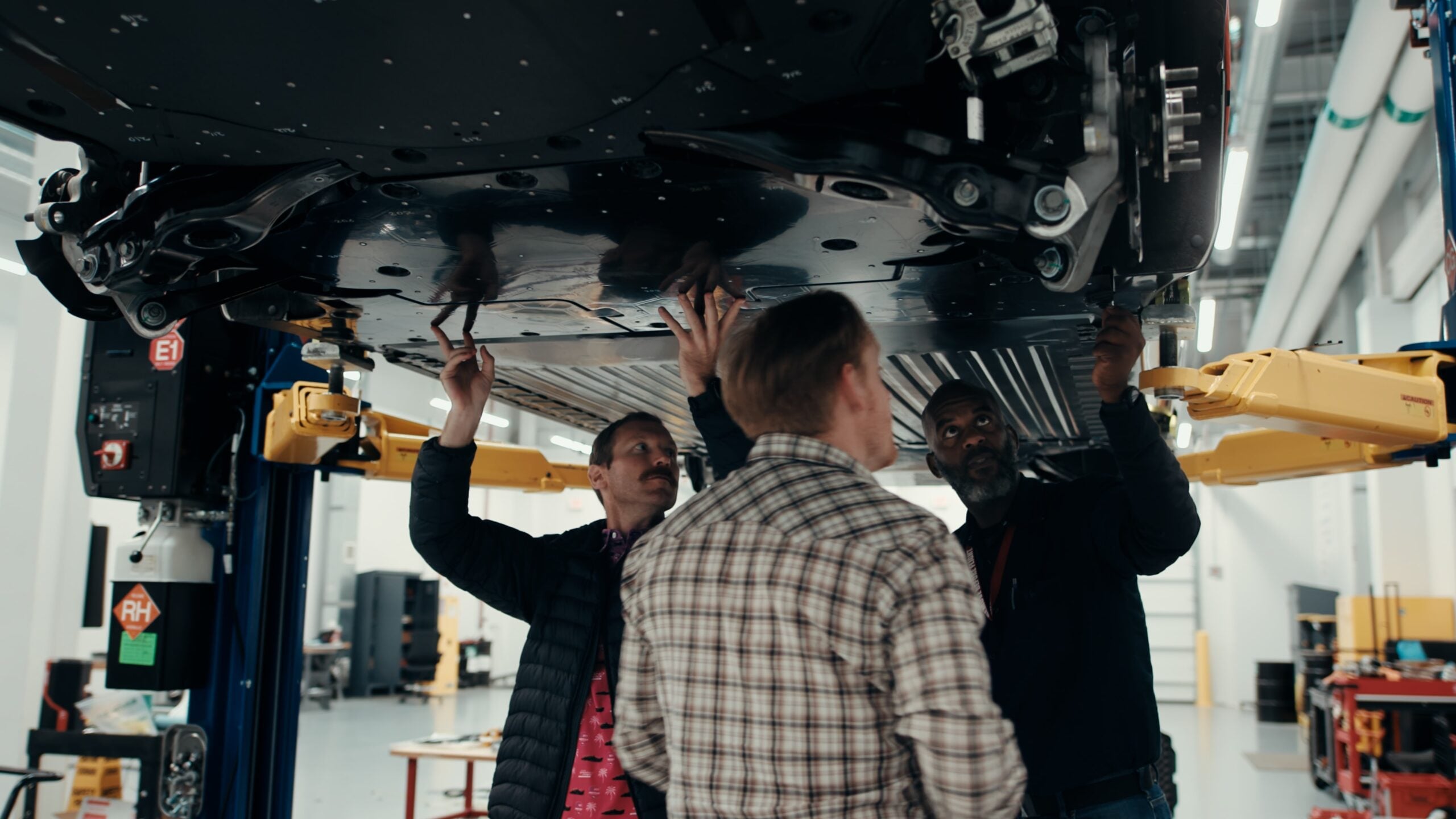
Then there’s the uncomfortable industry-wide reality. The EV race has entered its “hangover phase.” Early hype collided with pricing pressure, infrastructure gaps, and uneven consumer demand. Even leaders are recalibrating. When that happens, companies tend to favor operators over visionaries.
Ford’s next phase is about execution: cheaper EVs, refreshed lineups, and tighter cost discipline across 70 to 80 percent of its portfolio by the end of the decade.
That is less about dreaming up the future and more about surviving it.
There’s another layer that shouldn’t be ignored. Field was an outsider. He came from tech, not from Ford’s deeply rooted internal ecosystem. That made him powerful during transformation, but vulnerable during consolidation. When results get scrutinized and priorities shift, outsiders are often the first to go, or the first to leave.
His successor, notably, comes from within Ford’s advanced development ecosystem and shares Tesla DNA but has been embedded longer. That smells strongly of continuity without disruption.
Why He’s Really Leaving Ford
So why is he really leaving?
Because the job changed.
The Ford that hired Doug Field wanted a disruptor. The Ford that exists today wants a disciplined integrator. Those are not the same role, and rarely the same person.
In that sense, Field isn’t exactly a failure, making his departure more like a marker. It tells you more about the hirer, not the hire: Ford’s EV experiment has moved from ambition to accountability.
And in this phase, the company is no longer chasing the future. It is trying to make the future pay for itself.