
Ford Motor Company has shared new technical details about its long-anticipated “Universal EV” platform, an architecture designed to support a new generation of more affordable electric vehicles. The first model built on this foundation is expected to debut next year as an all-new, budget-focused midsize electric pickup.
The company’s target is ambitious: a starting price around $30,000 while still maintaining sustainable profitability, something many analysts in the industry still consider extremely difficult to achieve.
Ford occupies a unique position in the current electric vehicle landscape. The company moved early into the space, partnering with Tesla on charging compatibility and launching the electric F-150 Lightning, one of the first full-size EV pickups aimed at mainstream buyers.
However, slower than expected sales and significant losses inside its Model e electric division forced a strategic reset. Several EV programs were paused or canceled, including a three-row SUV project, while development quietly continued on a more cost-conscious platform meant to attract a broader audience.
The Battery Problem And Ford’s New Approach

At the core of Ford’s strategy is the battery itself, which remains the single most expensive component in any electric vehicle. Batteries typically account for about 40% of total vehicle cost and roughly a quarter of overall weight. Rather than chasing bigger battery packs and headline range numbers, Ford’s engineers are focusing on efficiency.
The thinking mirrors the shift that once occurred in gasoline engines when manufacturers moved from large naturally aspirated motors to smaller turbocharged setups. Instead of simply increasing size, the idea is to extract more performance and range through smarter engineering.
For Ford’s new pickup, that means aggressive aerodynamic optimization, something not traditionally associated with trucks.
Aerodynamics First, Even For A Pickup

According to Ford, every millimeter of the vehicle’s shape was analyzed through an internal engineering system that assigned real-world cost and efficiency values to design choices.
For example, increasing roof height by just one millimeter could add about $1.30 in battery cost or reduce range by approximately 0.055 miles. That kind of data-driven development pushed designers toward a tighter, more aerodynamic profile than buyers typically expect from a pickup.
Animations and previews shown by the company suggest the final product may look closer to a crossover-style utility vehicle, similar in overall philosophy to the Hyundai Santa Cruz, rather than a traditional body-on-frame work truck. This has sparked speculation that Ford could revive the historic Ranchero name, a model that helped define the coupe utility segment decades ago by blending passenger car characteristics with pickup functionality.
During development, engineers reportedly relied on 3D-printed aerodynamic elements, allowing rapid testing of multiple body configurations in wind tunnel simulations and reducing development time.
Efficient Electrical Architecture With Lower Complexity
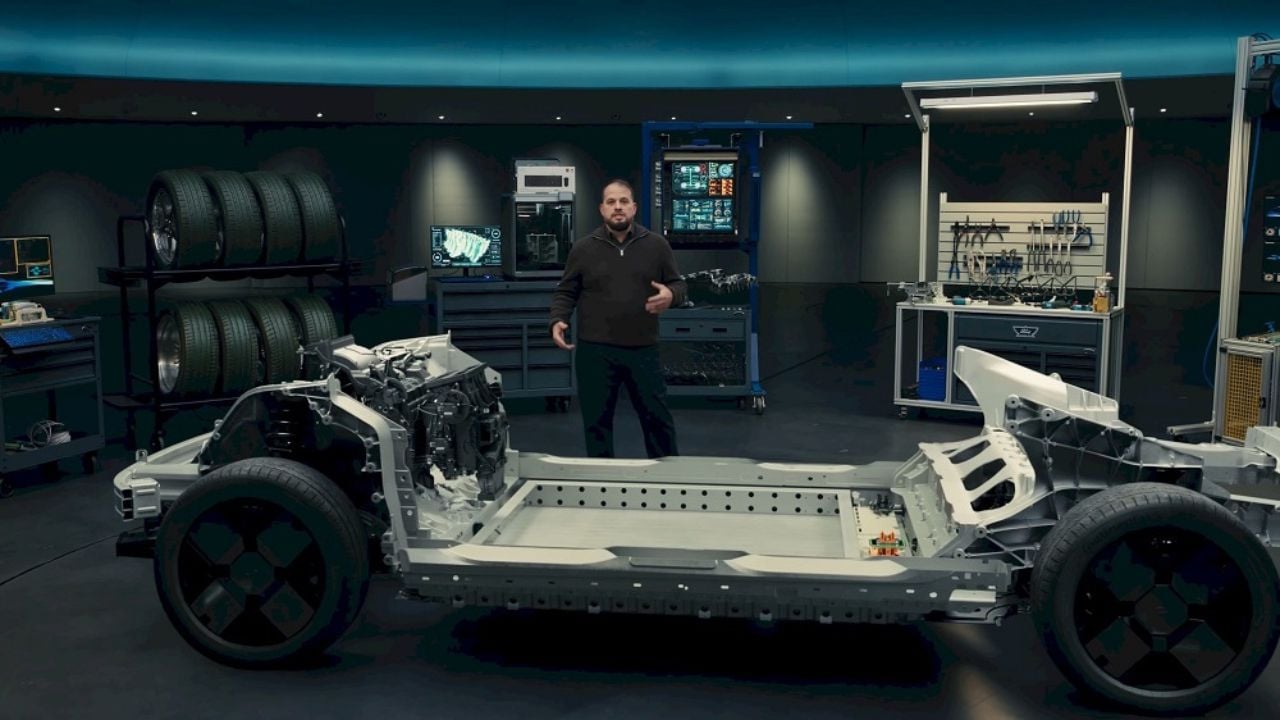
Ford’s efficiency push extends beyond aerodynamics. The new Universal EV platform uses a cost-effective 400-volt architecture instead of higher-voltage systems that can be more expensive to implement. One of the most notable changes, however, is the adoption of a 48-volt low-voltage electrical system, similar to the approach seen in Tesla’s Cybertruck.
The shift to 48 volts brings several advantages. It reduces electrical current requirements, simplifies wiring, and lowers manufacturing complexity. Ford says this move alone allowed engineers to eliminate roughly 0.75 miles of wiring, cutting about 22 pounds of weight in the process. Fewer cables also mean lower material costs and easier assembly on the production line.
To gain more control over key technology, Ford also acquired Auto Motive Power, enabling in-house development of power electronics and reducing reliance on outside suppliers. Vertical integration like this has become increasingly important as automakers attempt to reduce EV costs while improving margins.
A Different Path To Affordable EVs
Rather than trying to win the electric vehicle race with bigger batteries or extreme performance figures, Ford appears focused on intelligent engineering and cost optimization. By combining aerodynamic efficiency, a smaller but smarter battery strategy, and simplified electrical systems, the company hopes to deliver an electric pickup that feels practical for everyday buyers instead of niche early adopters.
If Ford succeeds in bringing a genuinely usable midsize electric pickup to market at around $30,000, the Universal EV platform could represent a major turning point, not only for the company but also for the broader push toward affordable electric trucks in the U.S. market.
For now, the industry will be watching closely. The promise of a truly accessible EV pickup has been discussed for years, but Ford’s new platform suggests the company believes it has finally found a realistic path to make it happen.
This article originally appeared on Autorepublika.com and has been republished with permission by Guessing Headlights. AI-assisted translation was used, followed by human editing and review.