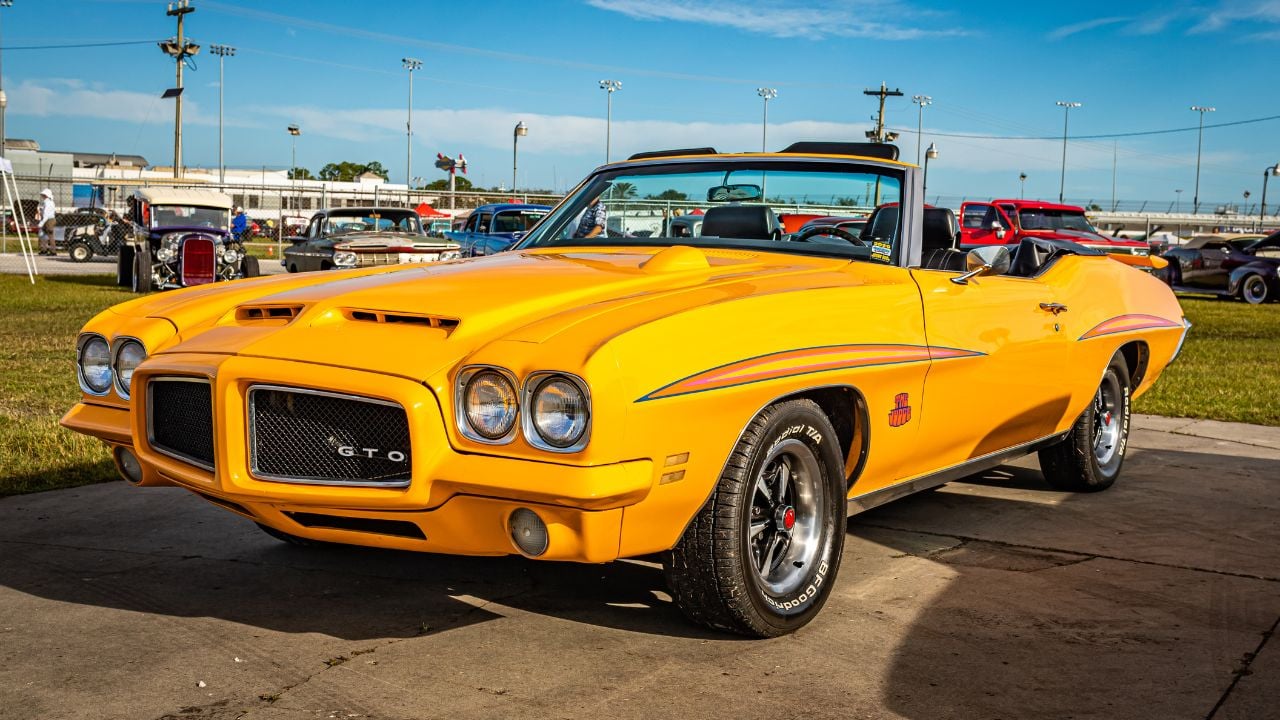
There’s something primal about the sound of a muscle car at full throttle: that deep, rumbling growl that announces its presence three blocks away. Between 1964 and the early 1970s, Detroit’s automakers were locked in an arms race of horsepower and decibels, creating horsepower-hungry muscle cars that weren’t afraid to let out their aggression quite loudly. These were mechanical beasts that turned suburban streets into drag strips and made ear protection a legitimate concern for bystanders.
The loudness wasn’t accidental. Engineers deliberately designed exhaust systems with minimal restriction, allowing those big-block V8s to breathe freely and sing their aggressive song. Combined with aggressive cam profiles that created that distinctive lumpy idle, headers that amplified the sound, and often questionable muffler choices, these machines were built to intimidate.
“If I leave here tomorrow, would you still remember me?” Definitely, because I’d hear you roaring out of the driveway – and the subsequent ringing in my ears for days to come.
1970 Plymouth ‘Cuda 440 Six Pack
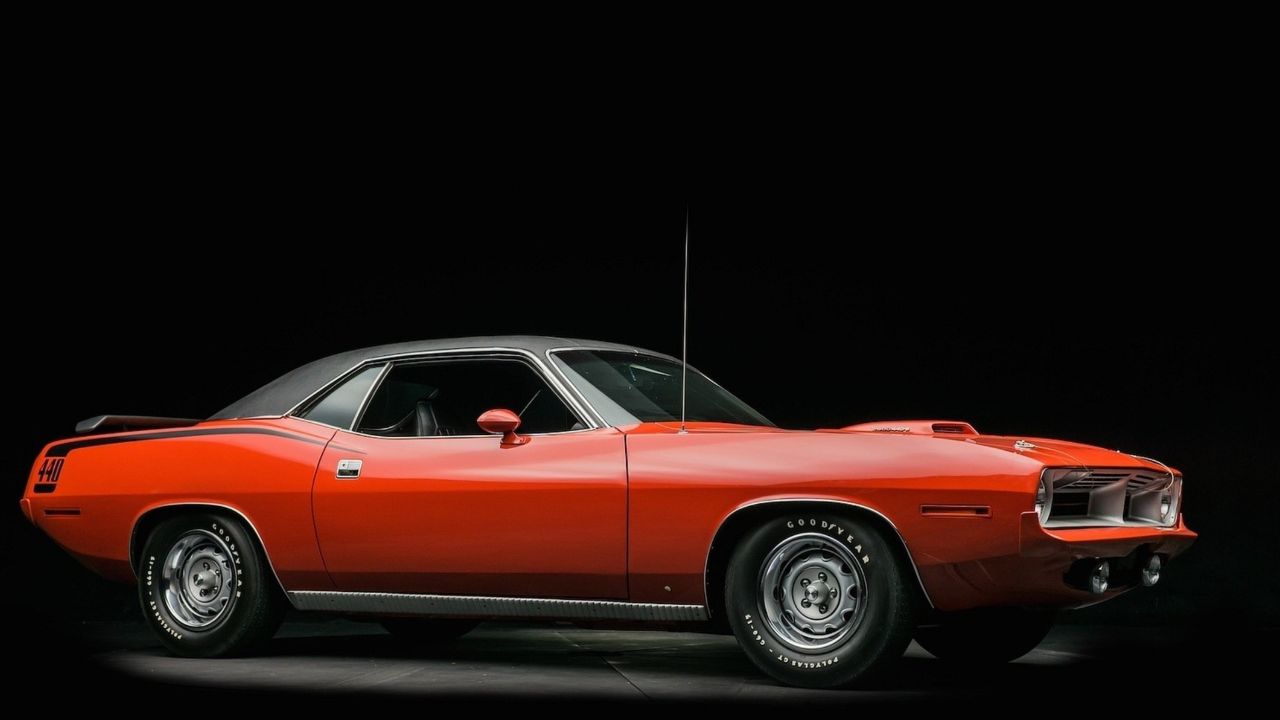
The 1970 Plymouth ‘Cuda with the 440 Six Pack engine was essentially a street-legal race car that happened to have license plates. That massive 440 cubic inch V8, topped with three two-barrel carburetors, didn’t just make 390 horsepower: it made a sound that could wake the dead. The factory exhaust system was surprisingly aggressive for a street car, and most owners quickly swapped it for headers and straight pipes, turning an already loud machine into something that registered on seismic equipment.
What made the ‘Cuda particularly ear-splitting was Plymouth’s decision to prioritize performance over noise control. The car came with minimal sound deadening, minimal sound deadening and a resonant unibody structure, and an exhaust note that had a distinctive raspy quality thanks to that triple-carburetor setup. When you mashed the throttle, those six barrels would open in sequence, creating a crescendo of mechanical mayhem that announced to everyone within a half-mile radius that serious business was about to happen.
1970 Dodge Charger R/T 440 Magnum
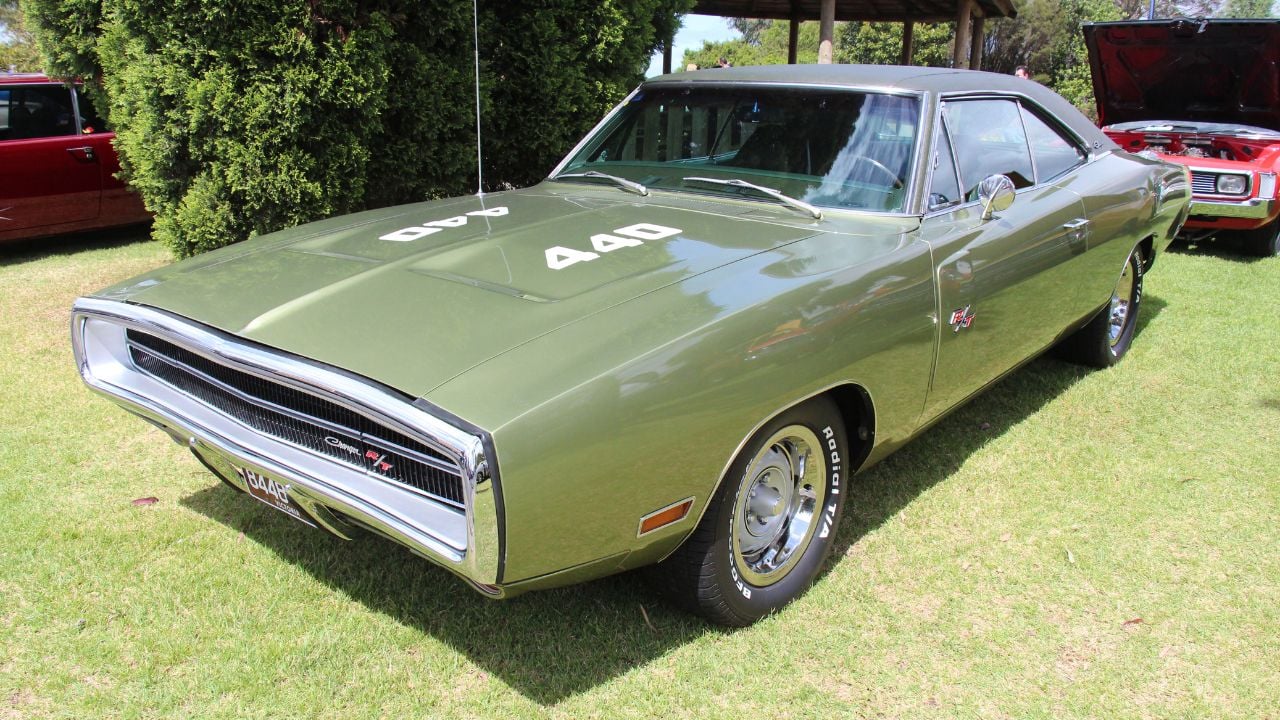
The ’70 Charger R/T was Hollywood loud. A Dodge Charger R/T chased Steve McQueen through San Francisco in Bullitt—but the film cars were 1968 models, not a 1970 Charger, and every frame of that chase scene captured the Charger’s menacing exhaust note. The 440 V8 produced a deep, authoritative rumble that seemed to emanate from the earth itself, while The Charger’s big-block rumble carried loudly under acceleration, and its long body made it hard to miss—visually or audibly.
Dodge engineers seemed to understand that intimidation was part of the package. The R/T came with a performance exhaust system that was surprisingly free-flowing for a factory setup, and the car’s long hood and short deck proportions created an acoustic chamber that amplified every pop and rumble. Add in the aggressive cam timing that made the engine lope at idle like a caged predator, and you had a machine that sounded as dangerous as it looked. Many owners reported that highway patrol officers could identify a Charger R/T by sound alone, even from several cars away.
1970 Chevelle SS 454 LS6

The 1970 Chevelle SS with the LS6 454 engine was Chevrolet’s answer to the horsepower wars, and at 450 horsepower, At 450 hp (gross), it was one of GM’s highest factory-rated production engines of the era. But the LS6 wasn’t just about power: it was about making sure everyone knew exactly how much power you had under the hood. The combination of that massive displacement, aggressive cam timing, and a relatively free-flowing exhaust system created a sound that was equal parts beautiful and terrifying.
What set the LS6 apart was its ability to go from a menacing idle to an absolute roar in milliseconds. The engine’s solid lifter cam created that distinctive “chop” at idle, while the big-block’s long stroke produced exhaust pulses with incredible authority. Chevy’s performance exhaust option made it even louder, and most serious street racers immediately went to headers and side pipes, creating a combination that could literally be heard from miles away. The car’s relatively lightweight construction meant every explosion in those cylinders was transmitted directly to your ears – and everyone else’s.
1969 Pontiac GTO Judge
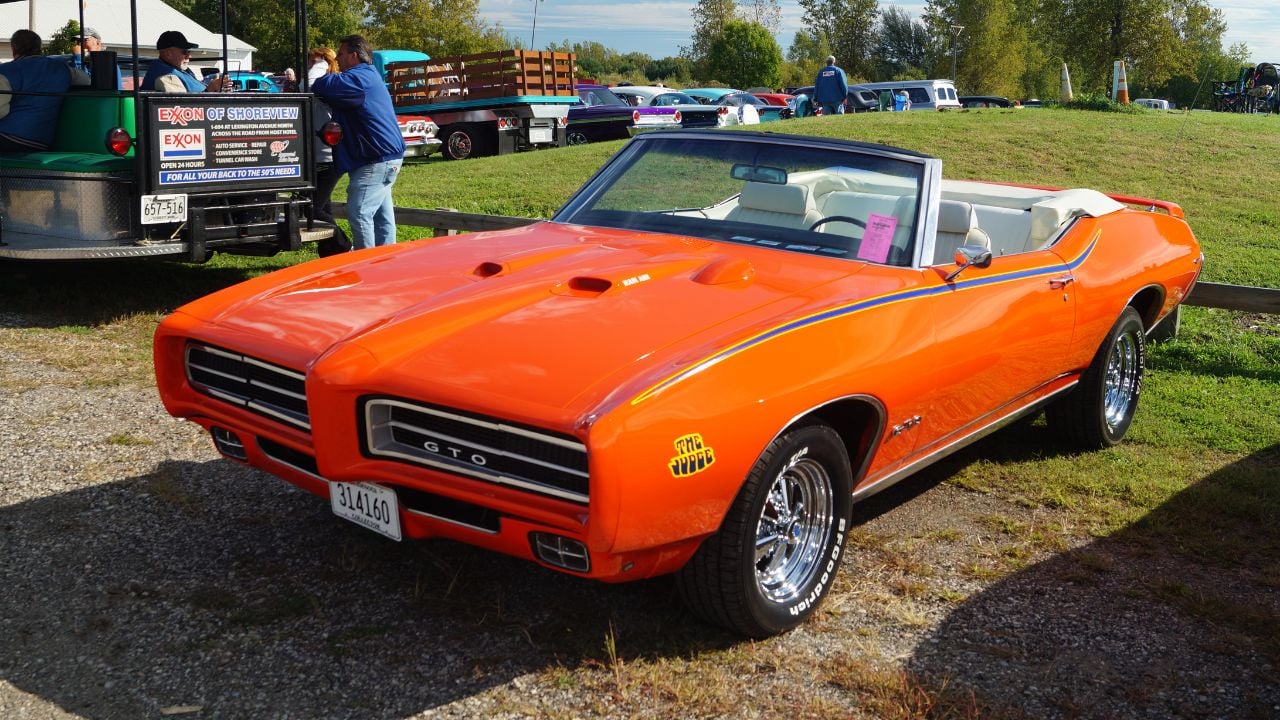
The GTO Judge was a statement piece, complete with wild graphics—and when equipped with the rare Ram Air IV option that sounded like it was perpetually angry about something. Pontiac’s 400 cubic inch V8 in Ram Air IV trim was one of the most aggressive-sounding engines of the era, with a cam profile that made the car sound like it was constantly clearing its throat at stoplights. The Judge’s exhaust system was tuned for maximum intimidation factor, creating a sound that was part race car, part street fighter.
Pontiac engineers understood that the GTO’s image was built on attitude, and they made sure the Judge sounded the part. The Ram Air system not only fed the engine cold air but also created additional induction noise that mixed with the exhaust note to create a truly menacing soundtrack. The car’s relatively short wheelbase and stiff suspension transmitted every mechanical noise directly to the cabin and the outside world. When you added the popular dealer-installed headers and performance exhaust options, the Judge became a rolling amplifier that announced your arrival long before you came into view.
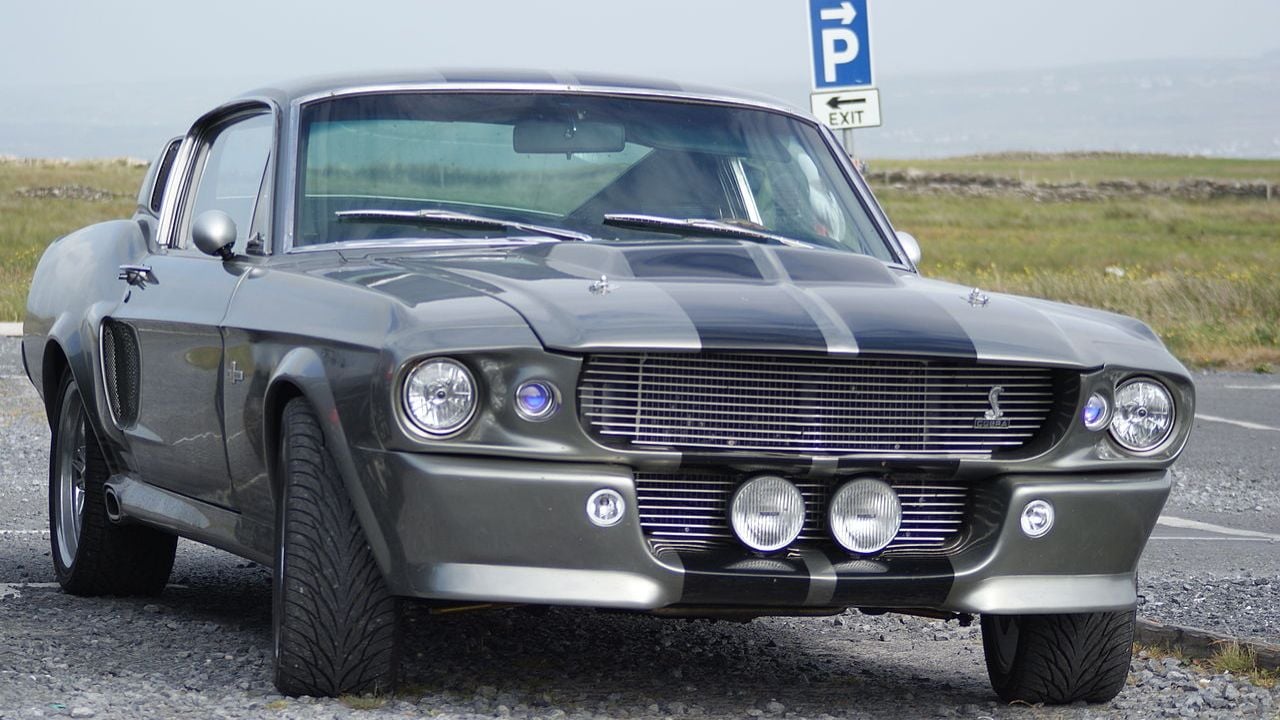
1967 Shelby GT500

Carroll Shelby took Ford’s already potent Mustang fastback and turned it into something that sounded like it belonged on a racetrack rather than public roads. The 1967 GT500 used the 428 Police Interceptor; the 428 Cobra Jet was introduced during 1968 and became the signature engine of the GT500KR, but everyone knew the real number was much higher, and the exhaust note suggested even more. Shelby’s team designed an exhaust system that prioritized sound over silence, creating a deep, authoritative rumble that had a distinctly different character from its Detroit competitors.
The GT500’s sound was all about controlled aggression. Unlike some muscle cars that were just loud, the Shelby had a sophisticated exhaust note that changed character with engine speed – from a menacing idle growl to a high-rpm scream that suggested serious racing pedigree. The car’s performance-oriented suspension and minimal sound deadening meant that every mechanical noise was amplified, from intake and valvetrain noise to the big-block’s deep exhaust note to the distinctive sound of the solid lifter cam. Many owners described the GT500 as sounding “European” – more refined than a typical American muscle car, but no less intimidating.
1967 Camaro Z/28
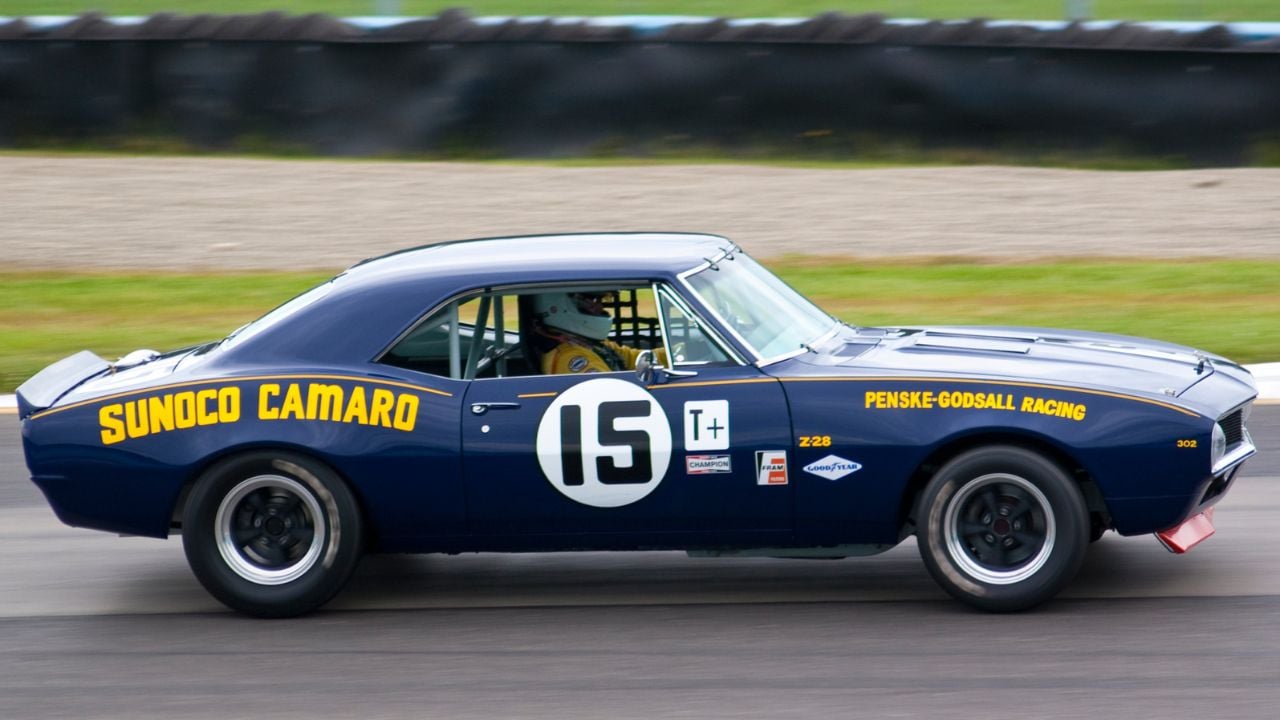
The first-generation Z/28 was Chevrolet’s attempt to build a Trans Am racer that you could drive to work, and it sounded exactly like what it was: a barely civilized race car. The 302 cubic inch V8 was a high-revving screamer that made its power at the top of the tach, and the sound it made getting there was absolutely intoxicating. Unlike the big-block muscle cars with their deep, rumbling exhaust notes, the Z/28 had a higher-pitched wail that suggested serious rpm capability.
What made the Z/28 particularly loud was its racing-derived cam timing and the relatively free-flowing exhaust system that Chevy designed to help the small-block breathe at high rpm. The car’s lightweight construction and minimal sound deadening meant that every mechanical noise was transmitted directly to your ears. The Z/28’s exhaust note had a distinctive crackling quality on deceleration, a sound that became the signature of serious street racers. Most owners quickly discovered that removing the air cleaner revealed even more induction noise, turning the car into a symphony of mechanical aggression that was music to enthusiasts’ ears.
1970 Buick GSX Stage 1

Buick might have had a reputation for building cars for your grandmother, but the GSX Stage 1 was anything but quiet and refined. The 455 cubic inch V8 in Stage 1 trim was one of the torquiest engines ever built, and it announced its presence with an exhaust note that was somehow both sophisticated and intimidating. Buick engineers created a sound that was distinctly different from other GM divisions – deeper and more authoritative than a Chevelle, smoother than a GTO, but no less aggressive.
The GSX’s loudness came from its massive displacement and aggressive cam timing, combined with an exhaust system that Buick designed to complement the engine’s torque curve. The car’s relatively heavy construction actually helped create a different kind of sound – instead of the tinny resonance of lighter cars, the GSX produced a deep, rumbling bass note that seemed to come from somewhere deep in the earth. The Stage 1’s reputation for being a sleeper was somewhat undermined by its exhaust note, which made it impossible to mistake for a regular Skylark. Many owners reported that the car’s idle was so aggressive that owners often remarked on the aggressive idle and deep exhaust note.
Can You Hear Me Now?
These machines represent the pinnacle of Detroit’s golden age of muscle cars: an era when horsepower was king and subtlety was for imports. Each one created its own distinctive soundtrack, from the raspy aggression of the ‘Cuda’s Six Pack to the sophisticated rumble of the Buick GSX. They were loud, not by accident, but by design, built during a time when making noise was part of making a statement.
Today, these cars represent an obnoxiously loud and aggressive-sounding part of automotive history that reminds us of an era when cars had personality and character. Sure, modern performance cars are faster, more efficient, and definitely quieter, but they’ll never replicate the visceral thrill of hearing one of these classics fire up and idle with that distinctive muscle car lope. In an age of electric vehicles and noise regulations, these loud, proud machines from Detroit’s golden era remind us that sometimes, the journey really is more important than the destination – especially when the journey sounds this good.